

11 min
2.6k
Medium Size Poodle
The Mastino Napoletano is also known by the name “Neapolitan Mastiff”. He impresses dog lovers across Europe with his imposing appearance combined with a calm presence. However, anyone wishing to live with such a four-legged companion should already have plenty of experience with dogs and, in addition, ample space to keep this demanding guard dog.
© deviddo / stock.adobe.com
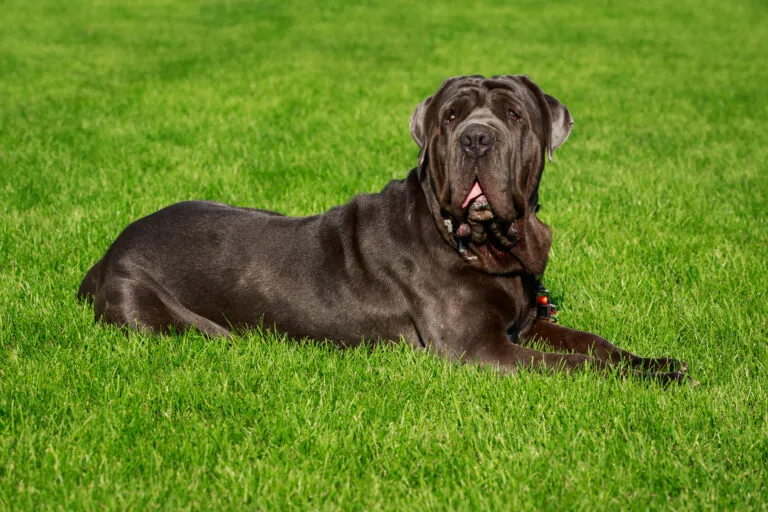
The Neapolitan Mastiff is an imposing dog and an effective guard dog.
Even non-experts usually recognise at first glance that this dog belongs to the powerful and muscular Molosser breeds: the heavy and very stocky Mastino Napoletano can reach a shoulder height of up to 75 cm. An adult male can weigh up to 70 kg.
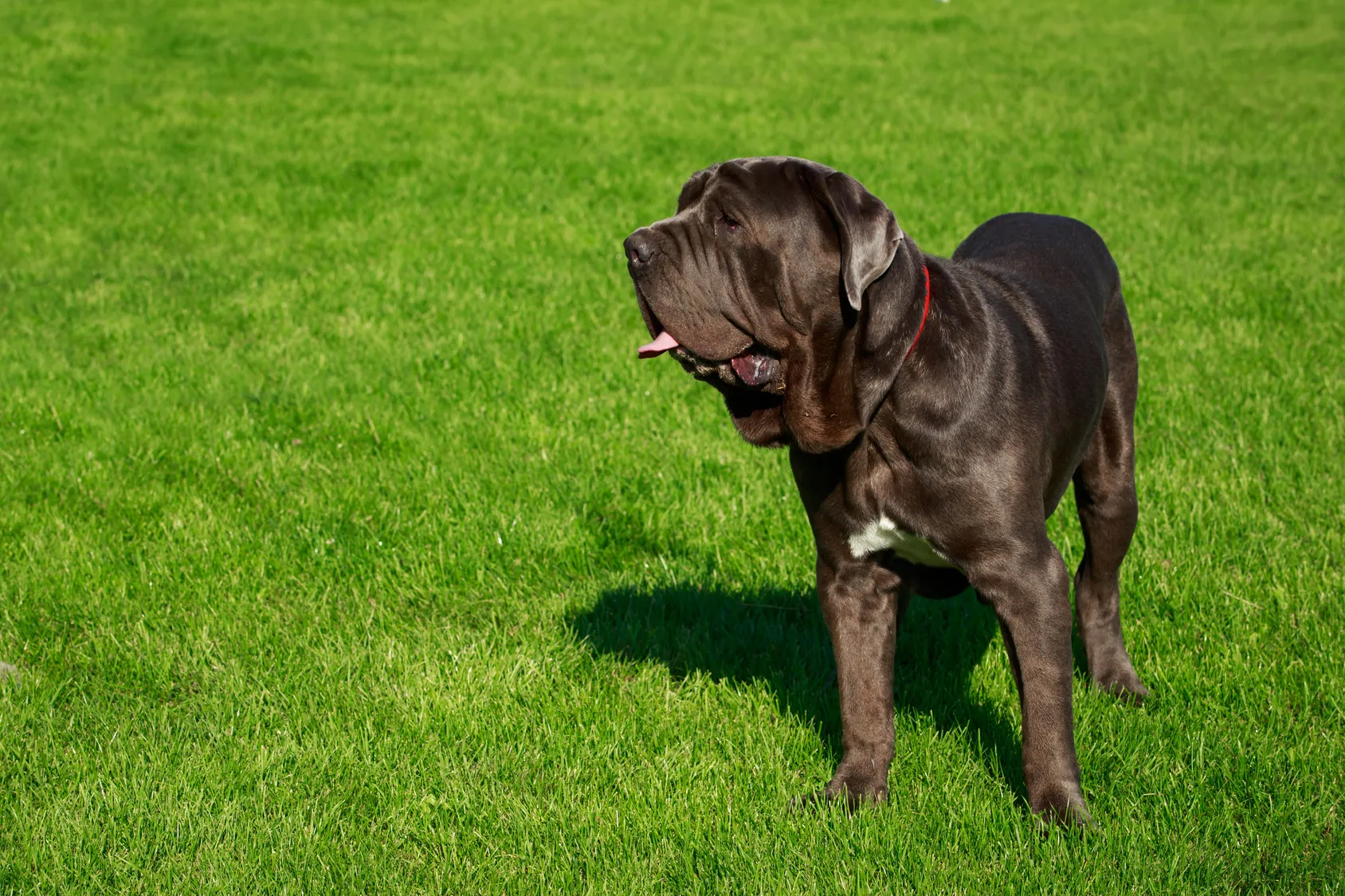
The head is very large, almost massive, which is further emphasised by the powerful jaw and the close-fitting, triangular ears. The skin lies relatively loose over the entire body, and is particularly wrinkled and slack around the neck.
The short and coarse coat is very dense and can appear in the colours grey, black, brown, fawn and red or be brindle. Although this breed generally appears rather heavy and sluggish and often gives off an air of calm, it can show lightning-fast reflexes.
 © deviddo / stock.adobe.com
The impressive dog keeps unwanted visitors at bay through his imposing appearance alone – but in case of danger, he will not hesitate to reliably defend house and home. This also shows that the Mastino Napoletano belongs in experienced hands.
The very territorial and protective character of the breed should be carefully considered before deciding to bring this four-legged companion into your life. The brave and independent dog acts in a flash when he feels his territory or loved ones are under threat.
Important to know: In some German and Austrian federal states as well as in certain Swiss cantons, the Mastino Napoletano is classified as a listed breed.
Behind the façade of this impressive guard dog lies a calm and genuinely friendly companion, who can impress with almost stoic composure. Towards his owner, he will always be loyal and affectionate.
Towards strangers he tends to be reserved, and when meeting other dogs he usually remains wary and sometimes even hostile – early socialisation is therefore essential!
When choosing a breeder, you should already ensure that your little Mastino has been well socialised. The first few weeks are crucial for future relationships with other dogs and with people.
If you plan to keep your Mastino, for example, with cats, it is best to look for a breeder who has already accustomed the puppy to feline companions. You should then continue socialisation by attending a puppy playgroup and dog training classes, so that your young dog meets as many dogs of other breeds as possible. This way, the rather solitary Mastino can grow into a socially compatible companion.
If a dog of this breed grows up with another dog, he will usually get along well with it as an adult. Be fair and consistent right from the start, because this proud dog will only recognise you as the “pack leader” if you behave accordingly.
This self-assured companion suits you if you already have some experience with dogs and can offer him loving yet consistent leadership.
He is not suitable for life in a flat, especially not in a city apartment, as a guard dog he needs territory to watch over.
If you are looking for a companion who happily carries out every command with a wagging tail, this breed is not for you. This personality on four paws will certainly not fetch sticks unnecessarily, but will only carry out tasks that seem sensible to him.
The Mastino Napoletano is not necessarily the ideal family dog, but instead values a single primary caregiver all the more.
Keeping him in a household with small children is only recommended to a limited extent, and dog and child should never be left unsupervised. However, a well-socialised Mastino can form a wonderful bond with children.
As soon as you seriously consider the arrival of a Mastino Napoletano, be sure to find out whether keeping the breed in your region is possibly subject to additional requirements or completely prohibited – this applies, for example, in Germany to Berlin and to the Swiss cantons of Geneva and Valais.
This dog’s favourite activity is guarding his territory – and you should therefore be able to offer him this. There should be several shaded areas on the property, as the breed does not tolerate heat particularly well. In addition, the area should be securely fenced, because the protective and guarding instinct does not stop at postmen or other visitors.
Bear in mind that a dog of this size can appear intimidating to many people, and show consideration – including on daily walks.
The Neapolitan Mastiff enjoys joining hikes, but he is not a particularly athletic dog. Once fully grown, and with appropriate training, the Mastino Napoletano can accompany you on short jogging or cycling outings, provided you adapt to his pace.
Some dogs of this breed also enjoy the opportunity to swim from time to time. If you take the breed’s stubborn character into account and show plenty of patience, you can also complete tracking training with a Mastino.
The short, fine coat of the Neapolitan Mastiff requires very little care. Occasional brushing is perfectly sufficient to remove loose hair.
However, his characteristic skin folds must be checked regularly for signs of inflammation, cleaned and, if necessary, treated with ointment. The floppy ears and eyes of this breed are also prone to inflammation and therefore need careful monitoring.
Reading tip: Cleaning dog ears: Practical tips for home
A dog of this size naturally requires a generous amount of food of good quality. Every potential owner should be aware of this, as feeding a Mastino Napoletano appropriately represents a considerable cost factor. The quality of the food is crucial for a healthy and long canine life.
Suitable options include food for large-breed dogs, which is also available in a puppy formula – ensuring your dog receives exactly the nutrients he needs for his size and age. In addition, puppy food for large breeds is designed to ensure that young dogs do not grow too quickly, which could damage the musculoskeletal system. High-quality food is characterised bymeat being listed first in the ingredients.
As with all large breeds, the Mastino Napoletano carries a certain risk of gastric torsion. It is best to divide your dog’s daily ration into several smaller meals and ensure he has a rest period afterwards – this helps minimise the risk of this life-threatening condition.
Due to poor breeding practices in the early years, the Mastino Napoletano is still considered relatively prone to health problems affecting the musculoskeletal system: he is prone to hip and elbow dysplasia as well as arthritis. Eye problems can also occur more frequently.
Because of the loose skin, the breed is also prone to skin infections, which you can largely prevent through appropriate hygiene. Make sure your Mastino is not exposed to either severe cold or heat, as he tolerates both poorly.
If you are interested in this breed, be sure to support reputable breeding efforts that are characterised by comprehensive health screening. Such breeders only include parent animals in their breeding programmes that are proven to be free from joint problems.
With good care, this muscular powerhouse can reach an age of around ten years.
The Mastino Napoletano can look back on a long line of ancestors: his forebears were likely Roman Molossers that were once used in the fighting arenas of the Roman Empire and accompanied soldiers as war dogs on their campaigns.
Over the centuries, they proved their worth in southern Italy as herding and farm dogs, where this type of dog is still widely used today as a guard and protection dog.
Since 1947, the breed has been selectively bred, although the early days of breeding were marked by several difficulties that still affect the breed today: many breeders came from lower social classes and placed little emphasis on maintaining the breed’s health. In addition, Mastino Napoletanos are still relatively inconsistent in appearance, as the breed is comparatively young.
In the 1980s, the Mastino Napoletano experienced a peak in popularity in several European countries. This was not always to the breed’s advantage: many “breeders” promoted the dog’s aggressiveness and aimed for an especially extreme appearance.
More mass and more wrinkles not only looked grotesque, but also led to health problems. Marketed as the “armour of antiquity” , this dog also often ended up in the wrong hands.
Fortunately, the Mastino Napoletano is now far from being a fashionable dog kept primarily for its unusual appearance – it is, quite simply, a breed for connoisseurs.
As a special dog with a special owner, a Mastino Napoletano has delighted many viewers in the popular “Harry Potter” films: a dog of this breed plays the loyal companion of the half-giant Hagrid.
 © Harald07 / stock.adobe.com
Before your Neapolitan Mastiff moves in, you can organise everything in advance to provide him with a comfortable home. As you already have dog experience, you will of course be familiar with the basics of essential dog equipment.
When shopping, consider the future size of your new companion – you can replace harnesses or collars later, but when it comes to dog blankets and beds as well as transport crates for car journeys, you can already base your choice on the measurements of the adult dog. Height-adjustable bowls are particularly suitable, as they allow even a fully grown dog to eat and drink comfortably.
Before the dog arrives, clarify who will look after him if you are unable to do so due to illness, and what will happen to him during your holiday. On a walking holiday , for example, you may be able to take him with you, as there are now many hotels and holiday homes that also welcome dogs. However, bear in mind that with your Neapolitan Mastiff you may not be allowed to enter every European country, so be sure to check in advance.
If your dog has to stay at home – which is certainly the better option for some destinations – you will need an experienced dog sitter who is familiar with the breed’s particular traits.
It makes sense, before buying a puppy – especially with such an imposing breed – to calculate the regular costs: high-quality food for such a large dog is expensive, and dog tax may also be higher depending on the region. In addition, plan for regular visits to the vet.
Perfectly Equipped for Your New Furry Friend
Whether dog food, dog treats, dog beds or toys: everything for your number one can be found in the online shop at zooplus.
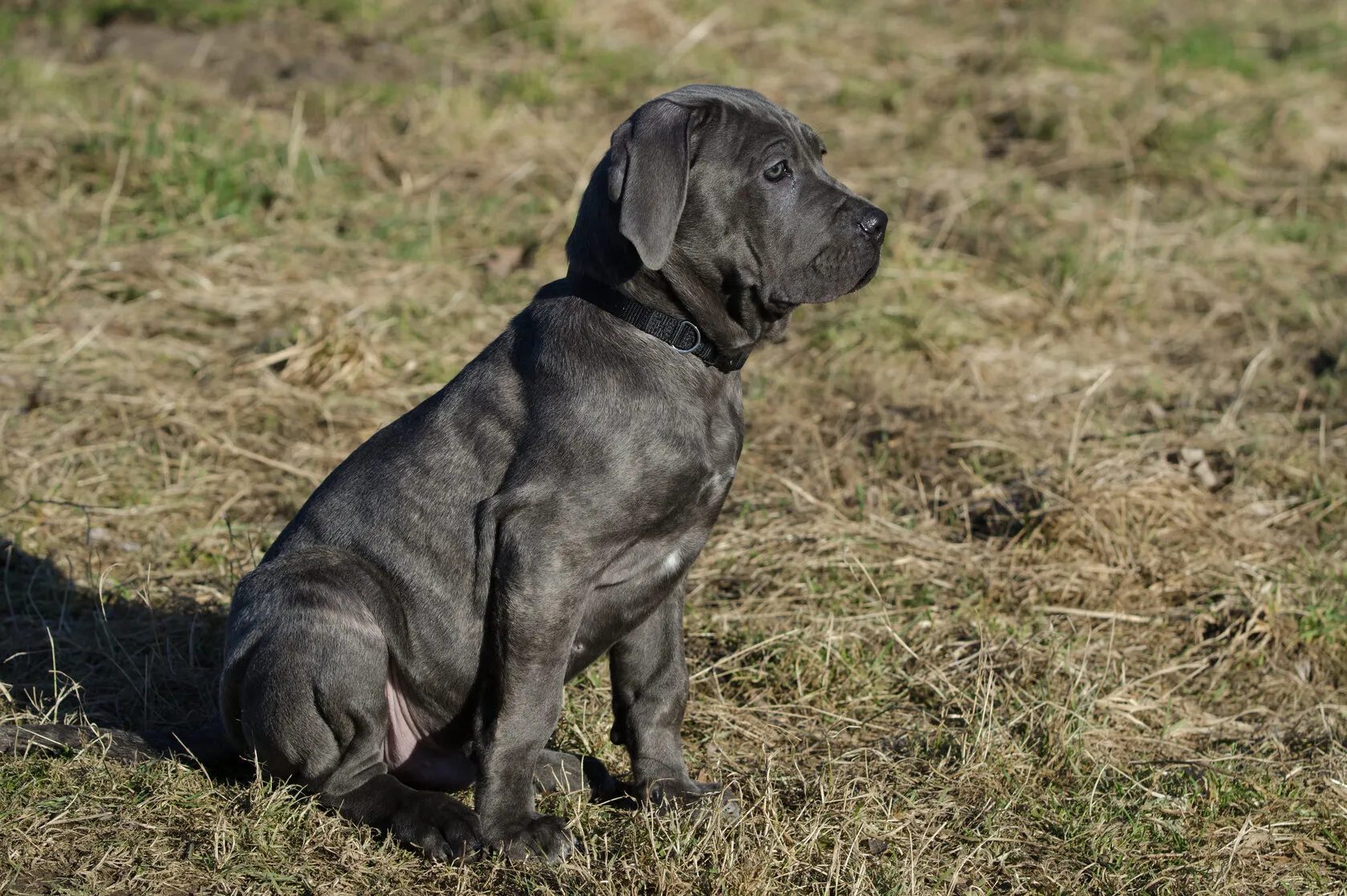
If you are looking for a Mastino Napoletano puppy, you should be sure to contact a reputable breeder registered with an association. Here, your future companion will receive the best foundations for a healthy and happy life by your side.
The basis for this is laid even before birth through the selection of healthy, strong-character parent animals. The puppy then grows up with the breeder until at least the eighth week and is already shaped and socialised during this time. When he moves into his new home, he is several times dewormed, microchipped, vaccinated and comes with a European pet passport.
Anyone wishing to offer a home to an already adult Mastino Napoletano will rarely find one in local animal welfare centres, as the breed is simply too rare. Nevertheless, a visit to the local animal shelter is worthwhile, as you may find similar dogs there looking for a home that you fall in love with at first sight.
Otherwise, specialised Molosser associations are a good place to start, as they often support the rehoming of adult dogs: searching for organisations such as “Doggen und Molosser in Not” may lead to success. The dogs rehomed through these groups often still live with their owners, who have to give them up for a variety of reasons, or in foster homes. Find out as much as possible about the dog’s background and temperament and visit him before making a final decision, to see whether you have real dream-team potential together.
A large, awe-inspiring dog like the Neapolitan Mastiff needs an owner who knows how to handle him. His protective instinct and vigilance must be guided in the right direction to ensure harmonious coexistence. But under the right keeping conditions and in the hands of an experienced, confident dog handler, the Mastino Napoletano is a truly wonderful companion.
| Special features: | The Mastino Napoletano is an imposing protection and guard dog who, due to his enormous size and strength, belongs in experienced hands. In some regions, he is classified as a listed breed. |
| Character: | alert, affectionate, even-tempered, calm, brave |
| Height at the withers: | 60–68 cm (female) 65–75 cm (male) |
| Weight: | 50–60 kg (female) 60–70 kg (male) |
| Coat: | short, coarse and hard, solid grey, black, brown, fawn or deer red |
| Coat care: | low effort |
| Exercise: | moderate |
| Suitable for beginners: | no |
| Barking: | announces visitors but rarely barks otherwise |
| Life expectancy: | approx. 10 years |
| Typical illnesses: | hip dysplasia, eye inflammation, skin infections |
| FCI group: | 2. Pinschers and Schnauzers – Molossoids – Swiss Mountain Dogs |
| Origin: | Italy |

"A life without a pug is possible, but pointless," Loriot once said. I would unreservedly agree and add: "A life without horse, cat and rabbit as well!" My heart beats for all animals big and small and I have the great fortune to be able to write about my passion as a freelance author. With my articles I would like to raise awareness for animal welfare and give useful tips to animal lovers.
Fans of the Bearded Collie agree that those who aren't familiar with this dog breed simply have to get acquainted with it. And those who have experienced how a Bearded Collie bolts across meadows with its flowing fur, how it rolls around full of energy and joy and how it attentively and observantly takes into account its owners wishes become simply addicted to this original dog breed and its unique charm.
The Irish Wolfhound is one of the largest dogs in the world. Used for hunting wolves and bears in medieval Ireland, today it is kept exclusively as a family dog. Despite its imposing size, this sighthound is very gentle and affectionate. Unfortunately, the friendly giant is also quite prone to illness and has a comparatively short life expectancy. Is an Irish Wolfhound right for me, and what does keeping one involve? You can find everything you need to know in the following article.