{"url":"https://www.zooplus.co.uk/magazine/dog/dog-health-and-care/dog-grooming","title":"Dog Coat Care: Tips for Every Coat Type","mag_id":4913,"is_single":true,"cat_name":"Dog","sub_cat_id":143,"sub_cat_name":"Dog Health and Care","cat_id":3410}
Well groomed from head to paw – dogs not only look good this way, they also feel completely comfortable in their own skin. We share tips on all aspects of coat care for dogs.
With over 300 different dog breeds, there are also many different coat types. Over the centuries, dogs’ coats have adapted to a wide range of requirements. In many dogs, the coat consists of topcoat and insulating undercoat.
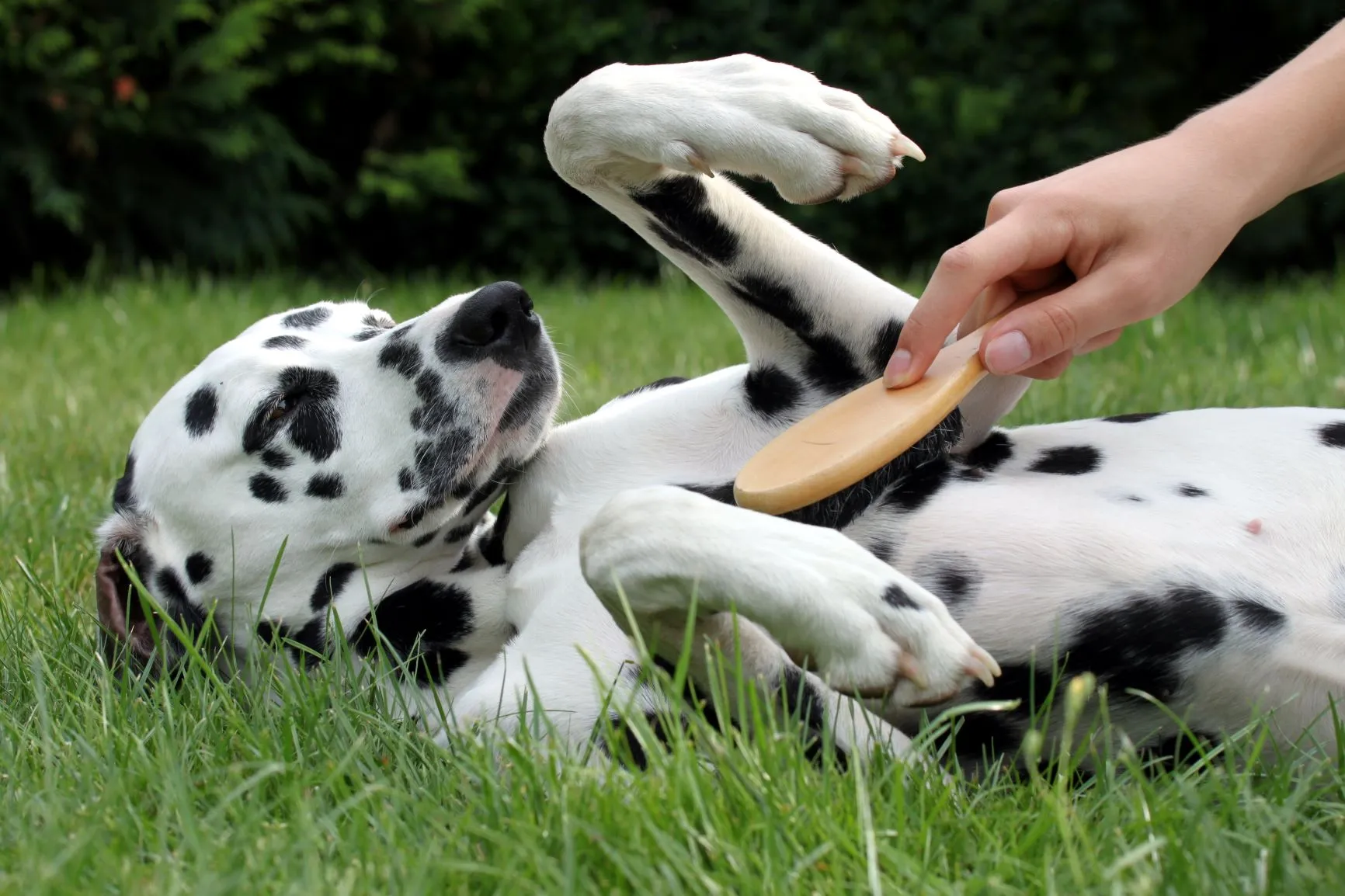
The undercoat can be very dense, for example in breeds such as the Samoyed. Other dogs, such as the Dalmatian, have little or no undercoat. Depending on the hair structure, coat care requirements vary.
Double-Coated Dogs: the Prototype
A double coat is considered the prototype of a dog’s coat – wolves are double-coated too. A defining feature is the presence of a thick undercoat alongside the topcoat.
In spring, dogs lose a large proportion of this and shed heavily; in autumn there is another coat change towards a thicker winter coat. During these periods, dogs need particularly intensive coat care.
A typical example of a double-coated dog is the German Shepherd. But the Labrador Retriever, Rottweiler, Spitz and all sled dogs also have a double coat. “Short double coat” refers to a length of up to four centimetres. “Long double coat” can be up to ten centimetres long. The undercoat can reach the same length.
Short-Haired Dogs Mean Less Grooming Effort
By smooth coat – also known as “short hair” – we mean short, smooth fur with little or no undercoat. As the coat consists almost entirely of topcoat, shedding is only mild. The dog sheds small amounts all year round. Smooth-coated dogs include, for example, the Boxer or the Pinscher.
Long Hair: Plan More Time for Grooming your Dog
The name says it all: long-haired dogs are easy to recognise by their long coats. We distinguish between long-haired dogs with lots of undercoat and those with little undercoat.
Most long-haired hunting dogs have little undercoat, such as the Irish Red Setter. This requires regular brushing, but it is not particularly time-consuming.
If long-haired dogs also have a lot of undercoat, you should allow plenty of time for grooming! This coat type is prone to matting. This includes dogs such as the Bobtail or the Tibetan Terrier.
Curls from Wavy Hair
The best-known representative of wavy-haired dogs is the Poodle, whose curls cover the entire body. This group also includes water dogs such as the Barbet. Wavy-haired dogs are always long-haired; the coat consists almost entirely of soft undercoat, which sheds very little.
There is no seasonal coat change. As a result, these dogs need regular clipping. Ear care is also important: in some curly-coated dogs, it is necessary to regularly remove hair from the ear canals.
Wire-Haired: Robust Coats for Woods and Fields
The coat of wire- or rough-haired dogs is harsh, water-repellent and often comes with a dense undercoat. The German Wirehaired Pointer even has this coat characteristic embedded in its breed name. But Schnauzers, Border Terriers and many other terriers also have rough coats. The topcoat of these dogs does not fall out on its own, which makes hand-stripping necessary.
Rare “Special Coats”
Hairless dogs such as the Chinese Crested have very little coat, making their care relatively easy. On sunny days, however, sun protection may be required.
Another true “special coat” is found in corded dogs, such as the Puli. Like curly coats, their fur consists mainly of undercoat. Due to its thick, soft structure, it felts after a few centimetres of growth, providing optimal insulation without damaging the skin. Owners of corded dogs should seek advice from a breeder or professional groomer on the best way to care for their dog’s coat.
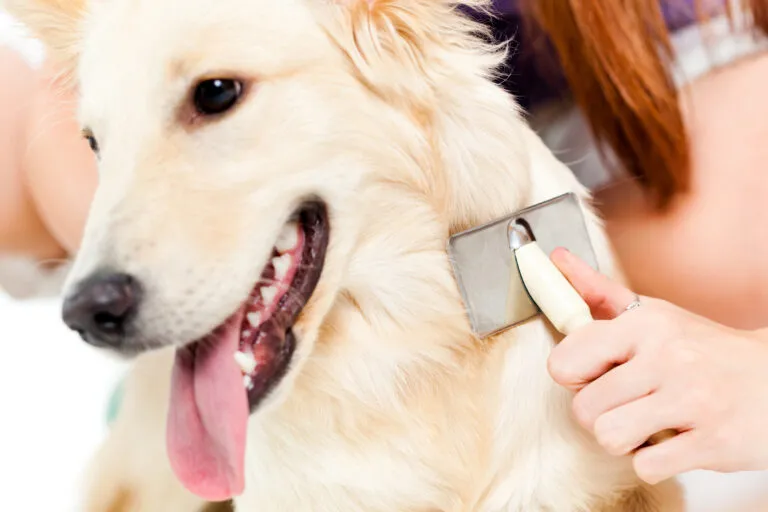
Whether curly, wire-haired or short-haired: grooming is good for every dog. Combing and brushing remove dead hair from the coat and help prevent matting. At the same time, they act like a gentle massage that boosts circulation. As an added bonus, grooming helps strengthen the bond between you and your dog.
But how often should a dog be brushed? Dogs with long, silky coats such as the Havanese need grooming every one to two days. Thoroughly brushing a Bobtail can take around an hour and should be done once a week. You should also use regular grooming sessions to check ears and claws.
For all coat types Discover a wide range of grooming products such as brushes, combs, clippers or dog shampoos in the zooplus online shop.
Important in Grooming: Get your Dog Used to Brushing
The easiest approach is to get your puppy used to regular grooming from the outset. A good time for brushing practice is when the puppy is tired after playing or going for a walk. Choose a calm place and moment, and use a soft puppy brush or a natural bristle brush. Limit the first sessions to one or two minutes and praise your four-legged friend afterwards.
It is important that the dog learns two things: grooming is a pleasant ritual, and the human decides when it ends. Always finish the little wellness session with plenty of praise and a treat if your dog has stayed still.
Which Brush for Which Coat?
Classic short and double coats can be cared for with combs or massage brushes. Anyone who thinks Poodles and similar breeds need little grooming is mistaken: these dogs can mat too! For example, under the armpits or around the rear. Alongside a comb, a slicker brush is helpful. They also need regular clipping. For rough-coated dogs, slicker brushes are particularly suitable as they remove dead hair.
For all coat types, the following applies: small mats can be tackled with a de-matting knife. Larger mats require scissors.
Many dog owners like the Furminator. It is ideal for removing loose undercoat. It is available for long- and short-haired dogs. However, it is not a substitute for hand-stripping and is not suitable for dogs without an undercoat.
Special Grooming Needs in Dog Coat Care
Combing or brushing forms the basis of regular grooming, but some breeds have higher requirements: they need regular hand-stripping and clipping.
Hand-Stripping
“Hand-stripping” refers to pulling out dead hair by hand. Rough-coated dogs in particular depend on this, as their hair does not fall out naturally. Hand-stripping is important to prevent skin irritation and inflammation, which can quickly develop under dead hair.
This special type of grooming should be done every eight to twelve weeks. Anyone who values the breed-typical look needs plenty of practice – or an expert by their side.
Clipping
The dog doesn’t shed – does that make it low-maintenance? Usually not, as these dogs need clipping every two to three months. Otherwise, the coat becomes too long, which can lead to matting and skin inflammation.
Dogs need time to get used to the sound of the clippers – ideally, start in puppyhood and use plenty of positive reinforcement. The head and paws often need tidying by hand. If in doubt, leave clipping to a professional groomer.
By the way: What is essential for curly-coated dogs can be harmful to others. They should not be clipped. In particular, clipping changes the coat structure of double- and rough-coated dogs to their disadvantage. The undercoat becomes denser, while the topcoat becomes sparser. If you want to make dogs with thick coats feel “airier”, you can achieve this, for example, by combing out the undercoat.
Visiting the Dog Groomer
Even if you want to do hand-stripping and clipping yourself, it’s worth having it demonstrated by an expert at least once. Ideally, speak to your dog’s breeder – many breeders give their buyers tips on dog care.
Those who don’t want to trim and clip themselves can visit a dog groomer. Here too, it’s advisable to start training with a young dog. Many groomers offer a taster session for puppies, focusing on positive associations and small initial coat adjustments.
When should you bathe your dog?
When it comes to bathing dogs, the rule is: as often as necessary, as little as possible. Dirt can often be brushed out of the coat once it has dried. Infrequent bathing protects your dog’s skin from irritation. Always use a shampoo designed for dogs, as it is matched to the pH level of canine skin. Bathing your dog is necessary, for example, in the following cases:
Heavy soiling
When the dog smells because it has rolled in carrion or faeces.
Before clipping
Healthy Coat Thanks to a Balanced Diet
An important requirement for a shiny coat is a balanced diet. Make sure it contains high-quality proteins, meaning a high meat content, as well as omega-3 and omega-6 fatty acids. If your dog’s coat looks dull or sheds excessively, you should visit a vet with your four-legged friend.
For the health of your furry friend: you might also be interested in these topics:
Important Note: The content provided for informational purposes only and is not intended to replace professional veterinary advice, diagnosis or treatment. If you have any questions or concerns about your pet's health, please always consult a licensed veterinarian.
zooplus Editorial Team
The zooplus editorial team consists of a dedicated team of experts with many years of experience in the field of animal husbandry: Luisa with her White Swiss Shepherd Elyos, Laura, Julio, and Florian. Together with a large network of animal experts, we work to make the zooplus magazine a trusted source of information for all animal owners and lovers. Our goal is to provide exciting animal knowledge and relevant information on the proper care of pets.
When does a female dog’s first season begin? How often and for how long is a female dog in season? And what symptoms does a female dog in season show? Find out everything you need to know about these “hot days” and how you and your dog can get through the season calmly and stress-free in the following article.
16 February 2024 |Leishmaniasis is an infectious disease transmitted by sandflies and can often prove fatal for dogs. Find out how you can protect your dog and how to recognise and treat the disease should it emerge.
Neutering has traditionally been a standard veterinary practice, but is it universally recommended? What distinguishes neutering from sterilisation and what expenses should a dog owner anticipate? Here, you can discover all the essential information concerning the advantages and disadvantages of neutering your dog.