

11 min
2.6k
Medium Size Poodle
Small but mighty: with his abundant pure white coat and alert, proud expression, the little Japanese Spitz is a real eye-catcher. When it comes to noisy barking, however, the Nihon Supittsu, as he is known in his native Japan, certainly doesn’t stand out. Unlike his relatives, the German Spitz breeds, this vigilant Japanese dog only raises the alarm in an emergency.
© len44ik / stock.adobe.com
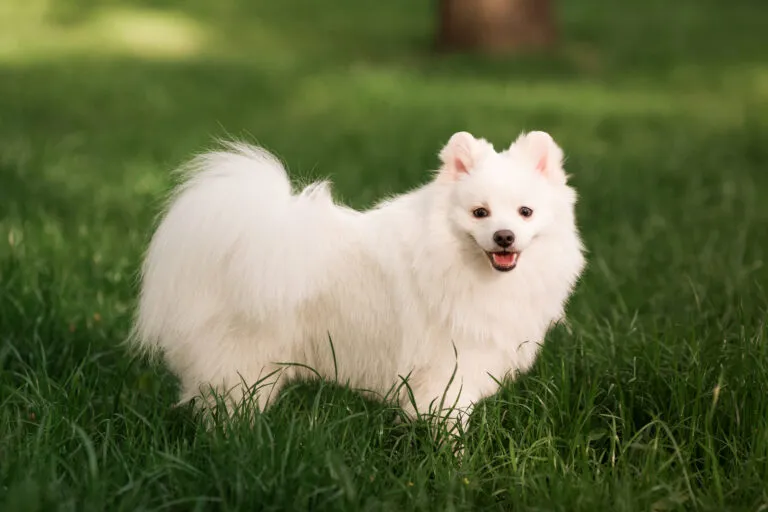
The Japanese Spitz stands out with its pure white, plush coat.
The Japanese Spitz is very well balanced and elegantly built. With a height at the withers of 30 to 38 cm for males (females are slightly smaller) and a weight of 5 to 10 kg, his proportions are very harmonious.
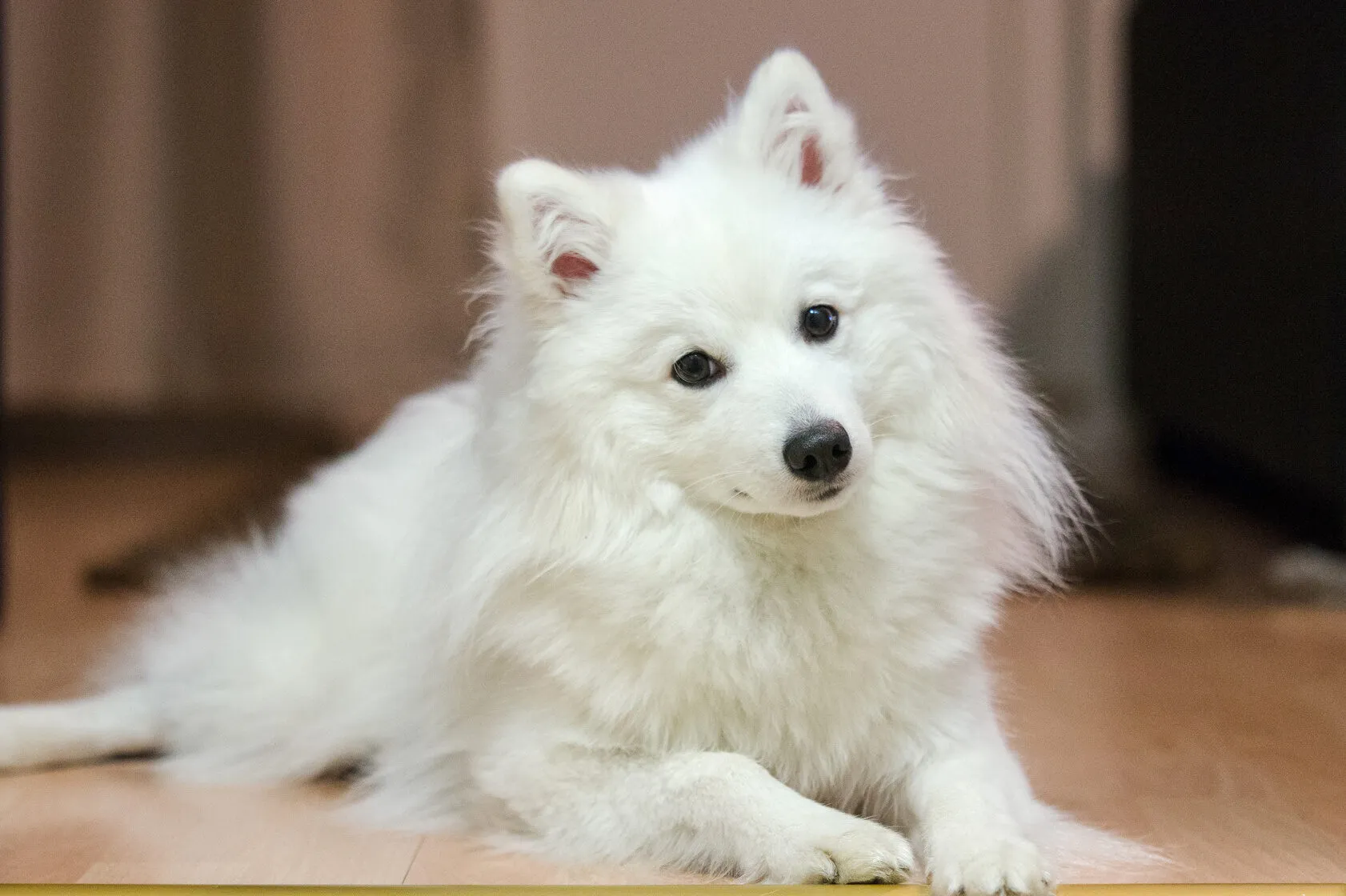
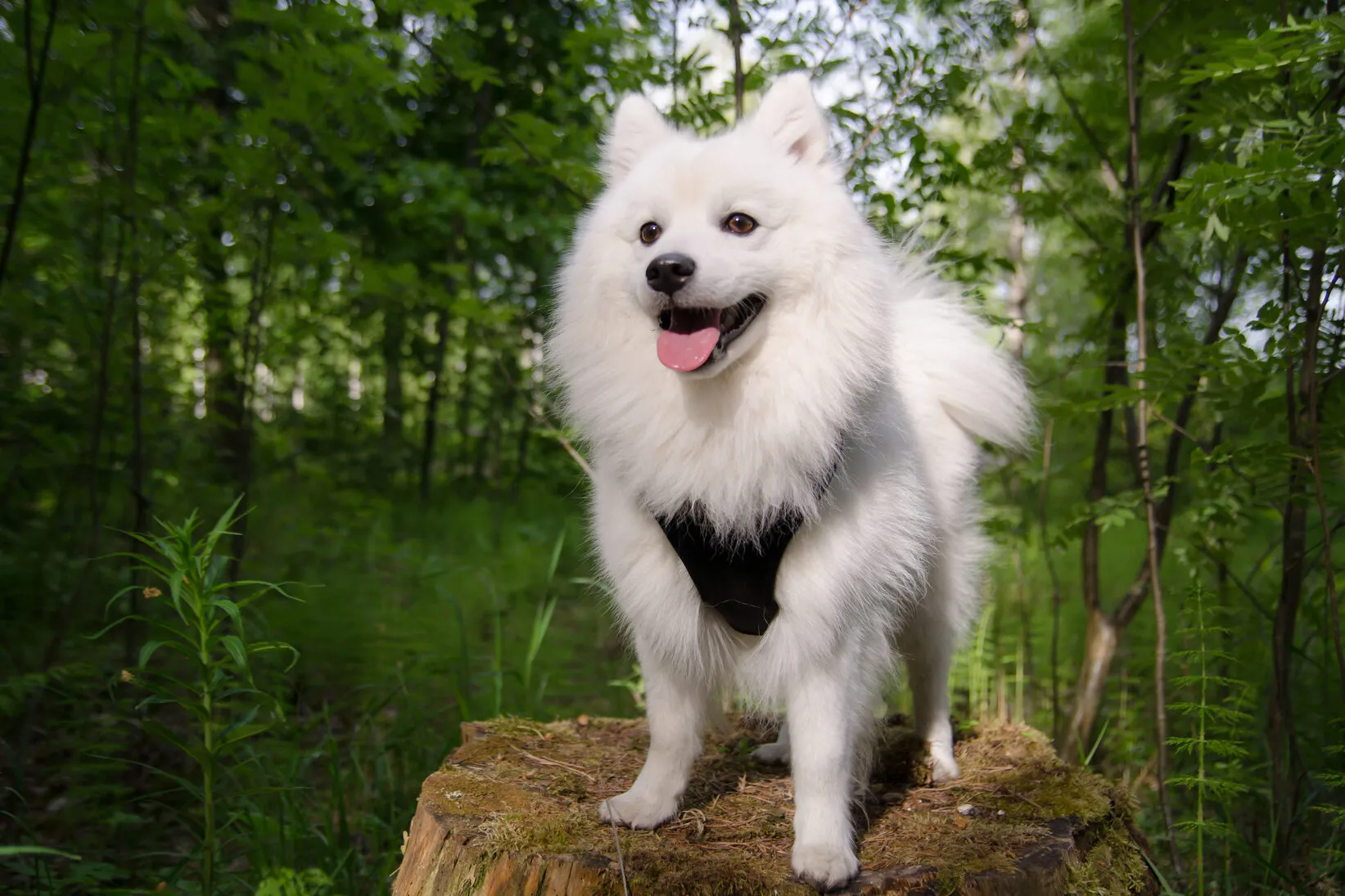
This cheerful white “ball of fluff” has an alert expression with dark, almond-shaped eyes and a cute, pointed face.
Despite his short legs, the Nihon Supittsu is very athletic and, with a body ratio of 10:11 (height at the shoulder to body length), has a strong constitution.
This clearly sets him apart from the outwardly very similar German Medium Spitz, whose build should be completely square, with a 1:1 ratio. Another difference is the coat, which, unlike that of his German relative, occurs exclusively in pure white.
The white hair is straight and stands out from the body. This makes it look very voluminous – especially straight after brushing. It gains additional density from the short and very soft undercoat, which provides the Spitz with reliable protection against wind and weather. The top coat is mostly long, forming an attractive ruff around the shoulders and chest.
The tail, which the Japanese Spitz carries over his back, is also luxuriously feathered and forms a beautiful plume. On the face, ears, front of the forelegs and below the hocks, the coat is shorter, but still very dense.
The FCI breed standard for the Japanese Spitz explicitly states that a true representative of the breed “must not be noisy”. Although, like all Spitz breeds, he is a very attentive watchdog, he doesn’t need to announce every person or dog passing his territory.
Only if he genuinely senses danger to his family, whom he adores above all else, will he hold back no longer and defend them loudly and with great courage. Thankfully, this rarely happens, making the Spitz a very pleasant and calm companion who meets strangers with healthy reserve but without excessive suspicion.
While he radiates a calm, balanced nature indoors, this little white dog really comes into his own outside. He loves romping about in the great outdoors, long walks through woods and fields, and games with his owner, where he can burn off plenty of energy.
Fast-paced dog sports, such as agility, are also great fun for this energetic four-legged friend. If walks, play and dog sports are combined with a mental challenge, the intelligent and cheerful Spitz is almost beside himself with excitement.
Even more than outdoor exercise, this Japanese pedigree dog loves his family. Ideally, he wants to be involved in everything and thoroughly enjoys being close to his human companions. However, he doesn’t cope well with long periods of being left alone, and even other dogs or pets are not enough company for this people-oriented companion dog.
His affectionate nature, combined with a quick understanding and willingness to learn, makes training very straightforward. Even people with little to no previous experience of dogs are unlikely to encounter many difficulties with this breed.
Living with young children or other pets is generally harmonious and trouble-free.
Thanks to his friendly nature and lively yet calm temperament, the Japanese Spitz is an ideal companion for anyone who has the time and enthusiasm to actively engage with a dog.
It doesn’t matter whether you’re single or have a family, live in the countryside or in the city. The key is that your circumstances allow the dog to spend most of his time close to you and that he can accompany you to sports activities, to visit friends, shopping trips or even to the office.
Their people-oriented nature and obedient character fortunately make these dogs very easy-going companions. Even their occasional crafty attempts to get their own way, which give this little dog extra charm, can be quickly managed with a bit of consistency.
 © Joonas / stock.adobe.com
Just as a healthy, balanced diet can boost your dog’s vitality, the wrong nutrition can lead to a range of illnesses. A common issue in Spitz breeds is obesity, to which the Japanese Spitz is particularly prone due to his small size.
If not addressed in time, excess weight can lead to cardiovascular problems, diabetes and joint disorders. You’ll therefore be doing both your dog and your wallet a favour by sticking to the recommended daily food amount and avoiding too many treats between meals.
Healthy dog food is primarily characterised by a high proportion of quality protein, supplemented with vegetables and possibly rice. A high grain content, on the other hand, is a sign of inferior food that can lead to digestive issues or weight gain in the long term. Likewise, no sweeteners or artificial flavour enhancers should be included in dog food.
There is now a wide range of high-quality dry and wet foods that meet these requirements and provide your dog with all essential nutrients. However, home cooking and so-called BARF, where meat and vegetables are fed raw, are also becoming increasingly popular.
If you prefer not to rely on conventional products, these methods allow you to feed your dog in a very individual and needs-based way. However, both home cooking and BARF require precise knowledge of suitable ingredients and your dog’s individual nutritional requirements.
Dental problems in particular can be prevented through regular dental care, meaning brushing your dog’s teeth at least once a week, ideally daily.
Illnesses or inflammation of the eyes, nose, ears and claws can also be detected and treated early through proper care and regular checks.
Another important aspect is the Japanese Spitz’s coat care. Despite his impressive, abundant coat, grooming is relatively low maintenance, and it is usually sufficient to thoroughly comb or brush the coat twice a week. Only during the shedding season (twice a year) does grooming increase to daily combing.
One sign of a reputable, responsible breeder is the presentation of genetic test results. The breeding dogs used should have sound genetics in order to rule out hereditary diseases from the outset. Dogs in which breed-specific hereditary conditions have occurred must be excluded from breeding for the good of the breed.
This includes a predisposition to patellar luxation (dislocation of the kneecap), which can be hereditary in many dogs, especially small breeds. Eye problems, such as distichiasis or narrow tear ducts, as well as dental issues, can also occur in the Japanese Spitz. Life expectancy is around 12 to 16 years.
The strong resemblance to the German Medium Spitz suggests that the Japanese Spitz may descend from this breed. Other cynologists, however, believe the Spitz is more likely descended from the Nordic Spitz breeds.
What is certain is that the origin of the Japanese Spitz lies not in Japan, but rather in Europe. From there, he arrived in Japan at the beginning of the 20th century with travellers.
The attractive white dog with a charming character quickly gained popularity among the Japanese population. With additional Spitz breeds from China, Canada and the USA, a distinct breeding programme was established in Japan in the 1920s.
While in Europe efforts were made to increase the size of the Spitz, resulting in the German Giant Spitz, the Japanese focused more on the original compact form. In 1948, the Japanese Kennel Club established the first breed standard. Japan was recorded as the country of origin in the standard.
The FCI, which has officially recognised the Japanese Spitz since 1964, now lists him under standard no. 162 in Group 5 (Spitz and primitive types), subsection 5 (Asian Spitz and related breeds).
In his native Japan, the Nihon Supittsu was very popular for a long time, particularly in the 1950s. Although he is still more common there than in Europe, demand for this elegant little dog is gradually shifting. While the number of newly registered puppies in Japan is declining, it is increasing in North America and Europe.
 © akvals / stock.adobe.com
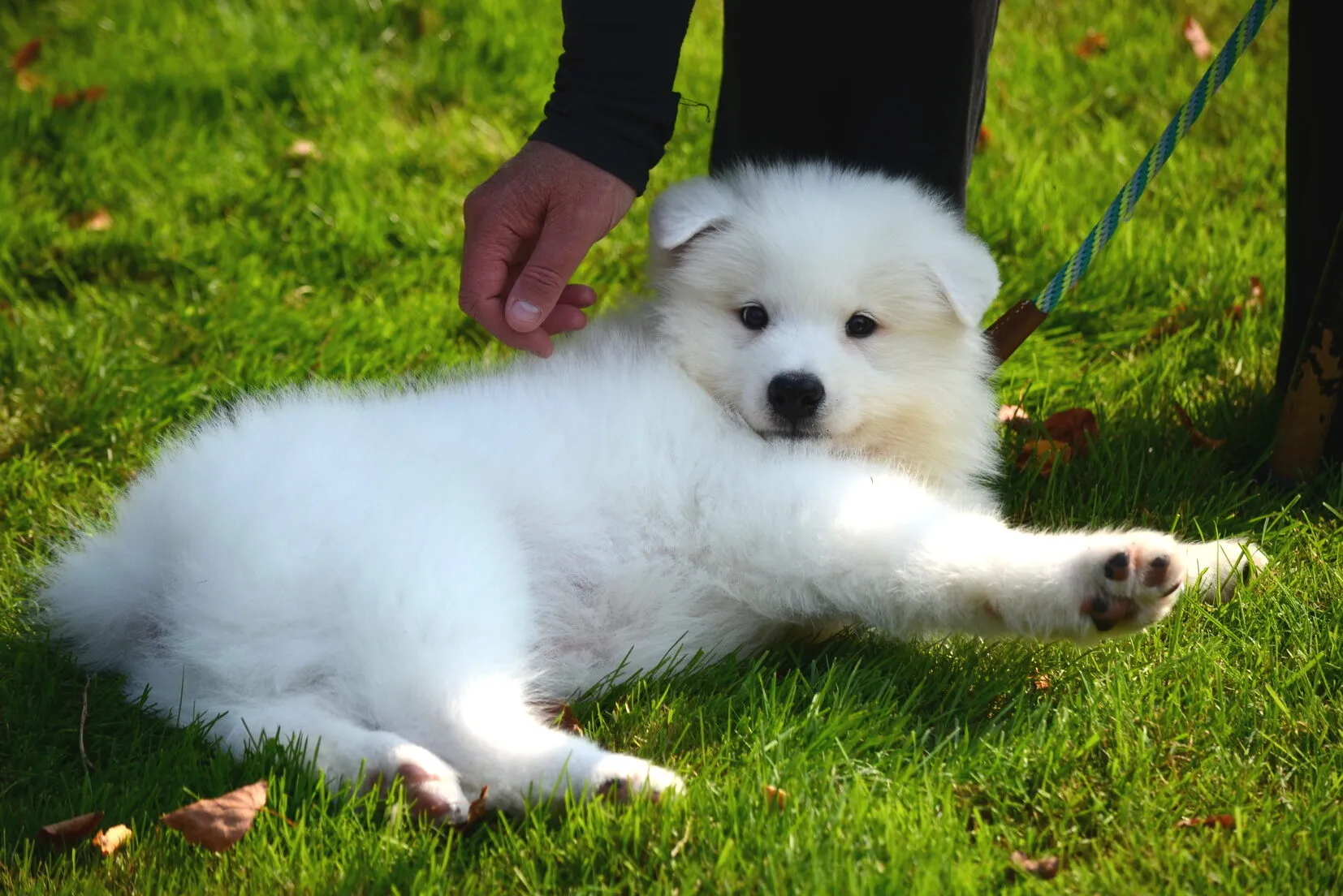
Despite growing popularity and demand in Europe and America, the Japanese Spitz is still one of the rarer dog breeds. As a result, the waiting time for a new litter from a breeder can be quite long.
If you are not set on a pedigree puppy and are also considering adopting an adult Spitz, it’s worth checking your local rescue centre as well as contacting breeders. Spitz dogs or Spitz crossbreeds regularly wait there for a loving new home. A puppy, however, should only ever be purchased from a reputable and certified breeder.
Several factors play a role when choosing a suitable breeder. It’s not just the “formalities” that need to be in order – such as papers, pedigree and purchase contract – but also personal motives that ultimately influence your decision. First and foremost, the breeder should be likeable and trustworthy – and you won’t be able to judge that from a brief email or phone call.
One or, ideally, several meetings are necessary to gain a comprehensive impression of the breeder and their dogs. Does the breeder invite you into their home? Do they willingly show you their “breeding premises”, and do the dogs live closely integrated with the breeder’s family?
The first few weeks are crucial for the socialisation of puppies, so the environment should absolutely suit the affectionate nature of the Japanese Spitz. In addition, a reputable breeder will be able to tell you a great deal about the breed and its particular traits. They will also ask about your living situation to ensure their puppy will have a good home with you.
 © Joonas / stock.adobe.com
Here you’ll find answers to commonly asked questions about this small Asian pedigree dog.
Here in the UK, the breed is known as the Japanese Spitz. In his native Japan, the little dog is called Nihon Supittsu.
As well as his need for closeness, it’s important to meet this four-legged friend’s strong need for exercise. Regular walks of at least one hour a day, plus longer hikes, are a must – whatever the weather. Dog sports are also ideal for keeping the Spitz mentally and physically stimulated.
This cute ball of fluff with a pretty face and impressive coat is enjoying growing popularity in many countries. His friendly and child-loving character, along with his lack of tendency to bark excessively or hunt, also adds to his appeal among dog lovers. Nevertheless, before buying a Japanese Spitz, you should be sure that this breed fits your lifestyle.
People who are heavily committed to their careers and therefore spend a lot of time away from home are generally not well suited to this affectionate and people-oriented dog. Japanese Spitz dogs want to spend plenty of time with their family and quickly feel neglected if they don’t receive enough attention. You should therefore have plenty of free time and ideally be able to take your dog along on many of your outings. If you’re allowed to bring your dog to the office, you’re unlikely to have any issues with this easy-going and calm companion.
| Special features: | The Japanese Spitz visually resembles the German Medium Spitz but barks significantly less. He is a popular companion and family dog. |
| Character: | playful, affectionate, obedient, fearless |
| Height at the withers: | Males: 30–38 cm Females slightly smaller |
| Weight: | not specified, approx. 5–10 kg |
| Coat: | long, dense, straight and standing off, white |
| Coat care: | low to moderate maintenance |
| Exercise: | needs sufficient activity and exercise |
| Suitable for beginners: | yes |
| Barking: | barks occasionally |
| Life expectancy: | up to approx. 16 years |
| Typical illnesses: | patellar luxation, eye diseases, dental problems |
| FCI group: | 5. Spitz and primitive types |
| Exercise requirement: | medium to high |
| Origin: | Japan |

The zooplus editorial team consists of a dedicated team of experts with many years of experience in the field of animal husbandry: Luisa with her White Swiss Shepherd Elyos, Laura, Julio, and Florian. Together with a large network of animal experts, we work to make the zooplus magazine a trusted source of information for all animal owners and lovers. Our goal is to provide exciting animal knowledge and relevant information on the proper care of pets.
Fans of the Bearded Collie agree that those who aren't familiar with this dog breed simply have to get acquainted with it. And those who have experienced how a Bearded Collie bolts across meadows with its flowing fur, how it rolls around full of energy and joy and how it attentively and observantly takes into account its owners wishes become simply addicted to this original dog breed and its unique charm.
The Irish Wolfhound is one of the largest dogs in the world. Used for hunting wolves and bears in medieval Ireland, today it is kept exclusively as a family dog. Despite its imposing size, this sighthound is very gentle and affectionate. Unfortunately, the friendly giant is also quite prone to illness and has a comparatively short life expectancy. Is an Irish Wolfhound right for me, and what does keeping one involve? You can find everything you need to know in the following article.