{"url":"https://www.zooplus.co.uk/magazine/dog/dog-health-and-care/ear-infections-in-dogs-otitis-externa","title":"Ear Infections in Dogs (Otitis Externa) ","mag_id":402378,"is_single":true,"cat_name":"Dog","sub_cat_id":143,"sub_cat_name":"Dog Health and Care","cat_id":3410}
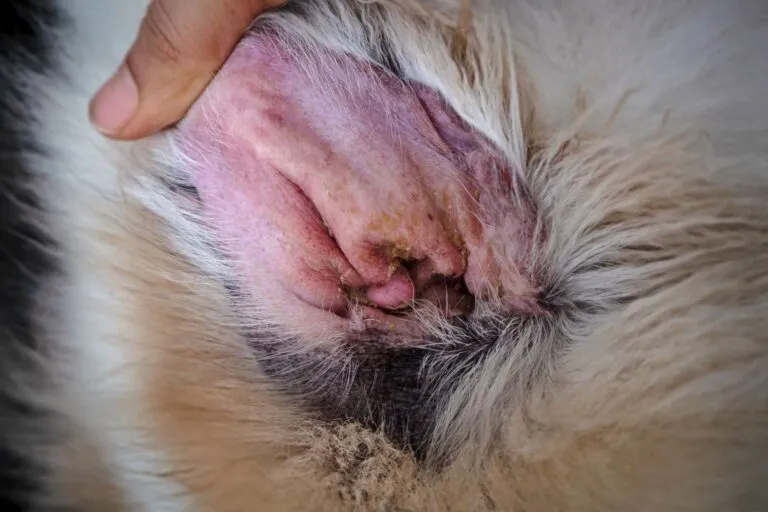
Is your dog tilting its head to one side and frequently shaking its long, floppy ears? Then, it's possible that your furry companion is suffering from an ear infection (Otitis). Here’s everything important that you need to know about ear infections in dogs.
While any dog can develop an ear infection (Otitis), those with floppy ears are at a particularly high risk of suffering from inflamed ears.
Symptoms: What Are the Signs of an Ear Infection in Dogs?
The clinical symptoms of an ear infection in dogs can vary depending on the cause and extent of the inflammation. Commonly, affected dogs show non-specific signs such as:
Diagnosis: How is an Ear Infection in Dogs Detected?
Ear infections can be of different origins, so it’s important to have your dog examined by a vet to identify the primary cause.
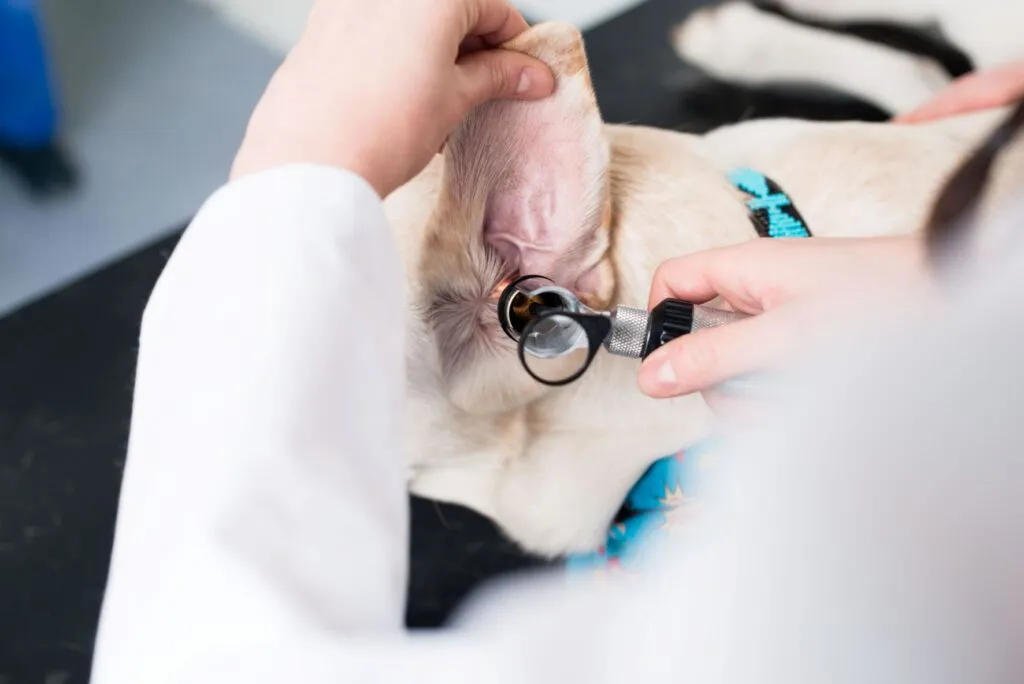
At the beginning of the examination, the vet will inspect the ear from the outside. To look inside the ear, including the eardrum, an otoscope is used.
Bacterial infections, fungal diseases (e.g., skin fungus), or the presence of mites can be ruled out by taking a swab with an ear bud. The vet then applies it to a slide and examines the extracted ear secretions under a microscope.
If there’s a suspicion that your dog could be allergic, an allergy test will also be conducted.
With an otoscope, the vet can examine the internal structures of a dog’s ear.
Treatment: How is an Ear Infection in Dogs Treated?
To rid your canine pal of an ear infection, the vet will first need to clean its ears using special ear cleaners, which are carefully massaged into the ear. Excess ear wax and potential bacteria, parasites, and the like are then removed.
For more severe cases, the vet might also prescribe anti-inflammatory medicines and, depending on the cause, antibiotics (after prior antibiograms), antifungals, or antiparasitics.
It is essential for the ear to heal that you keep it clean at home following the vet’s ear cleaning. However, do not use cotton buds, as sudden movements could cause injury.
Home Remedies for Ear Infections
Home remedies alone usually cannot relieve Otitis. Your dog will absolutely need veterinary treatment to recover and get through the day pain-free.
Nevertheless, the following home remedies can contribute to alleviating or preventing ear infections in dogs:
Salmon oil: Rich in omega-3 fatty acids, salmon oil supports your pet’s immune system and thereby reduces inflammation.
Coconut oil: Not only helpful against ticks, but when applied warm to the skin, it can also combat the itchiness of inflamed ears.
Herbal extracts or ointments from chamomile (Matricaria chamomilla L.), sage (Salvia), or marigold (Calendula officinalis) can also have a soothing effect.
You can also find special oils for your dog’s care in the zooplus online shop.
Causes: What Triggers an Ear Infection in Dogs?
Inflamed dog ears are an everyday occurrence for vets, mainly because a multitude of primary triggers can negatively impact the health of your dog’s outer ear canal.
Keratinisation disorders, such as with underactive thyroid (hypothyroidism)
Fungal infections with Malassezia
Tumors (e.g., polyps)
If your dog’s immune system is already weakened due to another underlying disease or the use of immunosuppressants (cortisone), yeast fungi can grow unchecked.
Ear Infections After Swimming
Unfortunately, unlike some other animals, dogs cannot close their ears under water. So, avid swimmers may pay for their aquatic fun with recurring ear irritations. This is because warm temperatures on summery days and moisture additionally encourage the growth of fungi and bacteria.
Particularly prone are dog breeds with hanging ears like the Basset Hound, the American, or the English Cocker Spaniel, whose ear anatomy lends itself to poor drying. But even dogs with upright ears can get an ear infection after swimming, especially if they are not allowed to shake themselves off thoroughly afterwards.
Prognosis: What Are the Healing Chances?
An Otitis externa can be very painful, but a local treatment usually proves effective.
For the treatment to be long-lasting and to avoid inflammation of the middle or inner ear canal (Otitis media and interna), you must diligently follow your vet’s instructions and regularly check your furry friend’s ears.
Prevention: How to Protect Your Dog from an Ear Infection
If your pet is a water enthusiast, always dry its ears with a towel after swimming. Also, check its ears regularly for accumulated dirt and remove it only with special ear cleaners.
Conventional soap or disinfectants can severely irritate the ears and lead to more serious infections. Therefore, it’s best to steer clear of such products.
Important Note: The content provided for informational purposes only and is not intended to replace professional veterinary advice, diagnosis or treatment. If you have any questions or concerns about your pet's health, please always consult a licensed veterinarian.
At the Justus-Liebig-University of Giessen I was extensively trained as a veterinarian and was able to gain experience in various fields such as small animal, large animal and exotic animal medicine as well as pharmacology, pathology and food hygiene.
Since then, I have been working not only as a veterinary author, but also on my scientifically driven dissertation. My goal is to better protect animals from pathogenic bacterial organisms in the future.
Besides my veterinary knowledge, I also share my own experiences as a happy dog owner and can thus understand and enlighten fears and problems as well as other important questions about animal health.
When does a female dog’s first season begin? How often and for how long is a female dog in season? And what symptoms does a female dog in season show? Find out everything you need to know about these “hot days” and how you and your dog can get through the season calmly and stress-free in the following article.
16 February 2024 |Leishmaniasis is an infectious disease transmitted by sandflies and can often prove fatal for dogs. Find out how you can protect your dog and how to recognise and treat the disease should it emerge.
Neutering has traditionally been a standard veterinary practice, but is it universally recommended? What distinguishes neutering from sterilisation and what expenses should a dog owner anticipate? Here, you can discover all the essential information concerning the advantages and disadvantages of neutering your dog.