{"url":"https://www.zooplus.co.uk/magazine/dog/dog-health-and-care/lumps-and-bumps-lipomas-in-dogs","title":"Lumps and Bumps: Lipomas in Dogs ","mag_id":402457,"is_single":true,"cat_name":"Dog","sub_cat_id":143,"sub_cat_name":"Dog Health and Care","cat_id":3410}
Have you discovered a lump on your four-legged friend's skin? It could well be a fatty tumor, commonly known as a lipoma. In this article, you'll learn all about lipomas in dogs and how dangerous they can be for your beloved pet.
A lipoma in dogs is generally a benign tumor that, in most cases, is harmless. However, there can be exceptionally large lipomas or malignant forms like liposarcomas which significantly worsen the prognosis. Thankfully, liposarcomas are very rare in dogs.
Symptoms: What signs can a lipoma cause in a dog?
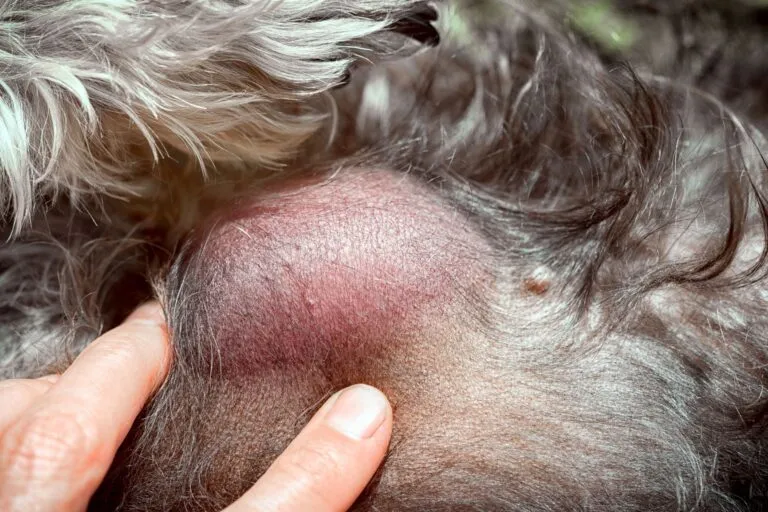
Until they reach a certain size, lipomas may not cause any noticeable symptoms. They are usually first detected when you stroke your dog, feeling a mass increase under the skin that can lightly be moved back and forth. Unlike an infection, the lump and surrounding tissue are neither warm nor painful.
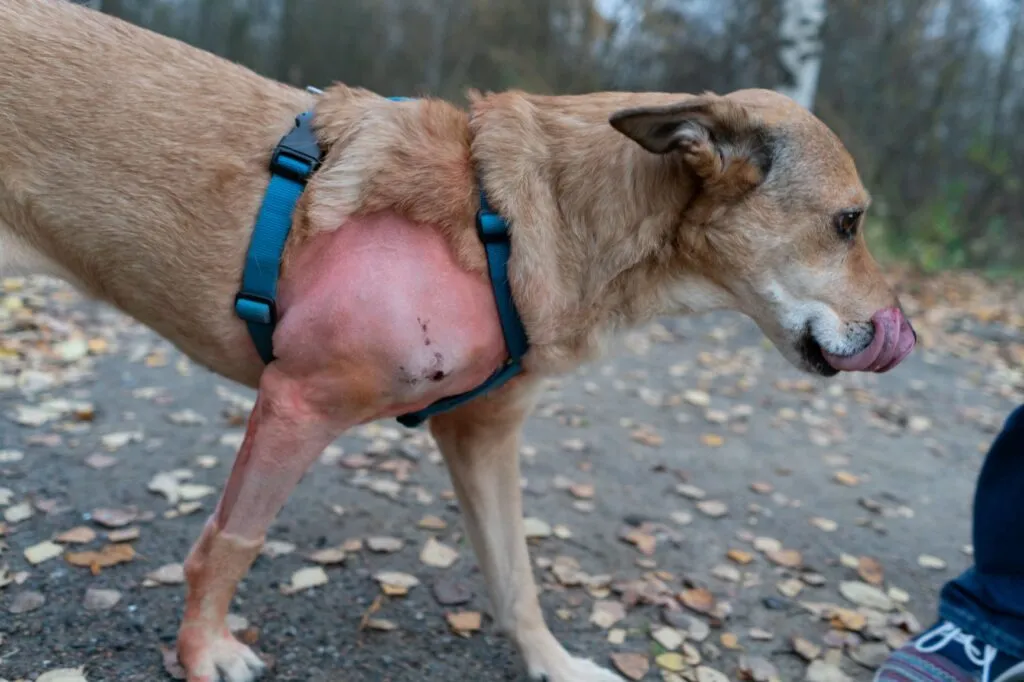
Should the lipoma grow very large, it could restrict your dog’s movement, particularly if the tumor is near joints or significant muscle groups.
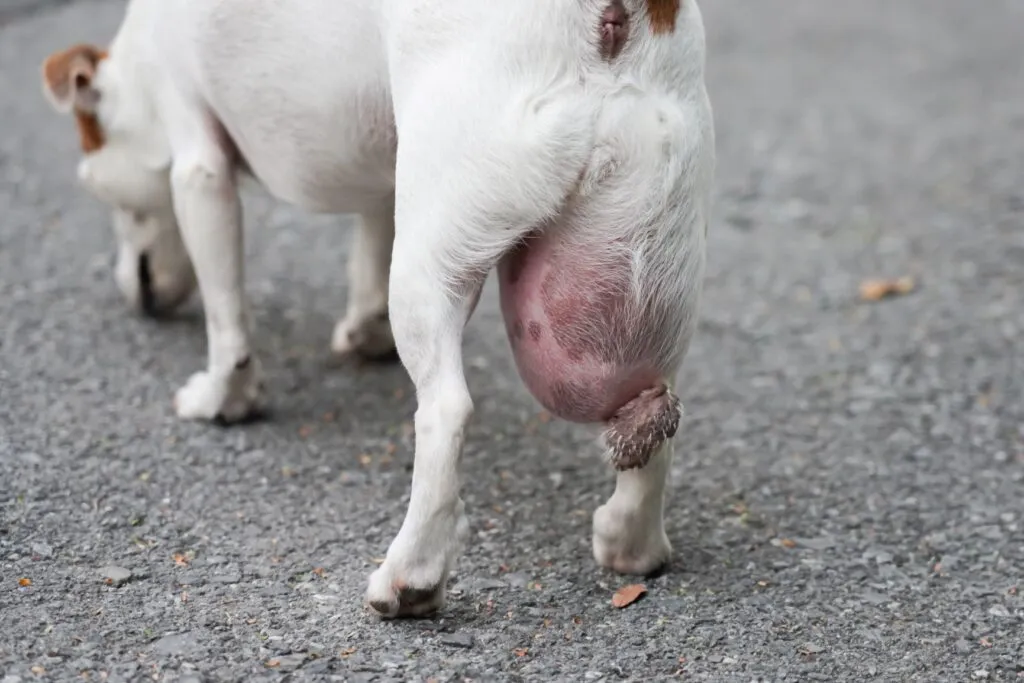
A very large tumor on the thigh of a Jack Russell Terrier.
The Infiltrative Lipoma
A particular version of a lipoma in dogs is the infiltrative lipoma. As the name suggests, this tumor grows invasively and is merged with the surrounding healthy tissue. It typically occurs in the area of the thigh, which then increases in size.
Diagnosis: How is a lipoma in a dog confirmed?
If you have found a lump on your dog, it is vital to have it examined by a veterinarian. This is crucial to rule out any malignant tumors.
Initially, the vet will measure your dog’s vital parameters (such as pulse rate, breathing rate, condition of the mucous membranes, body temperature) and gently palpate the lump.
Then, they proceed to take a tissue sample using fine-needle aspiration biopsy, which a pathologist will investigate under a microscope. Since the needle is very thin, the procedure causes little to no pain to your feline friend.
On rarer occasions, a larger sample is required. In this case, the vet uses a core needle, and due to the associated discomfort, will sedate your dog beforehand.
The healing wound of a dog after the surgical removal of a lipoma.
Therapy: Can a fatty tumor be treated?
Treating a lipoma requires surgical intervention. Unlike infiltrative lipomas or many malignant tumors, vets can often remove lipomas from the subcutaneous tissue without complications.
Under anesthesia, the vet will shave and cleanse the skin before making an incision with a scalpel.
If your dog has a malignant liposarcoma or an infiltrative lipoma, additional treatments such as radiation therapy or chemotherapy may be necessary instead of, or in addition to, surgery.
Causes: How does a lipoma develop in a dog?
A lipoma is a benign tumor made of mature body fat. It’s essentially a fatty growth.
Most commonly, lipomas develop within the subcutaneous layer but they can also be found within the muscle tissue or the body fat of internal organs. Frequently, not just one but several lumps appear, which vets refer to as multiple lipomas.
The exact cause of lipomas in dogs remains unknown, but researchers debate whether the condition could be inheritable. Moreover, it’s observed that middle-aged and older dogs of both genders are more likely to develop lipomas than younger pups.
Important Note: The content provided for informational purposes only and is not intended to replace professional veterinary advice, diagnosis or treatment. If you have any questions or concerns about your pet's health, please always consult a licensed veterinarian.
At the Justus-Liebig-University of Giessen I was extensively trained as a veterinarian and was able to gain experience in various fields such as small animal, large animal and exotic animal medicine as well as pharmacology, pathology and food hygiene.
Since then, I have been working not only as a veterinary author, but also on my scientifically driven dissertation. My goal is to better protect animals from pathogenic bacterial organisms in the future.
Besides my veterinary knowledge, I also share my own experiences as a happy dog owner and can thus understand and enlighten fears and problems as well as other important questions about animal health.
When does a female dog’s first season begin? How often and for how long is a female dog in season? And what symptoms does a female dog in season show? Find out everything you need to know about these “hot days” and how you and your dog can get through the season calmly and stress-free in the following article.
16 February 2024 |Leishmaniasis is an infectious disease transmitted by sandflies and can often prove fatal for dogs. Find out how you can protect your dog and how to recognise and treat the disease should it emerge.
Neutering has traditionally been a standard veterinary practice, but is it universally recommended? What distinguishes neutering from sterilisation and what expenses should a dog owner anticipate? Here, you can discover all the essential information concerning the advantages and disadvantages of neutering your dog.