{"url":"https://www.zooplus.co.uk/magazine/dog/dog-health-and-care/cooling-down-for-dogs-10-tips","title":"Keeping Dogs Cool in Summer: The 10 Best Tips","mag_id":177783,"is_single":true,"cat_name":"Dog","sub_cat_id":143,"sub_cat_name":"Dog Health and Care","cat_id":3410}
Summer heat isn’t just challenging for us humans. Dogs feel the effects of hot summer days too, and that’s when they need help to cool down. We’ll share the best tips on how to keep your dog cool in summer and enjoy the warmer months together.
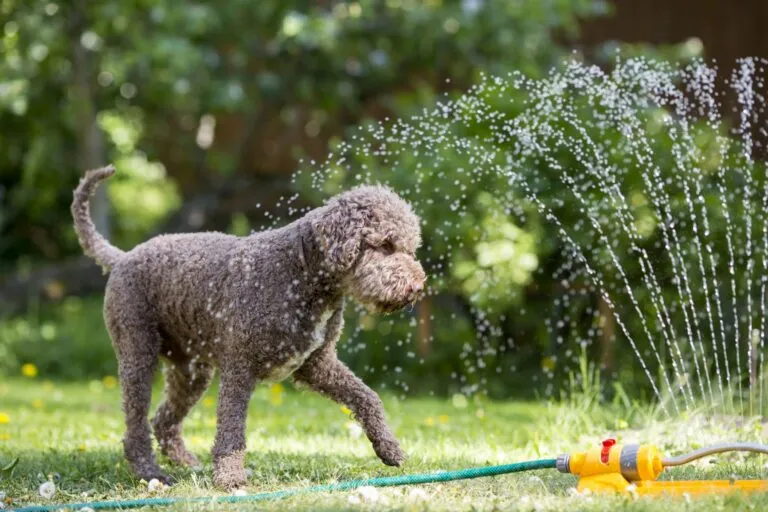
In very hot weather, dogs need to be able to cool down. A great way to help them do this is by using a lawn sprinkler in the garden.
How to Keep Dogs Cool in Summer: 10 Tips
Unlike us, dogs can only sweat through their paw pads. As this isn’t enough to regulate their entire body temperature, they also release excess heat by panting. In extreme heat, however, even this may not be sufficient. We’ve put together 10 tips to help make summer more comfortable for your dog:
1. Create a Cool Retreat
Our four-legged friends need plenty of opportunities to shelter from the sun and avoid heatstroke. In your garden or on the balcony, for example, you can put up a parasol. Dogs also enjoy cooling off under trees or bushes.
Dark flooring exposed to the sun can heat up intensely, so cover it with a light-coloured blanket or an old towel to protect your dog. On particularly hot days, you can dampen it as well. Another way to provide your dog with a cool surface to rest on is with cooling mats. These are usually filled with gel or water and can be chilled in the freezer.
To stop your home from heating up, it’s also a good idea to shade windows with curtains or blinds early in the morning. At night, you can let the warm air out again by opening windows and doors.
2. Summer Means Ice Treats
Everyone enjoys a refreshing, tasty ice lolly in hot weather, and that goes for our loyal companions too. Dog-friendly ice cream offers a delicious way to cool your dog down in no time. You only need a few ingredients and, after a few hours in the freezer, for example in an ice cube tray, the treats are ready. There are no limits to your creativity.
Even in mild temperatures, cars can turn into dangerously hot chambers within minutes. Once it reaches a certain temperature, open windows no longer provide enough air circulation.
The risk of overheating and life-threatening heatstroke is therefore particularly high in summer. To protect our dogs from this danger, it’s best to leave them at home in a cool, shaded place while you pop to the shops or fill up with petrol, whenever possible.
4. Keep Your Dog Hydrated in Summer: Plenty of Water!
When panting, large amounts of air pass over the mucous membranes. This causes fluid to evaporate, which helps cool your dog down. However, the more they pant, the more fluids they lose.
In very hot weather, it’s therefore even more important than usual to make sure your dog drinks enough. To encourage your four-legged friend to take in plenty of fresh water, try the following tips:
Place several water bowls around your flat or house.
Actively encourage your dog to drink by offering water or showing them the bowl.
Many dogs prefer drinking water from the garden or even unsalted broth.
A dog’s daily water requirement depends on their body weight, activity level and diet. Dogs fed dry food need to drink more water.
However, you can cover part of their water needs through their food. If your furry friend enjoys wet food, you can mix it with dry food or replace it entirely during the summer months.
6. Cool Your Dog Down with a Swim
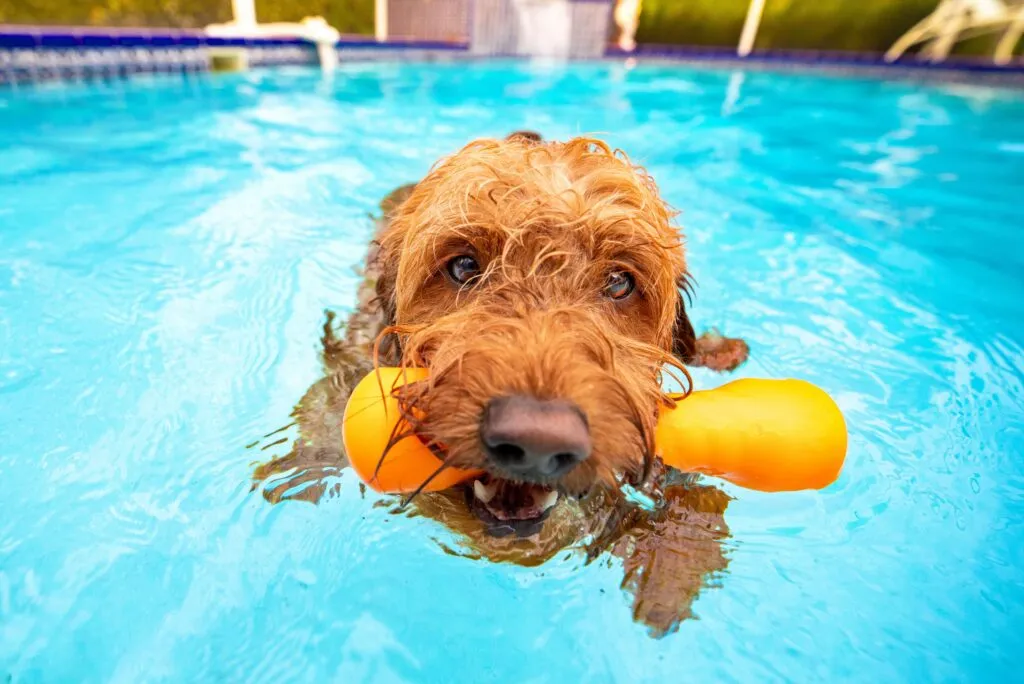
Swimming is a simple and effective way for your dog to cool off in hot weather. If there’s no lake or stream nearby, you can still wet your dog’s coat in other ways.
Dogs especially appreciate having their own paddling pool in summer, or at least a small tub. With the right toys, you can also encourage your pet to enjoy a little splash. Lawn sprinklers or garden hoses are popular with many dogs for play and cooling off too.
However, when spending time by the water, make sure your dog doesn’t stay in for too long. Swallowing too much water increases the risk of water intoxication. Early signs include restlessness, vomiting and coordination problems.
Swimming is one of the best ways to cool dogs down effectively in summer.
7. Protect Your Dog from Cystitis
Cooling down on hot days is important, but it’s possible to overdo it. Very cold floors or water can lead to cystitis in dogs. Typical symptoms include frequent urination (polyuria) or pain when urinating (stranguria).
Always give your dog the chance to dry off on a towel. At the same time, check the temperature of cooling mats or cover them with a towel.
8. Adjust Walks to the Time of Day
Midday walks are usually no fun for dogs in summer. The tarmac becomes scorching hot and the sun beats down on their thick coats.
That’s why it’s best to head out during the cooler morning or evening hours on hot summer days. In most cases, shorter routes are enough – especially in shady woodland or parks.
9. Keep Your Dog Cool with the Right Coat Care
Snip, snip – off comes the coat? Many dog breeds have very long fur. It’s easy for us to assume they must be far too hot underneath. But will reaching for the clippers really help?
In fact, a dog’s thick coat not only keeps them warm but also helps keep them cool. As water evaporates from the fur, it creates a cooling effect that provides pleasant relief for heavily coated dogs. So you shouldn’t automatically trim every dog’s coat in summer – it very much depends on the breed.
If you’re unsure, you can always seek advice from your vet or a professional dog groomer.
10. Protect Your Dog from Parasites
Admittedly, our final tip isn’t directly about cooling your dog down. However, parasites are a key concern in summer. Green grass and warm temperatures create ideal conditions for ticks and mites. Protect your dog from serious infectious diseases or allergic reactions by starting parasite prevention in spring.
Common options include pyrethroid-impregnated flea and tick collars, spot-on treatments applied to the skin, or chewable tablets. All three product types contain antiparasitic agents, which differ in how long they work and the range of parasites they cover.
Our infographic summarises the five best tips for you once again:
Conclusion: Making Summer with Your Dog Unforgettable
Summer is the perfect time to create unforgettable outdoor moments with your four-legged friend. Just remember that extreme heat can be tough on your dog too. By paying attention to their needs and keeping them well protected, nothing will stand in the way of a wonderful summer together.
Important Note: The content provided for informational purposes only and is not intended to replace professional veterinary advice, diagnosis or treatment. If you have any questions or concerns about your pet's health, please always consult a licensed veterinarian.
zooplus Editorial Team
The zooplus editorial team consists of a dedicated team of experts with many years of experience in the field of animal husbandry: Luisa with her White Swiss Shepherd Elyos, Laura, Julio, and Florian. Together with a large network of animal experts, we work to make the zooplus magazine a trusted source of information for all animal owners and lovers. Our goal is to provide exciting animal knowledge and relevant information on the proper care of pets.
When does a female dog’s first season begin? How often and for how long is a female dog in season? And what symptoms does a female dog in season show? Find out everything you need to know about these “hot days” and how you and your dog can get through the season calmly and stress-free in the following article.
16 February 2024 |Leishmaniasis is an infectious disease transmitted by sandflies and can often prove fatal for dogs. Find out how you can protect your dog and how to recognise and treat the disease should it emerge.
Neutering has traditionally been a standard veterinary practice, but is it universally recommended? What distinguishes neutering from sterilisation and what expenses should a dog owner anticipate? Here, you can discover all the essential information concerning the advantages and disadvantages of neutering your dog.