{"url":"https://www.zooplus.co.uk/magazine/dog/dog-health-and-care/conjunctivitis-in-dogs","title":"Conjunctivitis in Dogs (Pink Eye): Causes, Symptoms, and Treatment","mag_id":399807,"is_single":true,"cat_name":"Dog","sub_cat_id":143,"sub_cat_name":"Dog Health and Care","cat_id":3410}
Many dog owners have experienced it – their beloved four-legged friend suddenly has swollen, watery eyes. Conjunctivitis is one of the most common conditions affecting the eyesin dogs. In this article, you’ll find all the important information about the causes, diagnosis, and treatment of this condition.
Strictly speaking, conjunctivitis in dogs is not dangerous. However, the condition can cause significant pain and other symptoms, which are naturally distressing for your dog. In the worst case, if left untreated, conjunctivitis can eventually lead to blindness in dogs.
Causes: What Leads to Conjunctivitis?
There are numerous different triggers for conjunctivitis in dogs. It’s important to note: in most cases, conjunctivitis is not an independent disease. Much more often, it is a result of another condition.
Common Cause: Changes to the Eyelid
Changes to the eyelids often cause conjunctivitis in dogs. This can be due to either a lid opening that is too small or too large or an eyelid that turns inwards or outwards (entropion/ectropion).
Also, hairs growing on the usually hairless edge of the eyelid (distichiasis, trichiasis) can irritate the eye and trigger conjunctivitis.
What Else Can Cause Conjunctivitis in Dogs?
Other possible triggers for conjunctivitis include:
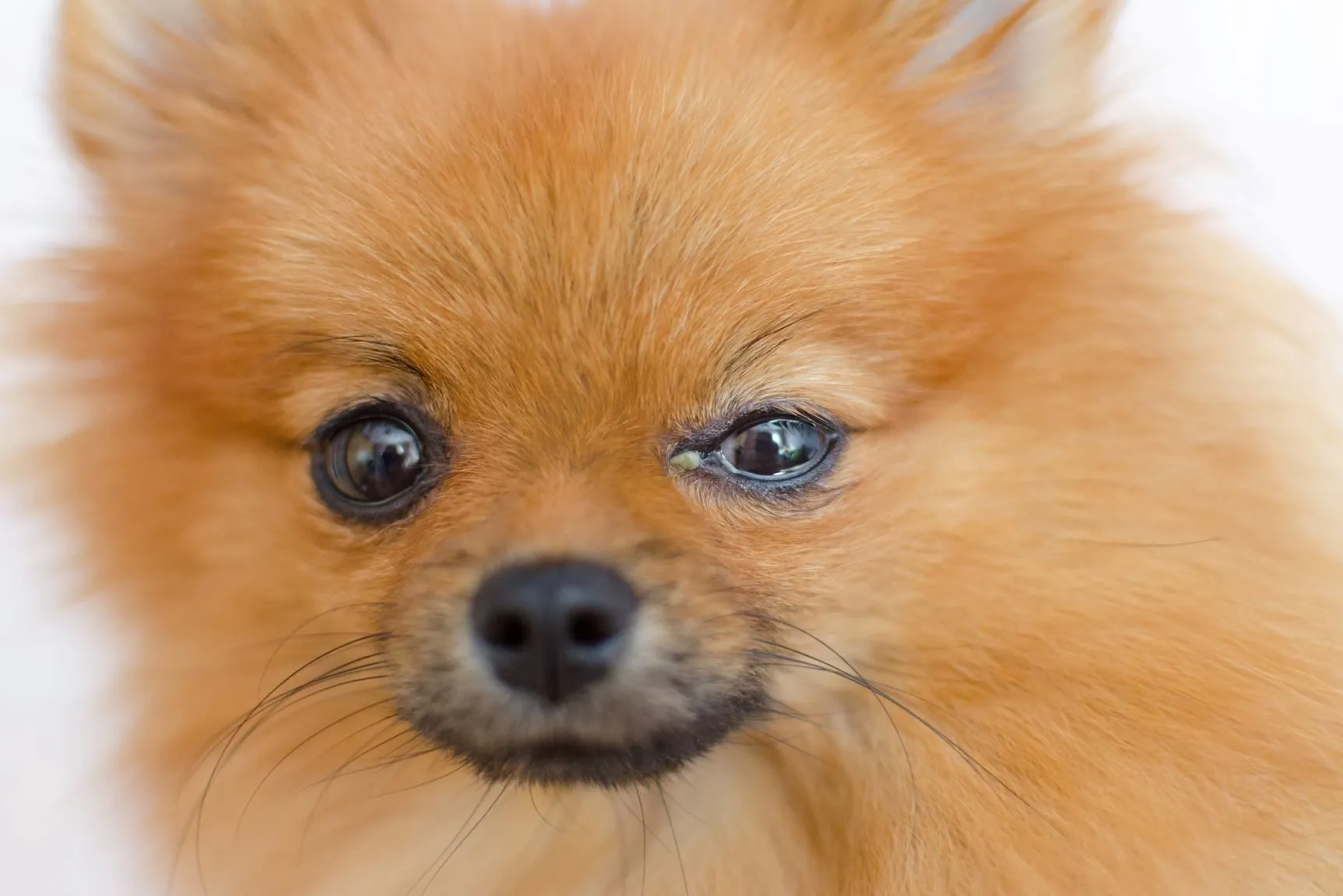
Eye discharge, swelling, and squinting are typical symptoms.
Diagnosis: How Can Conjunctivitis in Dogs be Detected?
What should you do if you suspect your dog has conjunctivitis? If you notice one or more of the symptoms mentioned above in your dog, you should definitely take them to your vet. The vet will usually carry out several examinations to get to the bottom of the cause of the conjunctivitis.
First, the vet will thoroughly examine the eyes. They will assess the position of the eyelids and look for abnormalities. The vet will also check for foreign bodies. In addition, the severity of the symptoms can already provide clues about the cause and duration of the inflammation.
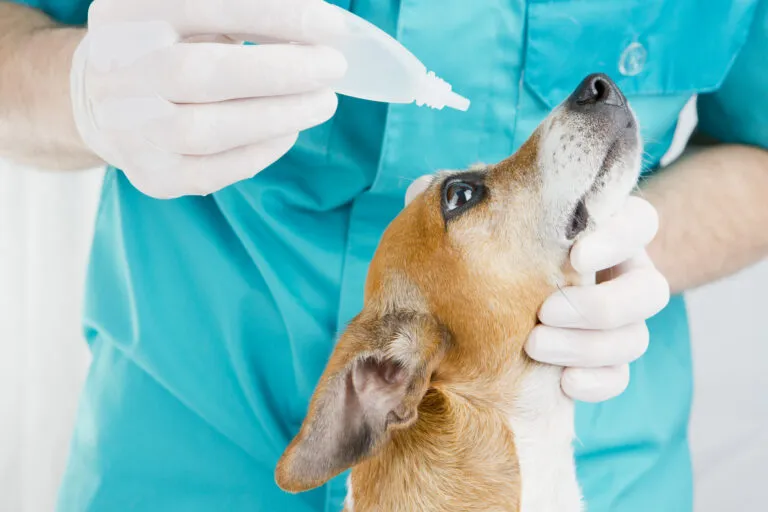
Which Eye Drops Does the Vet Use?
By applying fluorescein drops, a greenish dye, the vet gains two important pieces of information. On the one hand, the green dye accumulates at the site of any corneal damage. On the other hand, the greenish colour should appear at the dog’s nostrils shortly after application. If the nasolacrimal duct is clear, the tear fluid can drain away freely.
Finally, the so-called Schirmer’s test is used to assess whether the eye is producing enough tear fluid.
Treatment: How do I Treat Conjunctivitis in Dogs?
Treatment for conjunctivitis in dogs depends on the underlying cause. In cases where the conjunctiva is irritated by dust or similar, daily rinsing of the eye may be sufficient.
What Helps Immediately with Conjunctivitis?
A foreign body should be carefully and completely removed. After removal, the use of anti-inflammatory eye drops or an eye ointment may be necessary.
If a bacterial infection is the cause of your dog’s conjunctivitis, the vet will prescribe antibiotic medication for the eyes. For fungal infections, antifungal agents are available. For parasites, such as Thelazia, antiparasitic treatments are used.
In contrast, the vet will remove eyelid deformities or irritating hairs on the eyelids surgically.
Which Ointment Can be Used for Dogs?
Follicular conjunctivitis in young dogs can be treated with a suitable eye ointment during acute inflammation. Your vet will advise you on this. In most cases, this type of inflammation disappears once the dog is fully grown. However, keratoconjunctivitis sicca usually requires more complex and long-term treatment.
Home Remedies: What Can I Do for Conjunctivitis in My Dog?
If your dog has conjunctivitis, the underlying cause should first be clarified by a professional. In addition to the treatment prescribed by your vet, you can use the following home remedies as support.
Can I Use Bepanthen Eye Ointment on Dogs?
Bepanthen eye ointment also soothes irritated conjunctiva and relieves pain
regular cleaning of the eye with clean, boiled water and a lint-free cloth
Euphrasia eye drops
Compresses with aloe vera gel to cool the eyes
Important: Please do not use tinctures or teas made from chamomile under any circumstances to clean your dog’s eyes. These can irritate the eyes and may even worsen the inflammation.
Transmission: Is Conjunctivitis in Dogs Contagious to Humans?
If conjunctivitis in dogs is caused by pathogens such as bacteria, viruses or fungi, it can indeed be contagious – both to other pets in the household and to humans. The risk of transmission is highest with bacterial conjunctivitis.
How to Protect Yourself from Infection
To protect yourself from infection, you should follow strict hygiene measures when treating your pet. Wash your hands thoroughly before and after contact with the infected eye and wear disposable medical gloves.
Other forms of conjunctivitis, such as those caused by eyelid changes or a foreign body, are not contagious.
Prognosis: Is Conjunctivitis in Dogs Curable?
How long conjunctivitis lasts depends, among other things, on the cause. Acute bacterial infections usually heal completely within one to two weeks with consistent treatment. Initial improvement in symptoms often occurs after just a few days. Chronic forms of conjunctivitis, on the other hand, must be treated over a longer period or may require surgery.
In general, it can be said: the chances of recovery from conjunctivitis are generally good, provided the problem is recognised and treated early. Serious complications and long-term effects up to and including blindness can occur if conjunctivitis is left untreated.
Prevention: How Can I Prevent Conjunctivitis in My Dog?
The eyes are among the most sensitive areas in dogs. Check your dog’s eyes once a day. This way, you can spot possible irritations, foreign bodies or injuries to the eyes early on.
Avoid draughts, as these can dry out the eyes and lead to inflammation. Eye secretions or any dirt should be regularly removed with a damp cleaning cloth.
Conclusion: Conjunctivitis in Dogs – What Can I Do?
If you notice that your dog has watery, red and/or swollen eyes, you should take them to the vet. The vet can determine the cause of these symptoms and recommend suitable treatment. If conjunctivitis does not improve even with home remedies such as eye ointment or drops, it’s time for a visit to the practice.
Summary: Key facts about conjunctivitis in dogs
Description:
Conjunctivitis in dogs can cause significant pain and, if left untreated, may lead to blindness.
Course of the disease:
Can be acute or chronic
Symptoms:
Eye discharge, pain (blinking, rubbing the eyes), redness and swelling of the conjunctiva
Occurrence:
All dogs
Causes:
Several possible causes: eyelid disorders (entropion or ectropion), distichiasis, trichiasis, allergy, trauma, infections, keratoconjunctivitis sicca (insufficient tear production)
Treatment:
Depends on the cause (e.g. rinsing the eye, anti-inflammatory medication, antibiotics, surgery)
Important Note: The content provided for informational purposes only and is not intended to replace professional veterinary advice, diagnosis or treatment. If you have any questions or concerns about your pet's health, please always consult a licensed veterinarian.
zooplus Editorial Team
The zooplus editorial team consists of a dedicated team of experts with many years of experience in the field of animal husbandry: Luisa with her White Swiss Shepherd Elyos, Laura, Julio, and Florian. Together with a large network of animal experts, we work to make the zooplus magazine a trusted source of information for all animal owners and lovers. Our goal is to provide exciting animal knowledge and relevant information on the proper care of pets.
When does a female dog’s first season begin? How often and for how long is a female dog in season? And what symptoms does a female dog in season show? Find out everything you need to know about these “hot days” and how you and your dog can get through the season calmly and stress-free in the following article.
16 February 2024 |Leishmaniasis is an infectious disease transmitted by sandflies and can often prove fatal for dogs. Find out how you can protect your dog and how to recognise and treat the disease should it emerge.
Neutering has traditionally been a standard veterinary practice, but is it universally recommended? What distinguishes neutering from sterilisation and what expenses should a dog owner anticipate? Here, you can discover all the essential information concerning the advantages and disadvantages of neutering your dog.