

11 min
2.6k
Medium Size Poodle
The Šarplaninac, also known as the Yugoslavian Shepherd Dog, is a livestock guardian dog originating from Serbia and North Macedonia. It has a very strong protective instinct and is highly territorial. As a fearless protector of livestock herds, a dedicated guard dog and as a service dog for the police and military, it delivers impressive performance.
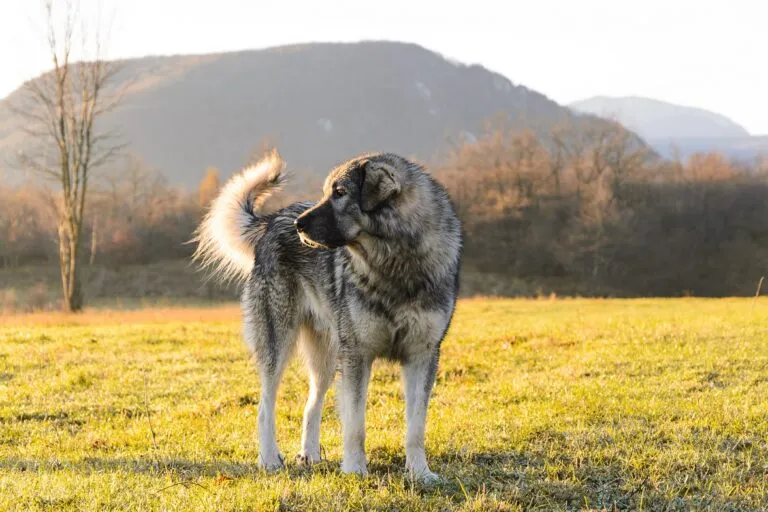
© ognjeno / stock.adobe.com
The Šarplaninac is an imposing livestock guardian dog that prefers to spend plenty of time outdoors.
The Šarplaninac is a large, imposing dog. The average height at the withers is 62 centimetres for males and 58 centimetres for females. However, there is a tendency towards larger dogs, which can reach a shoulder height of up to 70 centimetres.
Male dogs under 56 centimetres and females under 54 centimetres are not approved for breeding. Males weigh between 35 and 45 kilograms, while females weigh between 30 and 40 kilograms.
The strong, well-proportioned physique of the Yugoslavian Shepherd Dog has a sturdy bone structure. Its head is broad and the muzzle straight. It looks out at the world with almond-shaped brown eyes.
The small, V-shaped drop ears are covered with short hair. Its long, sabre-shaped tail reaches at least to the hock joint. In appearance, the Šarplaninac strongly resembles the Karst Shepherd Dog, to which it is closely related.
The Šarplaninac’s long, thick coat has plenty of undercoat. Its coat can be solid white, tan or straw yellow, grey, brown or almost black, although iron grey and dark grey are preferred.
The base colour of the coat is most pronounced around the head, neck and body, becoming lighter on the lower parts of the legs.
However, the coat should never appear multi-coloured. Shading and a more or less pronounced mask are possible.
The Šarplaninac, formerly also known as the Illyrian Shepherd Dog, is a typical livestock guardian dog. Its original task was to protect sheep and cattle herds from wolves, bears and livestock thieves. As a result, it is attentive, fearless and eager to work.
The Yugoslavian Shepherd Dog has a pronounced protective instinct and confidently defends the livestock entrusted to it, as well as the home and property. If necessary, it will risk its own life in the process.
In its original homeland, the Šar Planina mountain range from which it takes its name, it was often left entirely to its own devices for days or even weeks. As a result, this independent four-legged companion learned to make its own decisions.
Due to its past as an independently working livestock guardian, the Šarplaninac has developed a strong stubborn streak. It tends to question its owner’s instructions and commands, which makes training more difficult.
For this reason, this large, powerful dog belongs in the hands of experienced owners. It is not suitable for beginners. Its training requires patience, calmness and consistency, but should be carried out without harshness and with plenty of sensitivity. Leniency and unclear role allocation can have a negative impact on training success.
If the Yugoslavian Shepherd Dog gets the right kind of activity for the breed, it shows its loyal and gentle side within the family. It usually gets on well with older children if it was properly socialised as a puppy.
Nevertheless, it is important to teach children early on how to interact respectfully with this strong four-legged companion. It is not a big cuddly toy. The Šarplaninac often accepts and guards cats, chickens and small pets living in the household, whereas it likes to bark loudly at unfamiliar animals and people.
It is in the nature of the self-confident Šarplaninac to want to drive away intruders. It is always ready to defend its territory and is therefore extremely suspicious of strangers.
As an owner, you should be aware that a loudly barking Šarplaninac can certainly appear intimidating to others.
Although this four-legged companion is dominant, it is not excessively aggressive. It normally gives its “opponents” enough time to leave its sphere of influence before taking action.
The “Šarpla” can be hot-tempered, especially towards dogs of the same sex, which is why other dogs should not live in its home. Care is needed during encounters with other dogs on walks.
In some countries, the breed appears on the list of potentially dangerous dogs, for example in the Swiss canton of Ticino and in Denmark. Depending on where you live, keeping, breeding or importing the breed may therefore require a permit or even be prohibited.
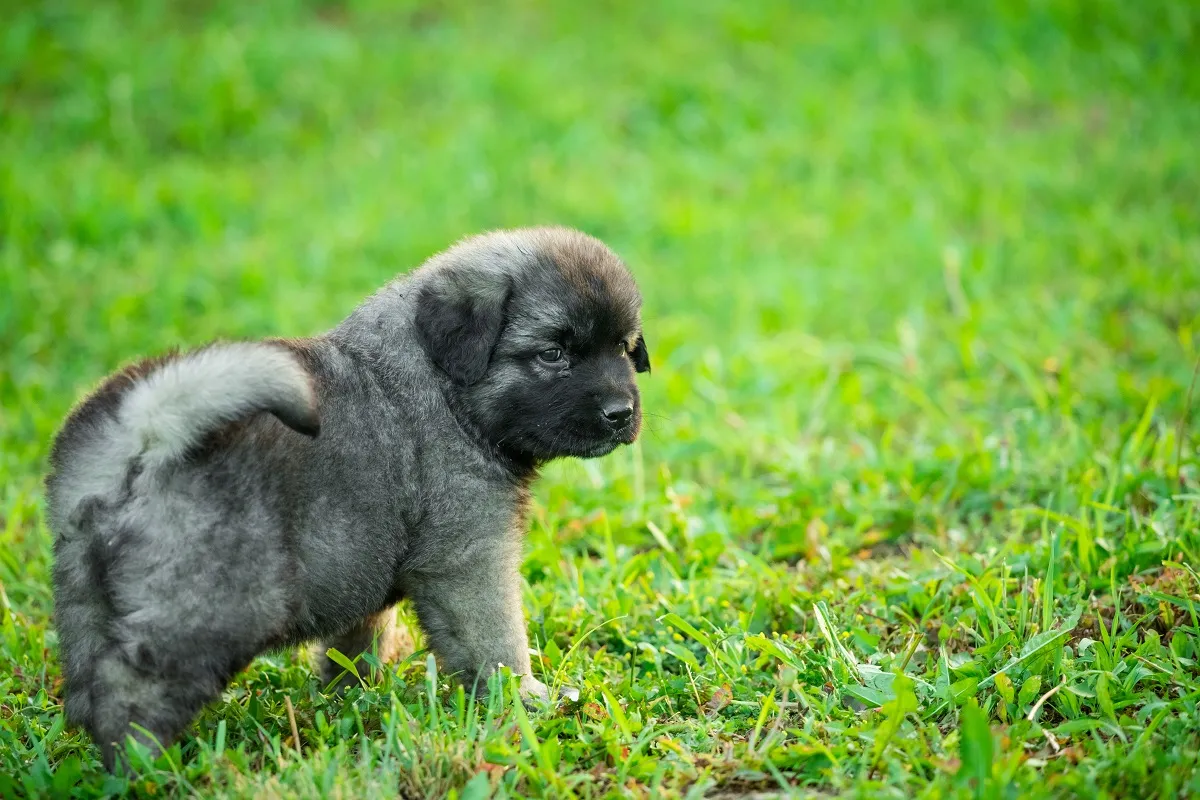 © Zoran/ stock.adobe.com
Ideally, the Šarplaninac should be allowed to fulfil its purpose and guard sheep or cattle. If this is not possible, it should ideally live on a rural property with a large garden that it can defend. Keeping this vocal breed in a city flat is not suitable.
The Šarplaninac is a true outdoor dog that loves spending lots of time outside. Its weatherproof coat protects it from wet and cold weather. In summer, it needs a cool, shady place where it can retreat. Long walks or hikes with its family are exactly to its liking.
This large, heavy dog is not enthusiastic about dog sports such as agility. It simply does not suit it to wait for its owner’s commands and carry out the same movements repeatedly. Nevertheless, this eager-to-work, energetic giant needs both physical and mental stimulation.
Suitable activities include working as a vigilant protector of home and property or as a loyal service dog for the police, military or customs service.
If this otherwise calm and balanced four-legged companion does not get enough exercise and stimulation, it can develop unwanted behaviours. Irritability and even aggression can result from a lack of activity.
When it comes to coat care, the Yugoslavian Shepherd Dog is relatively undemanding. Its dense undercoat should be combed regularly with a coarse-toothed dog comb.
A brush is needed for the harsh, long top coat to remove loose hair, tangles and dirt. During shedding season in spring and autumn, the dog should ideally be brushed daily.
It is normally not necessary to bathe the Šarplaninac. If its water-repellent coat becomes dirty while working as a guard or police dog, simply allow the dirt to dry and then brush it out. Bathing, especially with an unsuitable shampoo, would only damage the dog’s natural skin barrier.
If the Šarplaninac spends lots of time outdoors, as is typical for a livestock guardian dog, its claws naturally wear down on their own.
In that case, there is no need to trim its claws. However, its eyes, teeth and floppy ears should be checked regularly for inflammation.
A large, hard-working dog like the Šarplaninac can eat up to one kilogram of meat per day. It is not fussy about the type of food: it eats both dry food and wet and raw food them.
In the past, it had to make do with whatever the shepherds gave it from their own food rations – bread, milk and occasionally a chunk of meat. Today, it is advisable to choose a protein-rich, grain-free food. The portion sizes should be adjusted according to the dog’s age, health and activity level so that it does not become overweight.
The Šarplaninac is a robust dog breed that has developed over centuries. There are no known breed-specific hereditary diseases. However, as with all larger dogs, hip dysplasia can occur.
A predisposition to this musculoskeletal condition can be identified through genetic testing. Responsible breeders exclude affected animals from breeding and only breed with healthy dogs.
The life expectancy of this large breed is around 11 to 13 years. Some dogs can even live up to 15 years.
The original homeland of the Yugoslavian Shepherd Dog is the Šar Planina mountain range in the border region between North Macedonia, Kosovo and Albania. Shepherds living there have kept large, strong dogs to guard their livestock for centuries.
Whether the breed descends from ancient European shepherd dogs or from Asian dogs once brought by the Mongols is disputed.
The first breed standard was established in 1930, and nine years later the breed was given the name Illyrian Shepherd Dog.
The Šarplaninac is closely related to the Karst Shepherd Dog: both descend from the Illyrian Shepherd Dog. It was not until 1968 that the Yugoslav breeding association separated the two breeds. To this day, they differ very little from one another.
The most famous representative of the breed is considered to be Lex, the dog of former Yugoslav head of government and later president Josip Broz Tito.
Lex is said to have saved his owner’s life by dragging a suspicious package out of his office. The contents of the package later turned out to be a bomb.
In North Macedonia, the Šarplaninac is revered as a national animal: the 1-denar coin features the heroic shepherd dog from the Šar Mountains. Outside the territory of the former Yugoslavia, the breed remained largely unknown for a long time, as its export was prohibited until 1970.
Outside the Balkan states, the Yugoslavian Shepherd Dog is not very widespread. Most breeders of the Šarplaninac are simply enthusiasts of the breed who breed them.
They often only place their dogs with prospective owners who have experience with livestock guardian dogs and can provide a suitable home for this eager-to-work breed.
It is important that the puppy becomes accustomed to various environmental stimuli from an early age. Only then can it later prove its qualities as a loyal family protector.
The attentive, courageous Šarplaninac needs a task that it can carry out independently. Guarding livestock herds and its territory is simply in its blood.
Only those who can meet its needs and channel the strong protective instinct of the Yugoslavian Shepherd Dog appropriately are suited to owning this fascinating but demanding breed.
| Special characteristics: | Livestock guardian dog with a strong protective instinct, used for guarding livestock or home and property. |
| Character: | independent, courageous, eager to work, reliable |
| Height at the withers: | approx. 62 cm (males) approx. 58 cm (females) |
| Weight: | approx. 35-45 kg (males) approx. 30-40 kg (females) |
| Coat: | double, long, dense solid-coloured, possibly with shading and mask preferred colours: iron grey and dark grey |
| Coat care: | moderate effort, regular brushing and combing required |
| Exercise needs: | moderate need for exercise, activity mainly through independently guarding the property or livestock herd |
| Suitable for beginners: | no |
| Barking: | very vocal |
| Life expectancy: | 11-13 years, more rarely up to 15 years |
| Common illnesses: | hip dysplasia |
| FCI Group: | Group 2: Pinschers and Schnauzers – Molossoid breeds – Swiss Mountain and Cattle Dogs |
| Origin: | Serbia, North Macedonia |

"A life without a pug is possible, but pointless," Loriot once said. I would unreservedly agree and add: "A life without horse, cat and rabbit as well!" My heart beats for all animals big and small and I have the great fortune to be able to write about my passion as a freelance author. With my articles I would like to raise awareness for animal welfare and give useful tips to animal lovers.
The Irish Wolfhound is one of the largest dogs in the world. Used for hunting wolves and bears in medieval Ireland, today it is kept exclusively as a family dog. Despite its imposing size, this sighthound is very gentle and affectionate. Unfortunately, the friendly giant is also quite prone to illness and has a comparatively short life expectancy. Is an Irish Wolfhound right for me, and what does keeping one involve? You can find everything you need to know in the following article.
Fans of the Bearded Collie agree that those who aren't familiar with this dog breed simply have to get acquainted with it. And those who have experienced how a Bearded Collie bolts across meadows with its flowing fur, how it rolls around full of energy and joy and how it attentively and observantly takes into account its owners wishes become simply addicted to this original dog breed and its unique charm.