

11 min
2.6k
Medium Size Poodle

Hairless dogs divide opinion around the world. While some people rave about their unusual appearance, others criticise these hairless breeds. You can find out which hairless dog breeds exist, along with everything you need to know about their care and keeping, in this article.
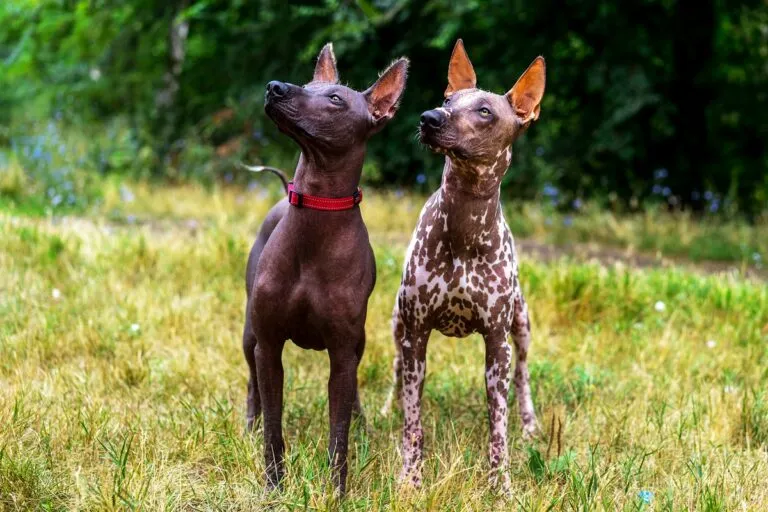
© Masarik / stock.adobe.com
Hairless dogs come in both large and small sizes and in a wide variety of colours.
They come in large and small sizes, in solid colours and spotted patterns. One thing quickly becomes clear about hairless dogs: they have no fur.
However, this does not apply to every example of the breed, as some even have a short layer of fluff or large tufts of fur on certain parts of the body. How pronounced the hairlessness is in dogs depends on genetic factors.
The characteristic of hairlessness often relates not only to normal body hair, but also to the whiskers (also known as tactile hairs or vibrissae). These hairs perform important functions. Among other things, they help dogs orientate themselves in space and assist with various visual and sensory tasks.
There are several hairless dog breeds that differ from one another in character and appearance. The best-known hairless dogs include:
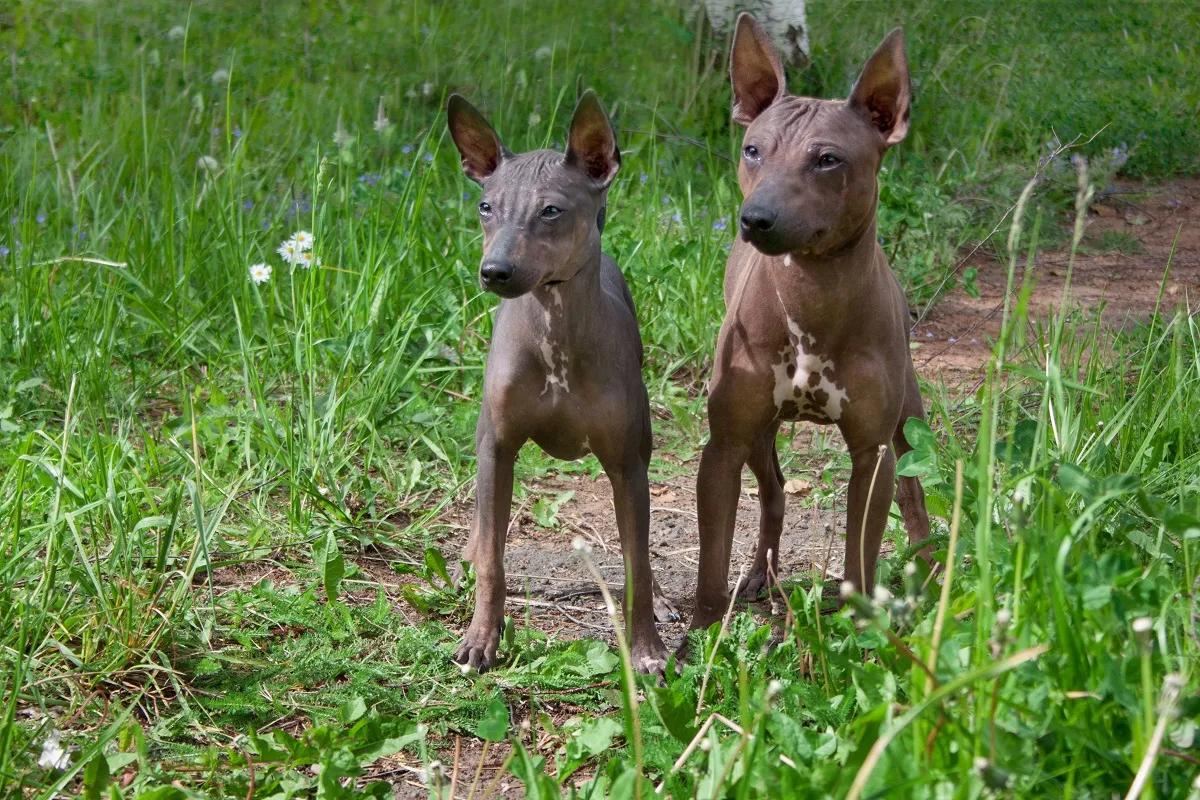
The American Hairless Terrier, which originates from the southern states of the USA, is the result of a cross with Rat Terriers. Most examples have no coat. However, some dogs do have eyebrows and vibrissae.
FCI recognised: no
 © tikhomirovsergey / stock.adobe.com
As the name suggests, the Argentine Pila originates from Argentina. According to Inca legends, the Argentine Pila was said to have been a gift used to strengthen relationships between different peoples.
FCI recognised: no
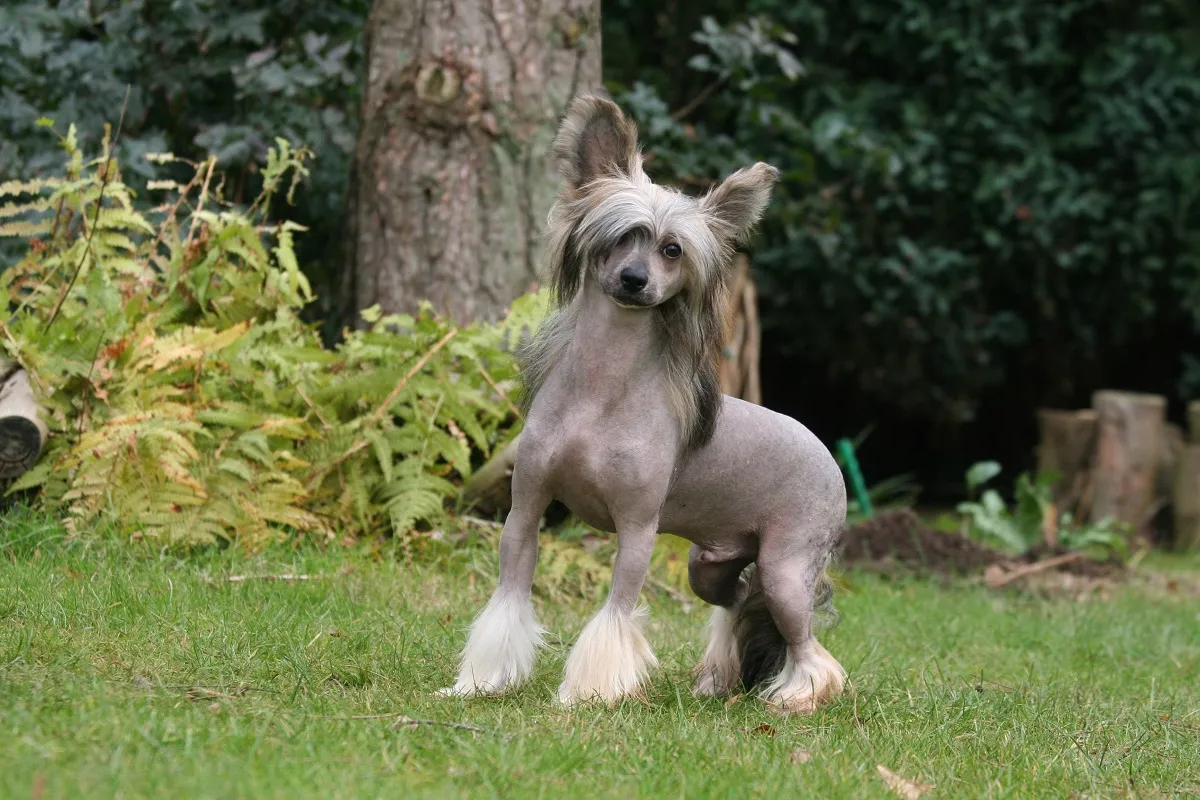
The small Chinese Crested Dog is a lively and active dog with a long tradition. The breed is thought to date back as far as the Han dynasty between 206 BC and 220 AD.
While it has a wild mane on its head, tail and paws, the rest of the body is largely hairless.
FCI recognised: yes
 © Dogs / stock.adobe.com
The Ecuadorian Hairless Dog (also known as Perro Pelón Ecuatoriano) is native to Ecuador. This muscular dog can have various skin colours, although most are sand-coloured with dark markings on the ears and tail.
FCI recognised: no
Although the Chihuahua is not normally a hairless breed, there are also Chihuahuas without fur. The reason for this is a genetic defect that causes impaired hair growth in affected puppies.
FCI recognised: no
The Hairless Khala is a hairless dog that originally comes from Bolivia. There are two different varieties of this breed, which differ in appearance:
FCI recognised: no
The slender Jonangi, which originates from India, has only a very short coat. Alongside its almost invisible fluff, this hairless breed is also known for its wrinkled forehead and tulip-shaped ears.
FCI recognised: no
The Peruvian Hairless Dog only has tufts of fur on certain parts of its body – on the head and tail. However, there is also the “Peludos” variety, which has normal body hair.
FCI recognised: yes
 © CELENEMILAGROS Leonid / stock.adobe.com
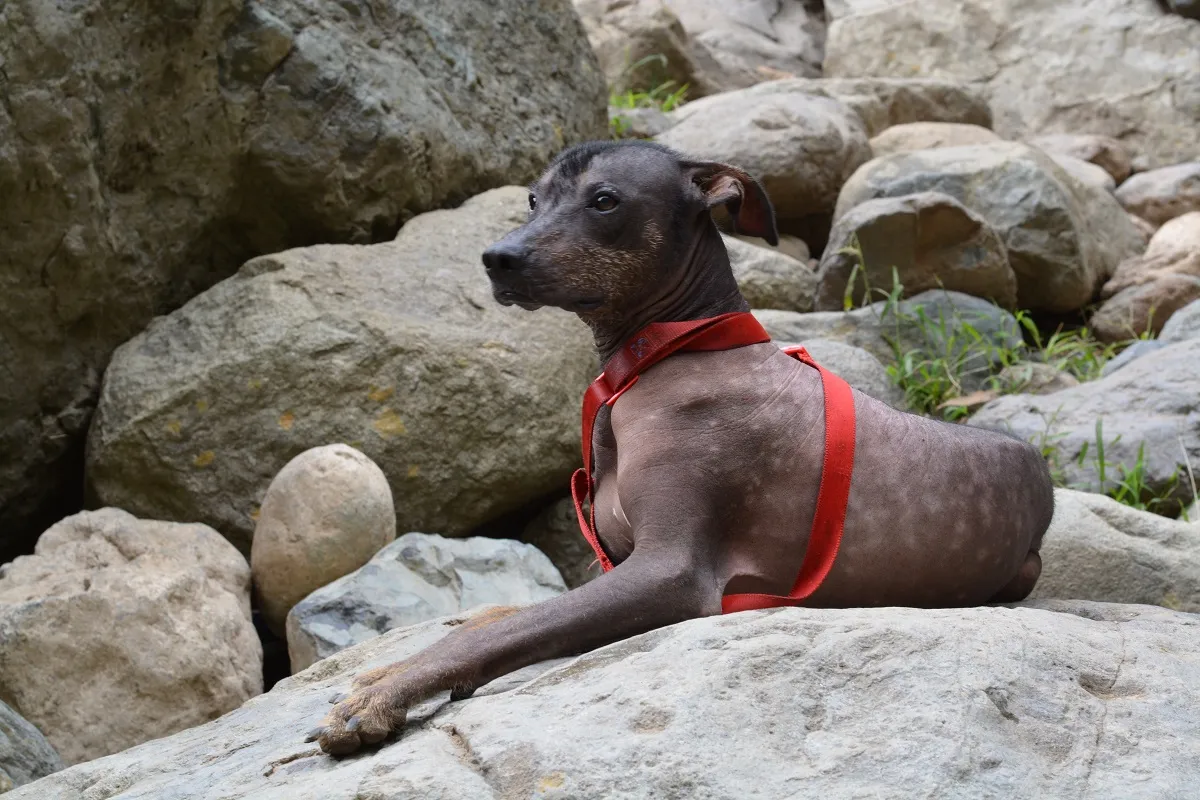
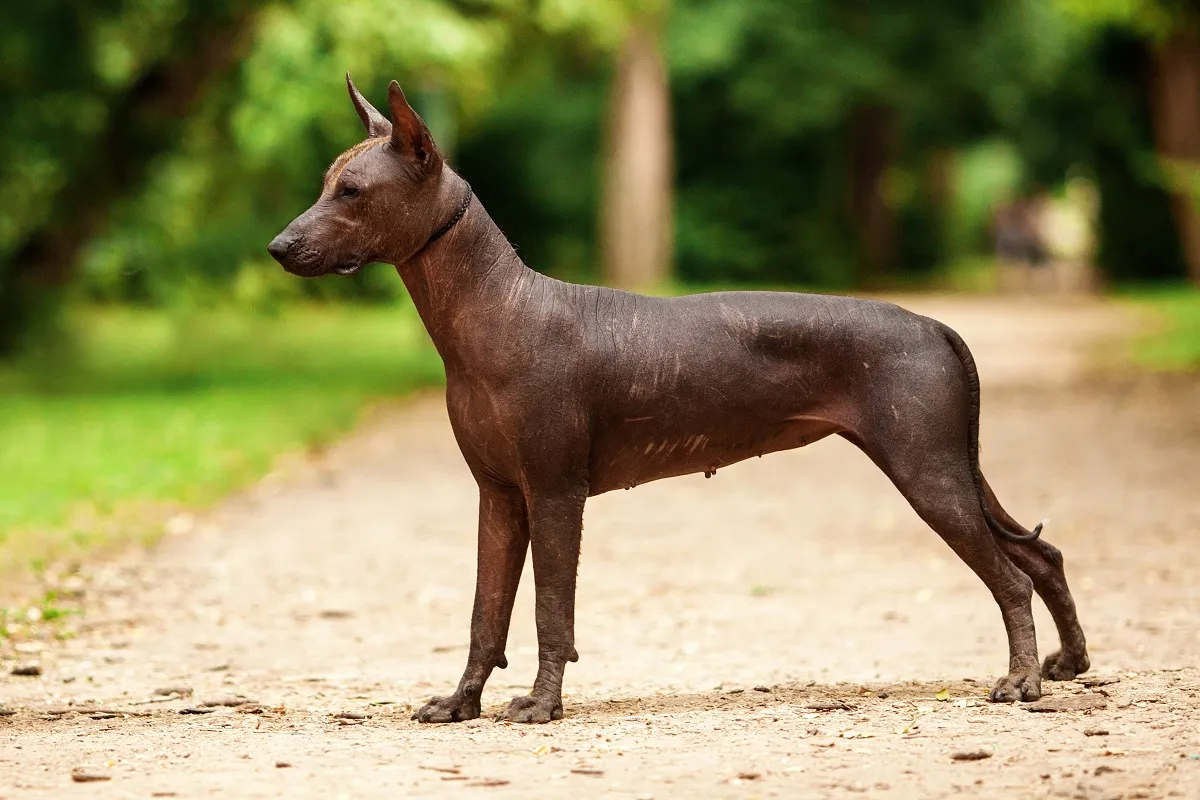
This hairless breed is one of the oldest dog breeds in the Americas: the Xoloitzcuintli. The name comes from the Aztec people and means “dog of the god Xolotl”. Some dogs of this breed have a coat, but there are also hairless examples.
FCI recognised: yes
 © tanipanova / stock.adobe.com
As unusual as hairless dogs may look, their health also needs to be taken into account. Bear in mind that your dog’s hairlessness not only creates an interesting alien-like appearance, but can also bring certain health disadvantages.
The lack of normal body hair alone affects your hairless dog’s ability to regulate body temperature, which is something you need to consider not only in winter but also in summer. For example, hairless dogs have a higher risk of sunburn.
A dog coat protects four-legged friends from the cold in winter.
The absence of tactile hairs in particular is a major disadvantage for hairless dogs. This is because these specialised hairs play an important role in spatial orientation and the sense of touch.
In addition, tactile hairs normally protect the dog’s eyes and are important for the natural cleaning function of the ears.
Hairless dogs are therefore more prone to the following illnesses:
In addition, hairless dogs often have severe dental abnormalities.
Due to the health limitations associated with hairless dogs, the trait of hairlessness in dogs is considered an unethical breeding trait in many countries. For example, it is listed in a German expert report interpreting Section 11b of the Animal Welfare Act (ban on unethical breeding practices).
When breeding hairless dogs, it should also be noted that hairlessness is linked to a lethal gene factor. If two hairless dogs are bred together, the puppies are not viable.
Important to know: breeding hairless dogs is still not banned in most countries.
The lack of fur initially leads many dog lovers to assume that hairless dogs are especially easy to care for. However, appearances can be deceptive, as unprotected skin naturally forms a layer of sebum that can lead to skin inflammation.
Hairless dogs therefore need regular skin care.
To prevent your hairless dog from suffering from inflammation, you should follow these tips:
If you notice signs of inflammation in your hairless dog (redness, swelling, warmth, pain), you should consult your vet at an early stage.
At the Justus-Liebig-University of Giessen I was extensively trained as a veterinarian and was able to gain experience in various fields such as small animal, large animal and exotic animal medicine as well as pharmacology, pathology and food hygiene. Since then, I have been working not only as a veterinary author, but also on my scientifically driven dissertation. My goal is to better protect animals from pathogenic bacterial organisms in the future. Besides my veterinary knowledge, I also share my own experiences as a happy dog owner and can thus understand and enlighten fears and problems as well as other important questions about animal health.
Fans of the Bearded Collie agree that those who aren't familiar with this dog breed simply have to get acquainted with it. And those who have experienced how a Bearded Collie bolts across meadows with its flowing fur, how it rolls around full of energy and joy and how it attentively and observantly takes into account its owners wishes become simply addicted to this original dog breed and its unique charm.
The Irish Wolfhound is one of the largest dogs in the world. Used for hunting wolves and bears in medieval Ireland, today it is kept exclusively as a family dog. Despite its imposing size, this sighthound is very gentle and affectionate. Unfortunately, the friendly giant is also quite prone to illness and has a comparatively short life expectancy. Is an Irish Wolfhound right for me, and what does keeping one involve? You can find everything you need to know in the following article.