

11 min
2.6k
Medium Size Poodle
The Irish Wolfhound is one of the largest dogs in the world. Used for hunting wolves and bears in medieval Ireland, today it is kept exclusively as a family dog. Despite its imposing size, this sighthound is very gentle and affectionate. Unfortunately, the friendly giant is also quite prone to illness and has a comparatively short life expectancy. Is an Irish Wolfhound right for me, and what does keeping one involve? You can find everything you need to know in the following article.
© muro / stock.adobe.com
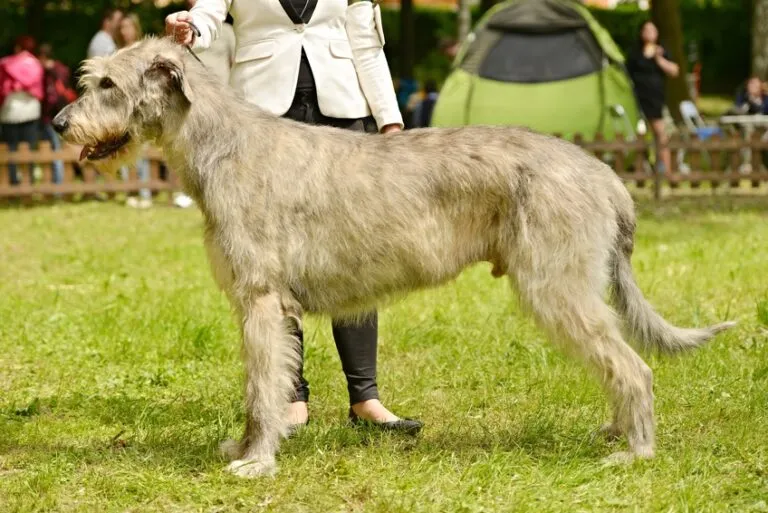
The Irish Wolfhound is considered the largest dog breed in the world. The record stands at a shoulder height of 106 cm.
“Is that a pony?” Comments like this are not unusual when out walking with an Irish Wolfhound. There’s no doubt that, with an average shoulder height of 81 to 86 cm, this pedigree dog attracts attention – whether it wants to or not. After all, the otherwise modest Irish Wolfhound is one of the largest dogs in the world.
The breed standard states a minimum height of 79 cm for males. Females are slightly smaller, with a height of at least 71 cm. The record stands at a shoulder height of 106 cm. Naturally, these giant four-legged dogs also bring plenty of weight to the scales. Males weigh at least 54.5 kg, females at least 40.5 kg.
Despite its impressive size and considerable weight, the Irish pedigree dog never appears cumbersome. As a typical sighthound, it has a lean build with dry musculature and a deep chest. Compared to its size, the so-called rose ears, which sit quite far back on its narrow skull, are rather small.
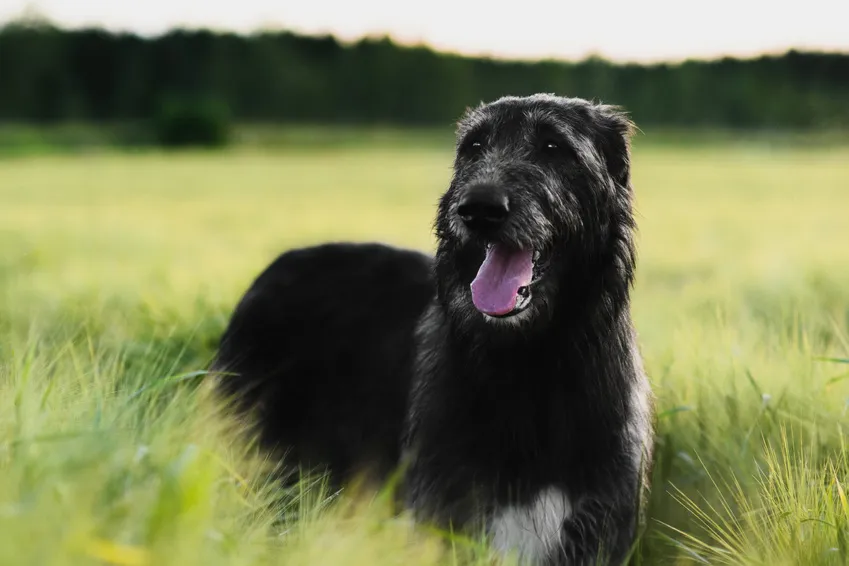
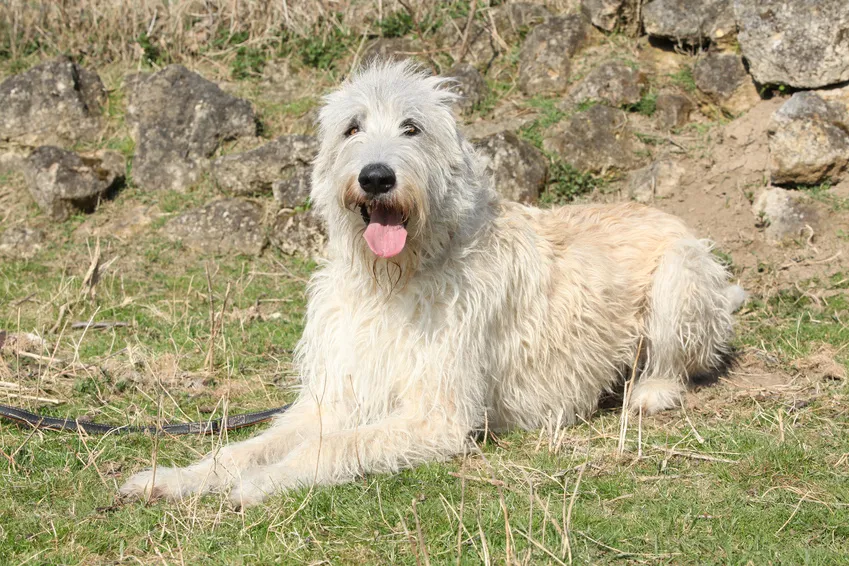
The Wolfhound’s coat is rough and harsh (wiry) and is permitted in the following colours:
The Irish Kennel Club also accepts any colour variation found in the Deerhound.
Lying on the soft sofa and snuggling close to its owner – that’s when the Irish Wolfhound feels happiest. The gentle giant often forgets that it is one of the largest dogs in the world and certainly not a tiny lapdog.
Its slightly boisterous nature can knock over not only vases, but also the occasional – less steady – family member. Deep down, however, the Irish Wolfhound is a kind-hearted dogthat needs little more than the closeness of its family.
The breed is very people-oriented and affectionate. The Wolfhound constantly seeks eye contact with its favourite person and checks that it is getting enough attention. Keeping these sociable dogs permanently outdoors in a kennel is therefore out of the question. They absolutely adore children and enjoy it when the whole family is together.
Even strangers are met by the Wolfhound in an open and friendly way – at least as long as they mean well. Thanks to its sensitive and alert nature, it quickly senses when someone does not have good intentions towards its family and will bravely step in. However, due to its guard dog limitations and lack of aggression, it is not suitable purely as a watchdog. Then again, what thief would really want to test the patience of this giant four-legged dog?
 © olgagorovenko / stock.adobe.com
The inner calm radiated by this impressive pedigree dog is remarkable. It is undemanding, patient and adapts easily to different everyday situations. However, the Irish dog’s natural composure should not distract from the fact that this dog was originally a hunter and runner.
As a hunting, and sighthound, it still has a fairly strong need to run and a hunting instinct that should not be underestimated. This need for movement and “coursing”, greyhound racing or special enclosed areas can satisfy its desire for fast, free sprints. During walks and shared cycling, or riding outings, it is best kept on the lead as its hunting instinct can take over at any moment.
Simply due to its size and hunting instinct, consistent and loving training is essential for the Irish Wolfhound. If your dog learns the most important commands early on, you can later give it more freedom.
A Wolfhound that reliably responds to your recall can more easily be let off the lead in certain (permitted) areas than one that only occasionally obeys this command.
However, you should generally not expect blind obedience from this breed. Despite being people-oriented, the intelligent and self-confident Irish Wolfhound sometimes shows a stubborn streak.
It may therefore sometimes take a little longer for it to respond to commands. Anyone who understands a little about dog training and treats their Wolfhound with the necessary consistency, love and patience will enjoy this peaceful breed enormously.
What makes healthy dog food ? Is dry food better than wet food? Is BARF feeding better than home-cooked food? Opinions on the right diet for dogs are as varied as the supermarket pet food shelves. What matters less is the feeding method and more what should – and should not – actually be in dog food.
Like all dogs, Wolfhounds primarily need protein, which should be supplemented with vegetables, rice, potatoes or pasta. Always make sure the food has an optimal composition, with plenty of high-quality protein, vegetables and only a small amount of grain – regardless of whether you cook yourself or choose prepared food.
A dog as large as the Irish Wolfhound naturally eats more than a small Dachshund. However, the same applies here: the richer its food , the less it needs. It is not quantity but quality that matters.
Good food provides the dog’s nutritional requirements optimally. These depend less on breed and more on individual factors such as age, weight, size and activity level. A Hound that is very active in sport naturally requires more energy than one kept as a family dog with only minimal exercise. Likewise, a puppy needs a different food composition from an adult dog.
Since Wolfhounds already grow very quickly, their growth must not be additionally accelerated by an excessive energy intake. Growth that is too rapid in the first few months often later leads to painful joint problems. An incorrect calcium-phosphorus ratio in the food can also negatively affect the young dog’s bone growth.
Besides the right food composition, there is even more you can do for your Wolfhound’s health: especially during the growth phase, avoid climbing stairs or other sudden movements that overstrain the dog and may later contribute to bone and joint disorders.
Since Hounds, like many large dogs, are prone to dangerous gastric torsion, you should also make sure they get enough rest after meals. It is also recommended to divide the daily food ration into around two to three (smaller) meals.
Height-adjustable feeding bowls have also proved effective, as they can keep up with the breed’s rapid growth and prevent the dog from having tobend down too far while eating and adopt an awkward posture.
Discover our range of dry dog food and wet dog food!
The calm temperament of the Irish Wolfhound means that it accepts many things with stoic calmness – whether it is food, the type of daily exercise or other living conditions. Even illness is endured – often until it is too late. Relying on the dog to let you know when something is wrong can have serious consequences with this breed.
Therefore, make sure yourself that your dog gets the right food and receives the necessary amount of exercise suited to its hunting and sighthound nature. Also observe very carefully whether you notice changes in its behaviour, movement or body (for example weight loss or gain). These may be early signs of illness and should be checked by a vet.
Even changes in coat texture can indicate an incorrect diet or certain illnesses. Although coat care for the rough-coated Wolfhound is very straightforward and occasional brushing is perfectly sufficient, you should always keep a close eye on your dog. Excessive shedding is not generally a concern.
Like (almost) all giant breeds, the Irish Wolfhound is unfortunately heavily predisposed to health problems. Breeding ever larger and faster dogs has meant that the breed’s health has taken a back seat. As a result, the average life expectancy of Wolfhounds today is just six to seven years.
According to a study published in 2005, only nine percent of all Wolfhounds reach ten years of age or older. The majority die before the age of eight, and some even live to only five years old. Fortunately, this comparatively short life expectancy has prompted many breeders to rethink their approach. Reputable breeders now once again place the breed’s health first.
The main concerns in the Irish Wolfhound are heart disease, bone cancer, gastric torsion and epilepsy. Of course, not every Irish Wolfhound will develop one of these illnesses. However, compared with other, healthy dog breeds, the risk is still relatively high. This makes choosing a breeder carefully all the more important.
Hip dysplasia, on the other hand, is less common than one might expect in such a giant breed: according to the OFA database evaluation, with around 4.5% affected dogs, the breed is among the 15 breeds with the lowest HD rate. The German Sighthound Breeding and Racing Association (DWZRV) therefore suspended mandatory hip X-rays for breeding approval in 2022. Instead, the ultrasound examination of the heart.
 © zuzule / stock.adobe.com
The Irish Wolfhound is not only one of the largest dog breeds in the world, but also one of the oldest. As with its close relative, the Greyhound, its origins are believed to lie in the Arab world. Archaeological finds prove that in ancient Egypt there were already large sighthound-like dogs that came to Europe and the British Isles with the Celts in the third century BC.
In ancient and medieval Ireland, the large, powerful dogs, which were suited to hunting wolves, bears, wild boar and elk, were highly sought after. Among the high nobility, who alone were permitted to own these impressive hunting dogs, the so-called Wolfhounds (wolf hunters) were widespread in the Middle Ages. The Irish Wolfhound became a status symbol and a sought-after gift for other European royal courts.
Like so many hunting dogs, the Irish Wolfhound also fell victim to the invention of firearms. Guns gradually made hunting dogs unnecessary, meaning the Wolfhound became increasingly rare. In order to save the remaining population, an export ban from Ireland was introduced in the mid-17th century.
However, the breed continued to decline, and the extermination of the wolf in Great Britain and Ireland around 1800 dealt it another blow. By the mid-19th century, the breed was virtually extinct. The fact that the Irish Wolfhound still exists and is recognised as a breed today is thanks to the Scotsman George Graham.
Graham crossed the few remaining specimens with Deerhounds, Great Danes, Borzois and other breeds. The resulting “new”, somewhat stronger and larger Wolfhound was first presented at exhibitions in the late 1870s and soon afterwards recognised by the British Kennel Club.
At the end of the 19th and beginning of the 20th century, the first breeding dogs arrived in North America and mainland Europe, where the population was almost completely wiped out by the two World Wars.
The number of new litters only slowly began to rise again in the mid-20th century, with most recorded on the British Isles and in North America. Although the Irish Wolfhound has also been bred more frequently in mainland Europe since the 1970s, this large pedigree dog remains rare outside the English-speaking world.
 © Isabelle / stock.adobe.com
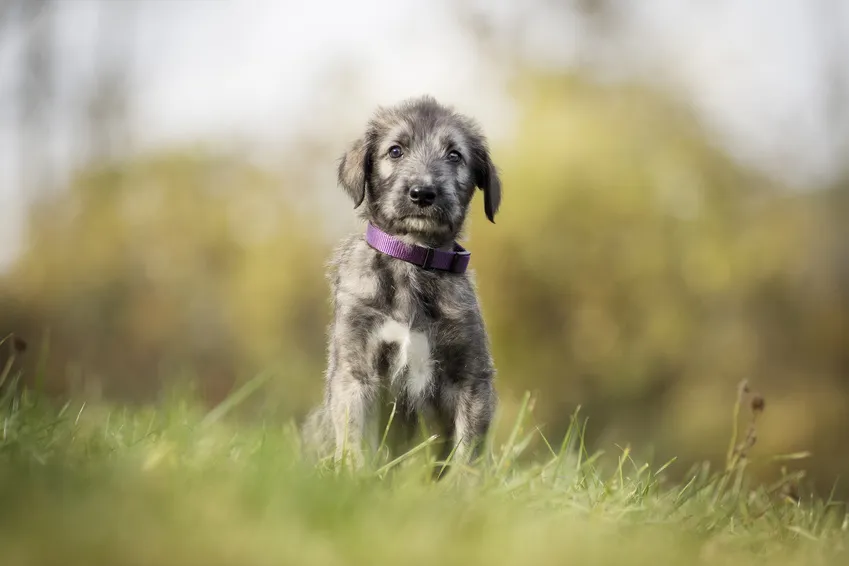
Anyone interested in the purchase of an Irish Wolfhound should by no means underestimate the issue of illness. Of course, this should not put you off buying the breed, but when choosing the right breeder you should pay particular attention to health within the breeding line.
Even if the breeder assures you that their dogs are healthy and the parents also appear healthy, you should not rely on this alone. Ask to see the puppies’ pedigree and pay attention to how old the grandparents, great-aunts and great-uncles lived to be. Also specifically ask the breeder about the heart ultrasound results of both parents. A reputable breeder will present these results without being asked.
In addition, arrange to meet the breeder in person and see for yourself how important the animals’ health and wellbeing truly are to them.
However, responsibility for the breed’s health does not rest solely with the breeder. As a buyer, you also need to take care of keeping your dog healthy. After all, a dog’s genes alone do not determine whether it will later become ill. The animal’s diet, care and living conditions can also increase or reduce the risk of the illnesses mentioned above.
Do you like large dogs? Then you might also like these breeds:
Here you will find answers to frequently asked questions about the Irish Wolfhound:
Thanks to its gentle nature, an Irish Wolfhound can be a good dog for first-time owners, but it still requires consistent training. This breed is large and, if not properly trained, can also be independent and boisterous. Good socialisation is also important to encourage its gentle and friendly temperament. Early attendance at a dog training class is always recommended.
An Irish Wolfhound needs plenty of daily exercise to stay healthy and happy. At least one to two hours per day is recommended. These dogs enjoy walks and can also take part in dog sports such as agility, but they should not be overexerted, especially after eating, in order to avoid health problems. In addition to daily walks, these active dogs also need mental stimulation to prevent boredom and behavioural problems.
An Irish Wolfhound is not suitable as a guard dog. Although it protects its family and becomes alert when danger arises, it is naturally friendly and curious towards strangers. Its gentle and patient nature makes it more of a family dog than an effective guard dog.
Yes, an Irish Wolfhound can make an excellent family dog. It is known for its friendly and patient nature, especially around children and other pets. It is gentle and shows great affection towards its family.
| Special characteristics: | The Irish Wolfhound is considered the largest dog breed in the world and is described as a “gentle giant”. It was once bred for hunting wolves and bears, but today is mainly kept as a family dog. |
| Character: | calm, balanced, friendly, loyal |
| Height at the withers: | Males: 79–90 cm Females: 71–79 cm |
| Weight: | Males: 54–59 kg Females: 40–50 kg |
| Coat: | relatively long, rough and wiry in grey, brindle, red, black, pure white, fawn and others |
| Coat care: | low maintenance, occasional brushing |
| Exercise: | high need for exercise, activities such as tracking or coursing |
| Suitable for beginners: | generally yes |
| Barking: | rarely barks |
| Life expectancy: | approx. 7 years |
| Common illnesses: | dilated cardiomyopathy, bone cancer, epilepsy |
| FCI group: | Group 10: Sighthounds Section 2: Rough-haired Sighthounds |
| Origin: | Ireland |

"A life without a pug is possible, but pointless," Loriot once said. I would unreservedly agree and add: "A life without horse, cat and rabbit as well!" My heart beats for all animals big and small and I have the great fortune to be able to write about my passion as a freelance author. With my articles I would like to raise awareness for animal welfare and give useful tips to animal lovers.
The Irish Wolfhound is one of the largest dogs in the world. Used for hunting wolves and bears in medieval Ireland, today it is kept exclusively as a family dog. Despite its imposing size, this sighthound is very gentle and affectionate. Unfortunately, the friendly giant is also quite prone to illness and has a comparatively short life expectancy. Is an Irish Wolfhound right for me, and what does keeping one involve? You can find everything you need to know in the following article.
Fans of the Bearded Collie agree that those who aren't familiar with this dog breed simply have to get acquainted with it. And those who have experienced how a Bearded Collie bolts across meadows with its flowing fur, how it rolls around full of energy and joy and how it attentively and observantly takes into account its owners wishes become simply addicted to this original dog breed and its unique charm.