{"url":"https://www.zooplus.co.uk/magazine/dog/dog-adoption/wolf-and-dog-compared","title":"Wolf and Dog Compared","mag_id":407564,"is_single":true,"cat_name":"Dog","sub_cat_id":144,"sub_cat_name":"Dog Adoption and Ownership","cat_id":3410}
The dog is considered man’s best friend – despite descending from a predator. When wolves and dogs went their separate ways and how much wild animal still lies within the modern domestic dog are explored in this article.
Wolves and domestic dogs are once again sharing the same territory
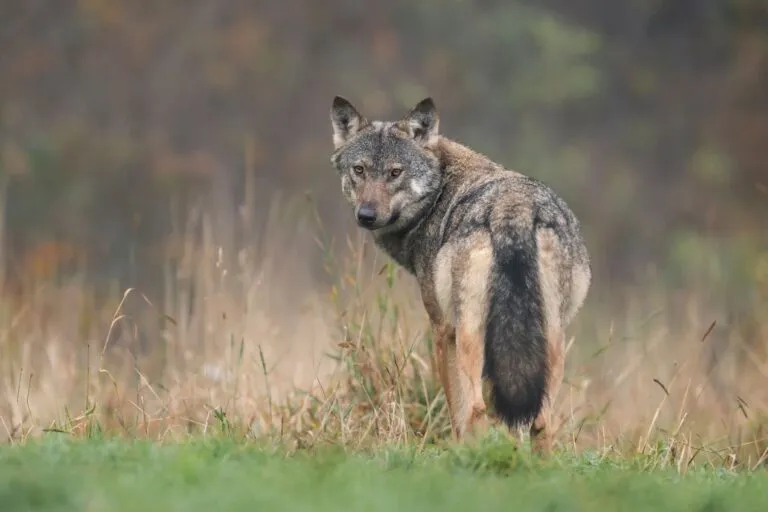
After being eradicated for a long time, wolves are slowly reclaiming their former habitats. The Nature and Biodiversity Conservation Union (NABU) has counted them – with the following result: in 2022, German forests were home to
160 wolf packs
43 wolf pairs and
21 resident lone wolves
Compared to the roughly ten million domestic dogs in Germany, the number of wolves is vanishingly small. Nevertheless, it is worth taking a closer look at the similarities, differences and kinship between the two.
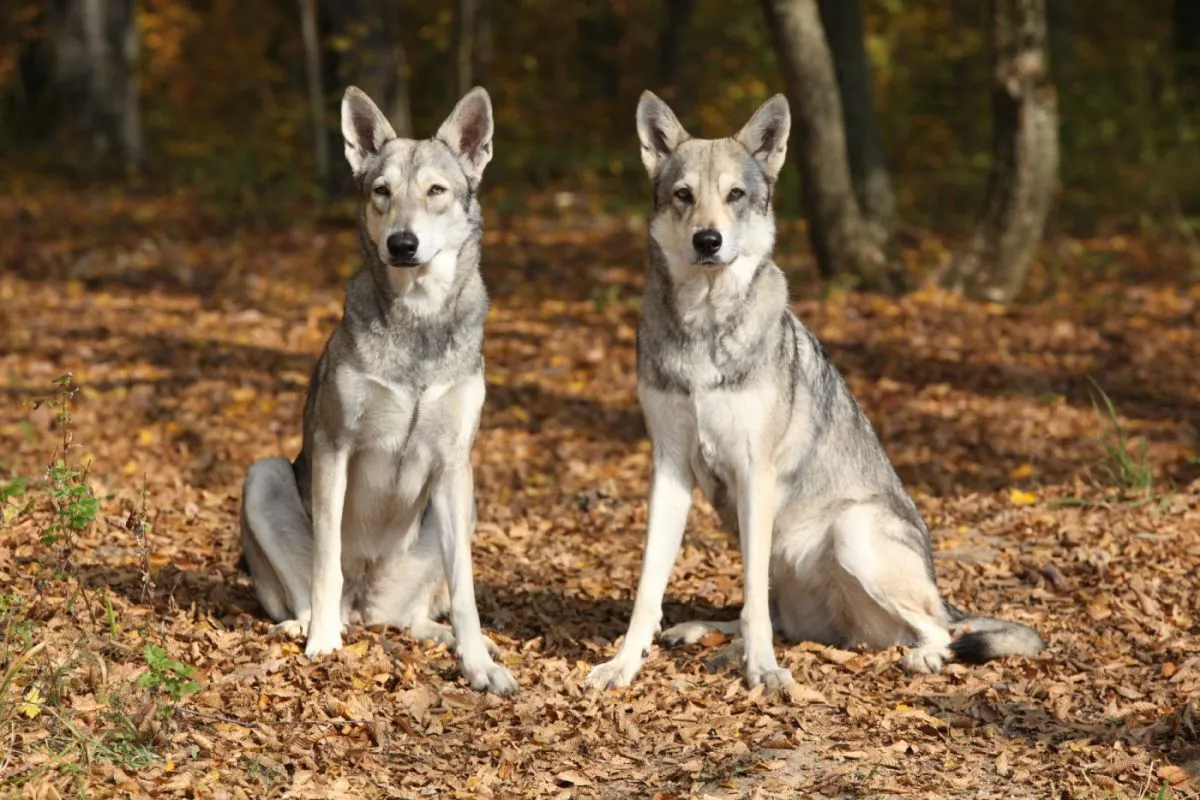
Wolf or dog? The Saarloos Wolfdog looks deceptively similar to a wolf.
What’s the difference? Wolves and dogs compared
A pug or a dachshund would hardly be mistaken for a wolf. Yet despite the colourful diversity of today’s dog breeds, there are still dogs that resemble wolves and are difficult to tell apart from them.
It is particularly difficult to distinguish between a wolf and a wolfdog. These include, for example, the Irish Wolfhound or the Saarloos Wolfdog.
Both breeds resemble the grey wolf. However, with a shoulder height of 60 to 80 centimetres, the grey wolf is slightly larger than the Saarloos Wolfdog, which reaches only around 70 centimetres.
Good to know: In addition to the grey wolf, there are also wolves with white, black or brown to reddish coats. Their eye colour can vary too.
Wolf vs dog: 5 differences
The following characteristics help to tell them apart – although often only a DNA analysis can provide certainty as to whether a four-legged animal is a wolf or a wolfdog:
Ear shape: Wolf ears are typically small, upright and triangular. Some dog breeds have similar ears, but in most cases dogs’ ears are larger or hang down as floppy ears.
Gait: When a wolf walks, its hind paws step into the tracks of its front paws. Domestic dogs, by contrast, often change their gait, which results in less regular tracks.
Tail carriage: Wolves usually carry their tails low. Domestic dogs, on the other hand, often hold their tails higher, for example when excited during an encounter. Depending on their mood, they carry their tails at different heights.
Communication: Domestic dogs have learned to communicate with their human owners. They bark and whine, whereas wolves howl and yelp. Only rarely do they make a soft “woof”.
Digestion: Although both canines are carnivores, unlike wolves, domestic dogs can digest starch. This is found in plants such as cereals.
Important similarities between wolves and dogs
Even though not all dogs resemble wolves in appearance, they still share comparable behaviours to this day:
Wolves and dogs have an excellent sense of smell and hearing.
Both animals are carnivores.
Wolves and dogs alike are pack animals.
Dogs and wolves roll around to mask their own scent from potential prey.
The hunting behaviour of both still shows similarities, even if it is now only weakly expressed in many domestic dogs.
How long do wolves live?
Wolves and dogs are not far apart when it comes to life expectancy either. Like many domestic dogs, wolves live to around 14 to 16 years.
A look back in history: do all dogs descend from wolves?
The ancestry of the domestic dog (Canis lupus familiaris) has not yet been fully clarified scientifically. Researchers assume that dogs and wolves descend from an ancestral dog. However, they still debate exactly when the modern domestic dog split from its ancestor, the wolf (Canis lupus).
For a long time, archaeologists assumed that the domestication of dogs by humans began around 15,000 to 20,000 years ago. Other scientists, however, suspect based on new excavations that the first ancestral dog lived up to 135,000 years ago.
Good to know: The aim of genetic studies on excavated skeletons is still to gain a clearer understanding of the ancestry of the modern domestic dog.
How did dogs come into being?
The best-known hypothesis suggests that Stone Age humans and the wolves living at the time had similar diets. When hunters killed game, wolves stayed close by, hoping to scavenge a few leftovers.
Through this constant proximity, wolves gradually became accustomed to humans – and vice versa. Some wolves grew tamer, and humans slowly began to integrate the four-legged animals into their lives.
The wolf was no longer a competitor, but became an ally. One of its roles was, for example, to protect shared food from other predators such as bears or sabre-toothed tigers.
How did today’s dog breeds develop?
Over thousands of years, humans bred many different dog breeds and selectively used certain behaviours depending on the desired purpose.
This led to the development of hunting dogs or companion dogs, which still perform important roles for humans today.
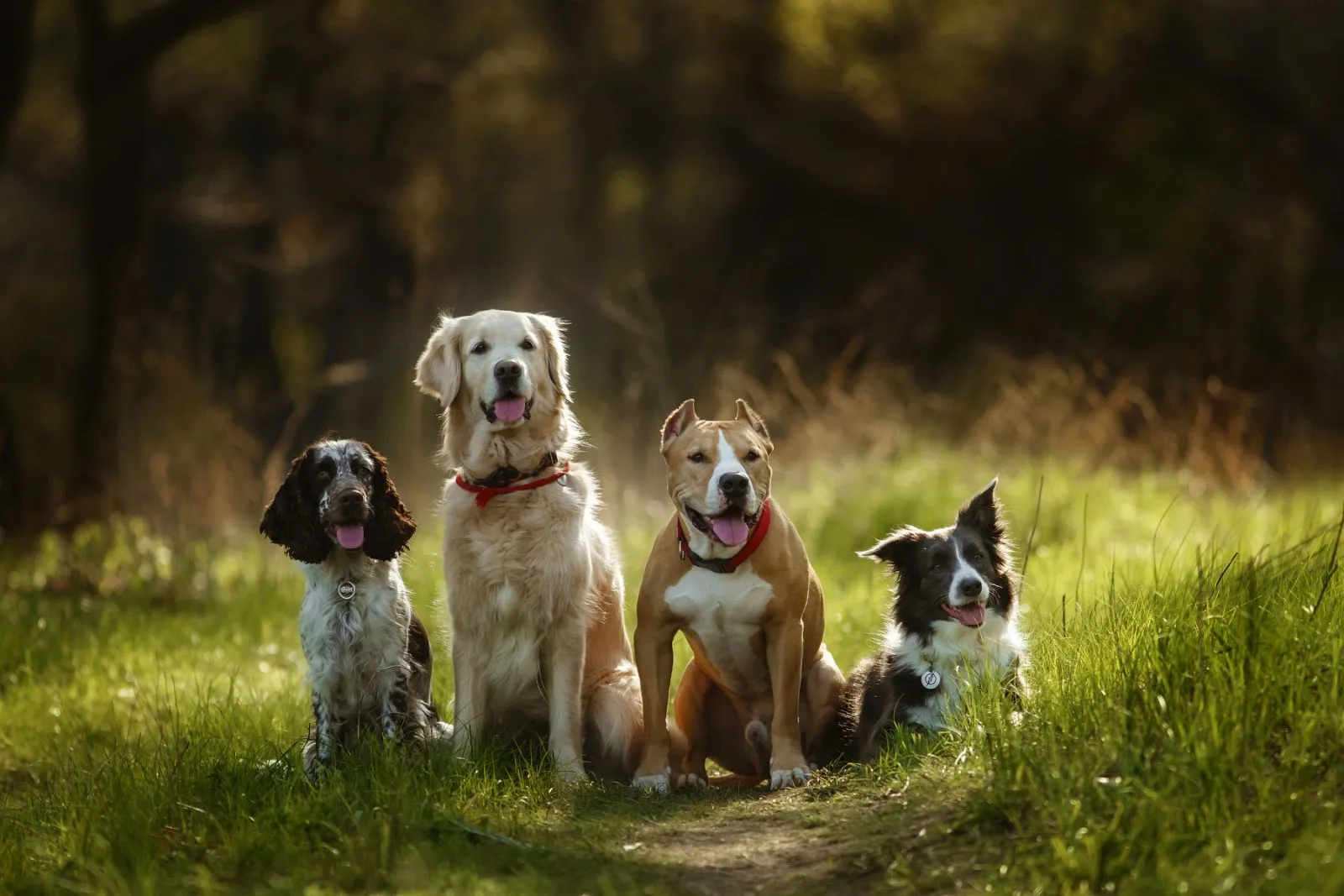
Numerous dog breeds have developed over the course of domestication.
Wolves and dogs today: how closely related are dogs still to wolves?
The genetic similarity between dogs and wolves differs by only a few percent. The two are therefore still closely related, even though they have in some ways diverged significantly.
To this day, numerous dog breeds have emerged from the ancestral dog: according to the FCI (Fédération Cynologique Internationale), there are over 350 fully recognised breeds. These vary more or less in appearance and temperament.
Can wolves and dogs be crossed?
Due to the genetic characteristics of both species, it is theoretically possible to cross wolves with domestic dogs. This results in fertile offspring known as wolf–dog hybrids.
However, because the reproductive cycles of the two animals differ, wolf hybrids are relatively rare in the wild and more often the result of human involvement.
Can you keep a wolf as a pet?
As wolves are legally classified as protected animals, they and their offspring from generations F1 to F4 are protected. As a result, keeping wolves and wolf hybrids in Germany is prohibited without the relevant official permit and proof of origin.
Even with permission, providing species-appropriate care is very difficult. These shy, freedom-loving animals need plenty of places to retreat and sufficient space. At the same time, as social pack animals, they cannot be kept alone.
In addition, their body language differs from that of domestic dogs. Misunderstandings between animal and owner are therefore almost inevitable.
How do dogs react to wolves?
Anyone who wants to enjoy these beautiful wild animals and treat their needs with respect can admire them in wildlife or nature parks in a natural setting.
Most wolves in Germany are found in Brandenburg. Although the likelihood of an encounter is low, if domestic dogs do meet wolves, their wild relatives are likely to react with curiosity.
If you do encounter one, it’s advisable to be cautious. Call your dog to you and put it on a lead. In most cases, the wolf will then retreat. If it is a particularly curious individual, the Wolf Advisory Centre in Saxony recommends driving the wild animal away by shouting.
Are you still looking for a dog to explore nature with on woodland walks? In our dog profiles you can get to know the most popular breeds and are sure to find a loyal companion.
At the Justus-Liebig-University of Giessen I was extensively trained as a veterinarian and was able to gain experience in various fields such as small animal, large animal and exotic animal medicine as well as pharmacology, pathology and food hygiene.
Since then, I have been working not only as a veterinary author, but also on my scientifically driven dissertation. My goal is to better protect animals from pathogenic bacterial organisms in the future.
Besides my veterinary knowledge, I also share my own experiences as a happy dog owner and can thus understand and enlighten fears and problems as well as other important questions about animal health.
“How do I recognise that my beloved dog is happy?”. “How do I know that I am doing everything right with my dog and that it is completely happy with its life with me?”. Many dog owners ask themselves these questions.
The corona pandemic has changed the day-to-day life of millions of people all over the world. Dog owners who go into quarantine in order to not spread the virus further are asking themselves: how can I take care of my dog during the quarantine? For now the UK is in lockdown which entails more relaxed measures than a quarantine.
Are you thinking about adopting a rescue dog from abroad? Maybe you’ve met a ‘Rommie’ rescue dog out on a walk and become curious about what the adoption process entails?