

11 min
2.6k
Medium Size Poodle
Hardly any dog lover can resist the classic Dachshund look. It’s no wonder they have held a firm place in the top 10 of the most popular dog breeds for years. Discover everything about these short-legged hunters and what the terms Dachshund and Teckel mean.
© deviddo / stock.adobe.com
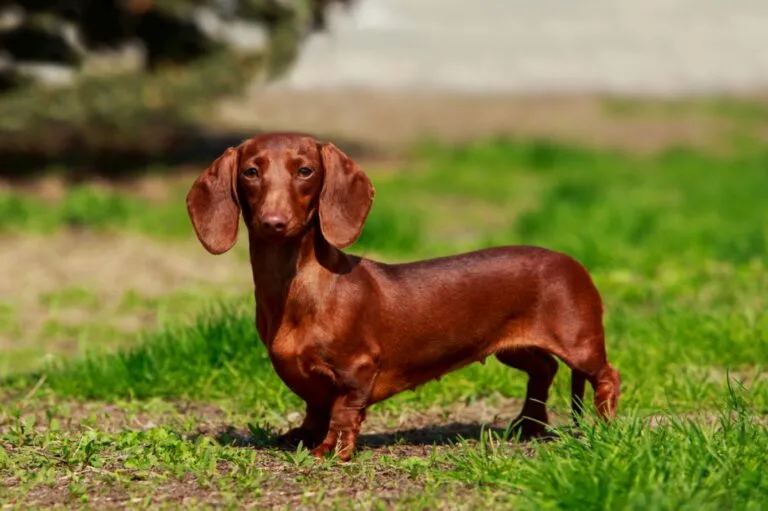
Dachshunds are big charmers on short legs.
The Dachshund’s build is unmistakable: short legs carry a muscular, elongated body. An upright head and floppy ears complete the picture.
The Dachshund’s long back is characteristic and has earned it the humorous nickname “sausage dog”. But looks can be deceiving: despite its short legs, this four-legged friend moves quickly and nimbly.
These compact dogs come in three different sizes:
One dog, many names: the Dachshund is also known as a Teckel. There is no difference between the terms.
Originally, the dog breed was given the name Dachshund because it helped track down badgers. Later, the shortened form “Dackel” became common “Teckel” which is the northern German variant.
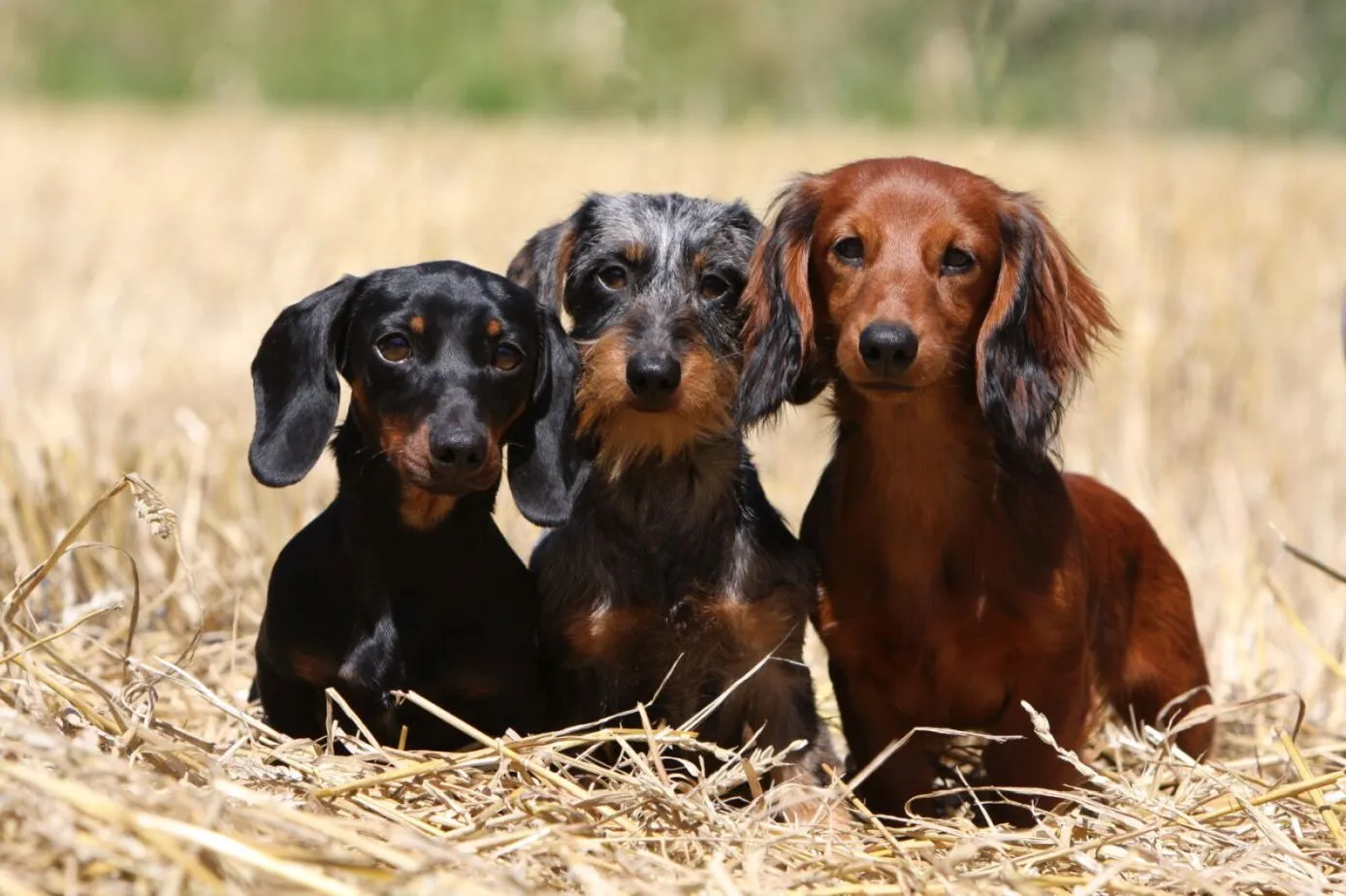
There are nine different types of Dachshund in total – alongside the three sizes, there are also three different coat types:
Even more variety comes from the range of colours in which Dachshunds appear. There are:
White is not permitted as a colour. As hunting dogs, it is important for them to blend in with the forest, their favourite environment.
 © Dogs / stock.adobe.com
Lively and intelligent, Dachshunds are masters of the hunt. This role requires independence and plenty of self-confidence. These four-legged companions prefer to decide for themselves where to go.
Especially when meeting large dogs, the Dachshund’s nature can therefore carry a certain potential for conflict: some Dachshunds refuse to show larger dogs the respect they deserve.
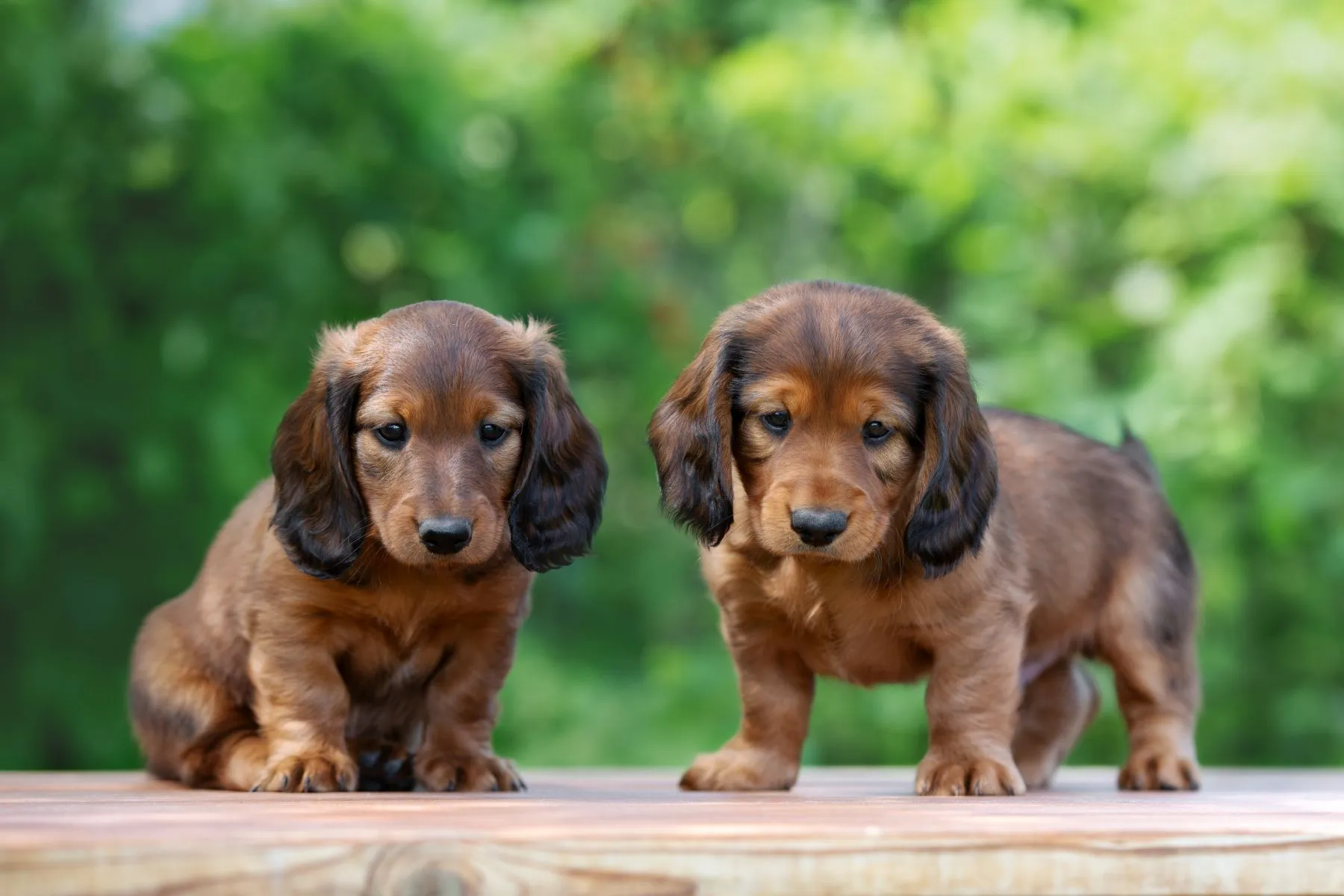
Nevertheless, Dachshunds are often even-tempered and are neither particularly anxious dogs nor aggressive dogs. As an owner, you can support this with loving but consistent training from puppyhood . This strengthens the human-animal bond, which should be built up carefully with Dachshunds in particular.
 © otsphoto / stock.adobe.com
Even though hunting is in their blood, Dachshunds are affectionate companions. They enjoy being pampered with plenty of fuss. Important for all family members: Teckels are not purely lap dogs, even if their size might suggest otherwise.
The typical Dachshund temperament has earned the breed a reputation for barking a lot. While there are some that bark excessively, the cause is usually a lack of training or insufficient stimulation.
To ensure your Dachshund feels comfortable, it needs regular dog grooming. Brush your dog several times a week – regardless of whether you have a long-haired or smooth-haired Dachshund at home.
The difference: caring for a long-haired Dachshund’s coat requires a little more time. With their short legs, they love rummaging through dense undergrowth. When grooming with a dog brush, it’s also a good idea to check for parasites on your dog.
Dachshunds are not necessarily suitable for beginners, as only consistent training will turn a Teckel into a well-balanced companion. This works best if you already have experience of owning dogs.
However, well-trained Dachshunds in the hands of experienced dog lovers can easily be kept as a family dog.
As a hunting dog, the Dachshund generally has a strong prey drive – one of your training goals should be to keep this under control. They should get used to interacting with other dogs and children from puppyhood so that they grow up to be sociable.
With good training, your Dachshund can also get used to other pets. Small animals, however, will often remain “prey” in the eyes of this passionate hunter, especially when out on walks. Off-lead exercise in areas rich in wildlife is therefore only advisable with exceptionally well-trained Dachshunds.
Training a Dachshund requires patience, empathy and consistency. This is because Dachshunds have a mind of their own. The reason: as former hunting dogs, they had to make confident decisions independently.
Set clear rules and, above all, remain consistent. Dachshunds usually learn quickly what is expected of them and stick to it.
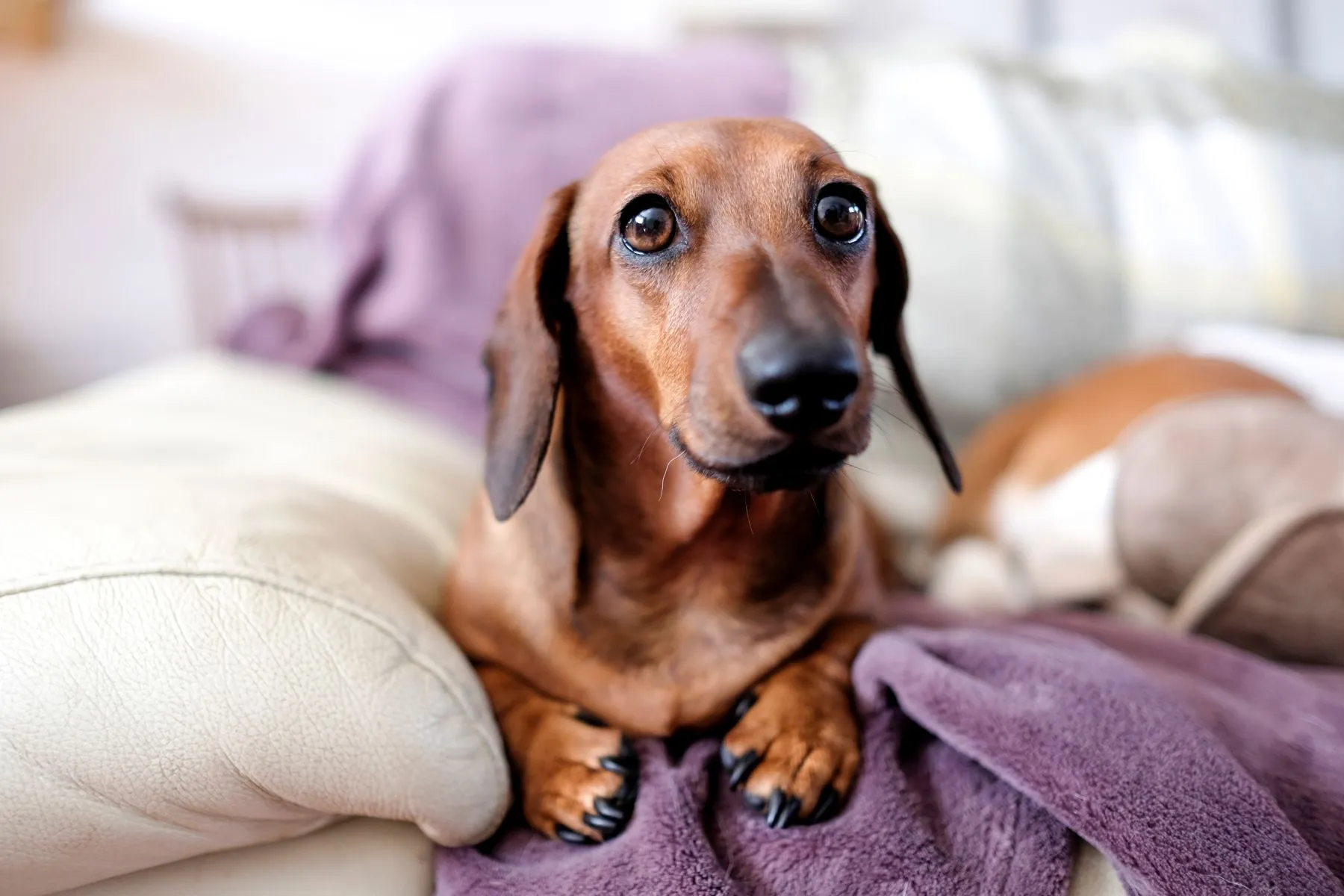
However, if you give in to those puppy-dog eyes during training, your four-legged housemate will shamelessly take advantage.
Thanks to their compact size, Teckels feel at home both in the city and in a spacious detached house in the countryside. City dogs, however, need plenty of exercise and enjoy walks through parks and urban woodlands.
 © andreac77 / stock.adobe.com
Teckels not only have a strong character but also plenty of intelligence. Accordingly, they need mentally stimulating activities to prevent boredom.
On outings, always give your little scent hound plenty of time to sniff and explore to its heart’s content.
Garden owners, take note: Dachshunds love digging – a habit that stems from tracking down badger setts.
While the Dachshund’s build offers many advantages when hunting, the short legs can lead to early bone growth issues and therefore crooked limbs.
Due to their distinctive physique and the health problems that can come with it, many Dachshunds are therefore classified as a breed associated with extreme conformation.
Stairs can encourage the development of so-called Dachshund paralysis. It’s therefore best to carry your dog up and down stairs as a precaution.
This type of slipped disc particularly affects dog breeds with elongated spines. Besides the Dachshund, this also includes the Basset Hound.
Compressed nerves in the spine can result in the dog being unable to control its hind legs, among other symptoms.
Once paralysis has occurred, it cannot be cured. Only the symptoms can be alleviated.
It is therefore better to prevent Dachshund paralysis with strong back muscles and an optimal body weight. For your four-legged friend, this means plenty of exercise and a balanced diet.
For a dog, Dachshunds have a relatively long life expectancy of around 12 to 15 years. Wire-haired Dachshunds are considered the most robust variety – although they are also said to be the most stubborn.
Dachshunds originate from Germany, where they were probably selectively bred from hounds in the Middle Ages. For a long time, these hunting dogs were a privilege of the nobility.
The breed name says it all: these agile dogs were reliable companions for hunters. With their short legs, they could enter fox and badger dens and drive the prey out.
The first official breeding programmes outside the nobility appeared at the end of the 19th century. However, it wasn’t until 1925 that a breeding standard was established. The 1972 Olympic Games finally brought the Dachshund its big breakthrough: a colourful Teckel named Waldi was chosen as the mascot of the major sporting event.
Today, the Dachshund also proves its versatility beyond hunting, for example in tracking work. Dachshunds are popular companion dogs and are now rarely used purely as working service dogs.
If a Dachshund has wrapped you around its paw, you’re not alone in your fascination. Many famous figures have fallen for their charm:
If you can’t decide between a Dachshund and another breed, you’re in luck: there are now various Dachshund crossbreeds. These include the Dachshund Terrier, the Piebald Dachshund and the Dachsador – a mix of Dachshund and Labrador.
Can’t imagine your household without a Dachshund? Then it’s time to start looking for your new companion. Whether you’re interested in a smooth-haired or wire-haired Dachshund, reputable breeders are the best place to go when searching for Dachshund puppies.
Steer well clear of cheap dogs from dubious mass breeders. Both mother dogs and puppies suffer from the profit-driven practices of such sellers. Moreover, every “bargain puppy” sold fuels demand for low-cost breeding.
You can find out what to look for when choosing a breeder in our dog breeder guide.
Doesn’t have to be a puppy? Then you may find what you’re looking for at an animal shelter or through Dachshund rescue organisations. These places also rehome older Dachshunds. Your advantage: foster carers can usually assess quite well how well trained an older dog already is.
Dachshunds shine with charm and a positive character. However, these lively sausage dogs can be stubborn. That’s why they belong with experienced owners.
In active families who are already confident in handling dogs, the Teckel will find the perfect home. It will repay you with loyalty and make sure life is never dull.
| Quick facts: | Dachshunds are small, compact dogs originally bred for hunting. Today, they are also very popular as family pets and companion dogs. |
| Chest circumference: | 25–45 cm (female), 27–47 cm (male) |
| Weight: | 3–9 kg |
| Average life expectancy: | 12–15 years |
| Temperament: | self-confident, intelligent, active, affectionate, strong prey drive |
| Coat: | short or long and smooth, wire-haired |
| Coat colour: | red, yellow, black, brown |
| Training effort: | high |
| Grooming effort: | medium |
| Exercise needs: | high |
| Origin: | Germany |

Animals have accompanied me for as long as I can remember - there is hardly a child's photo without a budgie on my head or a cat on my lap. For more than ten years, I have been writing as an editor about various topics ranging from health insurance to cat ownership. Always with me: my cat Mimi, who is the best source of inspiration for many texts and knows when it's time for a break from writing.
Fans of the Bearded Collie agree that those who aren't familiar with this dog breed simply have to get acquainted with it. And those who have experienced how a Bearded Collie bolts across meadows with its flowing fur, how it rolls around full of energy and joy and how it attentively and observantly takes into account its owners wishes become simply addicted to this original dog breed and its unique charm.
The Irish Wolfhound is one of the largest dogs in the world. Used for hunting wolves and bears in medieval Ireland, today it is kept exclusively as a family dog. Despite its imposing size, this sighthound is very gentle and affectionate. Unfortunately, the friendly giant is also quite prone to illness and has a comparatively short life expectancy. Is an Irish Wolfhound right for me, and what does keeping one involve? You can find everything you need to know in the following article.