{"url":"https://www.zooplus.co.uk/magazine/dog/dog-adoption/sled-dogs","title":"Sled Dogs: Appropriate or Animal Cruelty?","mag_id":402859,"is_single":true,"cat_name":"Dog","sub_cat_id":146,"sub_cat_name":"Dog sports and games","cat_id":3410}
Which breeds are classed as sled dogs? What makes these sporty four-legged friends special? And are sled dog races actually against animal welfare laws? You can find the answers to these questions and more below.
Opinions are divided when it comes to sled dogs. The high-performance sport is constantly caught between proper exercise, tradition, and accusations of animal cruelty.
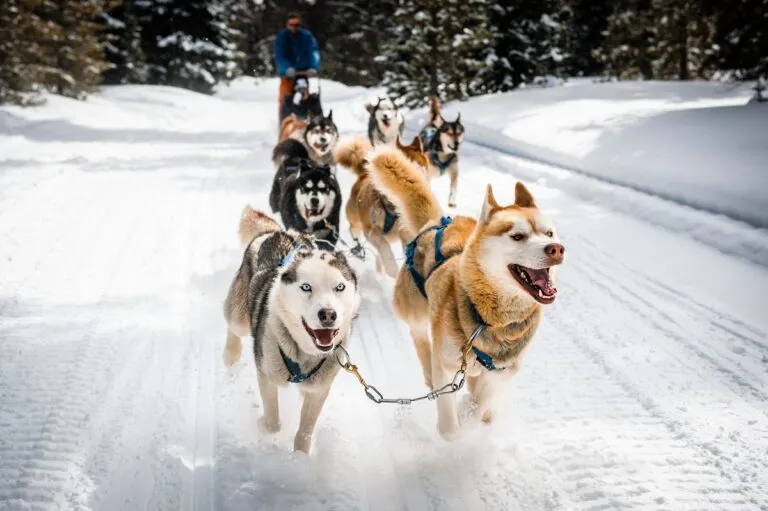
In principle, any dog that is harnessed to pull a sled can be called a sled dog. Wearing a harness and attached to the sled by lines, these medium-sized dogs race through snowy winter landscapes alongside the driver, known as the musher.
In a narrower sense, the term refers to certain breeds that, due to their origins, characteristics and natural behaviour, are particularly well suited to dog sledding. The Fédération Cynologique Internationale (FCI), the largest international canine organisation, recognises only four breeds as classic sled dogs.
Sled Dog Breeds
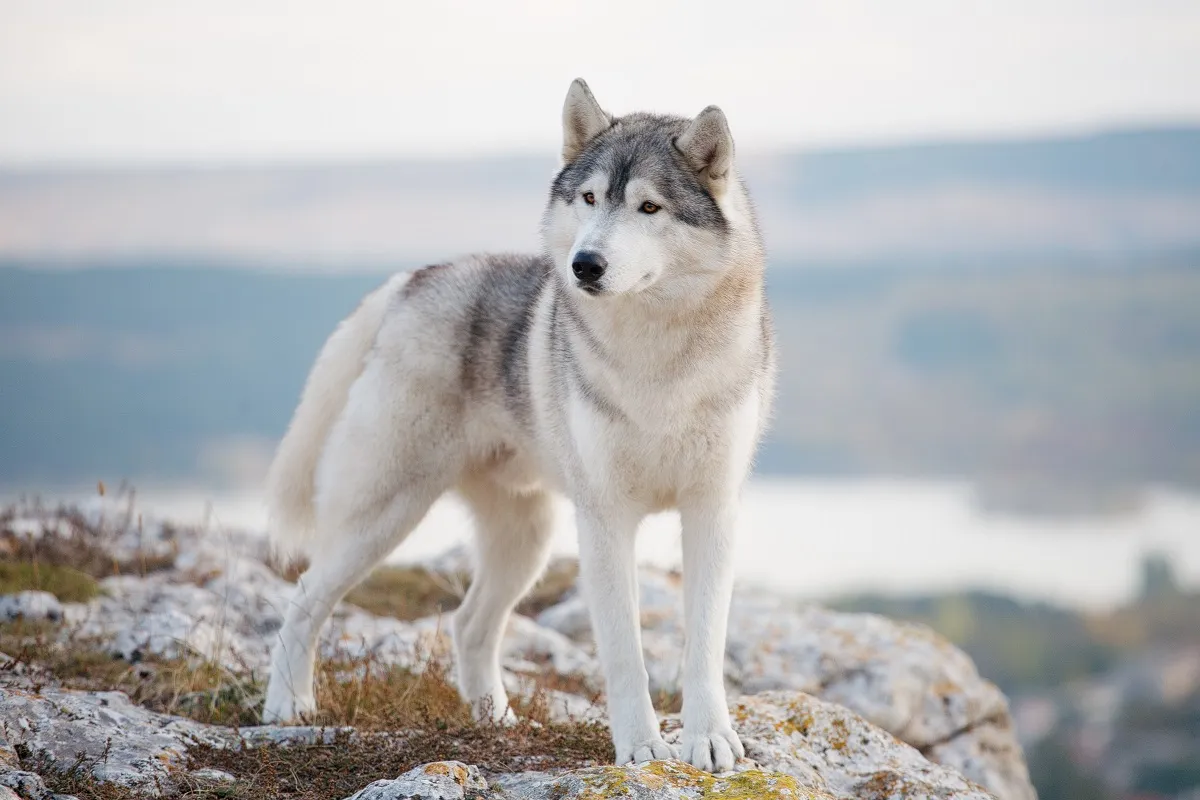
According to the FCI, the recognised sled dog breeds are the Siberian Husky, the Alaskan Malamute, the Samoyed and the Greenland Dog. In addition, there are other Nordic breeds that perform well as sled dogs, such as the Canadian Eskimo Dog, the Yakutian Laika and the Scandinavian Hound.
Good to know: Most of the dogs competing in sled dog races today are crossbreeds. They are either mixes of the Nordic breeds mentioned above or have a completely different ancestry.
Hunting Dogs vs. Sled Dogs
On short and medium distances, hunting-type dogs are often used as they reach their performance limit more quickly. For longer distances, the original Nordic sled dogs have proven themselves, as their breed traits make them ideally adapted to icy temperatures and able to sustain performance over extended distances.
A well-trained Siberian Huskies can pull up to nine times their own body weight.
Characteristics and Traits
The classic sled dog breeds – Siberian Husky, Alaskan Malamute, Samoyed and Greenland Dog – are closely related to the wolf. They not only resemble their wild ancestor more than most domestic dogs – they also typically do not bark. Instead, they howl and yelp like wolves.
Sled dogs are known for their exceptional stamina and strong willingness to work. They have a pronounced urge to move and an unwavering desire to run. Racing is in their blood, as they have been bred for this purpose for centuries.
What Sled Dogs Can Do
Well-trained dogs can pull a sled for up to 200 kilometres in a single day. Over short distances, they can reach top speeds of up to 40 kilometres per hour. On longer race routes, their average speed is between 16 and 23 kilometres per hour.
Sled dogs are hardy animals, resistant to cold. Even under heavy strain and in low temperatures, these adaptable dogs can deliver peak performance.
They have coarse outer coats with plenty of undercoat, grow to around 70 centimetres in height and weigh up to 45 kilograms. Thanks to their resilience and strong cardiovascular systems, sled dogs can cope with relatively limited food supplies despite their high athletic output.
Suitable as Family Dogs?
These dogs display strong social behaviour and, like wolves, prefer to live in packs. Within the group there is a strict hierarchy, which is regularly ‘negotiated’ – sometimes with their teeth. Interestingly, the lead dog at the front of the team does not necessarily have to be the pack leader.
While sled dogs enjoy being close to their family, they are often less people-focused and naturally more independent than other breeds. Of the four classic breeds, the sociable Samoyed is considered the most family-friendly.
Origins and History of Sled Dogs
The history of sled dogs can be traced back to around 100 BC. In the northern regions of the world, people have relied on the strength and endurance of sled dogs for centuries. It is believed that in northern Siberia, dogs were used before any other draught animals such as horses and cattle.
The names of the various breeds come from the indigenous peoples who originally bred them, or from the regions they hail from. For example, the Siberian Husky was once a loyal companion to Siberian nomadic tribes such as the Chukchi and the Yakuts. The Alaskan Malamute originates from the north-western Arctic and is named after the Mahlemiut people who live there.
Breeding and Areas of Use
In Canada and Alaska, sled dog races were particularly popular in the early 20th century. During the First World War, however, the dogs were also used in various regions for military purposes, for example to transport goods or injured people.
By the mid-20th century, many people had lost interest in sled dog racing, which also affected breeding. From then on, sled dogs were mainly bred for dog shows, where the most beautiful animals were awarded prizes. Breeding therefore increasingly focused on meeting breed standards rather than on the dogs’ working ability.
Different Breeding Lines
Only a few sled dogs were still bred for dog sports. The division of breeding lines into show dogs and working dogs continues to this day. Appearance alone gives no indication of how athletic a sled dog is. Since the 1970s, sled dog racing has regained popularity, but has increasingly come under scrutiny from animal welfare advocates.
Are Sled Dog Races Cruel to Animals?
Many animal welfare activists consider sled dog races and rides to be cruel. Some dogs reach – and exceed – their physical limits during these demanding races. Paw injuries, broken bones and/or joint inflammation can result from such extreme exertion. In the Iditarod, the longest sled dog race in the world, several dogs have died.
In addition, many sled dogs suffer from breed-related illnesses. For example, Huskies are notably prone to hip dysplasia and spinal diseases. Samoyeds are susceptible to diabetes and several other conditions. For this reason, animal welfare advocates consider sled dogs to be victims of torture breeding.
Differing Opinions
Another criticism concerns the owners: they are accused of keeping their dogs in kennels or on chains, only letting them out for training or competitions. Retired dogs that can no longer perform are allegedly sent to shelters – or simply killed.
Supporters of dog sports disagree. They believe that running and pulling are natural activities for sled dogs. In their view, it would be cruel to keep these active breeds in a cramped city flat without enough exercise.
Conclusion: Four-Legged High-Performance Athletes
Sled dogs are fascinating animals: their original appearance, unwavering drive to work and athletic endurance make them truly special. Most of them are not suitable as obedient house or family dogs. They belong with experienced owners who understand and can meet the specific needs of these canine athletes.
"A life without a pug is possible, but pointless," Loriot once said. I would unreservedly agree and add: "A life without horse, cat and rabbit as well!" My heart beats for all animals big and small and I have the great fortune to be able to write about my passion as a freelance author. With my articles I would like to raise awareness for animal welfare and give useful tips to animal lovers.
“How do I recognise that my beloved dog is happy?”. “How do I know that I am doing everything right with my dog and that it is completely happy with its life with me?”. Many dog owners ask themselves these questions.
The corona pandemic has changed the day-to-day life of millions of people all over the world. Dog owners who go into quarantine in order to not spread the virus further are asking themselves: how can I take care of my dog during the quarantine? For now the UK is in lockdown which entails more relaxed measures than a quarantine.
Are you thinking about adopting a rescue dog from abroad? Maybe you’ve met a ‘Rommie’ rescue dog out on a walk and become curious about what the adoption process entails?