{"url":"https://www.zooplus.co.uk/magazine/dog/dog-training/building-a-bond-with-your-dog","title":"Building a Bond with Your Dog","mag_id":373068,"is_single":true,"cat_name":"Dog","sub_cat_id":141,"sub_cat_name":"Dog Training","cat_id":3410}
The dog, it's commonly said, is a human's best friend. There's a remarkable capacity for both to form deep connections with one another. But for our four-legged friends, it's not just about an emotional exchange - it's about a more profound level of communication. Read on to discover how you can build and strengthen your bond with your dog.
Why is the Bond Between Dog and Owner So Important?
When sentient beings like humans and dogs come together, something special can develop. This something happens on a subtle, emotional level.
It’s about being seen for your wants and needs. Ideally, this relationship fosters deep trust and understanding.
Dogs, animals that crave hierarchy, seek leadership and safety. They yearn to be guided, to behave correctly, and to be loved and recognised for it.
When a dog feels its loyalty is acknowledged, it becomes the most devoted ally imaginable. Some might call this unconditional love – something that deeply benefits humans too.
Bonding Promotes Learning
The bond between dog and owner is critical for the canine’s development. A well-bonded dog usually knows when it has not acted according to the wishes of its owner. This awareness is crucial for learning new behaviours.
At the level of connection, dogs want to learn to please. Forcing behaviours from the outside, or punishing through hitting or shouting, doesn’t aid the dog. Such actions only damage and weaken its relationship and connection with you.
The connection is what grants you special access to your dog. Without a bond, the dog is less likely to participate in the learning process. They might comply with demands, but only out of fear of punishment or the prospect of a treat used incorrectly. Good dog training is founded on bonding.
Trust Over Fear Employ positive reinforcement when teaching your dog. It’s the quickest way to your goal and simultaneously strengthens your connection.
When a well-bonded dog is scared, it seeks protection from its trusted human.
How Can I Tell if I Have a Good Bond with My Dog?
Connection is subtle and elusive by nature. It’s not as if poorly bonded dogs won’t follow commands or become unmanageable. No, they mostly function, but something crucial is missing.
Connection can manifest as emotional closeness.
One best understands the potential of a strong bond when experiencing it firsthand. The difference is astonishing, especially for you:
You notice more small things.
The flow of information is more consistent.
You “know” what’s happening with your pet.
You are better able to interpret the body postures and expressions of your dog.
You sense whether it enjoys something, feels ashamed, or what mood it’s in.
So, it comes down to the emotional level, where deep, unifying trust takes hold.
Is your dog easy to recall?
Successful recall indicates a good bond. If it hesitates or passes you by, that’s a sign of a lacking bond. Your dog may not feel entirely secure with you or may have had negative experiences.
What is your dog’s reaction to fear?
Dogs naturally tend to flee in fearful situations, signalling their need for safety. If in fear, it runs straight to you and takes refuge between your legs, that’s a sure sign of a strong bond.
The dog has complete trust in you, placing itself in your hands and showing that you can provide the necessary safety. In your relationship history, you’ve repeatedly proven yourself to be a pack leader who keeps promises, is strong, and allows the dog to be vulnerable. You maintain control for the benefit of your pet.
Tip: Support your dog in a frightening situation by using your body as a shield. Being protected provides them with the safety and trust needed to cope well with their fear.
How Can I Build a Bond with My Dog?
The foundation of a connection is time spent together with intent to genuinely understand the dog’s nature. Dogs perceive this and respond with closeness.
Good to Know: Bonding naturally develops if you interact with your dog in a species-appropriate manner and engage with it.
Building a bond through play.
Playing and sharing adventures are certainly the most effective ways to connect with your dog. Ideally, you’ll get down to your dog’s level. Sit on the floor to interact with it.
You learn during play what it enjoys and what it doesn’t, where it excels, and what its limits are. These areas can be specifically improved through training to create shared achievements.
Strengthening the bond through physical contact.
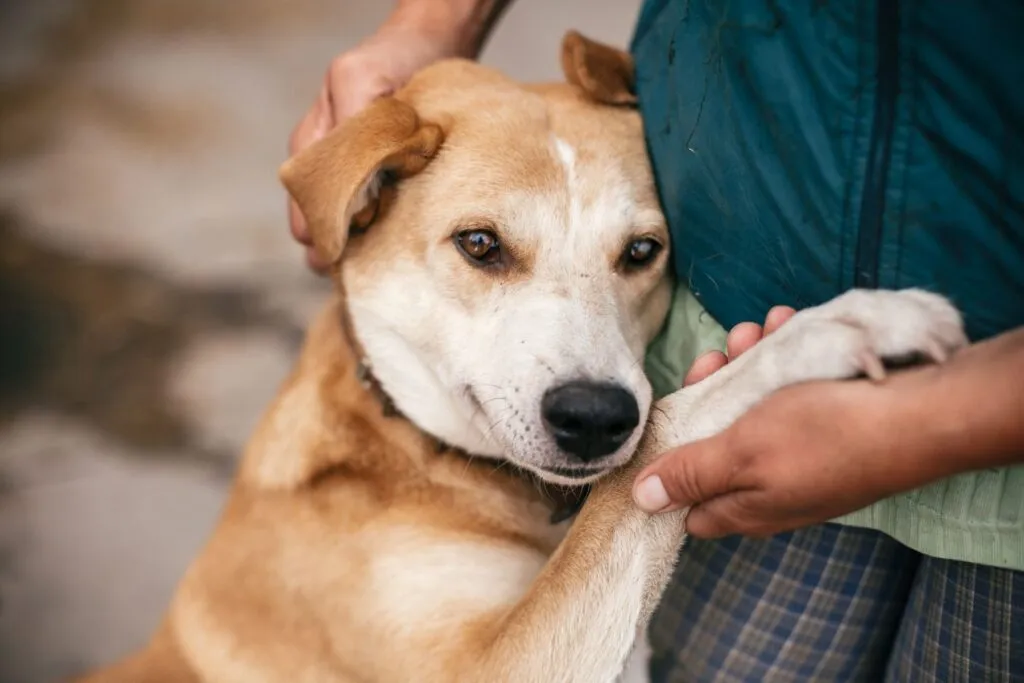
Many dogs value physical contact, while some do not. You need to learn about your pet. If the dog wants to cuddle, allow it. Rejection, particularly early in the relationship, can create deep rifts.
Should your dog be quite distant, it may have had poor experiences in the past. Rescued dogs, for instance, may initially appear wary. Give your dog the chance to open up at its own pace. Generally, all dogs appreciate some level of physical contact.
Building a better bond through patience.
Patience is a virtue, especially in dealing with dogs. They aim to please and to do things right, making their owner proud. If they err, it’s usually due to misunderstanding or because they haven’t been taught.
Invest time and approach shared everyday activities and successive lessons with calmness and patience, repeating them in different ways if immediate success is not achieved. Your dog will reward your patience with affection, and the trust between you will flourish.
Food as Affirmation, Not Manipulation
When your dog does something new well, a treat can affirm its action. Food is used as a reinforcer within existing bonds.
Never use food as a form of bribery or manipulation. Don’t try to coax your dog with treats into doing something it currently does not want or cannot do.
This puts the dog in conflict: it wants the treat but dislikes the lesson. The desire for food will win, leading to inner turmoil, which is antithetical to a good bond.
Withholding Food is a No-Go
Similarly, you should never use the denial of food as punishment. Your responsibility to feed is fundamental; and the dog knows it. Manipulating with food would fundamentally and sustainably shake its trust in you.
Your position as pack leader could be questioned, and your relationship might suffer serious damage.
Important: There are boundaries that mustn’t be crossed. Withholding food as a disciplinary measure is one of them.
A Dog Trainer Can Help Strengthen Your Bond
In dog schools, not only is basic behaviour trained, but good trainers also help you discover and develop your bond.
Once you’ve formed the early stages of a connection with guidance, you can continue working on it independently. Trainers provide you with the tools needed to grow closer to your dog as an owner.
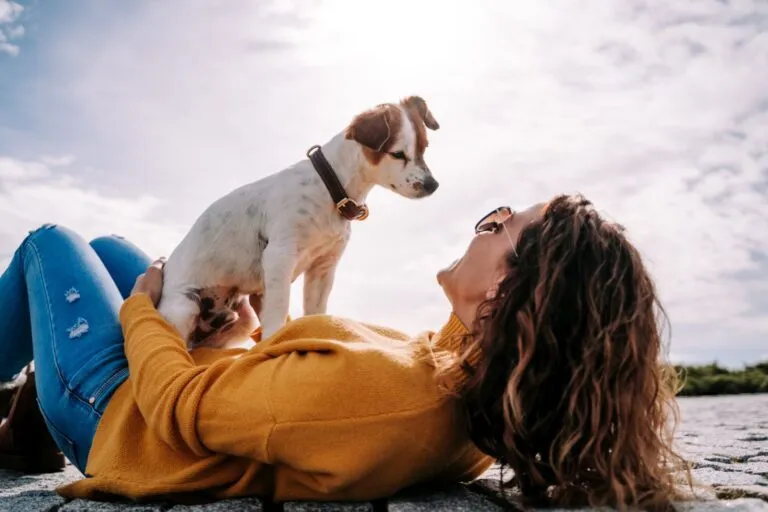
When you play with your dog, engaging at eye level strengthens your bond.
At a Glance: How to Build a Bond with Your Dog
Play and train with your dog
Praise plenty and generously in everyday situations
Allow your dog physical contact when it seeks it, and don’t force when it refuses it.
Stay calm in stressful situations and be fair and patient with training
Set and enforce rules consistently, conveying mental strength
Conclusion: Bonding is the Key to a True Partnership
Having a connection means acting in the dog’s best interests. As an owner, your duty is to train your dog, but the basis for this is not coercion; it’s motivation.
Dogs with a deep bond can far better realize their potential. They learn quicker, achieve more, and exhibit fewer behavioural issues.
Bonding isn’t just about emotional sentimentality; it’s the key to a true partnership where both dog and human can exceed their own limits.
Here are some purchase proposals curated by the zooplus editorial team
Important Note: The content provided for informational purposes only and is not intended to replace professional veterinary advice, diagnosis or treatment. If you have any questions or concerns about your pet's health, please always consult a licensed veterinarian.
At the Justus-Liebig-University of Giessen I was extensively trained as a veterinarian and was able to gain experience in various fields such as small animal, large animal and exotic animal medicine as well as pharmacology, pathology and food hygiene.
Since then, I have been working not only as a veterinary author, but also on my scientifically driven dissertation. My goal is to better protect animals from pathogenic bacterial organisms in the future.
Besides my veterinary knowledge, I also share my own experiences as a happy dog owner and can thus understand and enlighten fears and problems as well as other important questions about animal health.
“How do I recognise that my beloved dog is happy?”. “How do I know that I am doing everything right with my dog and that it is completely happy with its life with me?”. Many dog owners ask themselves these questions.
The corona pandemic has changed the day-to-day life of millions of people all over the world. Dog owners who go into quarantine in order to not spread the virus further are asking themselves: how can I take care of my dog during the quarantine? For now the UK is in lockdown which entails more relaxed measures than a quarantine.
Are you thinking about adopting a rescue dog from abroad? Maybe you’ve met a ‘Rommie’ rescue dog out on a walk and become curious about what the adoption process entails?