{"url":"https://www.zooplus.co.uk/magazine/dog/dog-training/my-dog-bites-what-should-i-do","title":"My Dog Bites – What Should I Do?","mag_id":413203,"is_single":true,"cat_name":"Dog","sub_cat_id":141,"sub_cat_name":"Dog Training","cat_id":3410}
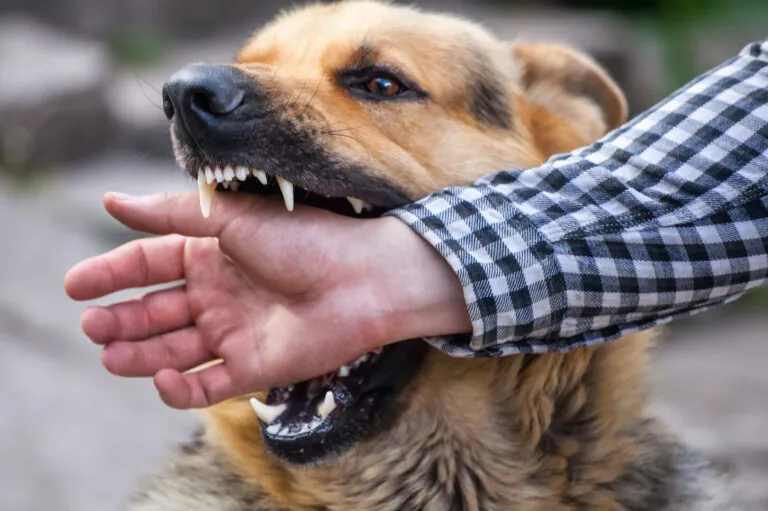
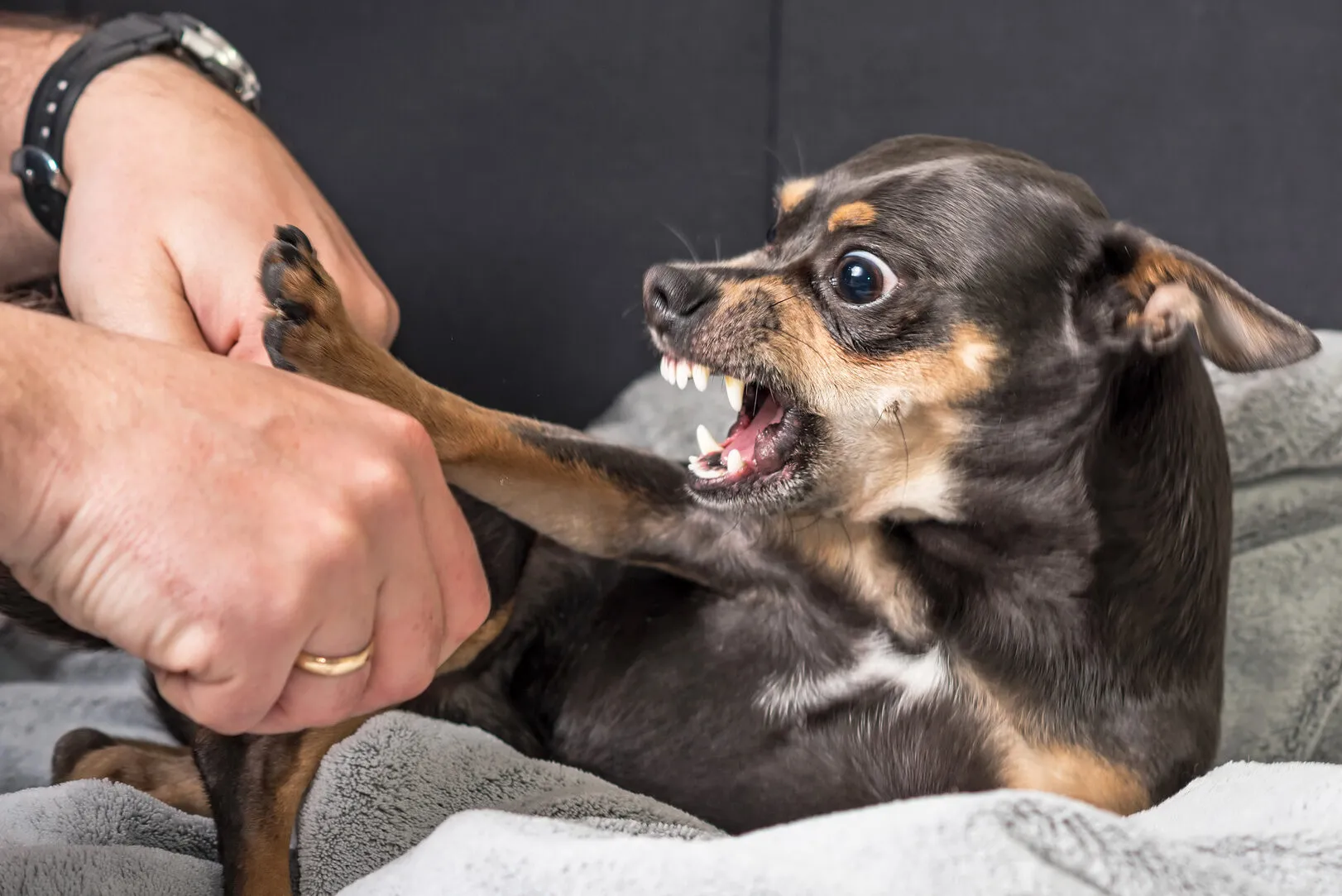
A dog that shows aggressive behaviour towards other four-legged friends or even people poses a high risk, especially if they are already snapping, have bitten other dogs or even a person. We explain what you can do if your dog bites. But first things first: every dog is different in terms of character and background, so there is no one-size-fits-all solution.
Bear in mind: a dog does not bite for no reason. It usually builds up over time and in many cases is based on entrenched misunderstandings in communication between human and animal.
Seek Professional Help
To recognise these issues, it makes sense to bring in a professional dog trainer. Together, you can get to the bottom of the causes and prevent future aggression.
By the way: it’s not uncommon for small or very good-natured four-legged friends to develop into snappy dogs because owners have not taken the training of their “as-good-as-gold” companions seriously enough. This calls for a long-term change of mindset at the other end of the lead!
Safety First: The Muzzle
When dealing with aggressive behaviour, preventing danger comes first. A potentially bite-prone dog should, for example, only be out in public wearing a muzzle, and you may also need to take precautionary measures at home. Make sure you focus on positive muzzle training.
Important: if you cannot guarantee that your four-legged friend won’t bite while out and about, you have no other option but to have them wear a muzzle. Make sure your dog can pant freely without restriction. After an adjustment period, the muzzle will no longer bother your companion and you will project greater confidence, which in turn has a positive effect on your joint training.
When Dogs React Aggressively Towards Other Dogs
Aggressive behaviour towards other dogs can often be diffused before it escalates if owners, at the first signs of an uncomfortable encounter (circling, growling), calmly but decisively walk away in different directions.
If you know that your dog is only aggressive towards certain groups of dogs (male dogs, German Shepherds, etc.), you can avoid such encounters by planning your walks ahead and coordinating with other dog owners, although parallel training is still worthwhile.
Dog Bites Another Dog: The Consequences
If a fight does break out, well socialised animals are usually engaged in a ritualised conflict that is not intended to cause injury. However, even these can lead to serious consequences, particularly where there is a significant size difference.
More serious, however, are usually unprovoked attacks from dogs that do not display normal social behaviour and bite without warning. In addition, the dog that has been attacked may be so affected by this traumatic experience that they also react aggressively to future encounters with other dogs.
What Should You Do if a Fight Breaks Out?
If your dog bites or is bitten, do not intervene under any circumstances. Shouting or hitting with the lead would only make the opponents more aggressive and put you at additional risk.
Never try to pull dogs apart if they are locked onto each other, as this could worsen the injuries. It can help to startle the dogs with a loud noise (such as bursting a plastic bag) or by throwing water from a bottle you are carrying, so that you can safely separate and leash them.
Causes: Why Does My Dog Keep Biting Me?
The problem often stems from poor socialisation and the resulting insecurity or fear. In some breeds, a strong protective instinct can also quickly get out of hand, potentially making them a risk.
And of course, training mistakes can encourage or reinforce this behaviour, for example, if your four-legged friend has learned that they get their own way by threatening or snapping. They may then be allowed to stay on the sofa or not have to give up their toy. In this case, it is strongly advisable, ideally with professional support, to correct these training mistakes.
Other Possible Causes
Of course, there are many other reasons why a dog may snap – depending on their age, breed, health and the current situation. Possible triggers include:
From puppyhood, redirect potentially risky situations in a positive way. For example, if your young four-legged friend behaves aggressively towards visitors, a good exercise is to ask your dog to “sit” when guests arrive. If this works well, the visitor can give them a treat.
At the first signs of snapping, it is advisable to intervene immediately. Work on your dog’s basic obedience and use a clear stop signal such as “leave it” at the slightest sign of unwanted aggressive behaviour. If these approaches do not bring the desired success, you can distract your dog with a loud noise, such as a throw chain, and defuse the situation that way.
If a dog snaps while being stroked, this could be a sign that they are in pain.
Consequences: What Should I Do if My Dog Bites Me?
Try to remain calm and composed at all times. Dogs immediately notice if you become nervous when a jogger approaches or even if you are afraid of your four-legged friend, which in turn can reinforce aggressive behaviour. If there are general dominance issues within the family, meaning the dog shows aggression towards certain members, it makes sense to agree on a consistent approach. Different rules will only confuse your dog.
Aggressive and dominant dogs are best given a sleeping area that is a little out of the way. It can also help to exclude the dog from certain rooms altogether so that dominant animals are easier to manage.
How Do I Discipline a Dog that Bites Me?
The aim is to safely stop the unwanted behaviour rather than punish the dog. Physical punishment or intimidation often makes biting worse, as the dog may develop stress or defensive behaviour.
If there is serious growling or defensive biting, defuse the situation by creating distance. Reward calm behaviour, as positive reinforcement is the most promising approach in the long term.
Visit to the Vet Practice
After biting incidents, it is strongly recommended to seek professional help from a dog trainer or canine behaviourist and to work on your dog’s impulse control. Short, clear exercises can help you get the problem under control.
In addition, you should have your dog examined by a vet to rule out pain or a neurological condition. Both can lead to behavioural changes and make a dog more prone to biting.
In Brief: The Most Common Questions about Dogs that Bite
Here you will find answers to frequently asked questions about biting incidents in dogs.
Why Does My Dog Bite When Something Doesn’t Suit Them?
Some breeds naturally have a relatively low frustration threshold, such as the Malinois or the American Staffordshire Terrier. However, breed alone does not determine whether a dog will bite out of frustration. Poor socialisation during puppyhood and insufficient physical and mental stimulation can also lead to a dog biting other dogs or even people.
Why Does My Dog Bite My Hand?
The hand is often the body part that approaches the dog. Why your dog nips depends on the individual situation. It may be excited displacement behaviour during play, but it can also be a defensive reaction – for example, if you are about to have their claws trimmed.
Why Does My Dog Suddenly Bite When Being Stroked?
If a dog suddenly snaps or bites while being stroked, this is often a sign that something feels unpleasant, physically or emotionally. The area being touched may be painful. Some dogs simply do not enjoy being stroked (for long periods). If signals such as freezing, yawning or turning away are overlooked, the dog may eventually respond more clearly.
Why Does My Dog Bite During Play?
When playing, dogs use their mouths in a similar way to how people use their hands. Biting only becomes problematic if the dog nips too hard or becomes frantic or deliberately aggressive. In that case, your dog may be overstimulated or the game may have triggered their prey drive. It is also possible that the game has left your dog stressed or frustrated.
Why Does My Dog Bite Itself?
If a dog bites, chews or licks themselves, there can be many reasons. They may be suffering from a parasite infestation (e.g. fleas or mites) and trying to relieve the itching by nibbling. However, some dogs show this behaviour out of anxiety or boredom, which can develop into a form of compulsive behaviour.
Do Dogs that Bite Have to Be Put to Sleep?
A dog does not have to be put to sleep simply because they have bitten. The decisive factors are the cause, severity, frequency and the risk posed to people or other animals. Euthanasia is always the last resort, for example, if a dog bites due to severe neurological problems and the underlying cause cannot be adequately treated.
Conclusion: Take Behavioural Problems Seriously
When a dog bites, it is often a communication problem rather than simple disobedience. To help your four-legged friend unlearn this unwanted behaviour, you should identify the cause and, where possible, address it. Dogs that bite are a danger to themselves and others – especially if children live in the household.
This article was translated using Artificial Intelligence from the original German zooplus Magazine. While the original content was authored by industry experts and reviewed by our editorial team, this automated translation has not been human-edited and is provided for informational purposes.
zooplus Editorial Team
The zooplus editorial team consists of a dedicated team of experts with many years of experience in the field of animal husbandry: Luisa with her White Swiss Shepherd Elyos, Laura, Julio, and Florian. Together with a large network of animal experts, we work to make the zooplus magazine a trusted source of information for all animal owners and lovers. Our goal is to provide exciting animal knowledge and relevant information on the proper care of pets.
Being particularly social animals, dogs love the company of their pack. Nevertheless, every adult dog should be capable of staying on its own for short periods of time. This will need to be trained early on in life, as a fully-grown dog that has never been left alone will struggle to adapt.
Shoes, cables, phones, felt-tip pens, sofas, carpets or waste bins – nothing seems to be safe from the destructiveness of some dogs. Within a very short space of time, wild dogs can turn a home and all its furnishings upside down. But why do some dogs have destructive tendencies and how can they move away from this behaviour?
Are you thinking about adopting a rescue dog from abroad? Maybe you’ve met a ‘Rommie’ rescue dog out on a walk and become curious about what the adoption process entails?