They lower blood pressure, reduce emotional stress and boost our social wellbeing: dogs have a remarkably positive effect on us humans. This fact is increasingly being used in therapies such as speech and occupational therapy, physiotherapy and psychotherapy. But what exactly do therapy dogs do? What skills do they need, and which dogs are suited to the therapist’s role?
What Distinguishes a Therapy Dog from an Assistance or Visiting Dog?
Whether in hospitals, day clinics, special educational practices, care homes or schools, therapy dogs work in a wide range of settings. However, their home is – and remains – their owner’s house, who is usually also a therapist or works in another medical or educational profession. This is what sets them apart from assistance dogs, which live permanently as constant companions with people who have physical, mental or emotional disabilities.
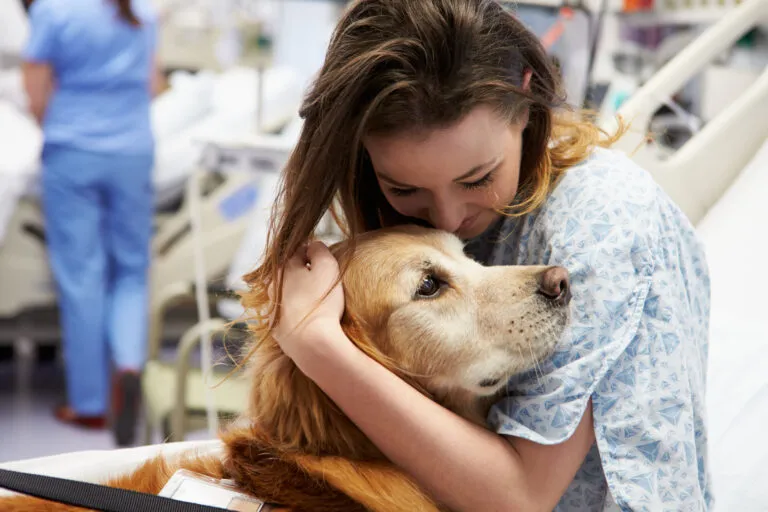
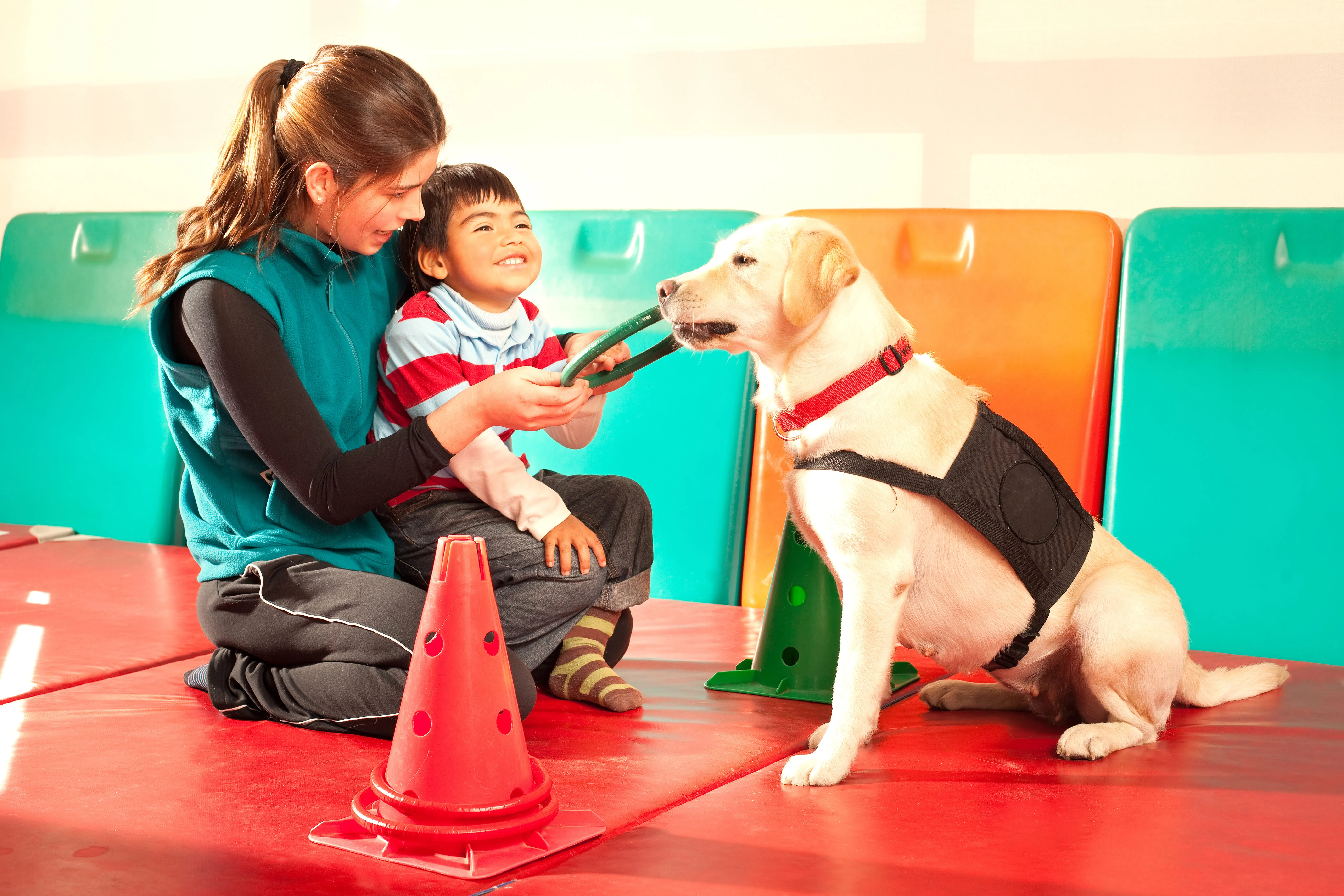
Together with their professional handler, therapy dogs form a close-knit team and support animal-assisted medical treatments for people with psychological or neurological conditions. Through their mere presence alone – and often through physical affection or an eager invitation to play – therapy dogs can significantly enhance the success of therapy sessions.
Unlike visiting dogs, where the main focus is on open encounters between people and dogs and encouraging social contact (without a specific therapeutic goal), therapy dogs are closely integrated into a planned course of treatment and are used purposefully by their owners during a patient’s therapy over several weeks. Of course, dogs do not replace a human therapist, but – as has been proven in many cases – they can positively influence and support treatment outcomes.
Where Are Therapy Dogs Used?
As a dog lover, you’ve probably known for a long time just how positive an effect dogs can have. This has now also been scientifically confirmed in various studies. It’s no surprise that more and more therapists and medical professionals are using dogs to support their work and help achieve the desired therapeutic success.
Whether in the treatment of depression, anxiety disorders, speech difficulties, learning disorders or other physical, psychological or neurological conditions, therapy dogs are now used in numerous areas and contribute to treatment success in a variety of ways. Their field of application covers almost all therapeutic disciplines, such as:
Therapy dogs provide comfort and emotional support for children.
How Do Therapy Dogs Work?
Therapy dogs accompany their owners to various individual or group therapy sessions and support people there in different ways. A distinction is made between active therapy dogs, which “actively” encourage patients to do something (for example, by inviting them to play), and reactive therapy dogs, which tend to take a more observant approach and respond very empathetically to patients’ moods and needs.
In their work, dogs come into contact with very different people: those who struggle to express themselves, those who can hardly move or move in unusual ways, and those who are fidgety and nervous. They work with children as well as adults and older people and are able to respond to each patient’s individual characteristics.
In their role as therapy dogs, these four-legged helpers are usually away from home and are confronted with a wide variety of situations, rooms, smells and medical equipment. All of this inevitably means a certain level of stress for the dog, which they must be able to cope with in their work as a therapy dog.
The Right Working Conditions
This makes it all the more important that the working conditions are right. After all, a therapy dog is, first and foremost, still a dog. As such, they have natural needs and – like all dogs – require plenty of exercise outdoors, close contact with their people and opportunities to play and interact with other dogs.
Even dogs with a seemingly stoic calm who appear to live only to please and help us humans need the occasional chance to withdraw and simply “be a dog”. Because of the stressful situations involved, experts recommend that therapy dogs should not work therapeutically for more than 45 minutes per day and no more than three times a week. Of course, this depends greatly on the specific working conditions.
If the dog alternates with other therapy dogs during work, is in a very familiar environment and, for example, can let off steam with other dogs on the grass or retreat in between sessions, the daily working time can be extended slightly. However, after two hours per day at the latest, a therapy dog’s working day should come to an end.
What Results Can Be Achieved with Therapy Dogs?
Dogs convey a sense of warmth, safety and security – simply by being there. As researchers have discovered, the presence of a friendly and open dog can demonstrably lower our blood pressure, reduce stress, aggression and insecurity, and significantly enhance our wellbeing. But how do dogs actually manage this? Dogs are highly empathetic and often perceive different moods with great accuracy. Unlike us humans, however, they do not judge.
They don’t criticise, they don’t judge, they don’t blame us, they have no expectations and they don’t offer well‑meant advice. They accept people as they are, provide comfort and closeness – regardless of how they look, how they behave, how they speak or move. At the same time, when we stroke a dog, our bodies release the hormone “oxytocin”, also known as the cuddle or happiness hormone, which makes us calmer, happier and more empathetic.
In a way that hardly any human therapist can, dogs manage to draw people out of themselves. At first, this might be a small smile from a patient who, due to their condition, was previously barely able to show any signs of joy. Over the course of therapy, it can lead to patients opening up more, speaking more fluently or suddenly moving an arm that had previously just hung limp at their side.
Therapy dogs can influence people in many different ways and achieve remarkable results in psychological, social and physiological areas. These include:
Strengthening emotional stability and reducing anxiety or aggression
Reducing stress
Relaxing the muscles
Lowering blood pressure and heart rate
Promoting awareness of the senses and one’s own body
Improving motor skills and speech abilities
Reducing balance or perceptual disorders
Encouraging interaction and communication
Increasing attention and sense of responsibility
Boosting self-esteem and supporting integration into society
Improving concentration, memory and reaction skills, thereby enhancing overall performance
How Does a Dog Become a Therapy Dog?
Not every dog is born to be a therapy dog. Dogs with a particularly stubborn streak or those with a strong protective and guarding instinct who may sometimes display aggressive or territorial behaviour would be more likely to increase stress in patients rather than have a positive effect. Key traits for success as a therapy dog include an open and friendly nature, a high stimulus threshold and low aggression – and these characteristics are closely linked to a dog’s early upbringing.
Ideally, “training” to become a therapy dog begins as early as puppyhood. A consistent upbringing and comprehensive socialisation are essential for later work as a therapy dog. By contrast, the breed the dog belongs to, whether it is a crossbreed and whether it is large or small, is of secondary importance. In principle, any dog can be trained as a therapy dog – provided the right prerequisites are in place.
What Requirements Must a Therapy Dog Meet?
A gentle and calm temperament is, of course, essential for therapy dogs. Jumping up at people, growling at them or barking loudly, pulling on the lead and ignoring their owner’s commands – none of this is acceptable for a therapy dog. Instead, they must allow themselves to be stroked at any time and must not become nervous or aggressive even when touched somewhat clumsily or when their tail is pulled. A therapy dog should therefore have the following traits:
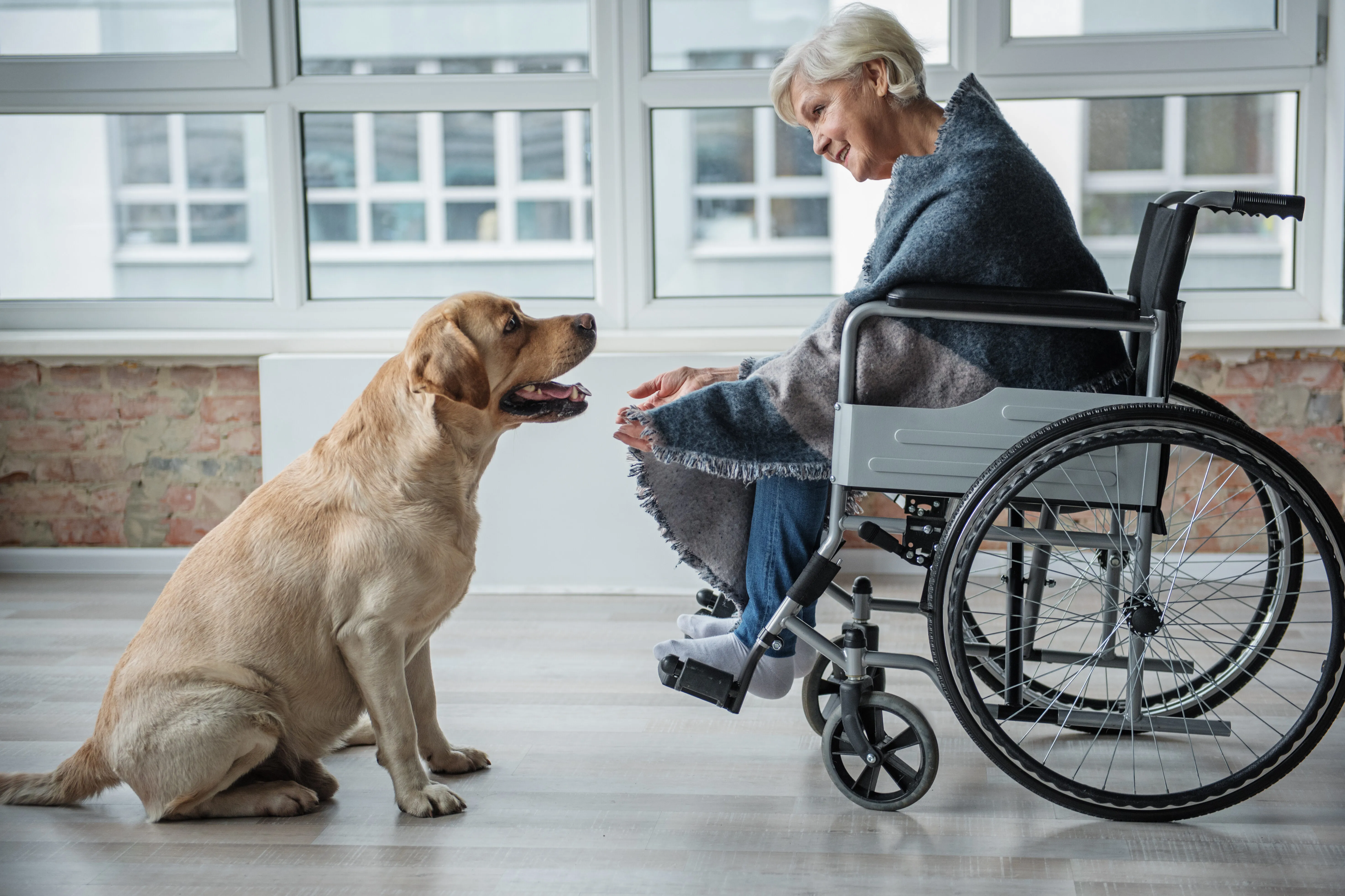
Comfort and connection through the support of a therapy dog.
Are Some Breeds Better Suited to Therapy Work than Others?
If a dog meets all the above characteristics, its breed is of little importance. Nevertheless, certain breeds are naturally more likely to have the qualities of a therapy dog than others. Friendly, people-oriented companion dogs or traditional working dogs that have been bred for decades to work closely with humans as hunting, herding or utility dogs are particularly well suited. These include breeds such as the Maltese, Pug, Poodle, Border Collie, German Shepherd, Bernese Mountain Dog, Australian Shepherd, St Bernard, Leonberger, Newfoundland, Beagle, Labrador or Golden Retriever.
Of course, belonging to one of these breeds does not automatically make a dog a good therapy dog. More important than origin are good socialisation, sound training and plenty of positive experiences. Even though more and more breeders are attempting targeted breeding of therapy dogs, what ultimately matters is the individual dog and how the puppy develops from birth onwards.
How Are Therapy Dogs Trained?
Whether a German Shepherd, Collie or Labrador, the basic rule applies: adult dogs that are already strongly shaped by previous experiences, may have had negative experiences with people and in whom certain undesirable behaviours have already become established are unlikely to be successfully trained as therapy dogs.
There is therefore no training in the traditional sense where a dog becomes a therapy dog within six months – regardless of prior knowledge. Even in the USA, where state-recognised therapy dog training has existed since the 1980s, both dog and handler must meet certain requirements before training begins. These are assessed through a temperament test for the dog and a written and oral test for the handler.
Dogs that are to be approved as therapy dogs in Germany must also pass a state examination. Various institutions and associations offer courses and training opportunities to prepare for work as a therapy dog. Dogs are also often trained through modelling, meaning they live alongside active therapy dogs and learn from them through natural imitation.
Additional Regulations for Therapy Dogs
In addition to assessing the dog’s stable temperament and the owner’s professional knowledge, the health and hygiene of prospective therapy dogs naturally play a crucial role. It is important that the dog is completely healthy, as a dog in pain may sometimes react unexpectedly and aggressively.
Furthermore, they must be free from parasites, be regularly wormed and have all necessary vaccinations. Close monitoring by a vet is essential for a therapy dog because – depending on where they work, for example in hospitals or day clinics – they are exposed to more germs and bacteria than other dogs.
If a dog meets all the above requirements and has demonstrated this in an examination, nothing stands in the way of their path to becoming a therapy dog. And in doing so, they will certainly not only make their patients happier in the future, but themselves as well – because “being needed” gives dogs a good feeling too.
This article was translated using Artificial Intelligence from the original German zooplus Magazine. While the original content was authored by industry experts and reviewed by our editorial team, this automated translation has not been human-edited and is provided for informational purposes.
zooplus Editorial Team
The zooplus editorial team consists of a dedicated team of experts with many years of experience in the field of animal husbandry: Luisa with her White Swiss Shepherd Elyos, Laura, Julio, and Florian. Together with a large network of animal experts, we work to make the zooplus magazine a trusted source of information for all animal owners and lovers. Our goal is to provide exciting animal knowledge and relevant information on the proper care of pets.
Being particularly social animals, dogs love the company of their pack. Nevertheless, every adult dog should be capable of staying on its own for short periods of time. This will need to be trained early on in life, as a fully-grown dog that has never been left alone will struggle to adapt.
Shoes, cables, phones, felt-tip pens, sofas, carpets or waste bins – nothing seems to be safe from the destructiveness of some dogs. Within a very short space of time, wild dogs can turn a home and all its furnishings upside down. But why do some dogs have destructive tendencies and how can they move away from this behaviour?
Are you thinking about adopting a rescue dog from abroad? Maybe you’ve met a ‘Rommie’ rescue dog out on a walk and become curious about what the adoption process entails?