{"url":"https://www.zooplus.co.uk/magazine/dog/dog-training/working-dogs-at-a-glance-on-four-paws-in-action","title":"Working Dogs at a Glance: On Four Paws in Action","mag_id":417060,"is_single":true,"cat_name":"Dog","sub_cat_id":141,"sub_cat_name":"Dog Training","cat_id":3410}
Dogs are considered man's best friend. However, some dogs are far more than loyal companions by our side. They take on important tasks and receive specialised training. We'll show you how working dogs support us.
Generally speaking, working dogs are four-legged companions that carry out specific tasks for people. These can include guide dogs for the blind or police dogs, for example.
As a rule, these animals must pass a working test before they are officially allowed to begin service. The Fédération Cynologique Internationale (FCI) recognises various working tests of this kind, such as rescue dog tests.
In everyday language, however, all dogs bred for a specific purpose are also referred to as working dogs – including hunting dogs and guard dogs.
Working Dogs Versus Utility Dogs
Sometimes the term “utility dogs” is used synonymously for working dogs. According to the FCI, utility dogs are high-performing working dogs.
Broadly speaking, all dogs belonging to a recognised utility dog breed are called utility dogs. These include, for example, the Dobermann, the German Shepherd and the Border Collie.
In contrast, the term “working dog” is broader in meaning. It includes all dogs that have passed a working test.
Why Are Dogs Better Suited to Certain Tasks than Humans?
The tasks carried out by working dogs are varied. Thanks to their keen noses and sensitive hearing, dogs are much better suited to many activities than humans.
Specially trained four-legged companions can sniff out illnesses such as diabetes and support people as loyal helpers during hunting or while herding sheep.
How Do I Keep a Working Dog Occupied?
Working dogs are intelligent, loyal and eager-to-learn animals. During training with their handler, they learn to use their nose and hearing according to their role.
Anyone who does not want their working dog to take a working test should still make sure the animal gets breed-appropriate activity – for example through suitable dog sports or scent work.
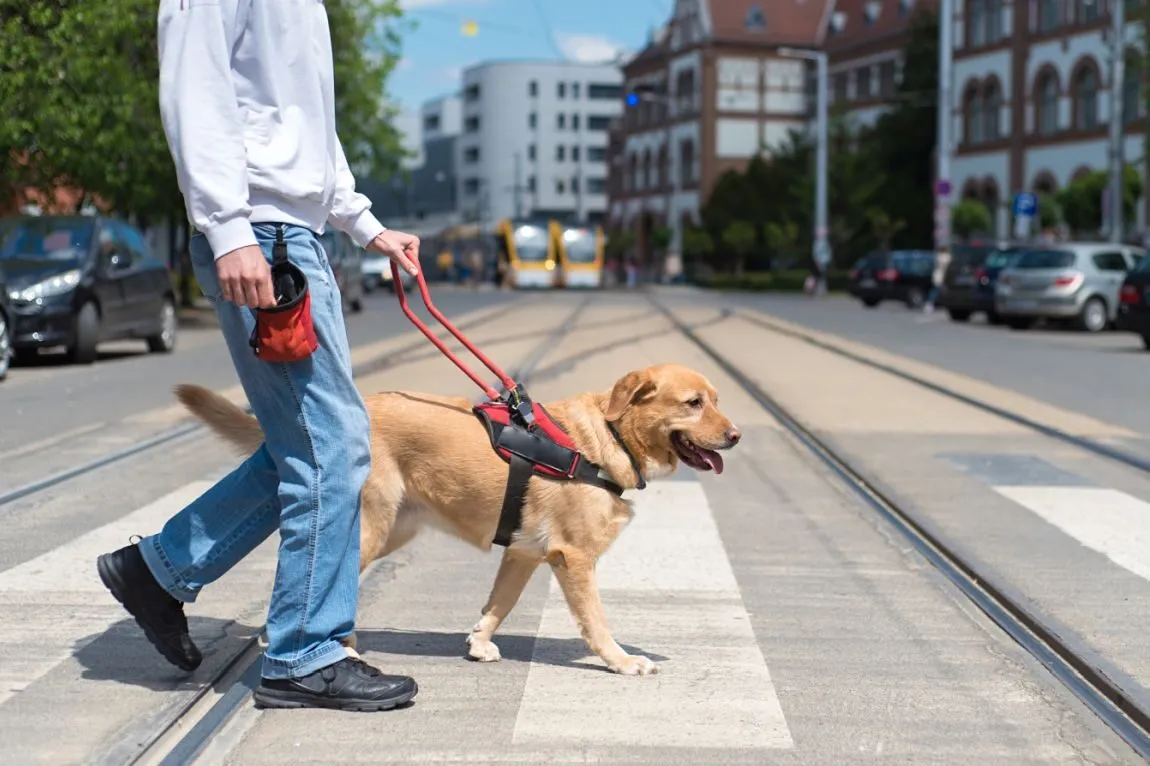
Guide dogs are an important everyday support for people with visual impairments.
Assistance Dogs for People with Physical Disabilities
Assistance dogs live alongside people with physical disabilities and support them in everyday life. They can help with shopping, for example, as well as getting dressed and undressed. They operate light switches and open doors. Their tasks depend on where help is needed.
Selection and Training
An assistance dog is generally trained for a specific person. The best-known assistance dogs are probably guide dogs for the blind.
However, not every dog is suitable as an assistance dog. Suitable dogs are selected while still puppies and trained from an early stage. The length of training varies depending on the purpose for which the dogs are being trained.
Guide Dogs for Visually Impaired People
Guide dogs for the blind are also assistance dogs. They support blind and severely visually impaired people as a mobility aid. Outside familiar surroundings, it is very difficult for these people to find their way around. Guide dogs help by accompanying their owners through everyday life.
Guide dogs for the blind are usually trained only when needed. The dog’s training takes several months.
Afterwards, the future handler takes part in an induction course lasting several weeks. During this time, the person and dog learn to trust each other and work together. At the end, there is usually a partnership test in which dog and owner must prove that they have become a team.
Medical Alert Dogs for Diabetics and People with Epilepsy
Medical alert dogs are also among the assistance dogs. These include diabetic alert dogs, for example, which live alongside people with diabetes. They detect possible fluctuations in blood sugar levels at an early stage.
Studies show that the dogs react to the affected person’s reduced oxygen saturation. This can be heard by the sensitive canine ears due to altered breathing.
Working Dogs that Detect Medical Emergencies
If blood sugar levels fall to life-threatening levels, the dog warns its owner in good time. The person can then react accordingly and take glucose tablets or something similar. High blood sugar levels are also indicated, so insulin can be administered if necessary.
Alert dogs are also used for conditions such as epilepsy or asthma. The duration of training varies depending on the organisation and the purpose for which the dogs are trained.
Rescue Dogs: Working Dogs that Save Lives
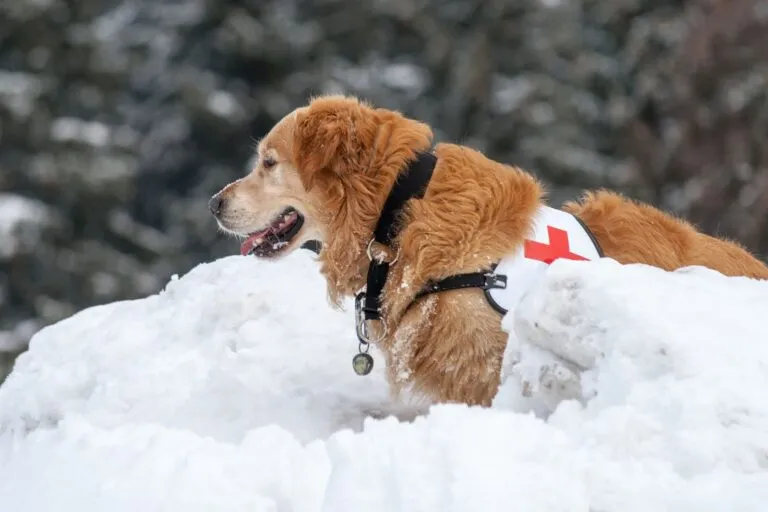
Rescue dogs are also known as search dogs. They are trained for different areas of deployment and have passed a rescue dog test.
Avalanche dogs and disaster dogs that search rubble for survivors are particularly well known. There are also area search dogs that search large areas of land and water dogs that locate missing people in bodies of water.
Team Players
Rescue dogs always work as part of a team with a handler and can be deployed in rescue dog units together with other dogs.
Rescue dogs are ordinary family dogs that live in households. Both the dog and the owner are trained for the relevant area of deployment. The training takes around two to three years and includes several tests.
Avalanche Dogs: Nothing Beats a Sensitive Canine Nose
Avalanche dogs are among the rescue dogs. They are deployed when people are buried by snow avalanches. Although there are now technical devices for locating buried people, sensitive canine noses are still the most reliable.
With their keen sense of smell, these dogs can sniff out people even when they are buried under four metres of snow. Avalanche dogs are used in snowy regions – depending on the deployment area, training may vary.
Service Dogs in the Police and Customs
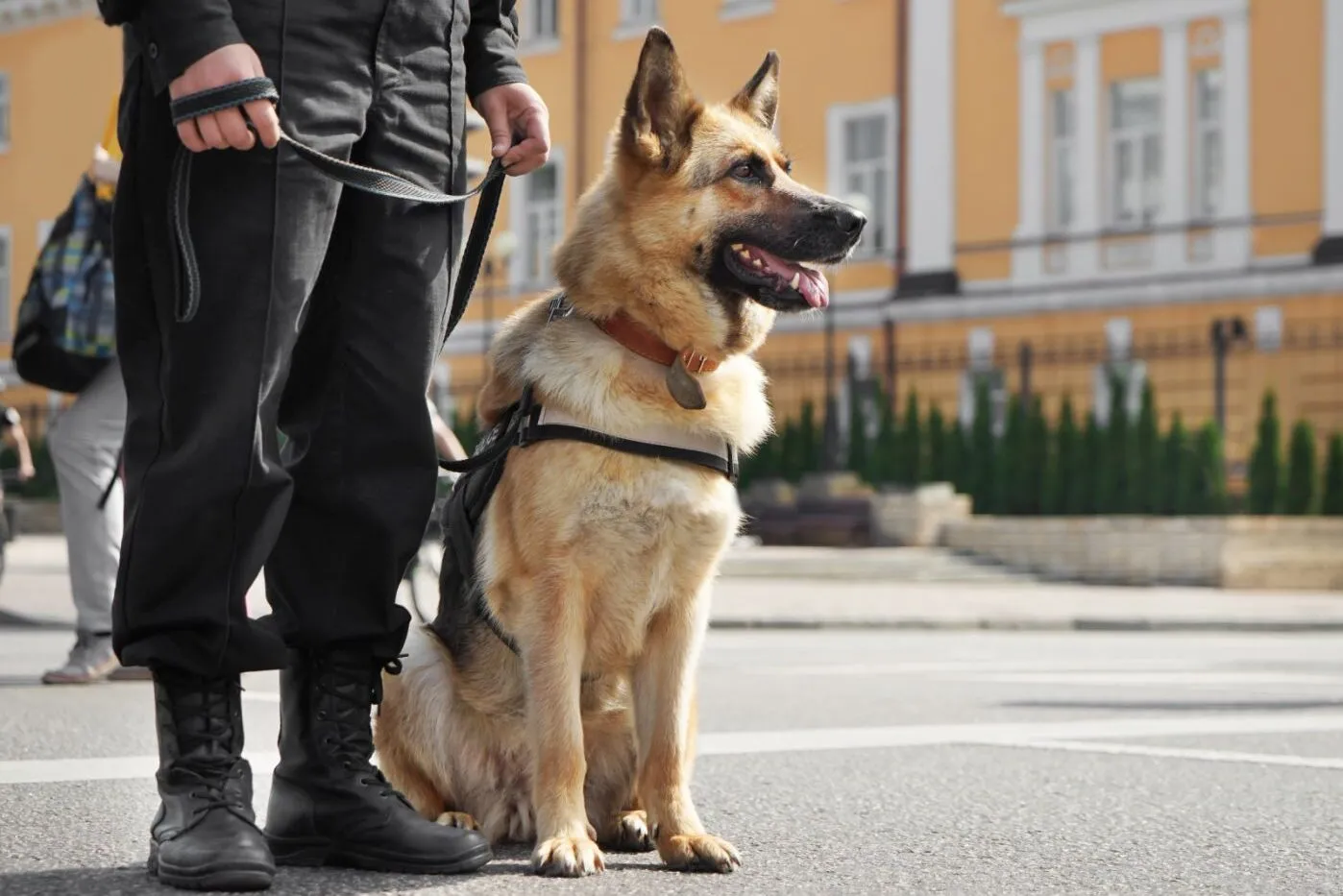
The police also rely on animal support. Police dogs belong to the so-called service dogs. They track scents and detect evidence, explosives, drugs or people, for example. The dogs also help protect police officers.
However, not every dog is suitable for police work. On average, only one out of a hundred dogs makes it into police service. Suitable animals undergo specialised training and then live with their police dog handlers. Training is possible from the age of one year and lasts several years.
Customs Dogs Sniff Out Illegal Items
Customs dogs support customs officers in their work and are used as protection and detection dogs. They detect goods that are illegally transported across borders – such as drugs or cigarettes.
Customs dogs are handled by customs dog handlers and receive specialised training. Customs dog handlers and dogs form both a professional and personal partnership. Training for the team takes several months.
Herding dogs are used to herd livestock such as sheep or cattle. They ensure that individual animals stay together as a herd. Animals are better protected from natural predators such as bears or wolves when they stay in a herd.
Four-legged companions that fend off such attackers are called livestock guardian dogs. Classic herding dogs are usually small and agile and less suitable for defence. Dogs that can be used both for herding and protection are known as shepherd dogs.
Dogs used in livestock farming live alongside farmers. Special seminars are available for farmers to provide the expertise needed to train the dogs according to their requirements.
Guard Dogs Signal Intruders by Barking
Guard dogs protect a designated territory. This may be a house, a property or even a pasture with animals. Their area of deployment is usually fenced in. Some guard dogs signal intruders by barking, while others react by attacking or defending their territory.
Guard dogs generally carry out their task alone, without a person constantly being present. Incidentally, guard dogs are primarily intended to act as a deterrent. Their training is not regulated uniformly.
Important: Dogs and owners should work with a professional trainer. Privately training dogs to attack people is prohibited in some countries.
This article was translated using Artificial Intelligence from the original German zooplus Magazine. While the original content was authored by industry experts and reviewed by our editorial team, this automated translation has not been human-edited and is provided for informational purposes.
"A life without a pug is possible, but pointless," Loriot once said. I would unreservedly agree and add: "A life without horse, cat and rabbit as well!" My heart beats for all animals big and small and I have the great fortune to be able to write about my passion as a freelance author. With my articles I would like to raise awareness for animal welfare and give useful tips to animal lovers.
Being particularly social animals, dogs love the company of their pack. Nevertheless, every adult dog should be capable of staying on its own for short periods of time. This will need to be trained early on in life, as a fully-grown dog that has never been left alone will struggle to adapt.
Shoes, cables, phones, felt-tip pens, sofas, carpets or waste bins – nothing seems to be safe from the destructiveness of some dogs. Within a very short space of time, wild dogs can turn a home and all its furnishings upside down. But why do some dogs have destructive tendencies and how can they move away from this behaviour?
Are you thinking about adopting a rescue dog from abroad? Maybe you’ve met a ‘Rommie’ rescue dog out on a walk and become curious about what the adoption process entails?