{"url":"https://www.zooplus.co.uk/magazine/dog/dog-nutrition/dog-food-dry-vs-wet","title":"Dry Dog Food or Wet Food: Which is Better?","mag_id":8264,"is_single":true,"cat_name":"Dog","sub_cat_id":145,"sub_cat_name":"Dog Nutrition","cat_id":3410}
The range of dog food available today is greater than ever before. While many products aim to cater for every dog’s taste, the choice can feel overwhelming: which dog food is the right one? And is dry dog food or wet food better for my four-legged friend? You’ll find the answers to these questions, along with an overview of the pros and cons, in this article.
When it comes to dog food, it’s not the form that matters, but the ingredients. That’s why one isn’t automatically healthier than the other. Make sure you choose a product labelled “complete food”. This ensures that both dry dog food and wet dog food provide your dog with all the essential nutrients.
Both types of dog food have their own advantages and disadvantages. Ultimately, it’s not a question of right or wrong. Instead, the choice comes down to your personal circumstances, your expectations and your dog’s individual needs. These factors will determine which type of dog food is best for you.
What Are the Differences Between Dry and Wet Dog Food?
To make your decision a little easier, we’d like to shed some light on the dog food jungle and outline the pros and cons of the different types below.
Three key aspects to consider are the water and energy content and the impact of the food on your dog’s dental health.
1. Water Content
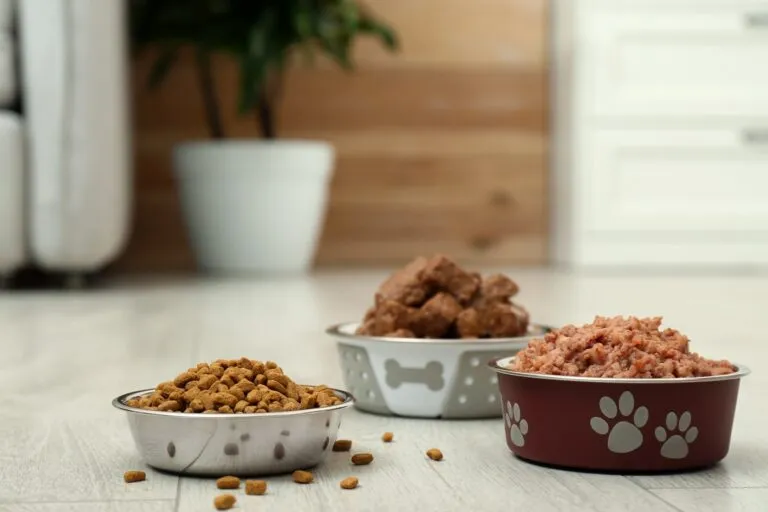
The main difference between dry and wet dog food lies primarily in their different water content.
While the moisture content in dry food must not exceed 14 percent, wet food contains between 70 and 85 percent water. This significant difference also affects the shelf life of the food. Dry food keeps much longer than wet food.
2. Energy Content
There are also considerable differences in energy content between dry and wet food.
With dry food, dogs take in a lot of energy even in small portions. To achieve the same energy intake with wet food, a dog would need to eat two to three times as much.
3. Dental Health
There is also debate about which type of food is better for your dog’s teeth. Some argue that the firm texture of dry food helps clean the teeth. Others claim that dry food tends to stick to the teeth and may actually contribute to dental problems.
What Are the Advantages of Dry Dog Food?
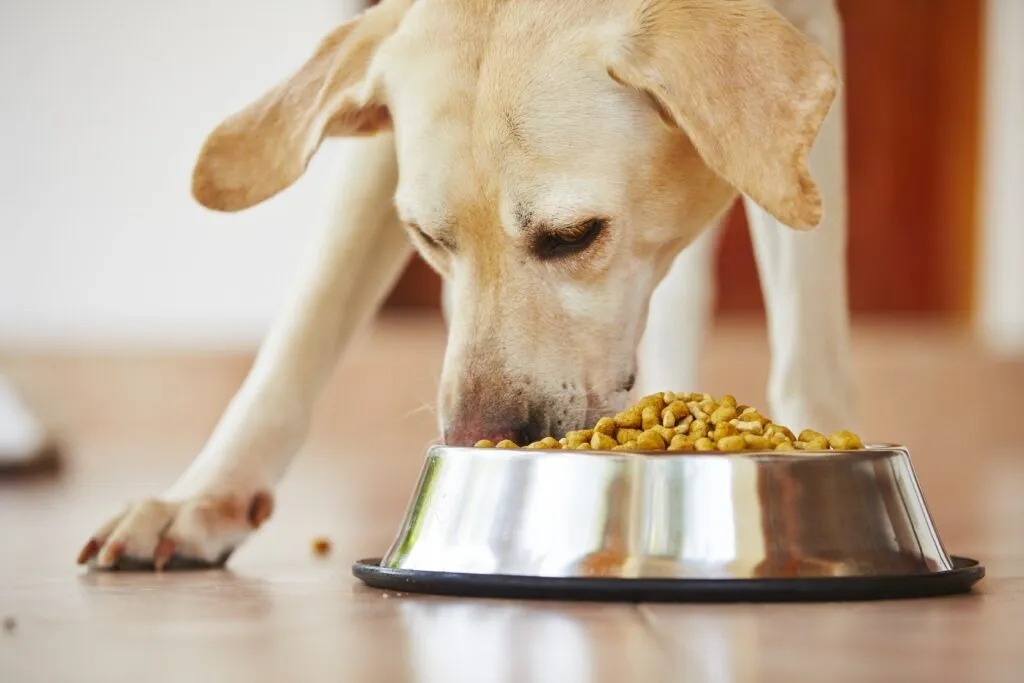
Thanks to its high energy content, dog owners need smaller portions to adequately feed and satisfy their four-legged friend when choosing dry food. It is therefore generally considered the more cost-effective option.
Supporters also point out that, due to the smaller quantities required, it is the more environmentally friendly choice. After all, it requires less packaging.
Easy to Handle
Another argument in favour of dry rather than wet dog food is its ease of use. There are no messy splashes with dry food. Even if a few kibbles land outside the bowl, you can simply sweep or vacuum them up. What’s more, dry food has less odour and is easier to manage when travelling.
With dry food, the portions for your dog tend to be smaller.
Advantages
Disadvantages
– long shelf life – more cost-effective than wet food – less packaging – easy to handle – low odour – high energy content
– contains less moisture – not every dog likes it
What Are the Advantages of Wet Food?
Dry food mainly offers advantages for owners in terms of price, cleanliness and handling. The benefits of wet food, on the other hand, are more noticeable for the dog. If given the choice, most four-legged friends would probably opt for wet rather than dry food. That’s because wet food has a stronger smell and taste and simply appeals more to most dogs.
Ideal for Dogs that Don’t Drink Much
The high water content is particularly beneficial: wet food makes it easier to meet your dog’s daily fluid requirements. It is therefore especially recommended for dogs that tend to drink very little during the day.
Advantages
Disadvantages
– high water content – strong smell and taste – suitable for senior dogs or dogs with dental problems – keeps dogs feeling full for longer
– spoils more quickly – creates a lot of packaging waste
Mixing Wet and Dry Food: Is a Combination Possible?
Both dry and wet dog food offer various advantages. It therefore seems logical that a combination of the two might be the best option. In principle, there’s nothing wrong with mixing dry and wet dog food. However, you must take extra care not to exceed the recommended daily feeding amount for your dog.
When Shouldn’t You Combine Dry and Wet Dog Food?
If your dog is prone to digestive issues, it’s better to stick to one type of feeding. Switching back and forth between different food types can lead to diarrhoea or constipation in sensitive dogs.
In general, combining both types of food does not provide any additional health benefits. Your dog can get all essential nutrients from either dry or wet food alone. So once you’ve found a food that your dog enjoys and tolerates well, it’s perfectly fine to stick with it.
Discover our wide selection of dry and wet dog food in the zooplus online shop:
Dry or Wet Dog Food: Is Semi-Moist Food a Good Compromise?
Semi-moist dog food (also known as soft food) is a hybrid of dry and wet dog food. But is it a genuine alternative to dry or wet food?
Moisture Content and Ingredients
The moisture content of semi-moist dog food is around 20 to 40 percent. This means soft food contains more moisture than dry food, but significantly less than wet food.
Thanks to its gentle production process, soft food contains a high proportion of meat and many natural nutrients. The increased moisture content also makes the kibble soft and juicy, helping to preserve its natural flavour.
Acceptance and Digestibility
Many dogs readily accept semi-moist food due to its higher meat and moisture content. It is also easy to digest. This type of food is well suited to senior dogs: even if their teeth are no longer as strong, older dogs can easily pick up and chew the soft kibble. In terms of smell, semi-moist food has a stronger odour than pure dry food.
Tips for Choosing
When selecting food, check whether it is a complete food or a complementary food, such as dog treats. The latter does not contain all the nutrients your furry friend needs for a balanced diet.
Also remember to provide your four-legged friend with plenty of fresh water every day, despite the higher moisture content of soft food.
Conclusion on Dry vs Wet Dog Food: It’s the Ingredients that Matter
When choosing the right food for your dog, and deciding between dry and wet food, the form should be less important. What really counts is the list of ingredients on the packaging. After all, nutrition plays a vital role in your dog’s overall health.
Your dog needs high-quality food that meets their individual needs and provides everything required for healthy development. Exactly which ingredients are necessary cannot be answered in general terms, as every dog is different and requires a tailored diet.
Be sure to take individual factors such as age, weight, activity level and overall health into account when looking for the best food for your dog. So before deciding between dry and wet dog food, it’s worth checking the label first. If you’re unsure, you can always ask your vet for advice.
This article was translated using Artificial Intelligence from the original German zooplus Magazine. While the original content was authored by industry experts and reviewed by our editorial team, this automated translation has not been human-edited and is provided for informational purposes.
Franziska Pantelic, Veterinarian
I am supporting the zooplus magazine for several years with my extensive expertise. I became a licensed veterinarian as early as 2009 and currently operate a mobile small animal practice in the metropolitan area of Munich.
The range of dog food available today is greater than ever before. While many products aim to cater for every dog’s taste, the choice can feel overwhelming: which dog food is the right one? And is dry dog food or wet food better for my four-legged friend? You’ll find the answers to these questions, along with an overview of the pros and cons, in this article.
There's nothing better than refreshing ice cream on hot summer days. The longing looks of dogs at frozen delicacies prove it. But did you know, you can easily make your own tasty dog ice cream and treat your dog to a cold, healthy surprise this summer.
Most people know the term “cold-pressed” from olive oil, but have you ever wondered what is behind the term “cold-pressed dog food”? We will explain the difference to conventional dog food and give tips on searching for the right dry dog food.