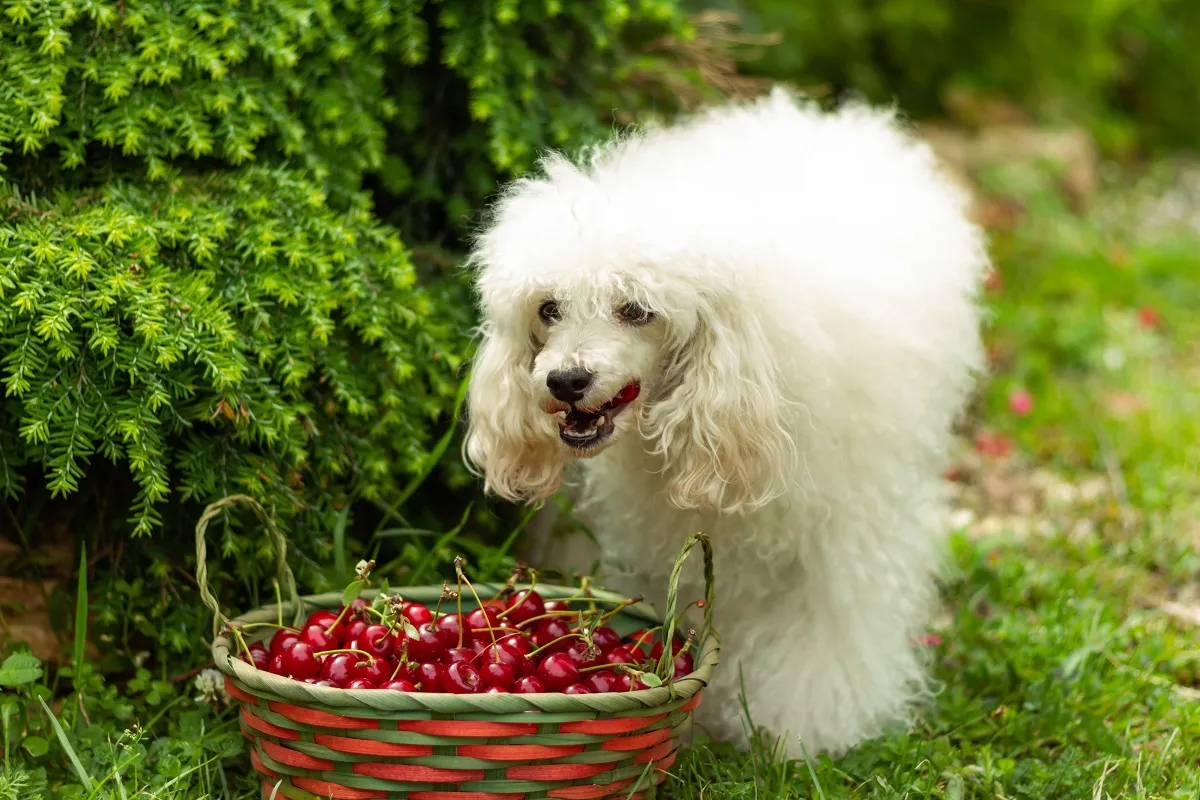
Cherries are a tasty snack for us humans during the summer months. But what about our four-legged friends? Find out in this article whether dogs can eat cherries and what you need to watch out for.
Whether sour or sweet – cherries are rich in vitamins and taste delicious too. They also contain many other nutrients that can have a positive effect on your dog’s health:
Antioxidants
Cherries contain plenty of beneficial antioxidants. They combat “free radicals” in the body – harmful substances that are produced through metabolic processes or external factors such as UV radiation.
Melatonin
Melatonin is a neurotransmitter that, together with adenosine, regulates the sleep–wake cycle in the brain. The red flesh of cherries contains relatively high levels of melatonin, which is said to help improve dogs’ ability to concentrate.
Secondary Plant Compounds
Secondary plant compounds such as anthocyanins occur naturally in cherries and are also believed to have a positive effect on your dog’s health. They are also responsible for the red colour of the cherry flesh.
Can Dogs Eat Cherries?
Yes, dogs can eat cherries if you follow these guidelines:
remove the stone and all green parts such as stalks, stem bases and shoots before feeding
do not feed your dog cherries too often or in large quantities to avoid digestive problems and cyanide poisoning
How Many Cherries Can Dogs Eat?
An approximate maximum amount for large dogs is five pitted cherries per day. Smaller dogs should eat fewer cherries.
Which Cherries Can Dogs Eat?
Cherries commonly available in supermarkets are usually sweet cherries. Dogs can eat the recommended amount of these as long as they are washed and free from green parts and germs.
Can Dogs Eat Sour Cherries?
Sour cherries (also known as Morello cherries) have a more tart flavour than sweet cherries, but they do not differ significantly in their nutritional content. The same safety advice applies to dogs as with sweet cherries.
Can Dogs Eat Preserved Cherries?
Preserved cherries and cherry jam often contain sugar or other additives that are not suitable for your dog. Some types of sugar, such as xylitol (birch sugar) , are also toxic to dogs and should therefore never be included in your dog’s food.
Can Puppies Eat Cherries?
The small red fruits pose a certain risk of choking and intestinal blockage (if the stone is swallowed), particularly for puppies. As puppies’ digestive systems are not yet fully developed and they do not digest fruit well, it is advisable not to give cherries to puppies.
It is therefore advisable to stick to the recommended limits. In addition, you should stop feeding cherries as soon as your dog shows any health problems and consult a vet.
Toxic Hydrocyanic Acid
Hydrocyanic acid (also known as cyanide) is found in certain parts of the cherry plant, particularly in the stones, the stalk and the stems.
As hydrocyanic acid is toxic to dogs and can be fatal in large quantities, dogs should not eat too many of the risky parts of cherries. Only the pure flesh is safe for your dog, and only in moderation.
Remove Green Parts and Stones
To prevent your dog from ingesting harmful substances or hydrocyanic acid from cherries, you should prepare them properly before feeding them to your dog.
To remove pesticides from the surface of the cherries, it is advisable to rinse them thoroughly under clean water beforehand. Also remove all green parts of the plant and the stones so that your dog does not ingest any hydrocyanic acid.
Note: If your dog accidentally eats a cherry stone, this is usually no cause for concern. Only if your dog has eaten several stones and shows signs of illness should you consult a vet.
This article was translated using Artificial Intelligence from the original German zooplus Magazine. While the original content was authored by industry experts and reviewed by our editorial team, this automated translation has not been human-edited and is provided for informational purposes.
At the Justus-Liebig-University of Giessen I was extensively trained as a veterinarian and was able to gain experience in various fields such as small animal, large animal and exotic animal medicine as well as pharmacology, pathology and food hygiene.
Since then, I have been working not only as a veterinary author, but also on my scientifically driven dissertation. My goal is to better protect animals from pathogenic bacterial organisms in the future.
Besides my veterinary knowledge, I also share my own experiences as a happy dog owner and can thus understand and enlighten fears and problems as well as other important questions about animal health.
The range of dog food available today is greater than ever before. While many products aim to cater for every dog’s taste, the choice can feel overwhelming: which dog food is the right one? And is dry dog food or wet food better for my four-legged friend? You’ll find the answers to these questions, along with an overview of the pros and cons, in this article.
There's nothing better than refreshing ice cream on hot summer days. The longing looks of dogs at frozen delicacies prove it. But did you know, you can easily make your own tasty dog ice cream and treat your dog to a cold, healthy surprise this summer.
Most people know the term “cold-pressed” from olive oil, but have you ever wondered what is behind the term “cold-pressed dog food”? We will explain the difference to conventional dog food and give tips on searching for the right dry dog food.