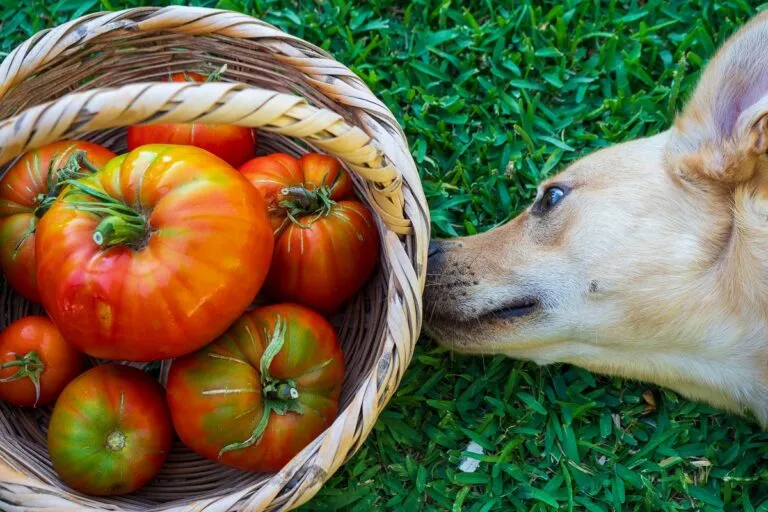
The tomato is a tasty and versatile food and has become an integral part of many dishes around the world. It is also very healthy for us humans – but does the same apply to our four-legged friends? Can dogs eat tomatoes, or are tomatoes toxic for dogs?
Especially the green parts of the tomato, such as the stem and unripe flesh, contain solanine, a substance that is toxic to dogs.
Tomatoes are healthy – but are they healthy for dogs too?
The tomato plant belongs to the nightshade family (Solanaceae). Among nutritionists, tomatoes are considered to have antioxidant properties and are believed to inhibit the early development of cancer. In addition, they contain not only many minerals and vitamins, but also fibre that supports digestion.
While tomatoes are generally healthy for humans and offer many benefits, they can quickly become dangerous for dogs.
When and why are tomatoes toxic for dogs?
In particular, the green parts of the tomato (stalk and leaves), as well as completely unripe tomatoes, contain the toxic substance solanine – a so-called alkaloid. Both dogs and cats can hardly metabolise solanine, meaning it gradually accumulates in the body.
This can eventually lead to poisoning, which in the worst case can put your dog’s life at risk.
Good to know: Solanine is also found in other types of vegetables, such as aubergines or peppers. Your dog should therefore not eat these vegetables either.
Recognising solanine poisoning in dogs
If your dog ingests too much solanine, they can suffer from severe poisoning. You may recognise this by the following signs:
- Cardiovascular problems (e.g. drop in blood pressure)
- Gastrointestinal complaints (e.g. diarrhoea, vomiting)
- neurological disorders (e.g. seizures, coordination problems)
What should you do if your dog has eaten tomatoes? If you notice the above symptoms in your dog, you should consult a vet as quickly as possible.
Cooked or raw: how are dogs allowed to eat tomatoes?
Even though solanine is mainly found in the green parts and skin of the tomato plant, the toxin is also present in ripe tomatoes and tubers. In addition, there is also the risk of a tomato allergy.
To avoid putting your dog’s health at risk, you should therefore generally not give your dog tomatoes to eat.
The most important questions at a glance:
Can dogs eat cooked tomatoes?
If your dog eats a few cooked tomatoes, this is usually no cause for concern – especially if you have removed the skin beforehand.
However, above a certain amount, cooked tomatoes can lead to digestive problems in your dog. It is therefore generally advisable not to offer cooked tomatoes to your dog.
Can dogs eat raw tomatoes?
No. Dogs should not eat raw tomatoes. They contain too much solanine and can therefore quickly lead to symptoms of poisoning in your dog. Make sure to keep green and unripe tomatoes away from your dog.
Can dogs eat tomato sauce?
In most cases, tomato sauce consists not only of tomatoes, but also of undesirable seasonings such as salt, pepper and herbs.
It becomes particularly dangerous for your dog if it also contains toxic foods such as onions or garlic. Therefore, do not give your dog tomato sauce – this way you avoid the risk of poisoning.
Can dogs eat tomato purée?
Tomato purée is usually made from very ripe tomatoes. Even though these have a significantly lower solanine content than unripe fruits or the green parts of the plant, it is still better not to give tomato purée to your dog.
Conclusion: tomatoes are best kept out of your dog’s bowl
If your otherwise healthy dog accidentally eats a small piece of ripe tomato, this is usually no reason to panic. However, tomatoes are not recommended for regular feeding. Even ripe and cooked tomatoes can contain solanine, which is toxic to dogs, and may impair their health – especially if your dog consumes larger quantities.
To avoid any risk, you should therefore generally avoid tomatoes in your dog’s diet and instead opt for well-tolerated vegetables. Green tomatoes are absolutely off limits in your dog’s bowl!
Tip: Suitable and healthier alternatives include cucumbers or carrots, for example.
You might also be interested in these articles