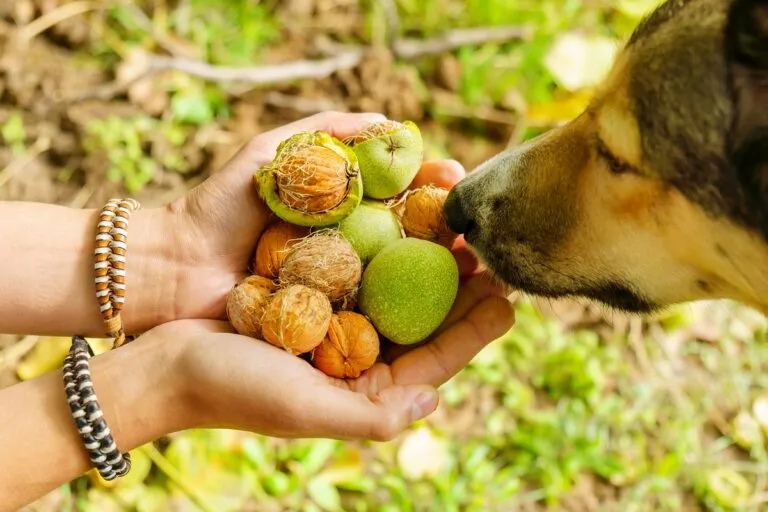
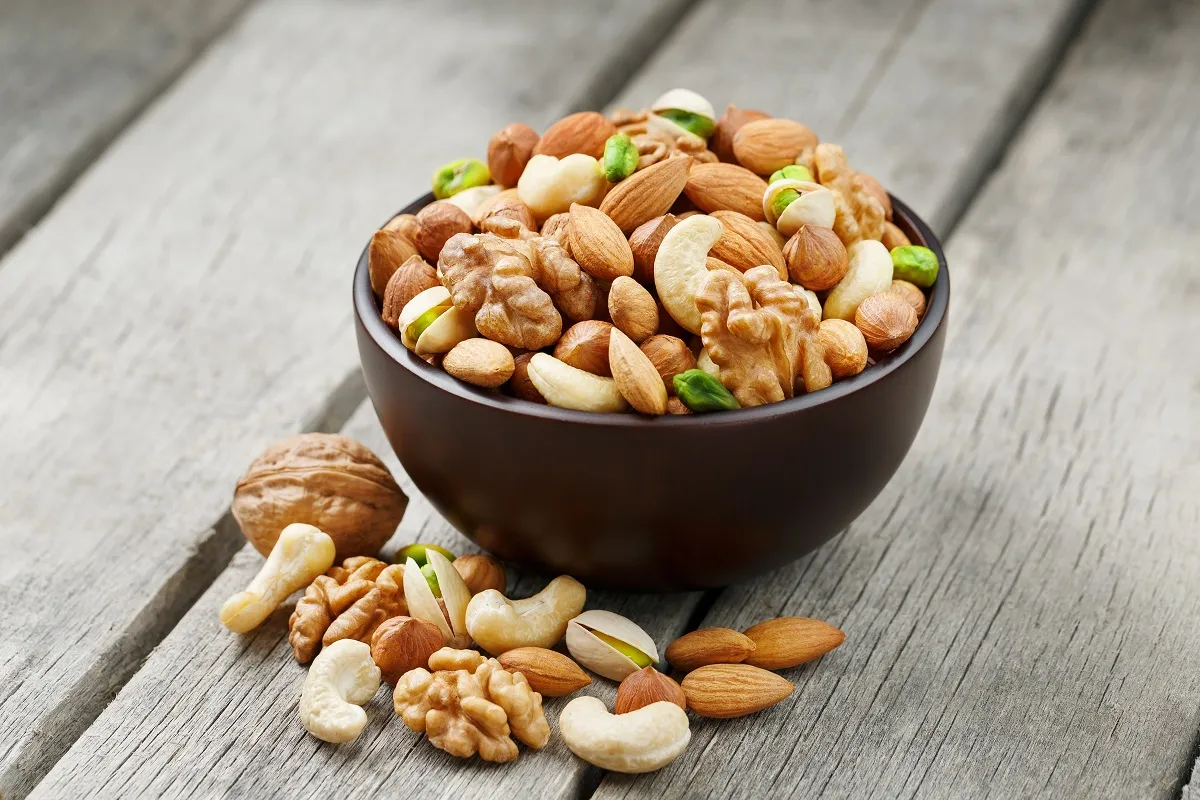
They’re small, tasty and nutritious: nuts are considered a true superfood in the human diet! But do they make sense in a dog’s diet too? Which nuts are healthy for dogs, and which are actually toxic? In the following article, you’ll find all the information you need on the question: “Can dogs eat nuts?”
Whether for baking, in smoothies or as a salad topping, nuts are incredibly versatile in the kitchen and, thanks to their nutrients, a very healthy addition to the human diet.
However, whether nuts are generally healthy for dogs depends on the type of nut and how much you feed your dog. While some nuts can be a healthy addition for dogs, others pose serious health risks.
Why Are Some Nuts Toxic to Dogs?
Some types of nuts are unsuitable or even toxic for dogs. The reason lies not only in toxic ingredients, but also in substances found on the outside of the nut. If your dog eats too many of them, it can even be fatal.
That’s exactly why it’s important for you as a dog owner to know which nuts are safe for dogs.
Benefits and Risks: Are Nuts a Good Addition to Your Dog’s Diet?
In principle, dogs do not need to eat nuts when it comes to a balanced diet. However, many nuts contain a range of nutrients that can have a positive effect on your dog’s health.
Others, on the other hand, have the exact opposite effect and pose a significant health risk.
To give you an overview, below you’ll find some of the advantages and disadvantages of nuts:
Benefits
Due to their ingredients, some types of nuts can have a positive impact on your dog’s health. However, this only applies if you feed nuts that are suitable for dogs and stick to the recommended maximum amount:
Nutrient
Positive effect
Fibre
Fibre supports healthy digestion
L-arginine
This amino acid reduces the risk of thrombosis (blood clots) by helping to prevent deposits on blood vessel walls.
Plant protein
Protein is important for cell formation and muscle function.
Plant fats
Omega-3 fatty acids help prevent deposits in blood vessels and are thought to lower cholesterol levels. They also promote a glossy coat.
Vitamin E
As an antioxidant, vitamin E protects cells from harmful free radicals (highly reactive molecules).
Disadvantages and Risks
If your dog eats too many nuts or the wrong types, this can also involve certain risks:
When Nuts Trigger Allergies
Dogs can be allergic to all sorts of things. In addition to flea saliva allergy and similar conditions, nut allergies are also possible. Allergies to cashews and hazelnuts are particularly well known in dogs.
Reading tip: Find out more about the signs and treatment of allergies in dogs.
Many Nuts Can Lead to Weight Gain
Nuts are high in calories. If your dog eats a lot of them, this can gradually lead to an energy surplus and unwanted excess weight (obesity).
Here you’ll find the average calories (kcal per 100 grams) of some types of nuts:
Cashews (roasted and unsalted): 574
Cashews (raw): 553
Peanuts (roasted and unsalted): 587
Peanuts (raw): 567
Almonds (blanched): 590
Almonds (roasted and unsalted): 598
Pecans (roasted and unsalted): 710
Pecans (raw): 691
Pistachios (roasted and unsalted): 572
Pistachios (raw): 560
Walnuts (English, raw): 654
High Fat Content Can Cause Gastrointestinal Problems
The high fat content of nuts is believed to promote inflammation of the pancreas (pancreatitis) in sensitive dogs.
Some nuts contain high levels of phosphorus – especially cashews and Brazil nuts. However, as this substance can damage the kidneys, you should never feed these nuts to dogs with kidney disease.
Often Contaminated with Mould
Unfortunately, nuts are repeatedly found to be contaminated with toxic moulds. These include moulds that produce so-called aflatoxins. If your dog ingests them, it can suffer a life-threatening poisoning.
Seasoned Nuts Are Off-Limits for Dogs
It can be particularly dangerous if you give your dog nuts that are seasoned. This includes, for example, nuts coated with cocoa, garlic or salt.
While cocoa and garlic can cause life-threatening poisoning in dogs, a high salt intake can lead to raised blood pressure.
Not all nuts are the same: some varieties can be a healthy addition to your dog’s diet, while others may pose a serious health risk to your canine companion.
Which Nuts Can Dogs Eat?
Not all nuts are the same – below you’ll find an overview of which nuts dogs can eat and which they cannot:
Non-Toxic Nuts for Dogs
The following nuts are considered non-toxic for dogs:
Cashew
Hazelnut
Almond
Brazil nut
Pistachio
Pecan
Note: Even though these nuts are not inherently toxic to dogs, they may pose other health risks (e.g. mould contamination) or trigger allergies.
Which Nuts Are Toxic to Dogs?
The following nuts are toxic to dogs:
Bitter almond
Macadamia nut
Black walnut
Nutmeg
Acorns
You’ll find detailed information on individual types of nuts in the overview below:
Can Dogs Eat Peanuts?
Peanuts are not suitable for dogs. They contain very high levels of plant protein and magnesium, the latter of which can cause cramps in large amounts.
Especially for dogs with heart or kidney disease, this can quickly become dangerous. In addition, some dogs develop a peanut allergy over the course of their lives.
Can Dogs Eat Peanut Butter?
Some dog owners occasionally use peanut butter, sometimes simply as a well-meant treat, sometimes to give tablets.
Even though many dogs love peanut butter, you should be cautious, just as with whole peanuts. Also bear in mind that peanut butter often contains additional ingredients that may be unsuitable for dogs, such as sugar or salt.
The artificial sweetener xylitol (birch sugar) is particularly harmful and life-threatening, as it can cause liver failure and low blood sugar (hypoglycaemia) in dogs.
Tip: A more suitable but still tasty alternative is special liver sausage for dogs or unseasoned cottage cheese.
Can Dogs Eat Walnuts?
Even though many dogs like and tolerate standard walnuts from the supermarket, it’s better not to give your dog walnuts.
On the one hand, walnuts may be contaminated with moulds that produce toxins harmful to your dog. On the other hand, there are also varieties (e.g. black walnuts) that are generally toxic to dogs and therefore an absolute no-go.
Can Dogs Eat Cashew Nuts?
Cashews are generally not toxic for dogs. However, please note that this type of nut contains a lot of phosphorus and is not suitable for dogs with kidney disease.
Can Dogs Eat Hazelnuts?
Yes, dogs can generally eat hazelnuts. However, reports suggest that dogs can develop a hazelnut allergy. It’s therefore best to try this variety in very small amounts first.
If your dog shows signs of an allergy, you should stop feeding them immediately.
Can Dogs Eat Almonds?
Almonds (with or without skin) are not toxic to dogs. However, due to their pointed shape and small size, they can in rare cases pose a choking risk – especially for small dogs and puppies. It’s therefore advisable not to give your dog almonds.
Can Dogs Eat bitter Almonds?
Caution is advised with bitter almonds. This special variety contains high levels of amygdalin, which is broken down during digestion into toxic hydrocyanic acid. Bitter almonds are therefore an absolute no-go for dogs.
Can Dogs Eat Brazil Nuts?
No, dogs should not eat Brazil nuts. Brazil nuts contain high levels of phosphorus, a substance that can damage the kidneys. They are absolutely off-limits, especially for dogs with kidney disease.
Can Dogs Eat Pistachios?
Pistachios are not toxic to dogs, provided they are not contaminated with toxic moulds.
Due to their small size, dogs can also choke on pistachios. As a precaution, you should avoid giving pistachios, particularly to puppies.
Can Dogs Eat Pecans?
Pecans contain a substance called juglone, which can cause digestive problems in dogs. It’s therefore advisable to avoid pecans in your dog’s diet to prevent health issues from developing in the first place.
Can Dogs Eat Macadamia Nuts?
Like black walnuts, macadamia nuts are toxic to dogs and therefore not suitable for them. This is due to the cyanoids and glycosides they contain. As few as four macadamia nuts are said to be enough to poison a medium-sized dog.
Feeding Nuts to Dogs: What You Should Bear in Mind
To find out which nutrients your dog needs and whether supplements, such as nuts, are appropriate for your dog, it’s best to consult your vet or a canine nutrition expert.
In general, you don’t need to worry about negative consequences if you remove nuts from your dog’s diet.
Take the Right Precautions
If you still want to supplement your dog’s diet with nuts, you should follow these guidelines:
Only give your dog nuts that are proven to be non-toxic for them.
Only feed ripe nuts.
First test the tolerance: When offering them for the first time, give your dog only a small amount and watch carefully for signs of intolerance or allergy .
The dose makes the poison: only feed nuts occasionally and always in very small portions (e.g. no more than one to three nuts per day).
Chop the nuts if in doubt to prevent choking – especially when feeding puppies or small dogs.
Do not give your dog nuts in their shells (risk of choking and intestinal blockage).
Seasoned nuts (e.g. with cocoa, salt or garlic) of any kind are strictly off-limits for dogs.
Make sure tostore nuts in a cool, dry place, as moisture can encourage mould growth.
Note: If your dog has an allergic reaction to nuts or shows other signs of illness, you should consult a vet. This is especially important in cases of poisoning – act quickly to prevent the worst from happening.
This article was translated using Artificial Intelligence from the original German zooplus Magazine. While the original content was authored by industry experts and reviewed by our editorial team, this automated translation has not been human-edited and is provided for informational purposes.
At the Justus-Liebig-University of Giessen I was extensively trained as a veterinarian and was able to gain experience in various fields such as small animal, large animal and exotic animal medicine as well as pharmacology, pathology and food hygiene.
Since then, I have been working not only as a veterinary author, but also on my scientifically driven dissertation. My goal is to better protect animals from pathogenic bacterial organisms in the future.
Besides my veterinary knowledge, I also share my own experiences as a happy dog owner and can thus understand and enlighten fears and problems as well as other important questions about animal health.
The range of dog food available today is greater than ever before. While many products aim to cater for every dog’s taste, the choice can feel overwhelming: which dog food is the right one? And is dry dog food or wet food better for my four-legged friend? You’ll find the answers to these questions, along with an overview of the pros and cons, in this article.
There's nothing better than refreshing ice cream on hot summer days. The longing looks of dogs at frozen delicacies prove it. But did you know, you can easily make your own tasty dog ice cream and treat your dog to a cold, healthy surprise this summer.
Most people know the term “cold-pressed” from olive oil, but have you ever wondered what is behind the term “cold-pressed dog food”? We will explain the difference to conventional dog food and give tips on searching for the right dry dog food.