

11 min
2.6k
Medium Size Poodle
The Mudi, still relatively unknown outside its native country, is a true all-rounder: as a working dog, it herds livestock and keeps the home and farm free of rats, while as a family dog, it is a tireless companion for sporty people who can give it plenty to do.
© jurra8 / stock.adobe.com
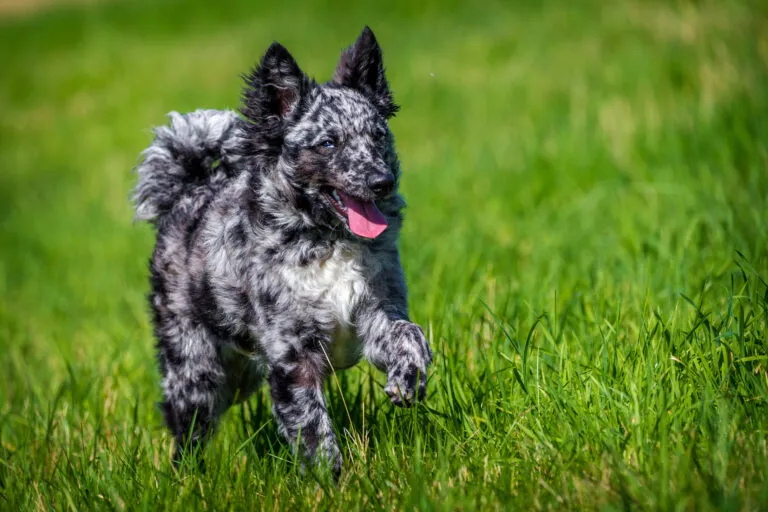
Mudis are family dogs for active people who can keep them sufficiently occupied.
This medium-sized herding dog from Hungary reaches a maximum shoulder height of 47 cm. Females weigh between 8 and 11 kg, while males weigh up to 13 kg.
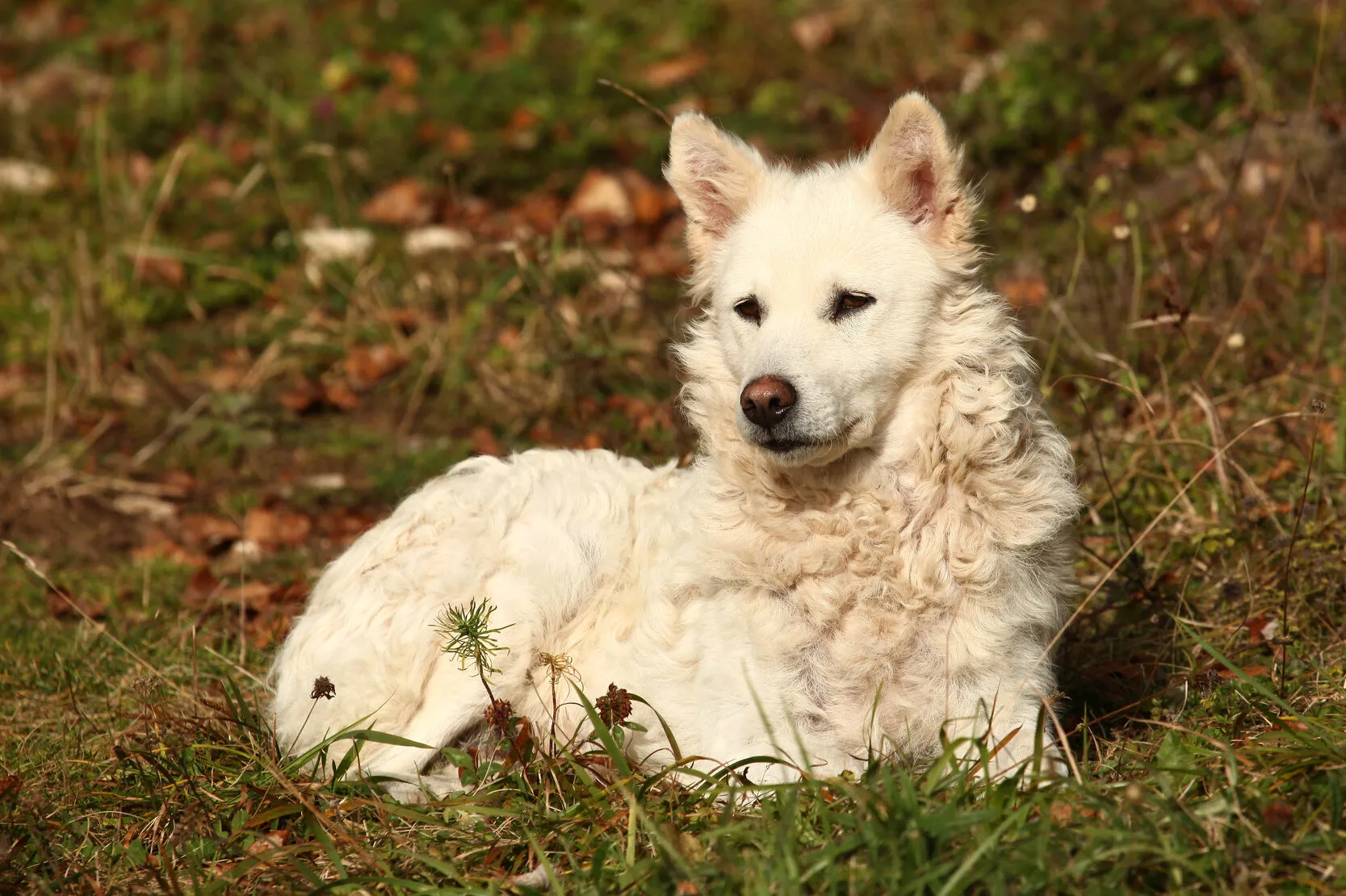
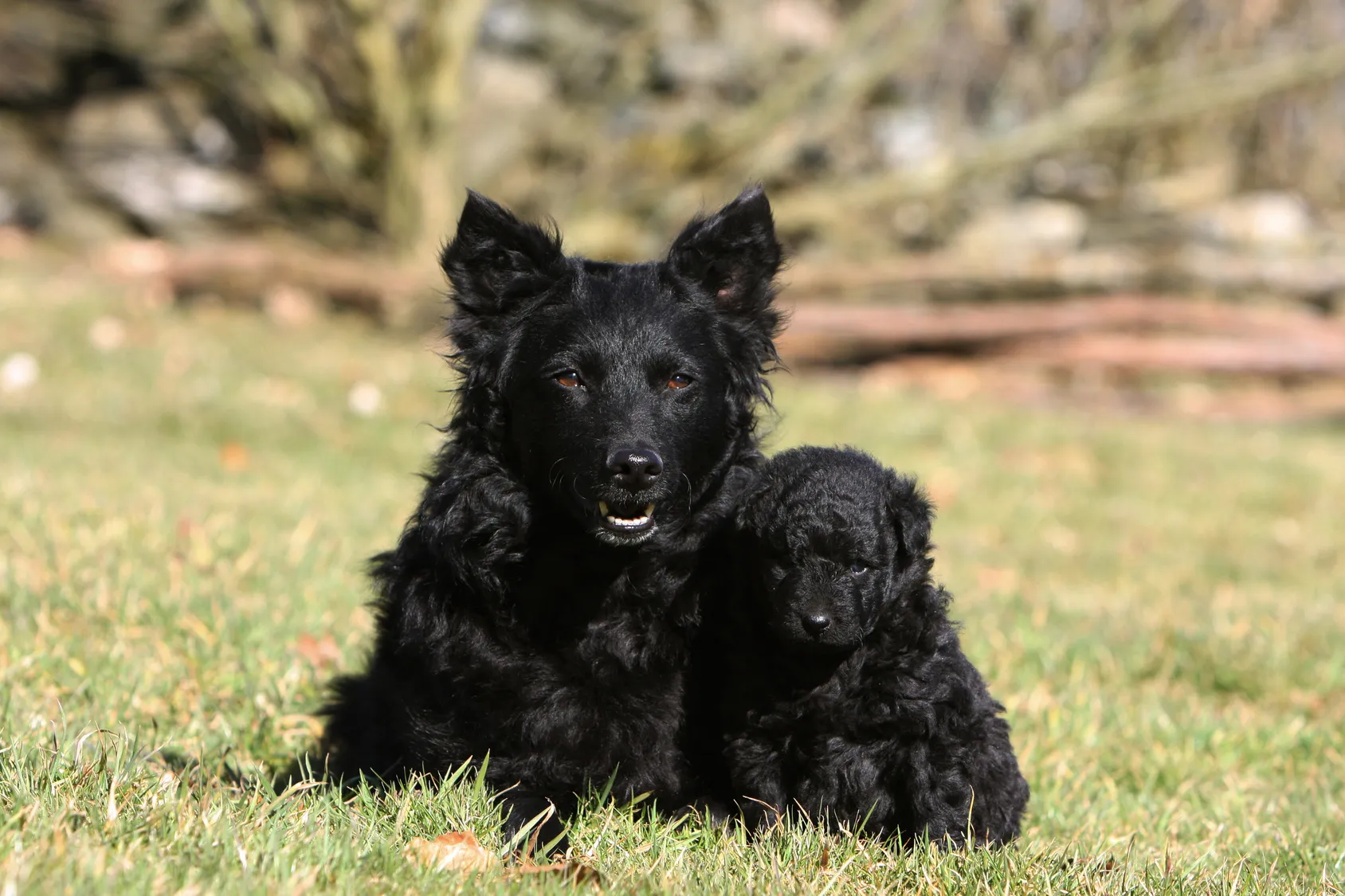
The head is wedge-shaped and narrows towards the nose, which, together with the erect ears, emphasises the breed’s alert expression. Some Mudis naturally have a bobtail. The coat is usually short and smooth on the head and front legs, while on the rest of the body it is long, dense and either wavy or curly.
Mudis are often black, but there are also fawn, white, grey or mottled blue merle varieties. As breeding efforts for this breed are still relatively recent, some Mudis may show slight differences in appearance.
The first written references to the Mudi date back to a book published in 1815, featuring a medium-sized herding dog with erect ears that closely resembles today’s Mudi. The breed is the result of crosses between various Hungarian droving and herding dogs and small shepherd-type dogs from Germany, including the so-called Schäferspitz and Pomeranian Spitz. It is closely related to the Hungarian breeds Pumi and Puli, as well as the Croatian Sheepdog. In 1936, the breed received its first official breed standard and name, inspired by a particularly typical representative, a black male named Mudi.
Today, Mudis are widely used as working dogs in Hungary: they herd all kinds of livestock, from cattle and sheep to horses. These independent helpers can drive pigs or geese out to pasture on their own in the morning, guard them there and bring them back again in the evening. They mainly control the animals they herd through eye contact and barking. Dogs of this versatile breed are still rarely seen outside Hungary. In Germany, for example, only around a dozen puppies are officially registered each year. However, these intelligent and original herding dogs are slowly becoming more popular – especially in Scandinavian countries, where a growing number of breeders are now becoming established. The breed register is still open, meaning that dogs from Hungary that meet the breed standard but do not have pedigree papers can still be registered.
 © Uros Petrovic / stock.adobe.com
Like most herding dogs, Mudis are intelligent, curious and very eager to learn. They readily accept consistent leadership, while always retaining a degree of independence that was essential for their original tasks. The breed is considered brave and fearless, so even difficult herds can usually be guided in the desired direction simply through the dog’s confident presence. Unlike some other sheepdogs, the Mudi never nips at the animals in its care, instead directing them solely through eye contact and barking.
Hungarian sheepdogs are always ready for new adventures and are extremely loyal to their family, including all four-legged members. A Mudi loves spending time with its favourite people and, despite being tough when working, is also a sensitive companion. This sensitivity also applies to training: aggression from its human pack deeply unsettles this dog. Around strangers, Mudis tend to keep their distance. They are considered watchful and, in this context, also relatively vocal.
The Mudi is a relatively young and original breed known for its strong physical resilience. With good care, these herding dogs can live up to 15 years. However, keeping this sensitive bundle of energy healthy also requires plenty of physical and mental stimulation, without which a Mudi may develop problematic behaviours such as aggression or apathy.
Despite the energy of a Mudi puppy, keep in mind that young dogs should not take part in sports training until they are 12 to 15 months old, as this can lead to permanent damage to the dog’s musculoskeletal system. Stairs should also be avoided until this age. Once your four-legged friend is fully grown, you can begin training gradually but consistently, as physical activity benefits both your Mudi’s body and mind equally.
A healthy diet is one that is perfectly tailored to your dog and its needs. Make sure you offer your Mudi a food in which meat is listed first among the ingredients. In the wild, these animal hunters would naturally also eat the stomach contents of their prey as well as fruit or plants when needed, but meat should always make up the main part of the diet. Ready-made food in the form of dry or wet food provides a balanced ratio of the necessary nutrients. Choose a high-quality product without low-grade cereals.
A young dog should be fed more often than an adult Mudi, for whom two meals a day are sufficient. The amount of food needed depends not only on size but also on your companion’s activity level. Manufacturers’ recommendations can serve as a guide, but keep an eye on your dog’s waistline so you can quickly adjust if weight is gained or lost. Don’t forget to include any reward treats when calculating daily portions.
Always make changes to your dog’s food gradually by mixing increasing amounts of the new food into the familiar one step by step – this helps prevent sensitivity reactions such as diarrhoea or vomiting. Of course, fresh water should always be freely available.
The Mudi’s soft coat is easy to care for because it does not tend to mat. However, during the moulting season it is best to use a dog brush daily to reduce shedding around the home and remove loose fur from your four-legged friend.
Some dog owners regularly brush their pets’ teeth using special dog toothpaste and a dog toothbrush to help prevent tartar in dogs. If you get your puppy used to this grooming routine early on, your adult Mudi will usually tolerate it without any fuss – and the reward is often healthy, gleaming teeth well into old age. You can also offer dental care snacks for dogs or dry chew treats.
Check your Mudi’s ears daily and, if necessary, use a special ear cleaner for dogs from specialist retailers. You should also check the claws from time to time, as a claw pressing into the nail bed can be very painful for your four-legged friend. Older dogs in particular are prone to problems with overgrown claws. Either trim them yourself using suitable claw clippers or leave the task to your vet every few weeks.
Early socialisation is especially important for this breed so that your Mudi becomes open and confident around new experiences, including other people and animals. Socialisation should begin with the breeder and then continue in the new home. An especially important phase in your dog’s development and training is between the 12th and 16th week of life – during this period, you can make a particularly lasting positive impression.
With loving consistency, a Mudi is easy to train, provided it recognises you as the leader. This intelligent four-legged friend needs an equally intelligent human companion – otherwise, from the dog’s point of view, it makes more sense to follow its own plans, since the cleverer one should take responsibility for the pack.
Despite its eagerness to learn, a Mudi lacks the strong will-to-please seen in other herding dogs such as the Border Terrier. This means that if a Mudi sees no point in a task, it will very likely stop carrying it out sooner or later – something to bear in mind in certain dog sports too, as the Mudi may take a rather overly pragmatic approach. Puppy playgroups are ideal for young representatives of the breed, as they allow them to meet lots of other dogs. Afterwards, you can of course attend dog training classes with your Mudi, provided you are happy with the training methods used.
This original working dog also needs plenty of activity as a companion dog. So if you do not own a farm with livestock to herd, you should set aside plenty of time to keep your sporty companion occupied. It is ideally suited to dog sports such as agility, dog dancing, obedience or competitive dog sports – as long as you keep its independent nature in mind. The breed is also suitable for training as a rescue dog. It will happily accompany you jogging or – provided it has had sufficient training and is fully grown – trotting alongside your bicycle or horse on a relaxed outing.
This herding dog’s almost non-existent hunting instinct is another advantage, meaning it can usually be allowed to run off lead without any problems. Mental challenges are also great fun for a Mudi – how about clicker training or scent games? Without enough activity, the breed may develop behavioural issues such as aggression or apathy. Even so, you should also plan deliberate rest periods to avoid an overexcited dog.
 © Dogs / stock.adobe.com
People who prefer a sedentary lifestyle, are not very mobile and do not enjoy being outdoors in all weather conditions should not bring a Mudi into their home. Mudis are, however, excellent companions for sporty people who spend lots of time outdoors with their dog and can ideally also offer a garden. It may try to “herd” other pets, which can confuse some cats, but a balanced Mudi will always be friendly towards all family members, whether two-legged or four-legged.
The breed is considered very attached to its owner and does not cope well with being separated from its pack – bear this in mind when planning holidays too. However, special care arrangements may not even be necessary, because many hotels now allow well-behaved dogs to stay with their owners. A Mudi, for example, makes an excellent companion for a walking holiday.
By deciding to bring a dog into your home, you are taking responsibility for its wellbeing for many years to come. Before getting a Mudi, remember that it needs daily activity and that even in rainy weather, “a quick walk around the block” will not be enough before settling back down on the sofa. Before buying a Mudi, calculate the costs you can expect: in addition to the purchase price of the dog itself and the cost of basic equipment (beds, blankets, lead, collar or harness, car travel safety equipment, grooming tools such as a brush, tick remover and claw clippers, toys and bowls), there are also regular expenses for high-quality food as well as dog liability insurance, dog tax and veterinary costs.
You have made your decision: a Mudi is the dog for you! Great! However, you may need a little patience when searching for your ideal dog, as Mudis are rare outside Hungary. Depending on where you live, the nearest breeder could easily be hundreds of kilometres away. It can be helpful to contact clubs for Hungarian herding dogs, as they are often able to provide information about active breeders in your area and, where applicable, partner breeders in Hungary.
Although dogs that meet the breed standard but lack pedigree papers can still be entered into the breed register, it is advisable to contact an experienced Mudi breeder whose breeding goals focus on health and the unique character of these herding dogs. Longer journeys or waiting times for a typical Mudi puppy are definitely worthwhile. Visit the breeder at home so you can get an impression of the living conditions and the parent dogs. Mudis should not be kept in kennels and should appear balanced and healthy. Puppies should not move into their new home before eight weeks of age and should come with a microchip for identification, a vaccination record and pedigree papers.
Clubs for Hungarian herding dogs in many countries also feature sections on their websites called “Herding Dogs in Need” or “Mudi in Need”. If you are considering an adult Mudi, be sure to look there as well, because many typical Mudis are waiting in shelters in Hungary or in foster homes for a new home. In most cases, these dogs do not have pedigree certificates, but considering the breed’s origins on small farms in Hungary, this should not be a barrier. Speak in detail with the organisation arranging the adoption beforehand to find out whether you and the dog have the potential to become a dream team.
We wish you a wonderful time with your clever Mudi.
Here you will find answers to frequently asked questions about the Mudi:
Yes, a Mudi can make a good family dog, provided its needs for exercise and activity are met. It is friendly, loyal and affectionate with all family members, but it does need an active family that can devote enough time and attention to it.
A Mudi needs plenty of daily exercise and mental stimulation, at least one to two hours. Alongside regular walks, it benefits from activities such as agility, obedience training and other dog sports to burn off energy and prevent behavioural problems.
A Mudi is not a typical livestock guardian dog, but rather a herding dogthat controls livestock through eye contact and barking. However, it does have a watchful instinct and may protect its family and home, although it is not aggressive towards strangers.

The zooplus editorial team consists of a dedicated team of experts with many years of experience in the field of animal husbandry: Luisa with her White Swiss Shepherd Elyos, Laura, Julio, and Florian. Together with a large network of animal experts, we work to make the zooplus magazine a trusted source of information for all animal owners and lovers. Our goal is to provide exciting animal knowledge and relevant information on the proper care of pets.
Fans of the Bearded Collie agree that those who aren't familiar with this dog breed simply have to get acquainted with it. And those who have experienced how a Bearded Collie bolts across meadows with its flowing fur, how it rolls around full of energy and joy and how it attentively and observantly takes into account its owners wishes become simply addicted to this original dog breed and its unique charm.
The Irish Wolfhound is one of the largest dogs in the world. Used for hunting wolves and bears in medieval Ireland, today it is kept exclusively as a family dog. Despite its imposing size, this sighthound is very gentle and affectionate. Unfortunately, the friendly giant is also quite prone to illness and has a comparatively short life expectancy. Is an Irish Wolfhound right for me, and what does keeping one involve? You can find everything you need to know in the following article.