{"url":"https://www.zooplus.co.uk/magazine/dog/dog-health-and-care/dog-vomiting-causes-treatment","title":"Dog Vomiting: Causes & Treatment","mag_id":416219,"is_single":true,"cat_name":"Dog","sub_cat_id":143,"sub_cat_name":"Dog Health and Care","cat_id":3410}
Every dog owner has probably seen it happen at least once and been alarmed: their dog suddenly vomits. However, not every type of vomiting is cause for concern. But when does vomiting in dogsstop being harmless? What does it mean if my dog vomits yellow fluid, blood, mucus or foam? And how can I help my four-legged friend? Read on to find out everything important about the causes, treatment options, as well as first aid and home remedies in the following article.
Although occasional vomiting in dogs is usually harmless, you should contact your vet immediately if it happens repeatedly, if there is blood in the vomit, or if your four-legged friend appears weak, has no appetite, or has a fever – especially in puppies and older dogs.
Vomiting in dogs, also known as “vomitus”, is quite common and can have many different causes. If a dog vomits just once, this is harmless in most cases.
However, if it happens more frequently or the dog seems unwell, a visit to the vet is unavoidable – especially if your dog is vomiting and has diarrhoea.
Dog Vomiting: When Should I Go to the Vet?
In any case, but especially if the vomiting continues for a longer period or the dog shows additional symptoms such as diarrhoeaand/or lethargy, you should not hesitate to consult a vet. It is particularly important to act quickly with puppies and older dogs.
Recognising Emergencies: Your Dog Retches without Vomiting or Vomits Blood
If your dog is retching without vomiting, this can have various causes, including a life-threatening gastric torsion, a foreign object in the throat or irritation of the airways.
If your dog repeatedly tries to vomit unsuccessfully, there is blood in the vomit or your dog has swallowed a foreign object, you should go to a vet or veterinary clinic immediately!
Note: Choosing a suitable diet food for dogs can support your dog’s natural bodily functions. Please note, however, that diet foods cannot cure or prevent illnesses. You should also always discuss your dog’s diet with your vet.
Causes: Why Is My Dog Vomiting?
The vomiting reflex is controlled by the vomiting centre in the dog’s brain. This centre can be stimulated by various triggers in different parts of the body.
Almost every organ in the body has receptors that can stimulate the vomiting centre and therefore trigger vomiting in dogs. In addition, the vomiting centre can also be stimulated by higher centres in the central nervous system (CNS).
What Stimulates the Vomiting Centre?
Possible causes include brain inflammation (encephalitis) and tumours in the CNS area, but also anxiety, stress and unpleasant smells. Disorders of the balance organ, for example in the form of middle or inner ear infections, can also affect the vomiting centre.
Toxic substances such as poisons ingested by the dog, as well as substances produced in the body due to metabolic diseases, and even medications, can enter the vomiting centre via the bloodstream and trigger vomiting.
Digestive Problems as a Trigger
If a dog vomits, this is often a sign of inflammation or excessive stretching of organs, especially the digestive organs such as the oesophagus, stomach, intestines, pancreas and liver. The most common causes of vomiting in dogs include:
Vets also distinguish between acute and chronic vomiting in dogs. Acute vomiting comes on suddenly and unexpectedly and is usually short-lived, lasting less than two weeks. Vomiting is considered chronic if the dog continues to be sick for more than two weeks without any improvement.
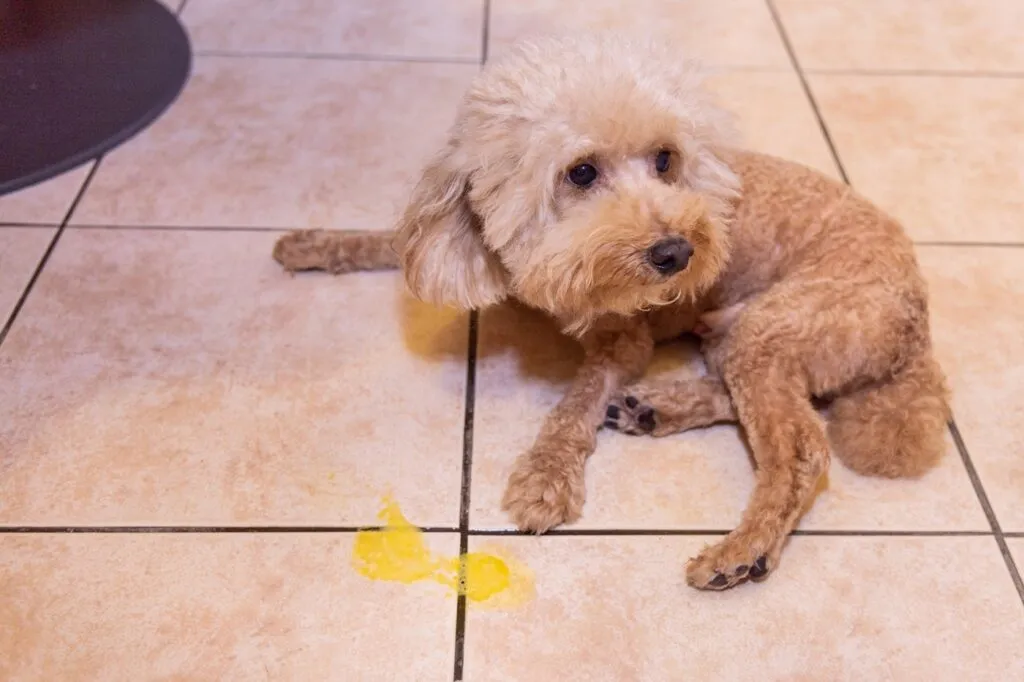
Is your dog being sick with yellow vomit? This is usually bile and often happens when their stomach is empty, which is generally harmless. However, if it happens repeatedly or is accompanied by symptoms such as loss of appetite, diarrhoea or fever, you should consult a vet to rule out more serious causes such as gastritis or a foreign object.
Diagnosis at the Vet: Is Your Dog Vomiting Yellow Bile, White Foam or Mucus? What the Colour and Consistency Can Reveal
Describe the appearance of the vomit to your vet as accurately as possible: Is your dog’s vomit white, yellow or reddish? Does it contain mucus or foam? These factors can provide valuable clues about the cause of the vomiting:
Dog vomits “normal” food pulp: If this type of vomiting occurs around eight to ten hours after feeding, a swallowed foreign object may be the cause, blocking the passage from the stomach to the intestines.
Dog vomits undigested food with a little white mucus and foam: In this case, the food has either not reached the stomach or has only stayed there briefly. This suggests that the animal has overeaten. However, it may not be “true vomiting” at all, but rather regurgitation – the passive bringing up of undigested food.
Dog vomits a lot of mucus or white foam: Large amounts of mucus or foam in the vomit may indicate poisoning. Your dog could be in danger, so take them to the vet immediately!
Dog vomits yellow food pulp: There are many possible causes here, ranging from harmless to serious – so you should contact your vet promptly.
Dog vomits yellow mucus/bile: The vomit contains bile – a sign that the dog is feeling sick or that the gap since the last meal was too long.
Dog vomits red mucus / red streaks in the vomit: The reddish streaks indicate that there is fresh blood in the vomit. This could point to a swallowed foreign object and should be checked by a vet.
Dog vomits black: Swallowed or digested blood may be mixed in, which can indicate a serious cause such as stomach bleeding or a tumour. Contact your vet as quickly as possible!
White “threads” in the vomit: These may be worms. Have your dog examined by a vet and treated for worminfestation if necessary.
Water: If the vomit is very watery, this suggests that the dog’s stomach is empty. Make sure your pet does not become dehydrated and, if in doubt, take your furry friend to the vet.
Faeces: Undigested intestinal contents in the vomit are a sign of a potentially life-threatening intestinal blockage and require an immediate visit to the vet.
Tests to Identify the Cause
Because there are so many possible causes of vomiting in dogs, a range of tests may be needed to determine the reason. First of all, the vet will need a detailed history, for example regarding feeding and when the vomiting occurred after feeding.
The vomiting process itself should also be described so it can be distinguished from the symptom of “regurgitation” (food flowing back up) or coughing.
The clinical examination follows the initial history. If the vet notices any abnormalities during the examination of the dog, further measures such as blood, stool, X-ray and ultrasound examinations may be required. If the dog vomits chronically, an endoscopy or diagnostic surgery may also be recommended.
Treatment: How Is Vomiting in Dogs Treated?
In many cases, a single episode of vomiting without any other symptoms does not require treatment, apart from fasting the dog for around 12 hours. However, your dog must always have access to enough water.
What Should You Feed a Dog after Vomiting?
If the dog vomits more frequently but otherwise seems well, conservative treatment is often enough. For this, the vet will administer antiemetic medication to reduce nausea and the urge to vomit. You should also feed your dog a light diet such as poultry and steamed potatoes.
If additional symptoms such as fever, lethargy and abdominal pain are present, these must also be treated and the cause investigated. If the vomiting is caused by a serious underlying condition, this will need targeted treatment.
First Aid: Which Home Remedies Help if My Dog Is Vomiting?
If your dog vomits, uncomplicated cases can usually be managed with a 12-hour fasting period to allow the stomach to settle, followed by feeding a light diet. Suitable foods include cooked poultry without skin or bones, rice, potatoes (unseasoned and ideally steamed) and cottage cheese. Sweet potatoes, pumpkin and the well-known Moro carrot soup are also easy to digest and provide plenty of valuable nutrients for weakened dogs.
You should also feed your dog lots of small portions throughout the day. Otherwise, your dog’s still-sensitive stomach can quickly become overloaded.
What Helps Soothe a Dog’s Stomach after Vomiting?
Cooled chamomile and fennel tea can also help to soothe the irritated mucous membranes in the stomach and throat and relieve discomfort such as stomach aches.
Prognosis: What Are the Chances of Recovery if My Dog Is Vomiting?
In most cases, vomiting in dogs is either self-limiting or easy to treat. However, the main factor is still what is triggering the vomiting. If your dog is sick because they have eaten too much or something spoiled, they will usually recover quickly. If kidney or liver disease is the cause, for example, the outlook depends on how well the underlying condition can be treated.
A Closer Look: How and Why Do Dogs Vomit in the First Place?
Vomiting is an important defence mechanism of the body. This protective reflex allows the body to remove toxic and unwanted substances or even foreign objects very effectively and quickly.
During this reflex, which takes place in several stages after stimulation, the throat, oesophagus, diaphragm, stomach, abdominal muscles and breathing all work closely together.
What Happens in a Dog’s Body When They Vomit?
Nausea: The first phase shows itself in dogs through swallowing, lip smacking, restlessness, lip licking, drooling and yawning. Increased saliva production coats the oesophagus and prepares it for the acidic stomach contents. Dogs often eat grass during this phase.
Retching: In the second phase, the abdominal muscles and diaphragm contract while the larynx and mouth remain closed. This creates a vacuum, causing the stomach contents to move up through the oesophagus into the mouth. From the outside, you can see “pumping movements” of the abdominal wall with the dog’s back arched.
Vomiting: During the vomiting phase, the stomach contents are expelled through the mouth. The epiglottis also remains closed during this phase so that no stomach contents can enter the windpipe and be inhaled. What is usually vomited up is partially digested or undigested food and fluid discoloured by bile.
Prophylaxis: How Can I Prevent My Dog from Vomiting?
As gulping down food too quickly is often a cause of vomiting in dogs, feeding from a slow feeder bowl can help in these cases.
Particularly with dogs that like to act like “vacuum cleaners”, you should prevent them from eating anything that is not food – whether at home or out on walks. Depending on the situation, targeted training and a temporary muzzle can help stop unwanted eating.
Avoid Sudden Changes in Food
As some dogs are sensitive to changes in their food, it is advisable to avoid sudden switches or make the change gradually over several days.
In winter, you should try to stop your dog from eating snow wherever possible, as this often leads to gastrointestinal problems (“snow gastritis”).
Conclusion: What Should I do if My Dog Is Vomiting?
If your dog vomits once, there is usually no immediate cause for concern. With a short fasting period and temporary light diet, most dogs recover quickly.
It becomes more serious if there is blood in your dog’s vomit and/or additional symptoms such as diarrhoea, pain, apathy or a worsening general condition occur – in this case, you should contact a vet immediately. Prolonged vomiting is also a reason to visit the vet.
Important Note: The content provided for informational purposes only and is not intended to replace professional veterinary advice, diagnosis or treatment. If you have any questions or concerns about your pet's health, please always consult a licensed veterinarian.
This article was translated using Artificial Intelligence from the original German zooplus Magazine. While the original content was authored by industry experts and reviewed by our editorial team, this automated translation has not been human-edited and is provided for informational purposes.
Franziska Pantelic, Veterinarian
I am supporting the zooplus magazine for several years with my extensive expertise. I became a licensed veterinarian as early as 2009 and currently operate a mobile small animal practice in the metropolitan area of Munich.
When does a female dog’s first season begin? How often and for how long is a female dog in season? And what symptoms does a female dog in season show? Find out everything you need to know about these “hot days” and how you and your dog can get through the season calmly and stress-free in the following article.
16 February 2024 |Leishmaniasis is an infectious disease transmitted by sandflies and can often prove fatal for dogs. Find out how you can protect your dog and how to recognise and treat the disease should it emerge.
Neutering has traditionally been a standard veterinary practice, but is it universally recommended? What distinguishes neutering from sterilisation and what expenses should a dog owner anticipate? Here, you can discover all the essential information concerning the advantages and disadvantages of neutering your dog.