{"url":"https://www.zooplus.co.uk/magazine/dog/dog-health-and-care/umbilical-hernia-in-dogs","title":"Umbilical Hernia in Dogs","mag_id":417734,"is_single":true,"cat_name":"Dog","sub_cat_id":143,"sub_cat_name":"Dog Health and Care","cat_id":3410}
Umbilical hernias are by far the most common type of abdominal hernia in dogs. But what exactly is an umbilical hernia in dogs, and how dangerous can it be? Find out everything you need to know in this article:
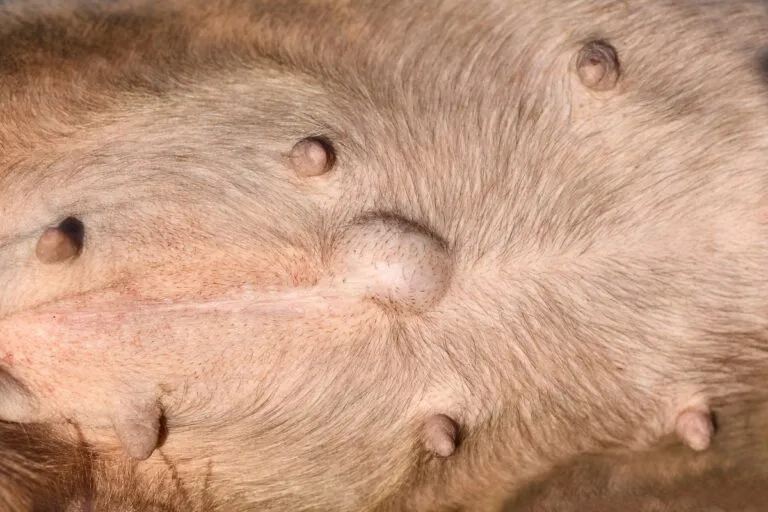
An umbilical hernia, also known as a navel hernia or hernia umbilicalis, is caused by a congenital incomplete closure of the abdominal wall. The opening (hernial ring) is usually so small that only fatty tissue and parts of the omentum can pass through, meaning the umbilical hernia is generally more of a cosmetic issue.
However, if the opening is larger and parts of organs such as loops of intestine can also protrude through it, this can become potentially life-threatening for your dog. Vets also refer to this as “incarcerated” organs.
How Common Is An Umbilical Hernia in Puppies?
Almost ten percent of all newborn puppies have an umbilical hernia. Certain dog breeds are particularly commonly affected:
Symptoms: What Are the Signs of An Umbilical Hernia in Dogs?
The typical sign of an umbilical hernia in a puppy is a small, soft lump around the navel area. Depending on the size of the opening, the contents of the hernia (for example fat or omentum) can be pushed back into the abdominal cavity (“reduced”).
Do Dogs Experience Pain from An Umbilical Hernia?
Dogs affected by small umbilical hernias usually do not feel any pain. However, incarceration can cause severe pain and requires immediate attention.
When Should I See a Vet?
If your puppy has an umbilical hernia, you should have it checked by your vet. If your dog is already showing signs of dangerous strangulation (vomiting, pain, swelling, restlessness), you should contact a vet immediately.
Diagnosis: How Is An Umbilical Hernia in Dogs Diagnosed?
An umbilical hernia can be identified quickly and easily by feeling the area. Imaging procedures such as an ultrasound or X-ray examination provide further information about possible tissue entrapment and the position of the abdominal organs.
How Is An Umbilical Hernia in Dogs Treated?
If your puppy is less than eight weeks old, surgery is generally not advisable at this stage. This is because the hernial opening may still change and close as the puppy continues to grow.
At this stage, an attempt can be made to move the contents back into the abdominal cavity and secure the hernia with a button and a plaster placed over it.
When Does An Umbilical Hernia in Dogs Need Surgery?
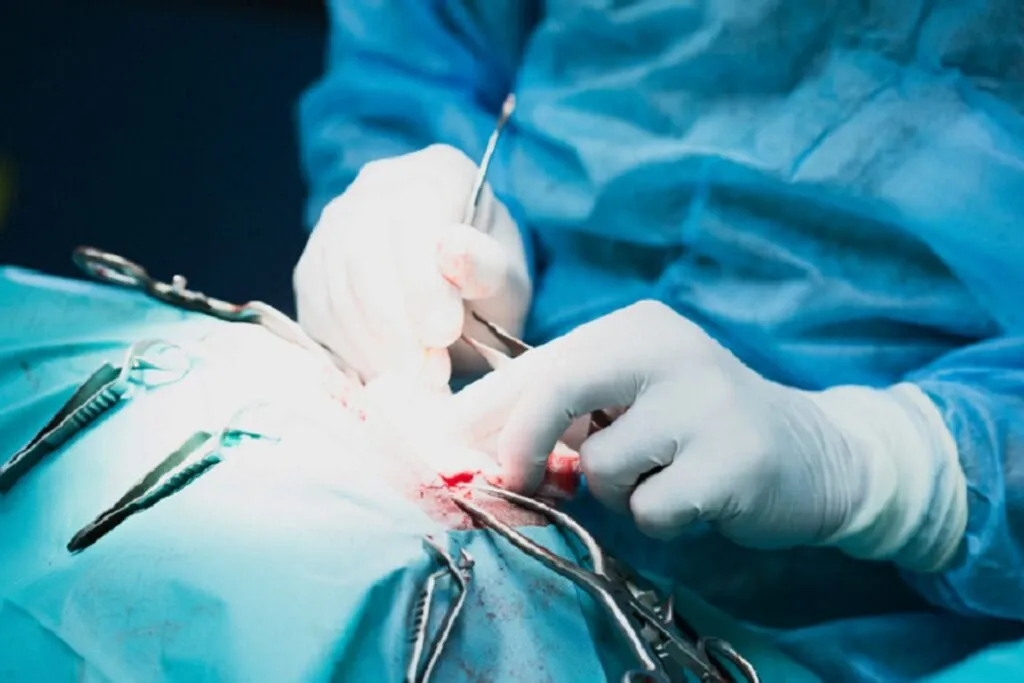
If the hernia does not heal by itself or if your dog is at risk of incarceration, surgery under anaesthetic is necessary. The vet carries out the following steps:
they make an elliptical incision in the surrounding skin around the hernial sac.
they expose the inner hernial sac down to the hernial opening.
they push the contents of the hernial sac back into the abdominal cavity (or remove them).
they close the wound.
How Quickly Does An Umbilical Hernia Need to Be Operated On?
Whether and how quickly your dog should undergo surgery for an umbilical hernia depends on various factors. The larger the hernia, the higher the risk of abdominal organs becoming trapped. If your dog is already showing signs of incarceration, swift action is required.
Surgery Costs: How Much Does Umbilical Hernia Surgery for Dogs Cost?
The cost of umbilical hernia surgery in dogs cannot be predicted with 100% certainty. Factors such as the complexity of the operation or the timing (e.g. visiting a veterinary clinic outside normal hours) can affect the price of the procedure.
If the umbilical hernia is uncomplicated, the costs are usually between 300 and 800 euros. In complicated cases, however, the price of the operation can rise to over 1000 euros. In addition, there are costs for follow-up examinations and any medication that may be required.
What Happens if An Umbilical Hernia Is not Operated On?
In this case, parts of the intestine can become trapped in the umbilical hernia and constricted (incarceration). The resulting restricted blood flow leads to inflammatory fluid retention (oedema) and severe pain. In addition, your dog is at risk of a life-threatening intestinal blockage (ileus).
Causes: What Triggers An Umbilical Hernia in Dogs?
There are various causes that can lead to a hernia umbilicalis in dogs:
the connective tissue of the abdominal wall is too weak and tears due to excessive pressure
the umbilical opening is too large
genetic tendency (predisposition)
injuries (especially in adult dogs)
Omphalocele in Unborn Puppies
Umbilical hernias can also occur in unborn puppies, where loops of intestine and other abdominal organs (for example the spleen) can protrude — this is referred to as an omphalocele.
These types of umbilical hernias usually do not occur on their own, but in combination with other malformations. As a result, the prognosis for these puppies is significantly worse — many of them only survive for a short time.
Prognosis: Can An Umbilical Hernia in Puppies Heal on Its Own?
Yes, as puppies grow, most umbilical hernias heal by themselves within the first six months of life.
However, to avoid complications, it is advisable to have your puppy’s umbilical hernia checked regularly by a vet. This is especially important if the hernia becomes larger.
If the umbilical hernia does not heal on its own, surgery is necessary.
Prevention: Can I Prevent An Umbilical Hernia in Dogs?
You can certainly reduce the risk of umbilical hernias in puppies. Above all, you should make sure that the parent animals are healthy and do not pass on the trait. For breeding, only choose animals that have never had an umbilical hernia.
Careful handling and an appropriate diet for puppies also help to reduce strain on the abdominal wall and strengthen the connective tissue.
Important Note: The content provided for informational purposes only and is not intended to replace professional veterinary advice, diagnosis or treatment. If you have any questions or concerns about your pet's health, please always consult a licensed veterinarian.
This article was translated using Artificial Intelligence from the original German zooplus Magazine. While the original content was authored by industry experts and reviewed by our editorial team, this automated translation has not been human-edited and is provided for informational purposes.
At the Justus-Liebig-University of Giessen I was extensively trained as a veterinarian and was able to gain experience in various fields such as small animal, large animal and exotic animal medicine as well as pharmacology, pathology and food hygiene.
Since then, I have been working not only as a veterinary author, but also on my scientifically driven dissertation. My goal is to better protect animals from pathogenic bacterial organisms in the future.
Besides my veterinary knowledge, I also share my own experiences as a happy dog owner and can thus understand and enlighten fears and problems as well as other important questions about animal health.
When does a female dog’s first season begin? How often and for how long is a female dog in season? And what symptoms does a female dog in season show? Find out everything you need to know about these “hot days” and how you and your dog can get through the season calmly and stress-free in the following article.
16 February 2024 |Leishmaniasis is an infectious disease transmitted by sandflies and can often prove fatal for dogs. Find out how you can protect your dog and how to recognise and treat the disease should it emerge.
Neutering has traditionally been a standard veterinary practice, but is it universally recommended? What distinguishes neutering from sterilisation and what expenses should a dog owner anticipate? Here, you can discover all the essential information concerning the advantages and disadvantages of neutering your dog.