{"url":"https://www.zooplus.co.uk/magazine/dog/dog-health-and-care/dog-eats-faeces-causes-and-risks","title":"Dog Eats Faeces: Causes and Risks","mag_id":417775,"is_single":true,"cat_name":"Dog","sub_cat_id":143,"sub_cat_name":"Dog Health and Care","cat_id":3410}
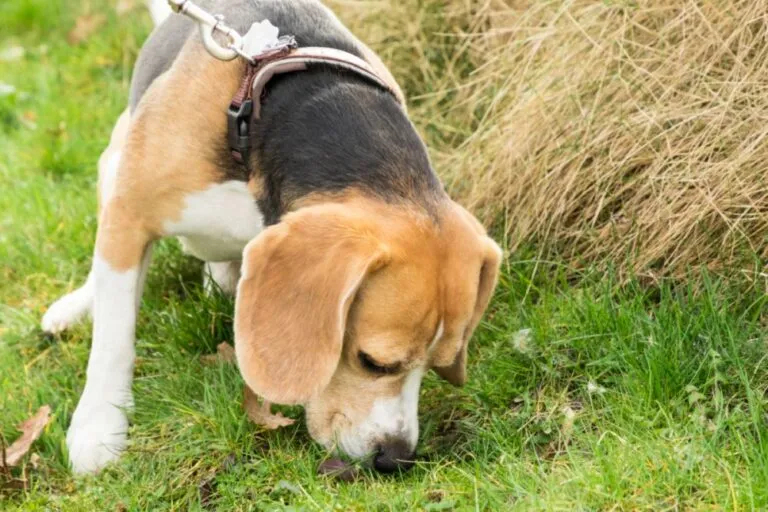
Curious dogs often come across all sorts of temptations when out for a walk. Does your dog find animal droppings particularly appealing? If your dog eats faeces, it’s understandably unpleasant for owners: this behaviour poses a health risk to both animals and humans. We explain how to identify the cause and which tips can help stop your dog from eating faeces.
If your dog eats faeces, it is an alarm signal. You should not view this behaviour, also known as coprophagia, only as a health risk for your dog, but also for yourself and your family. Therefore, the following applies: eating dog faeces is serious behaviour that you should stop.
Why Is Eating Faeces Harmful for Dogs?
Whether it is human or animal faeces: if your dog eats excrement, it can have serious consequences. The reason is the infectious agents and toxinsthat may be present in faeces.
Wild animal faeces in particular often contain infectious agents that your dog can catch and become ill from afterwards. The most common pathogens transmitted through faeces in dogs include:
In addition to pathogens, excrement may also contain toxic substances that can seriously harm your dog if consumed.
Dog Eats Dog Faeces
If a dog eats dog faeces, this can involve various health risks. Faeces from other dogs or even from the same dog may contain pathogens that can infect your dog.
Dog Eats Horse Manure
Dogs sometimes eat horse manure too. Even though it does not come from dogs, horses can excrete pathogens or substances (worming treatment) in their faeces that may be harmful to your dog.
Dog Eats Cow Dung
Eating cow dung can also be dangerous for your dog. Cow faeces may contain not only parasites, but also residues of medication or other harmful substances.
Dog Eats Cat Faeces
Eating cat faeces can be dangerous for your dog for several reasons, as cat faeces may contain infectious stages of Toxoplasma gondii, which can lead to toxoplasmosis in dogs.
Dog Eats Rabbit or Hare Droppings
Rabbit or hare droppings may also contain parasites such as giardia or worms, which can cause gastrointestinal problems in dogs. Your dog should therefore not eat droppings found in grass.
Dog Eats Fox Faeces
Eating fox faeces is particularly dangerous for dogs, as fox faeces may contain infectious fox tapeworm eggs and other parasites. If your dog ingests these, it may develop a difficult-to-treat disease called cysticercosis.
Dog Eats Wild Boar Faeces
Wild boars are especially likely to transmit parasites such as Trichinella. Compared with cow or horse faeces, wild boar faeces may also contain pathogens specialised in wild animals that can cause serious health problems in dogs.
Dog Eats Human Faeces
Human excrement is dangerous for your dog because, in addition to pathogens, it often contains residues of medication or other chemical substances that are toxic to dogs.
Zoonoses: Risk of Infection for the Whole Family
Pathogens that can be transmitted between humans and animals are a serious danger. These are known as zoonotic pathogens. These dangerous pathogens occur in the faeces of humans and animals and can quickly become a risk for the whole family.
If your dog ingests contaminated faeces, it can easily pass the pathogens on to you or other people. The pathogens can then spread both within and outside your family through smear infection.
Increased Risk of Illness for Vulnerable People
In vulnerable groups, including children, pregnant women, older people and those who are ill, the immune system is weakened. Infectious diseases therefore pose a particularly high health risk for these people.
If you belong to one of the above risk groups or have someone vulnerable in your immediate environment, you should be especially careful to ensure that your dog does not eat faeces and spread disease as a result.
Causes: Why Do Dogs Eat Faeces?
There can be various reasons why a dog eats faeces. In some dogs, the tendency towards coprophagia is congenital, for example. Below are three common reasons for coprophagia .
Before you can take steps to stop your dog eating faeces in the long term, you must first get to the bottom of the cause of the behaviour – ideally together with your vet.
Behavioural Disorders
Eating faeces in dogs may indicate a serious behavioural disorder. Coprophagia as a behavioural disorder…
can develop during puppyhood due to an incorrect socialisation phase and persist long term.
often occurs in kennel-kept dogs.
can be caused by a lack of exercise.
Malnutrition and Hunger
If your dog does not eat enough or if the dog food does not contain enough nutrients, this can gradually lead to severe deficiency symptoms .
In this case, your dog may try to obtain the missing nutrients by eating faeces.
Illnesses
A wide range of gastrointestinal diseases can lead to coprophagia in dogs in the short or long term.
Examples include:
bacterial infections
chronic exocrine pancreatic insufficiency (EPI)
Pancreatic insufficiency in dogs (underactive pancreas)
Symptoms: What Are the Signs of Health Problems Caused by Eating Faeces?
If your dog has eaten faeces and has been poisoned or infected with pathogens as a result, it may show signs of illness. The most common signs include vomiting, diarrhoea and bad breath.
With enough exercise and loving training, dogs often no longer even think about eating harmful faeces.
What Can You Do if Your Dog Eats Faeces? 6 Tips that Can Help
The following advice can help teach your dog not to eat harmful excrement in future.
1. Identify and Tackle the Cause
If your dog eats faeces, there is always an underlying issue. Instead of giving your dog questionable home remedies such as yeast or pepper, you should have your vet determine the cause of the unwanted behaviour.
Your vet can examine your dog thoroughly and identify possible underlying conditions. They can also introduce further measures such as nutritional advice or behavioural training .
2. Keep an Eye on Your Dog
To prevent your dog from eating faeces in the first place, you should always keep a close eye on them during walks. The same naturally applies when your dog is playing in the garden. Wild animals or rodents often leave droppings there. If in doubt, keep your dog on a lead and away from tall grass or areas where you cannot see clearly.
3. Stop Faeces Eating through Training
If your dog comes across faeces and wants to eat it, you should definitely stop them. It is important to give a clear “No”.
If your dog stops the behaviour and you reward them with kind words or a treat, you can positively reinforce the desired behaviour.
If you have other pets besides your dog, such as cats, you should clean their toilets regularly. Remove your cat’s droppings as soon as they have used the litter tray.
If you have puppies, you should also remove the little four-legged friends’ faeces immediately. Otherwise, the young dogs may play with the faeces or even eat it due to lack of experience.
5. Make Sure Your Dog Gets Enough Exercise and Stimulation
If your dog eats faeces out of boredom, you should offer them more opportunities for exercise and mental stimulation. How about playful dog training or dog sports?
A well-fitting muzzle can prevent your dog from picking up faeces or other objects. It is a safe method, especially when constant supervision is difficult (e.g. in the dog park).
Important: A muzzle is only intended as a supportive aid and never replaces the necessary training. To ensure the muzzle fits properly and your dog accepts it without stress, you should seek advice from an experienced trainer or vet regarding choosing the right model and getting your dog used to it .
Conclusion: There Are Ways to Help if Your Dog Eats Faeces
If boredom or a lack of training is the cause of your dog eating faeces, there are many dog sports that are enjoyable for both dog and owner and strengthen the bond between animal and human. They also support dog training.
If health-related reasons are triggering the coprophagia, your vet will know what to do.
Important Note: The content provided for informational purposes only and is not intended to replace professional veterinary advice, diagnosis or treatment. If you have any questions or concerns about your pet's health, please always consult a licensed veterinarian.
This article was translated using Artificial Intelligence from the original German zooplus Magazine. While the original content was authored by industry experts and reviewed by our editorial team, this automated translation has not been human-edited and is provided for informational purposes.
At the Justus-Liebig-University of Giessen I was extensively trained as a veterinarian and was able to gain experience in various fields such as small animal, large animal and exotic animal medicine as well as pharmacology, pathology and food hygiene.
Since then, I have been working not only as a veterinary author, but also on my scientifically driven dissertation. My goal is to better protect animals from pathogenic bacterial organisms in the future.
Besides my veterinary knowledge, I also share my own experiences as a happy dog owner and can thus understand and enlighten fears and problems as well as other important questions about animal health.
When does a female dog’s first season begin? How often and for how long is a female dog in season? And what symptoms does a female dog in season show? Find out everything you need to know about these “hot days” and how you and your dog can get through the season calmly and stress-free in the following article.
16 February 2024 |Leishmaniasis is an infectious disease transmitted by sandflies and can often prove fatal for dogs. Find out how you can protect your dog and how to recognise and treat the disease should it emerge.
Neutering has traditionally been a standard veterinary practice, but is it universally recommended? What distinguishes neutering from sterilisation and what expenses should a dog owner anticipate? Here, you can discover all the essential information concerning the advantages and disadvantages of neutering your dog.