{"url":"https://www.zooplus.co.uk/magazine/dog/dog-health-and-care/is-hiccups-dangerous-for-dogs","title":"Is Hiccups Dangerous for Dogs?","mag_id":416155,"is_single":true,"cat_name":"Dog","sub_cat_id":143,"sub_cat_name":"Dog Health and Care","cat_id":3410}
Hiccups are a symptom that doesn’t just occur in humans. Puppies and adult dogs also get singultus, the medical term for hiccups, quite frequently. The causes are usually harmless, but persistent hiccups can also indicate serious illnesses. We’ve summarised why your dog gets hiccups in the first place, what may cause them and how to prevent them.
Fortunately, hiccups are usually harmless in both puppies and adult dogs. However, persistent hiccups should always be checked urgently by a vet, as serious illnesses could also be behind the hiccupping.
How Do Hiccups Actually Occur?
A look at the anatomy and physiology of dogs helps to better understand how hiccups develop.
Three nerve branches of varying strength originate in the neck area and join together at the entrance to the chest to form a single nerve cord. This diaphragmatic nerve, now known as the phrenic nerve, runs past the heart to the diaphragm. There, it divides again into many small branches and stimulates the different muscular parts of the diaphragm. The diaphragm, located between the liver and lungs, plays an important role in breathing as a large muscle organ and partition between the chest and abdominal cavity.
If pressure is then exerted on the diaphragm, for example by a very full stomach, or if the phrenic nerve becomes irritated, this triggers a reflex. The diaphragm and supporting breathing muscles involuntarily spasm (reflex spasms). At the same time, the vocal cords close the glottis, causing pressure to build up – creating the typical hiccuping sound associated with hiccups.
Why Do Dogs Get Hiccups?
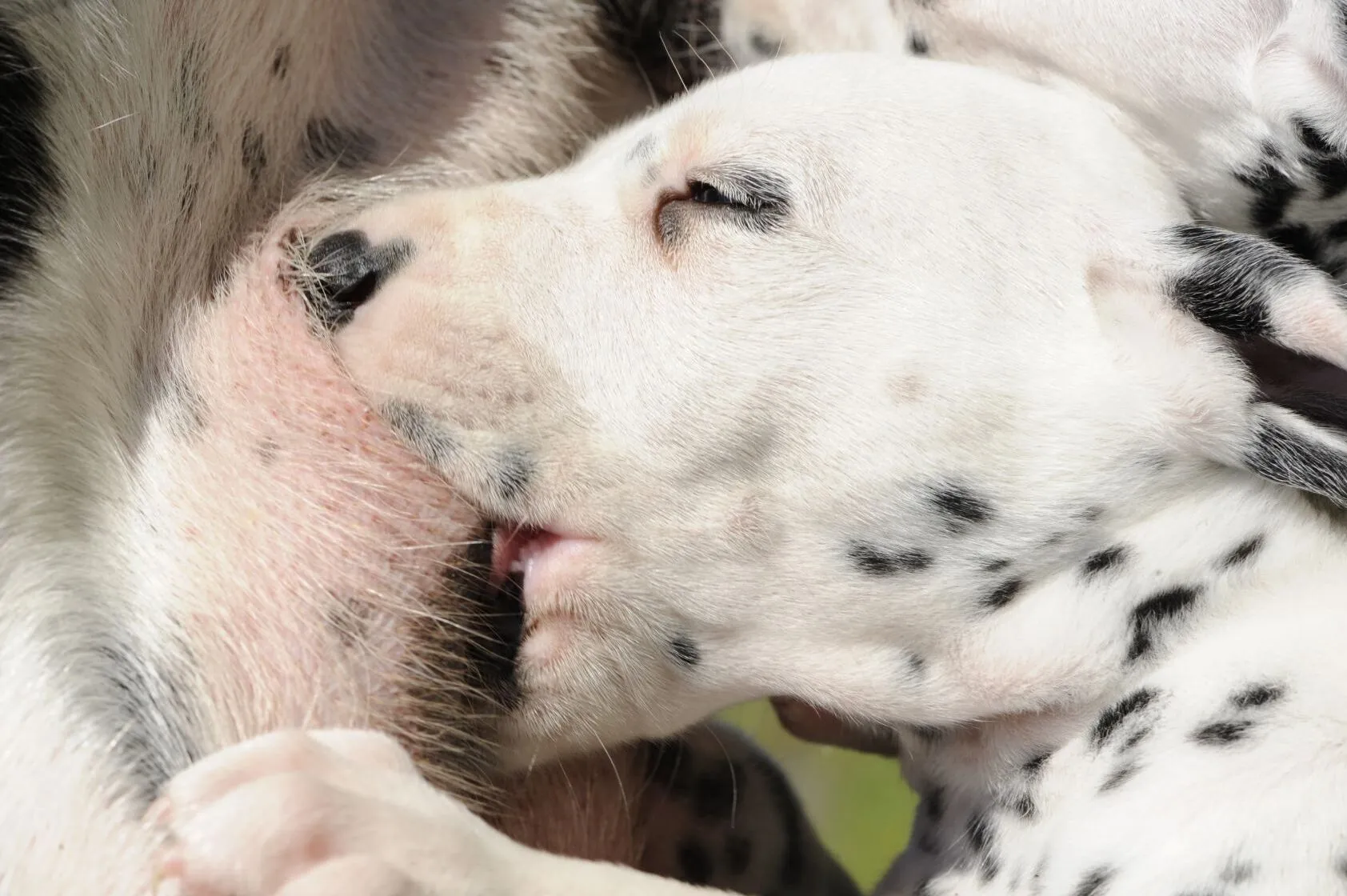
Puppies in particular often get hiccups because there is too much air in their stomach. While suckling their mother’s milk, they swallow more air and this stretches the stomach. When a puppy gets hiccups, it helps remove the excessive build-up of air from the stomach. Hiccups are therefore primarily a protective reflex in puppies.
Adult dogs can also get hiccups. But don’t worry, the causes are usually harmless. Most of the time, your four-legged friend has simply eaten too quickly or is stressed.
However, serious illnesses can also trigger hiccups. These include in particular:
A hiatus hernia (partial or complete displacement of the stomach from the abdominal cavity into the chest cavity through the diaphragm)
Tumours of the nervous system or other tissues within the chest or neck area, which irritate the phrenic nerve as they grow
Inflammation of the phrenic nerve (neuritis), the brain (encephalitis) or the meninges (meningitis)
Poisoning (for example from medication or plant toxins)
What Diagnostic Options Are Available?
A veterinary examination for hiccups is only necessary if they continue for several hours or even days in your dog. During the owner consultation (medical history) and the general clinical examination, the vet can often identify a harmless cause. Important information includes the duration and timing of the hiccups, any previous medication given, other symptoms and the animal’s eating and drinking habits.
If the hiccups cannot be clearly explained, the vet may carry out further diagnostic measures:
Some masses (e.g. tumours or abscesses) can be felt by hand in the neck, chest and abdominal area. If the dog reacts painfully during this, it may indicate an inflammatory condition such as an abscess or inflammation of the pancreas (pancreatitis).
Imaging procedures such as ultrasound or X-rays also allow the internal organs to be examined. This helps the vet to better locate and assess changes. In particular, positional changes such as a diaphragmatic hernia (hiatus hernia) can be ruled out in this way.
Neurological examinations can be used to diagnose diseases of the nervous system. Among other things, the vet tests the dog’s motor skills and sensory perception. A cerebrospinal fluid examination (examination of the brain and spinal fluid) can provide indications of possible inflammation of the brain.
A blood test can measure inflammatory cells and important organ parameters. This is important, for example, to diagnose inflammation of the pancreas.
What Treatment Options Are Available?
In most dogs, hiccups disappear on their own after a short time. Treatment is therefore only necessary in very few cases and depends largely on the underlying illness. However, to temporarily stop persistent hiccups, the phrenic nerve can be numbed for a short time using a local anaesthetic.
Can Hiccups in Dogs Be Prevented?
Although hiccups are not dangerous for your four-legged friend, the hiccupping isn’t particularly pleasant for them. With these two tricks, you can at least try to reduce the chances of hiccups occurring:
If eating or drinking too quickly is the cause, you can help prevent hiccups with an anti-gulp bowl from the zooplus shop instead of a normal food bowl.
Feed your dog smaller amounts several times a day instead of serving one large portion at once. This helps reduce the amount of air swallowed while eating.
Important Note: The content provided for informational purposes only and is not intended to replace professional veterinary advice, diagnosis or treatment. If you have any questions or concerns about your pet's health, please always consult a licensed veterinarian.
This article was translated using Artificial Intelligence from the original German zooplus Magazine. While the original content was authored by industry experts and reviewed by our editorial team, this automated translation has not been human-edited and is provided for informational purposes.
At the Justus-Liebig-University of Giessen I was extensively trained as a veterinarian and was able to gain experience in various fields such as small animal, large animal and exotic animal medicine as well as pharmacology, pathology and food hygiene.
Since then, I have been working not only as a veterinary author, but also on my scientifically driven dissertation. My goal is to better protect animals from pathogenic bacterial organisms in the future.
Besides my veterinary knowledge, I also share my own experiences as a happy dog owner and can thus understand and enlighten fears and problems as well as other important questions about animal health.
When does a female dog’s first season begin? How often and for how long is a female dog in season? And what symptoms does a female dog in season show? Find out everything you need to know about these “hot days” and how you and your dog can get through the season calmly and stress-free in the following article.
16 February 2024 |Leishmaniasis is an infectious disease transmitted by sandflies and can often prove fatal for dogs. Find out how you can protect your dog and how to recognise and treat the disease should it emerge.
Neutering has traditionally been a standard veterinary practice, but is it universally recommended? What distinguishes neutering from sterilisation and what expenses should a dog owner anticipate? Here, you can discover all the essential information concerning the advantages and disadvantages of neutering your dog.