{"url":"https://www.zooplus.co.uk/magazine/dog/dog-health-and-care/blood-in-dog-urine-causes-treatment","title":"Blood in Dog Urine: Causes & Treatment","mag_id":417166,"is_single":true,"cat_name":"Dog","sub_cat_id":143,"sub_cat_name":"Dog Health and Care","cat_id":3410}
Is your dog peeing blood or losing drops of blood? Blood in a dog’s urine can be very worrying for owners. Although bloody urine is not always dangerous, it can be a sign of a serious illness. Find out more here about the signs, causes and treatment.
Vets distinguish between three conditions that describe “blood in the urine”:
Haematuria: red blood cells (erythrocytes) in the urine
Haemoglobinuria: red blood pigment (haemoglobin) in the urine after the breakdown of red blood cells
Myoglobinuria: muscle protein (myoglobin) in the urine after the destruction of muscle cells
In most cases, vets use the term “blood in the urine” to mean haematuria. All three conditions can have different causes – some are fairly harmless, while others are very serious. It is therefore very important to have your dog examined by a vet as soon as they show signs of bloody urine.
Is Blood in My Dog’s Urine an Emergency?
Not every cause of blood in a dog’s urine is an emergency. However, if your dog is also in severe pain or shows other symptoms such as fever or difficulty urinating, it could be an emergency.
Note: In this case, you should contact your vet immediately to ensure your dog receives the best possible care.
Causes: What Does Blood in a Dog’s Urine Mean?
Whether your female dog, male dog or older dog has blood in their urine: if your dog has bloody urine, it can be the result of many different causes. Most of these affect the lower urinary tract (bladder and urethra) or upper urinary tract (kidneys and ureters). Others are located in the reproductive organs, although systemic illnesses can also lead to this.
What Could It Mean if a Dog Has Blood in its Urine?
The following table gives you an overview of the most common causes of bloody urine in dogs:
Cystitis, bladder stones, irritation of the urethral lining
Additional Symptoms: How Can I Recognise Blood in My Dog’s Urine?
The amount and type of bleeding determine the colour of the urine. Blood in a dog’s urine can usually be recognised by a pink-red to brown discolouration of the urine. In some cases, however, you may not be able to see the blood with the naked eye. In these cases, the blood is only visible under a microscope.
Alongside the bloody urine itself, your dog may also show other symptoms. Blood in a dog’s urine is often accompanied by the following signs of illness:
Your dog urinates more frequently (polyuria)
they have pain when urinating (stranguria)
they show general symptoms such as fever or loss of appetite
Diagnosis: How Is Blood in a Dog’s Urine Detected?
The colour of the urine is not always a clear indication of whether it contains blood. However, if you suspect it does, you should consult your vet.
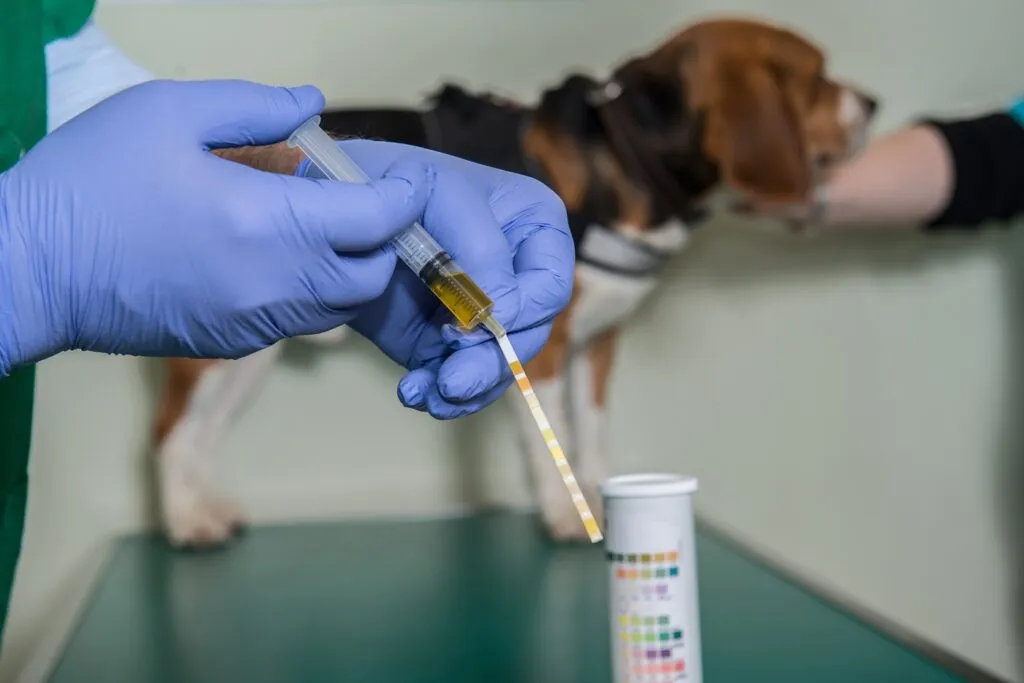
They can use a dipstick test and an examination of the urine sediment to determine whether it is haematuria, haemoglobinuria or myoglobinuria.
Blood in the urine can be detected using a test strip.
Treatment: What Can I Do if My Dog Has Blood in its Urine?
Treatment depends on the underlying condition. While an antibiotic may help treat the bacterial cause of a urinary tract infection, bladder stones require either special diet food for dogs or surgery. Anti-inflammatory medication and pain relief for dogs can also help ease the symptoms.
Are There Home Remedies for Blood in a Dog’s Urine?
Although there are home remedies for some causes (e.g. herbal tea for urinary tract problems), if your dog has bloody urine, they need veterinary care. Blood in the urine is a serious warning sign that may indicate a serious illness.
Important Note: The content provided for informational purposes only and is not intended to replace professional veterinary advice, diagnosis or treatment. If you have any questions or concerns about your pet's health, please always consult a licensed veterinarian.
This article was translated using Artificial Intelligence from the original German zooplus Magazine. While the original content was authored by industry experts and reviewed by our editorial team, this automated translation has not been human-edited and is provided for informational purposes.
At the Justus-Liebig-University of Giessen I was extensively trained as a veterinarian and was able to gain experience in various fields such as small animal, large animal and exotic animal medicine as well as pharmacology, pathology and food hygiene.
Since then, I have been working not only as a veterinary author, but also on my scientifically driven dissertation. My goal is to better protect animals from pathogenic bacterial organisms in the future.
Besides my veterinary knowledge, I also share my own experiences as a happy dog owner and can thus understand and enlighten fears and problems as well as other important questions about animal health.
When does a female dog’s first season begin? How often and for how long is a female dog in season? And what symptoms does a female dog in season show? Find out everything you need to know about these “hot days” and how you and your dog can get through the season calmly and stress-free in the following article.
16 February 2024 |Leishmaniasis is an infectious disease transmitted by sandflies and can often prove fatal for dogs. Find out how you can protect your dog and how to recognise and treat the disease should it emerge.
Neutering has traditionally been a standard veterinary practice, but is it universally recommended? What distinguishes neutering from sterilisation and what expenses should a dog owner anticipate? Here, you can discover all the essential information concerning the advantages and disadvantages of neutering your dog.