{"url":"https://www.zooplus.co.uk/magazine/dog/dog-health-and-care/heart-failure-cardiac-insufficiency-in-dogs","title":"Heart Failure (Cardiac Insufficiency) in Dogs","mag_id":417029,"is_single":true,"cat_name":"Dog","sub_cat_id":143,"sub_cat_name":"Dog Health and Care","cat_id":3410}
Is your dog becoming increasingly lethargic over time and getting out of breath quickly? Heart failure in dogs could be one possible cause. But how can I recognise heart failure, and what can I do about it? Read the following article to learn everything important about this topic.
If left untreated, a weak heart or heart failure in dogs will inevitably lead to the animal’s death sooner or later. It is a progressive condition that can only really be slowed down with the right medication. You should therefore always take heart failure in your dog seriously. Regular check-ups with your vet are essential!
How Does a Healthy Dog’s Heart Work?
To better understand how heart failure develops in dogs, let’s first take a closer look at the anatomy of the heart:
Anatomy and Function of the Canine Heart
The heart is divided into a left and right ventricle, as well as a left and right atrium. Oxygen-poor blood flows from the body’s circulation into the right atrium via the vena cava and is then transported through the tricuspid valve into the right ventricle. When the right ventricle contracts, the blood is pumped through the pulmonary artery into the lungs, where the oxygen-poor blood is enriched with fresh oxygen.
From there, it travels through the pulmonary veins into the left atrium and then through the mitral valve into the left ventricle. The enriched blood now leaves the heart via the aorta and can supply the body with important nutrients through the peripheral blood vessels.
What Types Are There, and How Does Heart Failure Develop in Dogs?
The term heart failure does not describe a specific disease, but rather the syndrome of cardiac weakness itself. Heart failure can be triggered by a wide range of diseases affecting both the heart itself and the surrounding organs.
Heart weakness can either develop due to reduced blood flow through the body (perfusion insufficiency) or be caused by what is known as congestive heart failure. In this case, blood backs up in the veins. This can affect either the right or left side of the heart.
Congestive Heart Failure
Vets divide the causes of congestive heart failure into left-sided and right-sided heart failure:
Left-sided heart failure: By far the most common heart disease in dogs is left-sided heart failure. Although some breeds, such as the Cavalier King Charles Spaniel , can develop mitral valve insufficiency at a young age due to a hereditary predisposition, in most cases it tends to affect older dogs. The condition usually centres around what is known as endocardiosis. This causes abnormal thickening of the mitral valve. The resulting leaky valve then causes blood to flow back from the left ventricle into the left atrium. Over time, this leads to enlargement of the atrium and a backlog extending into the lungs or the right side of the heart. Narrowing of the mitral valve (mitral stenosis), malformations (e.g. a left-to-right shunt) or dilated cardiomyopathy (enlarged heart chambers) can also lead to left-sided heart failure.
Right-sided heart failure: In dogs, this also occurs, although less frequently, due to endocardiosis of the tricuspid valve. However, fluid accumulation in the pericardium (pericardial effusion), pulmonary embolisms or advanced left-sided heart failure can also impair heart function through a backup of blood.
Perfusion Insufficiency
This develops due to reduced cardiac output. This refers to the amount of blood passing through the heart per minute. Both left-sided and right-sided heart failure can be possible causes.
Symptoms: Typical Signs of Heart Failure in Dogs
Heart weakness reduces a dog’s quality of life through various accompanying symptoms:
General symptoms: Tiredness, loss of appetite, reduced performance, restlessness
Right-sided heart failure: Cold limbs and fluid retention, pale mucous membranes, shortness of breath, abdominal pain caused by congestion extending to the liver
If the heart becomes so severely impaired that it results in what is known as heart failure collapse, the dog will die from the consequences of heart failure without treatment.
Diagnosis: What Examinations Does the Vet Carry Out?
Owners usually notice heart problems through increased tiredness and reduced performance. At the latest, this is the point when a visit to the vet is advisable. During the consultation with the owner (medical history), the vet asks important questions about when the symptoms appeared. The heart is then examined more closely for the first time as part of the general clinical examination. The vet determines the dog’s heart rate, breathing rate and other vital signs.
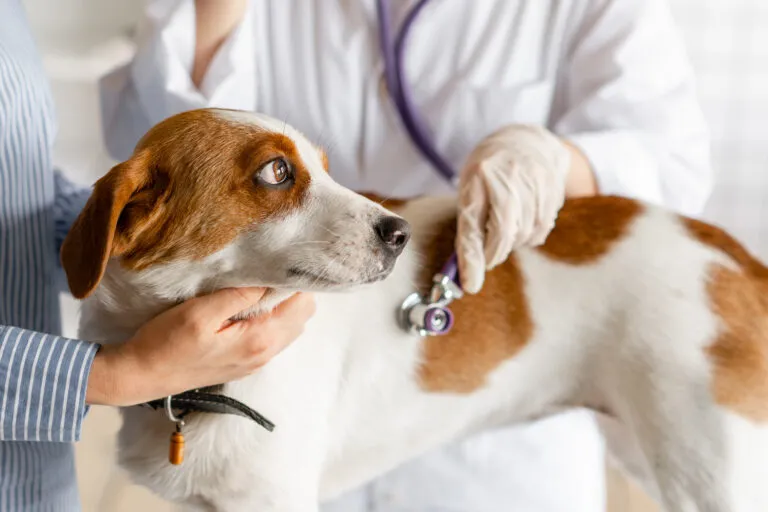
As part of a specialised cardiological examination, the vet or a veterinary specialist (cardiologist) takes a closer look at the heart. Using a stethoscope, they listen to the heart rate, assess the strength of the heartbeat and check for any heart murmurs.
Imaging procedures such as X-rays or a cardiac ultrasound are then used to visually assess the heart. The latter has the advantage of showing the heart’s current function. X-rays, on the other hand, can only be used to assess the size of the heart and surrounding structures such as the lungs or diaphragm.
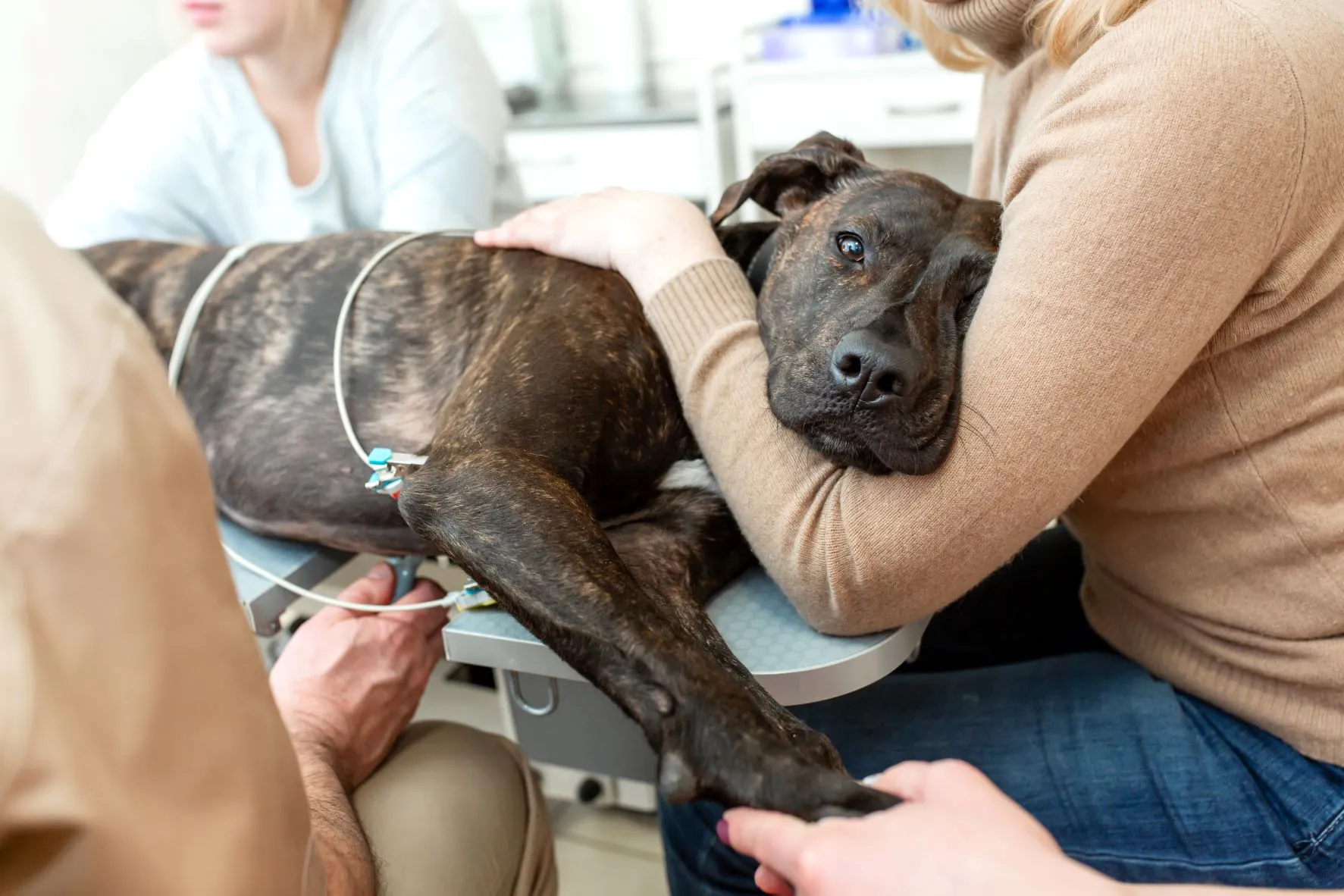
Electrocardiography is also used to rule out cardiac arrhythmias. To do this, electrodes are attached to the dog’s armpits and knee folds to measure the heart’s electrical activity. This activity is recorded as curves on a computer and then evaluated by the vet.
As heart failure in dogs is a progressive disease, it is divided into 3 or 4 stages depending on the classification system used. The different stages correspond to different treatment options and prognoses.
Treatment: How Is Heart Failure in Dogs Treated?
When and how the vet treats heart failure in dogs depends on the severity of the disease and other factors (e.g. age). As a rule, treatment of the underlying cause is not possible, but the following measures can improve the dog’s quality of life:
vasodilating ACE inhibitors (e.g. ramipril) and diuretics to reduce fluid retention (e.g. furosemide)
Improving the heart’s pumping ability (e.g. pimobendan or cardiac glycosides)
Dietary measures: Low-sodium food
Avoid strenuous activity
Note: Choosing a suitable prescription diet food can support your dog’s natural bodily functions. Please note, however, that prescription diet foods can neither cure nor prevent illnesses. You should also always discuss your dog’s diet with your vet. Special prescription diet foods can be found in the zooplus online shop.
Prognosis: What Are the Chances of Recovery for Dogs with Heart Failure?
Unfortunately, the underlying cause of heart failure in dogs can only rarely be cured. This makes early treatment all the more important. The prognosis for chronic heart failure improves with well-adjusted medication. Nevertheless, untreated cases or acute onset are often fatal.
Prevention: How Can Heart Failure in Dogs Be Prevented?
In general, heart failure in dogs cannot be prevented through precautionary measures. Nevertheless, you should still ensure your dog has a healthy diet and gets enough exercise. You should avoid obesity in any case.
Have your dog examined regularly by a vet. During the annual check-up, any possible heart murmur can be detected early and then investigated and treated accordingly at an early stage. In addition, dogs with a hereditary predisposition should be excluded from breeding.
Important Note: The content provided for informational purposes only and is not intended to replace professional veterinary advice, diagnosis or treatment. If you have any questions or concerns about your pet's health, please always consult a licensed veterinarian.
This article was translated using Artificial Intelligence from the original German zooplus Magazine. While the original content was authored by industry experts and reviewed by our editorial team, this automated translation has not been human-edited and is provided for informational purposes.
At the Justus-Liebig-University of Giessen I was extensively trained as a veterinarian and was able to gain experience in various fields such as small animal, large animal and exotic animal medicine as well as pharmacology, pathology and food hygiene.
Since then, I have been working not only as a veterinary author, but also on my scientifically driven dissertation. My goal is to better protect animals from pathogenic bacterial organisms in the future.
Besides my veterinary knowledge, I also share my own experiences as a happy dog owner and can thus understand and enlighten fears and problems as well as other important questions about animal health.
When does a female dog’s first season begin? How often and for how long is a female dog in season? And what symptoms does a female dog in season show? Find out everything you need to know about these “hot days” and how you and your dog can get through the season calmly and stress-free in the following article.
16 February 2024 |Leishmaniasis is an infectious disease transmitted by sandflies and can often prove fatal for dogs. Find out how you can protect your dog and how to recognise and treat the disease should it emerge.
Neutering has traditionally been a standard veterinary practice, but is it universally recommended? What distinguishes neutering from sterilisation and what expenses should a dog owner anticipate? Here, you can discover all the essential information concerning the advantages and disadvantages of neutering your dog.