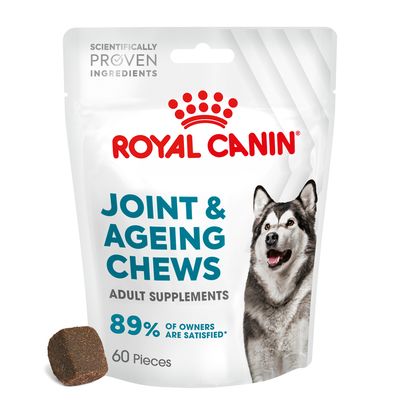
Joint & Bone Supplements for Dogs
Vet Melina Klein on chronic musculoskeletal disorders in dogs

"Musculoskeletal conditions can affect bones, ligaments, tendons and joints, including articular cartilage. There are many possible causes. Diet food for the musculoskeletal system is especially useful for chronic conditions.
The most well-known musculoskeletal condition in dogs is osteoarthritis. The majority of my elderly patients have arthritic changes in the spine, but it is not uncommon for dogs to experience osteoarthritis in their hips, knees and elbows too. Osteoarthritis refers to the degeneration of joints due to chronic overload, which can occur not only due to age, but also as a result of abnormalities (elbow or hip dysplasia in particular).
In the spine, osteoarthritis often occurs in conjunction with spondylosis (bony spurs). Other examples of chronic musculoskeletal disorders include wobbler syndrome (nerve damage of the cervical spine), canine cauda equina syndrome (nerve damage of the lumbar spine), OCD (osteochondritis dissecans — lack of ossification during growth) and degenerative myelopathy (DM — genetic degeneration of the spinal cord)."
This content is a translation of the original text published on zooplus.de, created by Vet Melina Klein, in collaboration with our editorial team. The information provided is for general guidance only and is not a substitute for professional veterinary advice, diagnosis or treatment. Always consult your vet if you have any concerns about your pet’s health or wellbeing.
Vet Melina Klein on chronic musculoskeletal disorders in dogs

"Musculoskeletal conditions can affect bones, ligaments, tendons and joints, including articular cartilage. There are many possible causes. Diet food for the musculoskeletal system is especially useful for chronic conditions.
The most well-known musculoskeletal condition in dogs is osteoarthritis. The majority of my elderly patients have arthritic changes in the spine, but it is not uncommon for dogs to experience osteoarthritis in their hips, knees and elbows too. Osteoarthritis refers to the degeneration of joints due to chronic overload, which can occur not only due to age, but also as a result of abnormalities (elbow or hip dysplasia in particular).
In the spine, osteoarthritis often occurs in conjunction with spondylosis (bony spurs). Other examples of chronic musculoskeletal disorders include wobbler syndrome (nerve damage of the cervical spine), canine cauda equina syndrome (nerve damage of the lumbar spine), OCD (osteochondritis dissecans — lack of ossification during growth) and degenerative myelopathy (DM — genetic degeneration of the spinal cord)."
This content is a translation of the original text published on zooplus.de, created by Vet Melina Klein, in collaboration with our editorial team. The information provided is for general guidance only and is not a substitute for professional veterinary advice, diagnosis or treatment. Always consult your vet if you have any concerns about your pet’s health or wellbeing.
How does diet food help dogs with joint problems? Vet Melina Klein explains
"A wide range of nutrients are necessary to maintain a healthy musculoskeletal system. Depending on the specific symptoms, the need for certain vitamins and minerals may be increased. A veterinary examination is essential to make a clear diagnosis and start promising treatment, which often includes optimising the dog's diet.
My patients with arthritis, osteoarthritis and spondylosis often respond well to food containing devil's claw and green-lipped mussel extract. The latter includes a number of nutrients that have a positive effect on joint health, such as omega-3 fatty acids (EPA — eicosapentaenoic acid and DHA — docosahexaenoic acid), glycosaminoglycans, chondroitin and vitamins A and E.
Unfortunately, many of my patients are obese; These dogs must lose weight in order to relieve their musculoskeletal system. I often recommend a reduced-calorie diet food combined with a dietary supplement to support the musculoskeletal system.
Changes in bone substance may require adjustment of vitamin D, calcium and phosphorus intake; A vet specialised in nutrition should be consulted in this case."
How does diet food help dogs with joint problems? Vet Melina Klein explains
"A wide range of nutrients are necessary to maintain a healthy musculoskeletal system. Depending on the specific symptoms, the need for certain vitamins and minerals may be increased. A veterinary examination is essential to make a clear diagnosis and start promising treatment, which often includes optimising the dog's diet.
My patients with arthritis, osteoarthritis and spondylosis often respond well to food containing devil's claw and green-lipped mussel extract. The latter includes a number of nutrients that have a positive effect on joint health, such as omega-3 fatty acids (EPA — eicosapentaenoic acid and DHA — docosahexaenoic acid), glycosaminoglycans, chondroitin and vitamins A and E.
Unfortunately, many of my patients are obese; These dogs must lose weight in order to relieve their musculoskeletal system. I often recommend a reduced-calorie diet food combined with a dietary supplement to support the musculoskeletal system.
Changes in bone substance may require adjustment of vitamin D, calcium and phosphorus intake; A vet specialised in nutrition should be consulted in this case."