

Cat Vitamins & Mineral Supplements
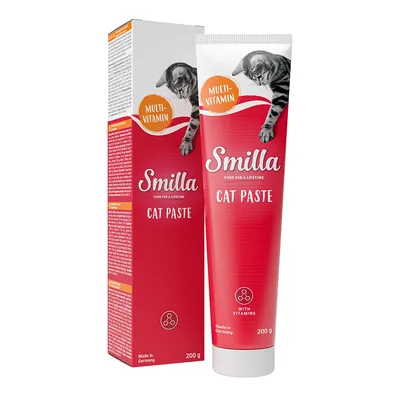

 £11.39

Vet Melina Klein explains how to know if your cat needs vitamins

"If you "cook" for your cat yourself or feed your cat a BARF diet, you must make sure that they receive a sufficient quantity of all necessary vitamins, macrominerals and trace elements. Vets that are experts in nutrition are specialised in dietary calculations and analyse self-prepared food down to the last detail. I recommend having a consultation like this at an early stage, as many signs of deficiency only become apparent after months or even years, and may have caused serious damage in the meantime.
Stray cats and cats that are poorly treated are often malnourished and require high doses of certain vitamins or minerals to compensate for the deficiency. This can be determined by special blood tests in a laboratory.
Cats with acute or chronic diseases almost always benefit from receiving suitable dietary supplements in addition to treatment. Have a conversation with your vet to ensure that the supplements are optimally adapted to your cat's specific disease.
Fat-soluble vitamins (E, D, K and A) can be easily overdosed and should therefore only be administered after consultation with a vet."
This content is a translation of the original text published on zooplus.de, created by Vet Melina Klein, in collaboration with our editorial team. The information provided is for general guidance only and is not a substitute for professional veterinary advice, diagnosis or treatment. Always consult your vet if you have any concerns about your pet’s health or wellbeing.
Vet Melina Klein explains how to know if your cat needs vitamins
"If you "cook" for your cat yourself or feed your cat a BARF diet, you must make sure that they receive a sufficient quantity of all necessary vitamins, macrominerals and trace elements. Vets that are experts in nutrition are specialised in dietary calculations and analyse self-prepared food down to the last detail. I recommend having a consultation like this at an early stage, as many signs of deficiency only become apparent after months or even years, and may have caused serious damage in the meantime.
Stray cats and cats that are poorly treated are often malnourished and require high doses of certain vitamins or minerals to compensate for the deficiency. This can be determined by special blood tests in a laboratory.
Cats with acute or chronic diseases almost always benefit from receiving suitable dietary supplements in addition to treatment. Have a conversation with your vet to ensure that the supplements are optimally adapted to your cat's specific disease.
Fat-soluble vitamins (E, D, K and A) can be easily overdosed and should therefore only be administered after consultation with a vet."
This content is a translation of the original text published on zooplus.de, created by Vet Melina Klein, in collaboration with our editorial team. The information provided is for general guidance only and is not a substitute for professional veterinary advice, diagnosis or treatment. Always consult your vet if you have any concerns about your pet’s health or wellbeing.
When is it best to give your cat vitamin supplements? Vet Melina Klein explains
"Healthy adult cats that are fed complete food do not require any additional nutritional supplements. Supplementation with (certain) vitamins is usually only advisable if the cat has health problems. Very old cats that are no longer able to properly digest the nutrients in their food also benefit from an increased supply of vitamins. Dietary supplements may also be required in order to make self-prepared food a balanced meal.
My patients often use supplements for the gastrointestinal tract; these may be sufficient for treating minor digestive issues. These include cellulose, yeast, psyllium husks, inulin and B vitamins.
Cats with a poor coat or skin problems benefit from various fatty acids, zinc, selenium and B vitamins, regardless of the cause of the issue. B vitamins are also used if the cat has neurological symptoms to support the nervous system. However, the root cause must always be determined!
Certain food supplements are also suitable for diseases affecting the musculoskeletal system, kidneys, liver and heart."
When is it best to give your cat vitamin supplements? Vet Melina Klein explains
"Healthy adult cats that are fed complete food do not require any additional nutritional supplements. Supplementation with (certain) vitamins is usually only advisable if the cat has health problems. Very old cats that are no longer able to properly digest the nutrients in their food also benefit from an increased supply of vitamins. Dietary supplements may also be required in order to make self-prepared food a balanced meal.
My patients often use supplements for the gastrointestinal tract; these may be sufficient for treating minor digestive issues. These include cellulose, yeast, psyllium husks, inulin and B vitamins.
Cats with a poor coat or skin problems benefit from various fatty acids, zinc, selenium and B vitamins, regardless of the cause of the issue. B vitamins are also used if the cat has neurological symptoms to support the nervous system. However, the root cause must always be determined!
Certain food supplements are also suitable for diseases affecting the musculoskeletal system, kidneys, liver and heart."