{"url":"https://www.zooplus.co.uk/magazine/dog/dog-health-and-care/hotspot-in-dogs-causes-symptoms-and-what-you-can-do","title":"Hotspot in Dogs: Causes, Symptoms, and What You Can Do","mag_id":411742,"is_single":true,"cat_name":"Dog","sub_cat_id":143,"sub_cat_name":"Dog Health and Care","cat_id":3410}
If left untreated, hotspots in dogs can keep coming back. In this article, you’ll find out whether this skin inflammation is dangerous and how your dog can get rid of it.
The term hotspot or hot spot comes from English and refers to a superficial, oozing skin inflammation that is often circular in shape. It is also known as pyotraumatic dermatitis or moist dermatitis.
In dogs, these painful hotspots mainly develop on the ears, neck, back or legs. There are two different types of hotspot:
Superficial hotspots are often noticeable due to matted fur in the affected area and cause intense itching.
A deep hotspot in dogs develops when the area becomes infected with bacteria and is often characterised by oozing and an unpleasant smell.
Which Dogs Are Particularly Prone to Hotspots?
Long-haired breeds are particularly susceptible to hotspots. These include, for example:
In these breeds, the coat can mat more quickly and poor air circulation can encourage inflammation.
How Dangerous Is a Hotspot in Dogs?
Although treating this inflammation can often be time-consuming and require some effort, a hotspot in dogs is generally not life-threatening.
Is a Hotspot in Dogs Contagious?
As a hotspot is not a disease in its own right, it is not automatically contagious to other dogs, pets or family members. It always depends on the exact underlying cause.
If infectious causes such as parasites or fungal skin infections are involved, these may be transmissible to other animals or people. All the more reason to have the inflammation treated professionally by a vet as quickly as possible.
Causes: How Does a Hotspot Develop in Dogs?
Hotspots in dogs often occur during the summer months, as high temperatures and humidity promote inflammation. However, other factors can also encourage this skin condition. These include, for example:
Parasites: One of the most common causes is a flea bite, more precisely a flea saliva allergy. The increased itching and licking quickly infect the superficial wound with bacteria, causing it to become inflamed. An infestation with ear mites can also lead to intense itching and therefore a hotspot in dogs.
Fungal skin infection: Superficial skin inflammation can also be triggered by other itchy conditions such as fungal infections. Dogs from animal shelters or strays are particularly affected.
Allergies: There are many allergens that can trigger a hotspot in dogs, for example, a food allergy or an allergic contact reaction to plants.
Inadequate grooming: Poor or insufficient coat care can lead to increased itching and related inflammatory reactions. This is particularly common in older dogs or strays.
Injuries or pain: Even a minor traumatic injury can result in a hotspot if your dog licks, scratches or bites at the wound. This behaviour may also occur if there is pain in the underlying muscles or bones.
Symptoms: What Does a Hotspot Look Like in Dogs?
A hotspot typically appears as a circular, red, superficial skin inflammation that is clearly defined from the surrounding healthy skin.
However, especially in long-haired dogs, the affected areas can be hidden beneath the coat and quickly become inflamed. A hotspot can therefore flare up within just a few hours and be accompanied by the following symptoms:
A foul-smelling wound discharge develops.
If the discharge comes into contact with other areas of skin, the surrounding fur sticks together.
Itching as a Typical Accompanying Symptom
As hotspots in dogs can cause severe itching, licking the wound sets off a vicious cycle.
Saliva contains many bacteria that can enter the wound and trigger renewed inflammation. This is why hotspots in dogs can often flare up again and again despite initial signs of healing.
Risks if Left Untreated
Without treatment, hotspots can develop into large and painful areas of inflammation. In rare cases, deeper layers of skin may also be affected.
This increases the risk of bacterial blood poisoning, which can be accompanied by fever and a reduced general condition in your dog, and may lead to serious complications such as impaired consciousness and shock.
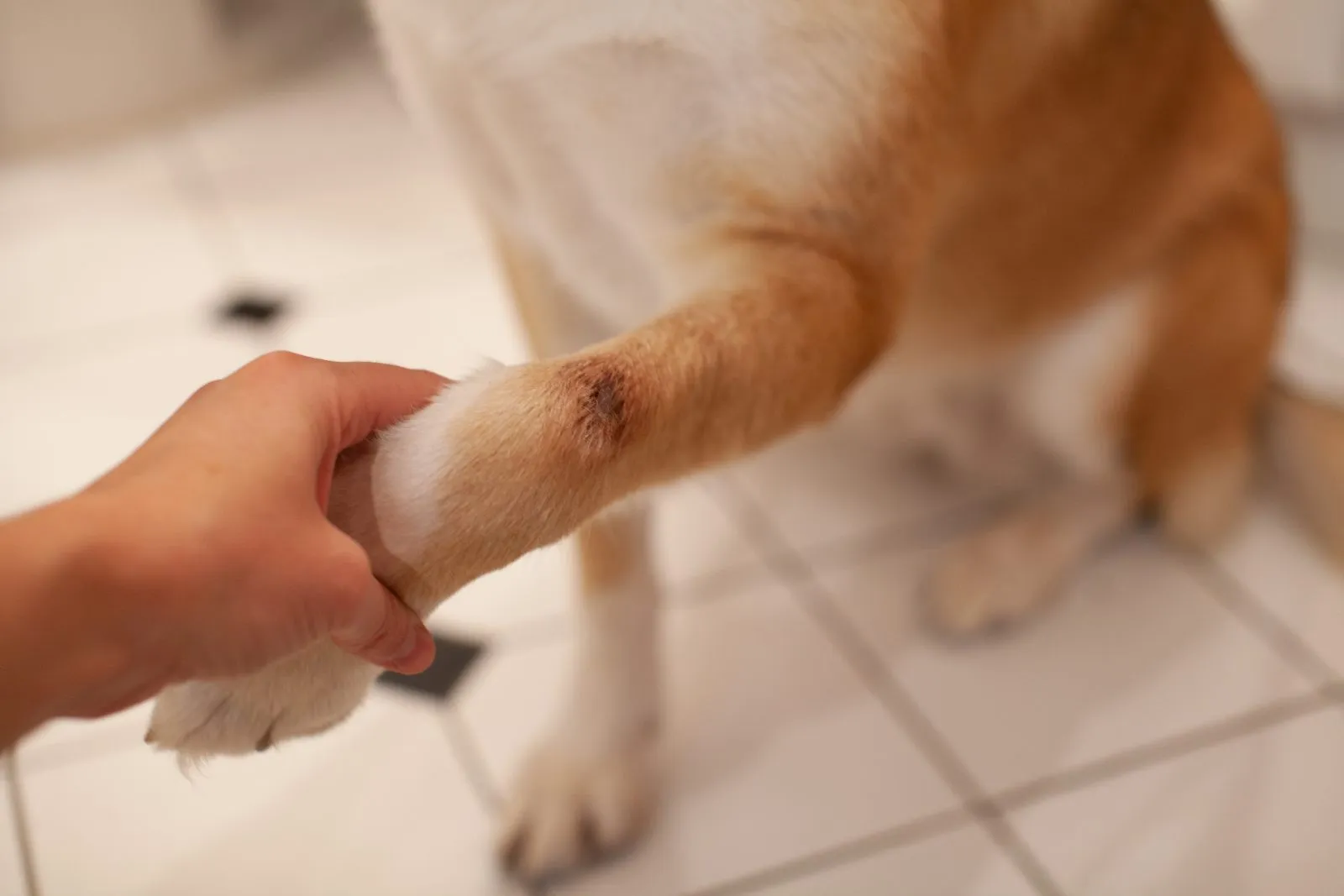
The dog has a hot spot on its front leg, and continued licking could cause the condition to flare up again.
Do I Need to Take My Dog to the Vet for a Hotspot?
If you notice any changes in your dog’s health, you should consult your vet as a precaution. The same applies if your dog’s skin becomes inflamed or they start losing fur. The earlier your dog is examined, the better you can help them.
Diagnosis: How Is a Hotspot Diagnosed in Dogs?
Due to their outward appearance, hotspots are relatively easy to recognise for a vet. Nevertheless, they will examine the wound further to rule out other possible conditions such as a fungal infection.
To do this, they take a swab from the wound using a sterile cotton bud and smear it onto a slide. Under the microscope, bacteria and fungi can be distinguished based on various characteristics.
Frequently Involved: Staphylococci
The bacteria most commonly involved are staphylococci. They are an important part of a dog’s normal skin flora and can therefore enter the wound very quickly.
In addition to bacteria, round inflammatory cells such as neutrophil granulocytes, which belong to the innate immune system, can be seen. Their role is to locate and then destroy pathogens.
Treating Hotspots in Dogs: How the Therapy Works
As hotspots in dogs tend to return after initial improvement, treatment is usually quite laborious. Wound hygiene should therefore be maintained long term (up to three weeks) and regularly (at least every other day).
How Is a Hotspot Cleaned?
If your dog is in severe pain, your vet may administer an anaesthetic or a calming sedative during the first treatment sessions. They will then carry out the following steps:
They clip the fur generously around the wound edges to prevent hair from getting into the wound.
They clean the crusted wound with sterile saline solution or chlorhexidine to loosen the bacterial film beneath the scabs.
The hotspot is then soaked with anti-inflammatory and mild medicated shampoos.
The shampoo should be left on for at least ten minutes before being rinsed off thoroughly.
You should repeat these steps regularly at home. Your vet will explain the exact treatment plan. They may also use ointments or medication to treat the hotspot on your dog’s skin.
If There Is No Visible Improvement
If there is no improvement, you may need to increase the frequency of treatment or have a bacteriological examination with a resistance test carried out. This enables your vet to treat bacterial infections with antibiotics, both locally and systemically.
Under veterinary supervision, corticosteroids such as cortisone preparations may also be necessary to reduce inflammation.
Long-Term Aftercare
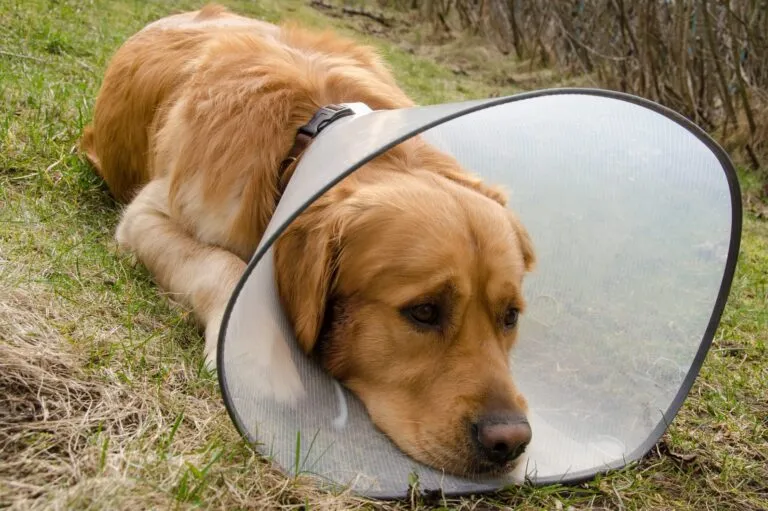
Once the wound begins to heal, it is important not to stop treatment abruptly. You must also prevent your dog from licking the wound and introducing new bacteria. For this purpose, you can fit a protective collar or muzzle overnight, for example.
Whether and how quickly a hotspot heals depends on the type and frequency of treatment and the bacteria involved .
Healing Hotspots in Dogs: How Long Does the Inflammation Last?
With consistent treatment, hotspots usually heal after a few weeks.
Prevention: How to Protect Your Dog from Hotspots in the Future
It’s not always possible to prevent a skin inflammation from developing in your dog. However, the following tips can help you reduce the risk:
Protect your dog from fleas. There are various collars available that contain pyrethroids. Collars are effective for up to eight months and should be worn continuously.
Spot-ons applied to the neck area every few weeks can also help against fleas.
When out walking, avoid contact with plants that can trigger itching, such as nettles.
If your dog has had hotspots before, you can use special dog shampoos to help prevent further inflammation. However, bear in mind that bathing your dog too often can have the opposite effect and actually encourage skin problems.
Important Note: The content provided for informational purposes only and is not intended to replace professional veterinary advice, diagnosis or treatment. If you have any questions or concerns about your pet's health, please always consult a licensed veterinarian.
This article was translated using Artificial Intelligence from the original German zooplus Magazine. While the original content was authored by industry experts and reviewed by our editorial team, this automated translation has not been human-edited and is provided for informational purposes.
At the Justus-Liebig-University of Giessen I was extensively trained as a veterinarian and was able to gain experience in various fields such as small animal, large animal and exotic animal medicine as well as pharmacology, pathology and food hygiene.
Since then, I have been working not only as a veterinary author, but also on my scientifically driven dissertation. My goal is to better protect animals from pathogenic bacterial organisms in the future.
Besides my veterinary knowledge, I also share my own experiences as a happy dog owner and can thus understand and enlighten fears and problems as well as other important questions about animal health.
When does a female dog’s first season begin? How often and for how long is a female dog in season? And what symptoms does a female dog in season show? Find out everything you need to know about these “hot days” and how you and your dog can get through the season calmly and stress-free in the following article.
16 February 2024 |Leishmaniasis is an infectious disease transmitted by sandflies and can often prove fatal for dogs. Find out how you can protect your dog and how to recognise and treat the disease should it emerge.
Neutering has traditionally been a standard veterinary practice, but is it universally recommended? What distinguishes neutering from sterilisation and what expenses should a dog owner anticipate? Here, you can discover all the essential information concerning the advantages and disadvantages of neutering your dog.