{"url":"https://www.zooplus.co.uk/magazine/dog/dog-health-and-care/bee-sting-in-dogs-what-should-you-do","title":"Bee Sting in Dogs: What Should You Do?","mag_id":411650,"is_single":true,"cat_name":"Dog","sub_cat_id":143,"sub_cat_name":"Dog Health and Care","cat_id":3410}
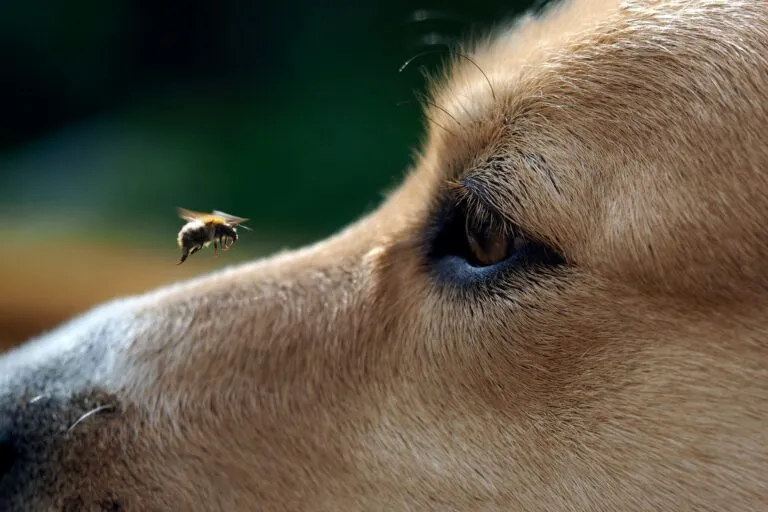
You’re lying in the garden, your beloved pet is sniffing around your flowerbeds as usual and suddenly you hear a yelp. On their nose you spot a small, reddened puncture mark. It’s most likely a bee sting in your dog! But what should you do if your dog has been stung by a bee?
Luckily, most bees only sting dogs in the skin. In this case, the sting is painful but generally harmless. However, if a bee stings your dog inside the mouth or throat, it can quickly become life-threatening!
Symptoms: What Are the Signs of a Bee Sting in Dogs?
The clinical signs of a bee sting in dogs vary depending on the site of the sting. The bee’s stinger is particularly noticeable, as it often remains lodged intact in the swollen puncture site.
Occasionally, a bee may accidentally fly into a dog’s mouth. If the dog swallows it, the bee may sting in panic. As the mucous membranes in the mouth and throat are far more sensitive than the outer skin, dangerous complications can occur here. These include:
severe swelling of the mucous membranes
breathing difficulties, ranging from choking fits to shortness of breath
physical weakness, even leading to unconsciousness
If your dog reacts to the bee sting allergically, pronounced redness and pustules may also develop. As a result, your dog may scratch more due to itching and can also show severe symptoms such as vomiting or diarrhoea.
When Should I Take My Dog to the Vet?
If your dog shows signs of a state of shock (e.g. anaphylactic shock) after a bee sting, you should act quickly and seek a vet immediately. Swelling of the airways can put your dog’s life at risk!
Shock After a Bee Sting in Dogs: What First Aid Measures Can I Take?
If your dog has been stung by a bee, the first rule is: stay calm! Only if you remain calm can you help your dog and manage the situation. Follow the steps below to provide first aid in the event of a life-threatening state of shock:
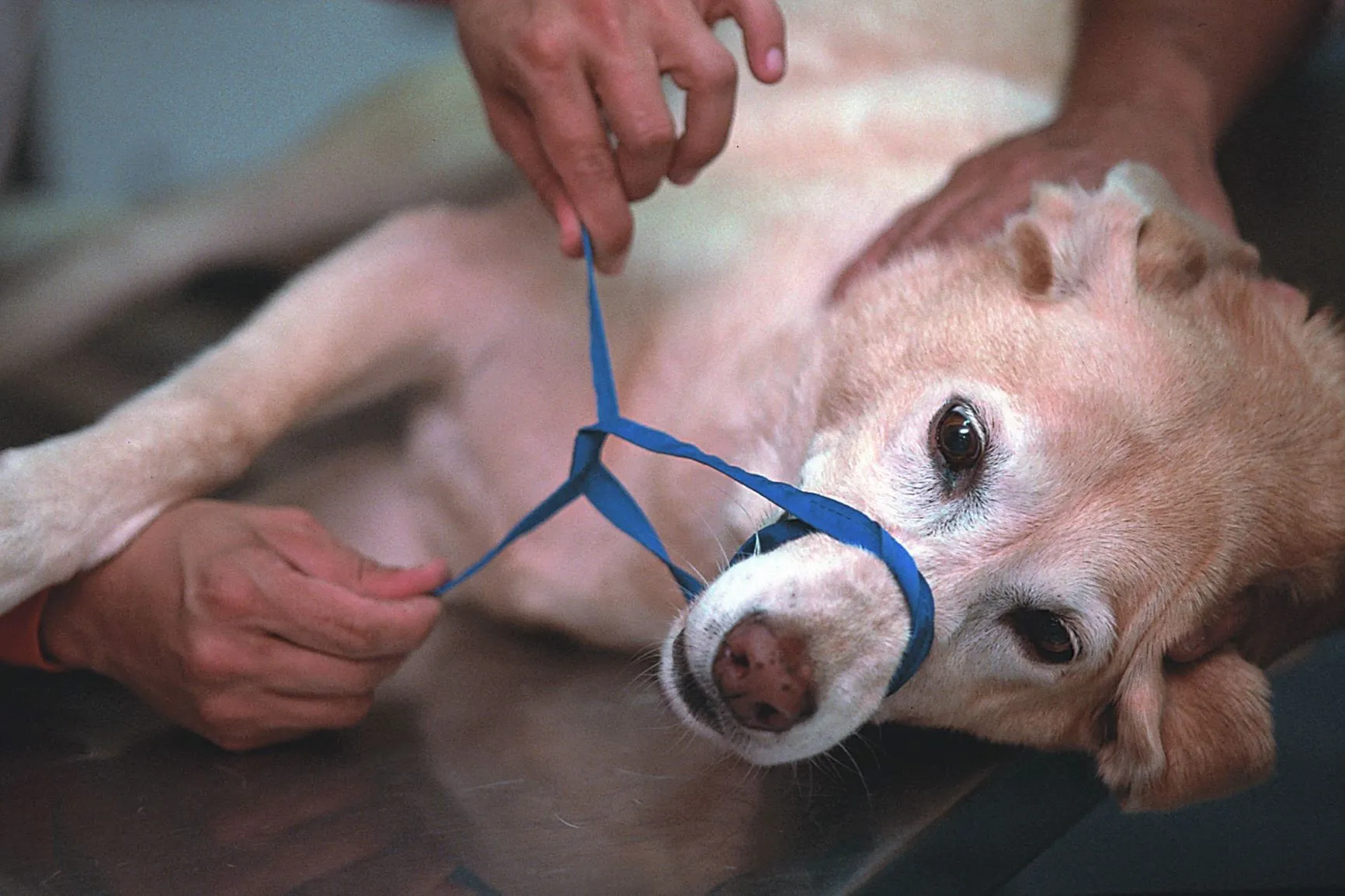
If possible, ask someone else to help who can calm and restrain your dog . If you are on your own, put your dog on a lead. If your dog is very anxious and the pain is severe, you should also fit a muzzle or a makeshift muzzle. Even the gentlest dogs may bite their owners when in severe pain or shock.
Protect your beloved pet and yourself by securing your dog’s muzzle before treating a bee sting.
Now place your four-legged friend in the recovery position. First, position yourself on their right-hand side. Then reach over their back and grasp one front leg and one hind leg. Carefully pull the legs towards you. If possible, with the support of a second helper or against a wall, gently lower your dog to the ground so that they are safely lying on their right side. Position your dog so that their spine is straight and their legs are extended .
If your dog has lost consciousness, you should gently tilt their head back and pull their tongue out to the side of the mouth. Using a cushion or a jacket, you can raise their hipsto support circulation in the event of an anaphylactic shock.
It is essential to contact your vet now. If they are unable to make a home visit, your dog must remain in the recovery position during transport. Thermal blankets can help keep your dog warm temporarily. You should also monitor their breathing and pulse.
Treatment: What Options Are Available?
When a bee stings, its stinger, along with the venom, remains in the victim, and the bee itself dies. Therefore, in the case of a bee sting in dogs, unlike stings from other insects such as hornets, bumblebees or a wasp sting, you need to look for the stinger and remove it using tweezers.
If your dog has been stung on the paw or lip, you can cool the affected area with cool water, damp towels or ice packs wrapped in cloth. If the sting is inside your dog’s mouth, you can offer ice cubes. This can help reduce pain and swelling. You can also apply special ointments to the sting, which will further ease the discomfort.
Important Note: The content provided for informational purposes only and is not intended to replace professional veterinary advice, diagnosis or treatment. If you have any questions or concerns about your pet's health, please always consult a licensed veterinarian.
This article was translated using Artificial Intelligence from the original German zooplus Magazine. While the original content was authored by industry experts and reviewed by our editorial team, this automated translation has not been human-edited and is provided for informational purposes.
At the Justus-Liebig-University of Giessen I was extensively trained as a veterinarian and was able to gain experience in various fields such as small animal, large animal and exotic animal medicine as well as pharmacology, pathology and food hygiene.
Since then, I have been working not only as a veterinary author, but also on my scientifically driven dissertation. My goal is to better protect animals from pathogenic bacterial organisms in the future.
Besides my veterinary knowledge, I also share my own experiences as a happy dog owner and can thus understand and enlighten fears and problems as well as other important questions about animal health.
When does a female dog’s first season begin? How often and for how long is a female dog in season? And what symptoms does a female dog in season show? Find out everything you need to know about these “hot days” and how you and your dog can get through the season calmly and stress-free in the following article.
16 February 2024 |Leishmaniasis is an infectious disease transmitted by sandflies and can often prove fatal for dogs. Find out how you can protect your dog and how to recognise and treat the disease should it emerge.
Neutering has traditionally been a standard veterinary practice, but is it universally recommended? What distinguishes neutering from sterilisation and what expenses should a dog owner anticipate? Here, you can discover all the essential information concerning the advantages and disadvantages of neutering your dog.