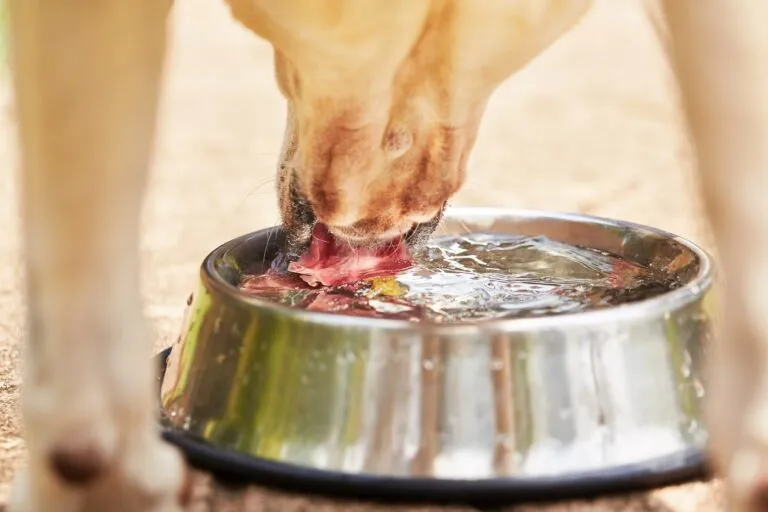
Typical of Cushing’s syndrome: affected dogs are extremely thirsty.
What is Cushing’s Syndrome in Dogs and How Dangerous Is It?
Cushing’s syndrome, also known as hyperadrenocorticism (HAC), is a hormonal disorder in which the dog’s adrenal cortex releases increased amounts of the stress hormone cortisol.
Unlike hypoadrenocorticism (Addison’s disease), which leads to a life-threatening deficiency of cortisol, Cushing’s syndrome is usually milder. Nevertheless, the excess of hormones can cause serious symptoms and complications in your dog.
Breed Predisposition: Which Dog Breeds Are Commonly Affected by Cushing’s Disease?
The following dog breeds are particularly prone to Cushing’s syndrome:
Symptoms: How Does Cushing’s Syndrome Present in Dogs?
Because cortisol has many different effects in the body, the signs of Cushing’s syndrome in dogs can vary widely. Your dog may show the following symptoms:
- They drink more and pass urine more frequently (polyuria and polydipsia).
- Your dog has an increased appetite and may seem constantly hungry.
- They pant more than usual.
- Their skin appears thin and darker.
- Their coat falls out (especially on the back or tail).
- They may appear weak (muscle weakness).
- Their abdomen enlarges (pot belly).
Consequences of the Hormonal Disorder
Due to the elevated cortisol levels, your dog’s immune system is weakened. This makes them not only more susceptible to infections (e.g. bacterial or viral), but also to inflammatory diseases such as pancreatitis.
As the disease progresses, the risk of developing diabetes mellitus also increases.
Diagnosis: How is Cushing’s Disease Diagnosed in Dogs?
Cushing’s syndrome in dogs is a well-known condition, and your vet will usually associate it quickly with the typical clinical signs. The following tests help your vet confirm the diagnosis.
Blood Test
Which blood values are altered in Cushing’s syndrome? Signs of hyperadrenocorticism in dogs include elevated liver enzymes (e.g. alkaline phosphatase). Cholesterol levels are also usually raised.
Ultrasound
Imaging procedures such as ultrasound allow your vet to assess the structure of the adrenal glands. This means they can not only diagnose tumours directly, but also detect an enlargement of one or both adrenal glands as an indication of pituitary-dependent hyperadrenocorticism.
At the same time, they can also examine surrounding organs such as the liver.
Hormone Tests
Various hormone tests are also required to confirm a diagnosis of Cushing’s syndrome in dogs. These include:
1. Urine Cortisol-To-Creatinine Ratio (UCCR)
Your dog’s urine can reveal a lot about the concentration of cortisol. A high hormone level in three consecutive morning urine samples suggests that your dog may have Cushing’s syndrome.
2. Low-Dose Dexamethasone Suppression Test (LDDS test)
In this test, your vet first checks the baseline cortisol level using a blood sample. They then administer a cortisol-like medication (dexamethasone).
In healthy dogs, this would trigger negative feedback and therefore a reduced release of ACTH and cortisol. However, if the cortisol level remains elevated over time, your dog is likely to be suffering from Cushing’s syndrome.
3. ACTH Stimulation Test
The ACTH stimulation test is no longer routinely used today. After an initial blood sample, the vet injects your dog with ACTH. About one hour after the injection, another blood sample is taken. If Cushing’s disease is present, the cortisol concentration after stimulation exceeds the initially measured baseline level.
Treatment: How is Cushing’s Syndrome Treated in Dogs?
Treatment for Cushing’s syndrome in dogs depends on the underlying cause.
If your dog has an adrenal tumour, your vet may be able to remove it surgically. However, the tumour must not have spread to other organs. After removal of one adrenal gland, the remaining gland can take over its function.
Chemotherapy for Affected Dogs
If surgery is not possible or your dog has a pituitary tumour, chemotherapy may help. The medication (Vetoryl, active ingredient: trilostane) reduces cortisol production in the adrenal glands.
In general, you should take your affected dog to the vet regularly so that the medication dose can be individually adjusted and the blood cortisol level monitored.
Costs: How Expensive Are Diagnosis and Treatment?
Due to the complex diagnostic procedures and lifelong medication, Cushing’s syndrome is considered one of the more costly canine illnesses. Even a basic blood test can cost around 24 to 71 euros, depending on the fee scale.
The size of your dog also plays a role in the cost. The larger your dog, the higher the required dose of the expensive medication. Anyone considering getting a dog should therefore always keep potential veterinary costs in mind.
Causes: Cushing’s Disease or Cushing’s Syndrome?
If your dog’s adrenal glands produce too much of the stress hormone (cortisol), this leads to an excess of cortisol. Vets refer to this condition as Cushing’s syndrome, also known as hyperadrenocorticism.
By contrast, Cushing’s disease is a specific form of Cushing’s syndrome. In this case, an increased release of ACTH (adrenocorticotropic hormone) from the anterior pituitary gland in the brain causes the adrenal glands to produce more cortisol. Vets therefore also refer to this hormonal disorder as central Cushing’s syndrome.
What Triggers Cushing’s?
Most commonly, tumours (usually benign) within the pituitary gland (ACTH-producing) are responsible for Cushing’s syndrome in dogs. Vets refer to this condition as pituitary-dependent hyperadrenocorticism.
In rare cases, tumours in the adrenal cortex (cortisol-producing) may be the cause – referred to by vets as adrenal-dependent hyperadrenocorticism.
Other Possible Causes
In some cases, ongoing treatment with steroids (e.g. cortisone preparations such as prednisolone or dexamethasone) can also lead to Cushing’s syndrome. Vets describe this form as iatrogenic.
Older dogs, particularly smaller breeds, may also develop Cushing’s syndrome spontaneously.
The Body’s Natural Hormonal Feedback System
The pituitary gland in your dog’s brain controls key hormonal cycles – including the production of cortisol.
When the anterior pituitary releases ACTH, it stimulates the adrenal cortex to produce the stress hormone cortisol. If the organ releases too much cortisol, this triggers an automatic negative feedback mechanism, causing the brain to reduce ACTH secretion. In a healthy dog, this system regulates the level of cortisol in the blood.
Prognosis: Is Cushing’s Syndrome in Dogs Curable?
Cushing’s syndrome in dogs generally has a good prognosis. However, this depends on early detection and treatment.
Although most underlying causes can be treated, your dog will usually require lifelong regular hormone checks and medication.
Life Expectancy: How Long Can a Dog Live with Cushing’s Syndrome?
If you follow your vet’s treatment advice, your dog can usually lead a normal life despite having Cushing’s syndrome.
However, if you neglect veterinary check-ups or leave your dog untreated, this can, depending on the cause, significantly shorten their life expectancy.
How Long Does a Dog with Cushing’s Live without Treatment?
Without treatment, this endocrine disorder is usually fatal. How long a dog will survive under these circumstances cannot be predicted with certainty.
Nutrition: What Can Dogs with Cushing’s Eat?
Affected dogs do not need to follow a special diet. However, it is advisable to feed your dog easily digestible food that supports the liver, as medication can put a strain on it. A well-tolerated, low-fat dog food is usually a good choice.
What Should Dogs with Cushing’s Avoid?
To avoid putting further strain on your dog’s immune system, you should steer clear of raw feeding (BARF). If you prefer to prepare food yourself, it must be cooked. A high protein content with a moderate fat level is important: fatty meats and offal should be avoided.
If in doubt, ask your vet for advice. They can provide valuable information about your dog’s individual mineral requirements.
Note: Choosing a suitable dietetic dog food can support your dog’s natural body functions. However, please note that dietetic foods cannot cure or prevent diseases. Always consult your vet about the right diet for your dog.
Prevention: Can Cushing’s Disease in Dogs Be Prevented?
Cancers often occur spontaneously and are therefore not always preventable. The same applies to Cushing’s disease. However, you can try to reduce risk factors such as obesity through the right diet and sufficient exercise.
Related articles on similar topics
This article was translated using Artificial Intelligence from the original German zooplus Magazine. While the original content was authored by industry experts and reviewed by our editorial team, this automated translation has not been human-edited and is provided for informational purposes.