{"url":"https://www.zooplus.co.uk/magazine/dog/dog-health-and-care/dogs-paw-structure-function-and-care","title":"Dog’s Paw: Structure, Function and Care","mag_id":412588,"is_single":true,"cat_name":"Dog","sub_cat_id":143,"sub_cat_name":"Dog Health and Care","cat_id":3410}
Your dog’s entire body weight rests on their paws, and they’re put under heavy strain every single day. That’s exactly why it’s so important to keep your dog’s paws healthy. But how can you tell if your dog’s paws are healthy, and what does proper paw care involve? You’ll find all the answers in this article.
Many dog owners don’t pay much attention to their dog’s paws, focusing instead on a shiny coat and those adorable puppy-dog eyes. Yet your dog’s paws are incredibly important to them – after all, they’re their foundation.
To spot unhealthy changes and prevent your dog from suffering, it’s essential to understand the structure of healthy dog paws:
Bones for Support
The bones in a dog’s paws provide stability and shape. The front paws consist of five toes of varying lengths (digiti manus), which are in turn divided into further bones (from top to bottom). The first toe is shortened, while the third and fourth toes are the longest.
The hind paws are similar in structure to the front paws, but they have only four toes. This is why they are slightly smaller than the front paws.
Joints and Muscles for Movement
Whether stretching or bending, many small joints and muscles in all four paws enable your dog to move them. If muscles, tendons or joints are injured, this can restrict the movement of the paws.
Pads for Cushioning
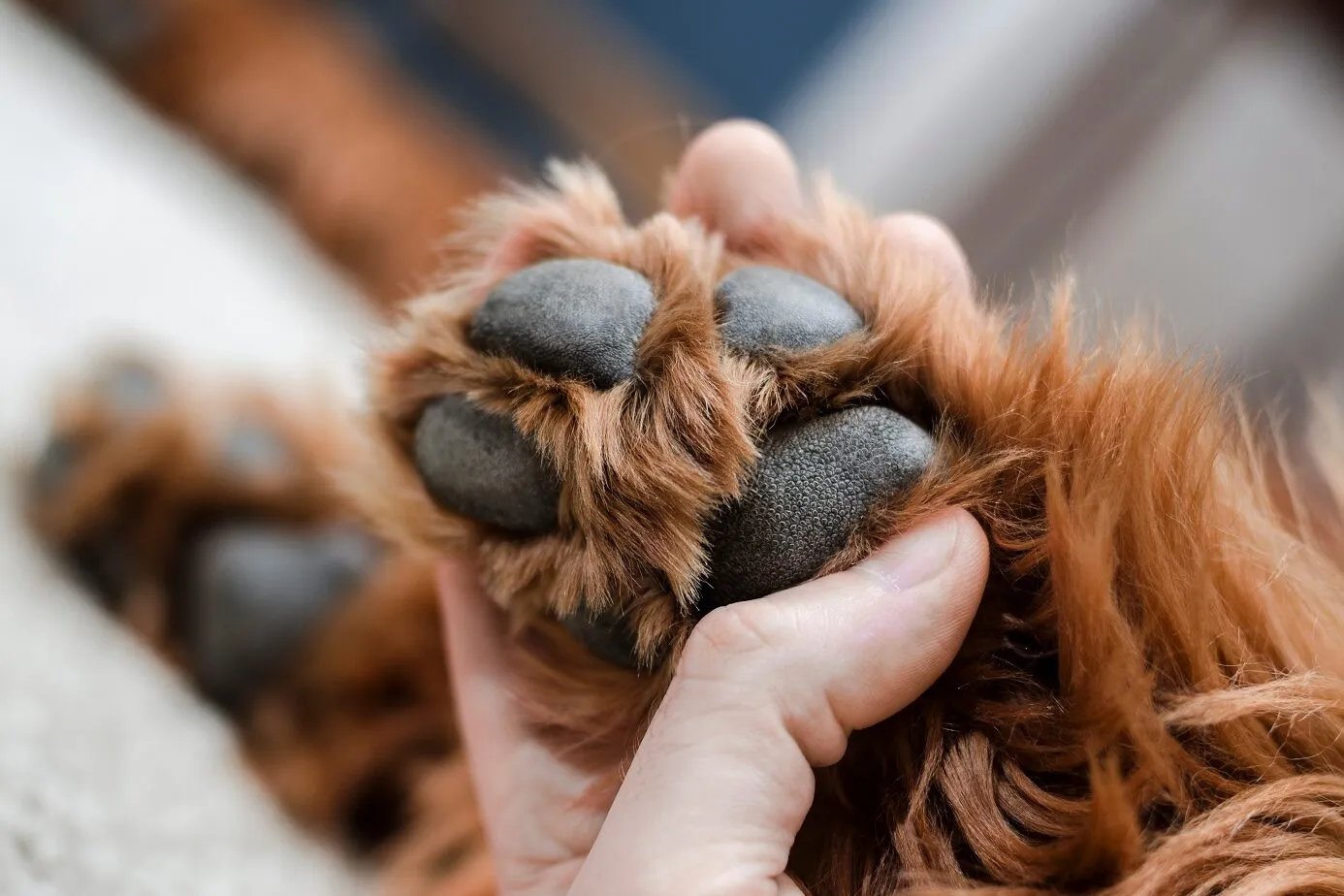
Each paw has several pads (torus), which you can recognise as hairless areas of skin on the underside:
Front paw: five digital pads, one metacarpal pad and one carpal pad
Hind paw: four digital pads, one metacarpal pad and one carpal pad
As the pads consist of a thick layer of subcutaneous tissue, fat and muscle, they protect the paws when walking over uneven ground.
Claws as Tools
Each claw, embedded in the nail bed, encloses a blood vessel. If you cut the claws too short, you may open these vessels and cause heavy bleeding.
Dogs are Digitigrade Walkers
Humans are known as plantigrade walkers, meaning we place the whole foot on the ground when walking – everything from toe to heel. Animals such as dogs, however, walk only on their toes and are therefore called “digitigrade” walkers.
The advantage: compared to humans, dogs can run much faster.
A paw has four or five toe pads, a central pad and a carpal pad. With their thick cushioning, these pads protect your dog’s paws from external environmental influences.
Function: What Makes a Dog’s Paw Special?
Although dogs can’t grasp objects with their paws like humans can with their thumbs, dog paws and human hands or feet are similar in function.
For example, paws play a key role in typical canine behaviours such as running at speed or silently stalking prey while hunting. They also act as important shock absorbers, protecting the joints and bones from damage during movement.
In addition, the paws contain many small scent glands that your dog uses to spread their smell. In a way, their paws leave behind your dog’s personal calling card – their own unique scent mark.
Health: What Are Typical Paw Conditions?
The paw is fairly robust and, thanks to its special structure and texture, is protected against many environmental influences. Nevertheless, illnesses and injuries do occur from time to time. Alongside other conditions such as cancer (e.g. mast cell tumour), the following injuries are particularly common:
Injured Pads
The pads of a dog’s paws have to withstand a lot. However, they can’t cope with everything – sharp shards of glass or pointed nails, for example. The greatest risk to the pads comes from injuries caused by foreign objects penetrating the skin.
Particularly unpleasant are grass awns, which often lodge between the toes and gradually burrow through the skin into the paw. To prevent this, you should check your dog’s paws for grass awns, especially after they’ve been running around in summer meadows.
Injured Claws
Sometimes your dog may tear out a claw during rough play at the park. Claws can also get caught in the gaps of escalators or metal grates in town, and when your dog pulls free, a claw may be torn out.
On the one hand, claw injuries can bleed heavily. On the other, they can quickly become infected if pathogens from the environment enter the wound. For this reason, you should treat any injured claw promptly and have it examined by your vet.
If you don’t and bacteria continue to spread into the paw, in the worst-case scenario your dog may even face amputation of the paw.
What Should You Do if Your Dog’s Paw Is Injured?
As your dog may be in severe pain with a paw injury, take care that they don’t bite you while you’re giving first aid. It’s important not to handle the situation alone and, ideally, to fit a muzzle or use a muzzle loop.
To avoid bacterial infections, you should always show the wound to your vet after giving first aid. They can carefully treat any deeply embedded foreign bodies or deep cuts.
What Does an Inflamed Dog’s Paw Look Like?
Healthy dog paws are usually soft and smooth. Early signs of inflammation include redness and swelling. Affected dogs tend to lick the paw more frequently, which usually makes the inflammation worse. The paw may also feel very warm and pus-filled sores (abscesses) can develop.
The Right Paw Care for Your Dog
As your dog’s paws are vital to their overall health, you should care for them properly. Check and clean the paws regularly, especially after walks. Trim the claws where necessary using nail clippers or a nail file.
Take Care in Cold Weather and Snow
If your dog has particularly long fur on their paws, you can carefully trim it between the toes, especially in winter. This helps prevent the hair from clumping together with snow.
Paws stressed by cold weather will also benefit from a gentle paw balm, which you can apply to dry pads from time to time. Don’t forget the spaces between the toes, and avoid applying too much.
Important Note: The content provided for informational purposes only and is not intended to replace professional veterinary advice, diagnosis or treatment. If you have any questions or concerns about your pet's health, please always consult a licensed veterinarian.
This article was translated using Artificial Intelligence from the original German zooplus Magazine. While the original content was authored by industry experts and reviewed by our editorial team, this automated translation has not been human-edited and is provided for informational purposes.
At the Justus-Liebig-University of Giessen I was extensively trained as a veterinarian and was able to gain experience in various fields such as small animal, large animal and exotic animal medicine as well as pharmacology, pathology and food hygiene.
Since then, I have been working not only as a veterinary author, but also on my scientifically driven dissertation. My goal is to better protect animals from pathogenic bacterial organisms in the future.
Besides my veterinary knowledge, I also share my own experiences as a happy dog owner and can thus understand and enlighten fears and problems as well as other important questions about animal health.
When does a female dog’s first season begin? How often and for how long is a female dog in season? And what symptoms does a female dog in season show? Find out everything you need to know about these “hot days” and how you and your dog can get through the season calmly and stress-free in the following article.
16 February 2024 |Leishmaniasis is an infectious disease transmitted by sandflies and can often prove fatal for dogs. Find out how you can protect your dog and how to recognise and treat the disease should it emerge.
Neutering has traditionally been a standard veterinary practice, but is it universally recommended? What distinguishes neutering from sterilisation and what expenses should a dog owner anticipate? Here, you can discover all the essential information concerning the advantages and disadvantages of neutering your dog.