

11 min
2.6k
Medium Size Poodle
The Maremma Sheepdog, also known as the Cane da Pastore or Maremmano-Abruzzese, is a courageous livestock guardian dog from Italy. The Maremmano protects any livestock entrusted to him independently and, if necessary, with his life. As a family dog, he is only recommended with reservations.
© fieryphoenix / stock.adobe.com
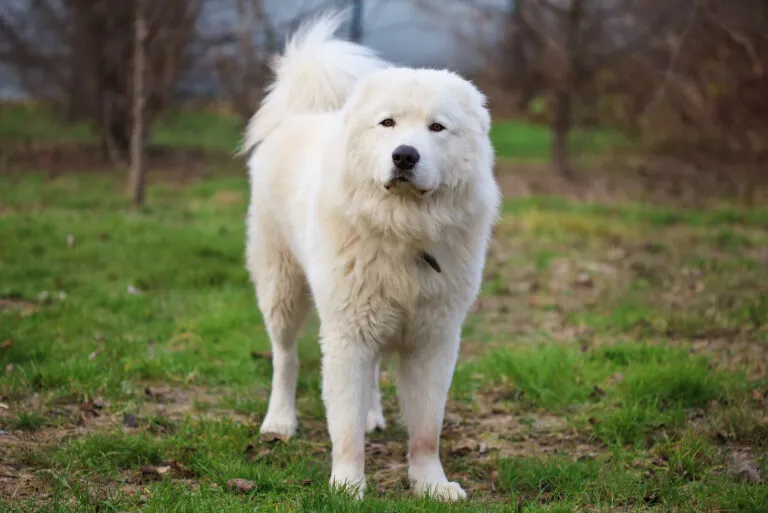
The Maremmano is a large, powerful dog that is often compared to a polar bear.
The Maremma Sheepdog is a large, majestic four-legged companion. Males reach a height of between 65 and 73 centimetres and weigh between 35 and 45 kilograms. Females are usually slightly smaller and lighter, with a shoulder height of 60 to 68 centimetres and a weight of 30 to 40 kilograms.
The full, medium-length to long coat feels coarse and harsh. Especially in the cooler months, he develops a thick undercoat, which makes the Maremma Sheepdog appear noticeably bulkier in winter than in summer.
According to the breed standard, white is the only permitted coat colour. Light shades of ivory, pale orange and lemon are tolerated. Around the neck and chest, males in particular develop a lion-like mane. The backs of the hind legs are furnished with feathering.
Because of his build, this large white Italian is often compared to a polar bear. He has a strong physique without appearing heavy or clumsy. Sexual dimorphism is more pronounced in this rustic breed than in others: males are larger and more powerful, while females have a more elegant appearance.
The head of the Maremma Sheepdog is conical in shape. His broad forehead and relatively narrow muzzle are said to resemble those of a bear. The rather small, triangular drop ears are covered with short hair and lie close to the head. His almond-shaped eyes are dark in colour.
The nose leather, mucous membranes, paws and claws are darkly pigmented. The well-coated tail is set low and, when at rest, reaches beyond the hock. When the dog is moving, he carries his tail level with his back.
In his native central Italy, the Maremmano-Abruzzese has long been kept as an attentive, fearless working dog. His speciality is independently guarding flocks of sheep. He also reliably protects cattle, horses and poultry, as well as house and yard, as a guard dog.
For centuries, he has been bred to work as a livestock guardian dog. Courageously, he stands up to wolves, bears and other intruders to defend his pack. As a result, this dog is naturally wary of strangers.
As a family dog, this white Italian is only suitable to a limited extent. If the Cane da Pastore is properly socialised as a puppy, he can learn to accept children and pets such as cats as members of his pack.
However, he is unlikely ever to become a gentle cuddle companion who romps around exuberantly with the children.
The training of a Maremmano requires plenty of experience, consistency and patience. He does not see his owner as someone who gives orders, but at best as an equal partner.
He will therefore never submit completely and will only follow commands if he considers them sensible. Harshness or even force will get you nowhere with him. The Maremmano is not suitable as a first-time dog.
Dogs of this breed mature exceptionally slowly. The Maremmano is only physically and mentally fully grown at around 30 months.
Until then, he may repeatedly display aggressive behaviour as he tries to establish his rank within the pack.
Incidentally, enthusiasts of the breed describe the Maremmano as the “cat among dogs”, as this free spirit always retains a degree of independence and a certain stubborn streak. After all, both traits are often attributed to our feline friends.
The Maremma Sheepdog feels most at ease when he can fulfil his purpose and guard livestock. He generally prefers being outdoors but should always have access to the house.
This determined, independent herding dog is not suited to life in the city. He wants to patrol his territory independently and put his innate guarding and protective instincts to use. Even so, he should not have to miss out on close contact with his family.
Two hours of exercise per day is the bare minimum for this large, energetic dog. He also absolutely needs a meaningful task that he can carry out independently and with focus – otherwise behavioural problems may arise. However, he shows little interest in dog sports. Guarding property and livestock is what keeps him happiest and most balanced.
A Maremmano can spend day and night outdoors. His dense, dirt-repellent coat protects him from rain, snow and wind. In summer, he must have access to a shady spot where he can rest if needed.
His long, dense coat must be regularly brushed to prevent eczema forming underneath. During the spring moult, when the Cane da Pastore sheds much of his insulating undercoat, it is best to groom his coat daily with a brush.
The thick ruff around the neck, the feathering on the hind legs and the hair between the paw pads require particularly careful attention. However, there is no need to bathe the Maremmano, even if he gets dirty while working. Simply allow the dirt to dry and then brush it out. His coat will soon be gleaming white again.
As a working dog who is on his feet all day, the Maremma Sheepdog needs high-quality, nutrient-rich food. Whether dry, wet or raw food goes into his bowl is up to his owner’s preference. This active breed does not usually struggle with being overweight.
To avoid life-threatening gastric torsion, the daily food ration should be divided into at least two portions. After eating, the livestock guardian dog should be allowed to rest.
The Maremma Sheepdog is generally considered a robust breed. Apart from joint problems such as elbow or hip dysplasia, which can occur in many large dogs, hardly any breed-specific diseases are known.
Occasionally, stomach or digestive problems as well as hereditary eye diseases are observed.
The Maremmano’s life expectancy is around ten to twelve years. With good care and favourable living conditions, some individuals may even reach 15 years of age.
The breed probably descends from Tibetan Molossers that various nomadic tribes brought from the Himalayas to Europe in pre-Christian times. As early as the era of the Etruscans and Romans, there were pictorial depictions and written references to this white herding dog.
His light coat colour likely served to make the vigilant working dog easier to distinguish from wolves at dusk – and to avoid mistaking him for an attacker.
The Maremma Sheepdog is named after the two Italian regions from which he originates: the Maremma, a marshy coastal landscape in western Tuscany, and the Abruzzo, a hilly region in central Italy.
Originally, two breeds developed here, which were very similar and were repeatedly crossed with one another. This ultimately gave rise to the Maremmano-Abruzzese, which was officially recognised by the FCI in 1958.
He is listed in Group 1 “Sheepdogs and Cattle Dogs (except Swiss Cattle Dogs)”.
 © Kseniya / stock.adobe.com
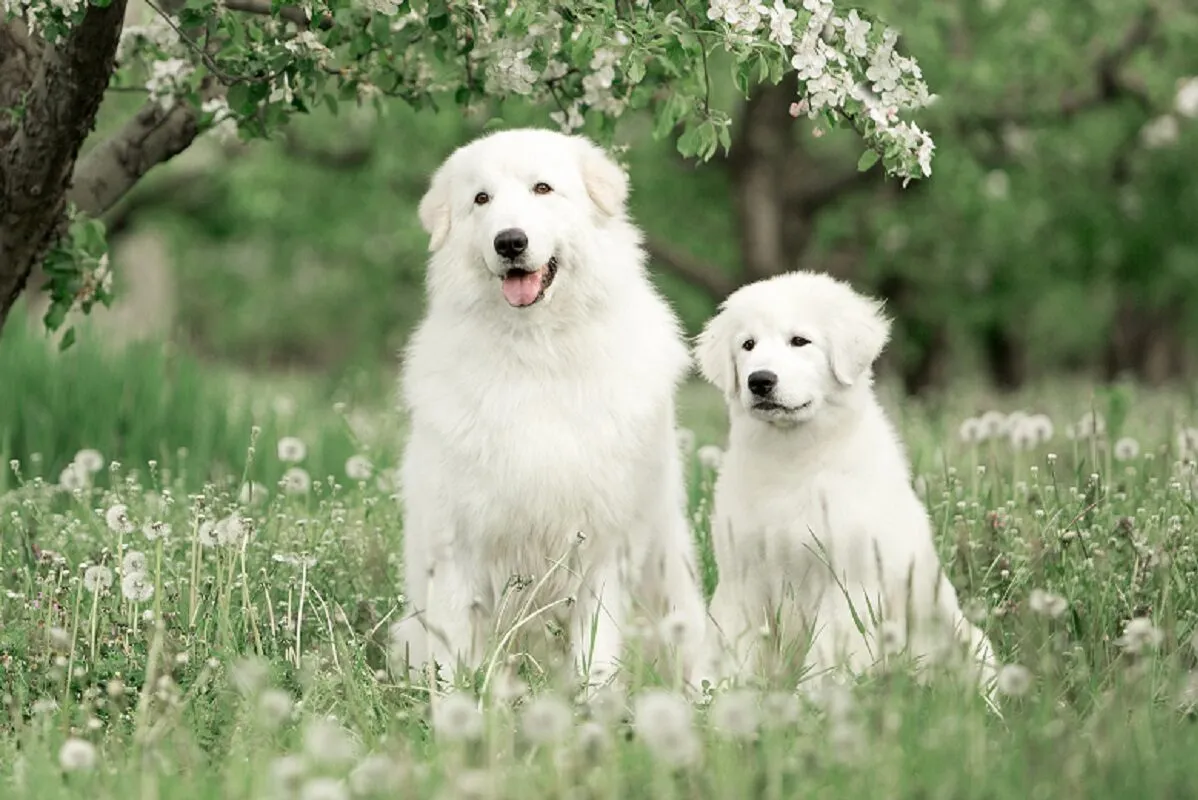
Most breeders of the Maremma Sheepdog are still based in Italy. However, dog enthusiasts in Germany, Switzerland and other European countries have also dedicated themselves to the breeding of the Maremmano-Abruzzese.
Responsible breeders only use healthy dogs for breeding and, for example, test the parent animals for hip dysplasia. They also ensure careful socialisation of the puppies so that they become accustomed to various environmental stimuli.
Shepherds often use a special trick to imprint their dogs on sheep at an early stage: they allow the puppies to drink milk from ewes so that they regard the flock as their family.
The Maremma Sheepdog is an original, dignified four-legged companion who delights dog lovers with his white coat and majestic presence.
However, he absolutely belongs in the hands of experienced owners who can offer him a home suited to his breed. Only when he has a meaningful task, such as guarding sheep, will this loyal, intelligent dog truly be happy.
| Special features: | The Maremmano is a livestock guardian dog from central Italy, primarily used for guarding sheep. |
| Character: | independent, vigilant, intelligent, courageous |
| Height at the withers: | 65–73 cm (males) 60–68 cm (females) |
| Weight: | 35–45 kg (males) 30–40 kg (females) |
| Coat: | medium-length to long, coarse, harsh, plenty of undercoat solid white |
| Coat care: | moderate effort |
| Exercise: | needs plenty of activity and exercise |
| First-time dog: | no |
| Barking: | barks a lot |
| Life expectancy: | 10–12 years, occasionally up to 15 years |
| Typical illnesses: | hip dysplasia, stomach problems, hereditary eye diseases |
| FCI Group: | Group 1: Sheepdogs and Cattle Dogs (except Swiss Cattle Dogs) |
| Exercise needs: | high |
| Origin: | Italy |

"A life without a pug is possible, but pointless," Loriot once said. I would unreservedly agree and add: "A life without horse, cat and rabbit as well!" My heart beats for all animals big and small and I have the great fortune to be able to write about my passion as a freelance author. With my articles I would like to raise awareness for animal welfare and give useful tips to animal lovers.
Fans of the Bearded Collie agree that those who aren't familiar with this dog breed simply have to get acquainted with it. And those who have experienced how a Bearded Collie bolts across meadows with its flowing fur, how it rolls around full of energy and joy and how it attentively and observantly takes into account its owners wishes become simply addicted to this original dog breed and its unique charm.
The Irish Wolfhound is one of the largest dogs in the world. Used for hunting wolves and bears in medieval Ireland, today it is kept exclusively as a family dog. Despite its imposing size, this sighthound is very gentle and affectionate. Unfortunately, the friendly giant is also quite prone to illness and has a comparatively short life expectancy. Is an Irish Wolfhound right for me, and what does keeping one involve? You can find everything you need to know in the following article.