

11 min
2.6k
Medium Size Poodle
Iceland’s only native dog breed can now be found all over the world. Not in huge numbers, but attentive dog lovers will occasionally come across one of these sturdy four-legged companions. Here, you can discover the essentials about the friendly Icelandic Sheepdog.
© Daniila di Sein / stock.adobe.com
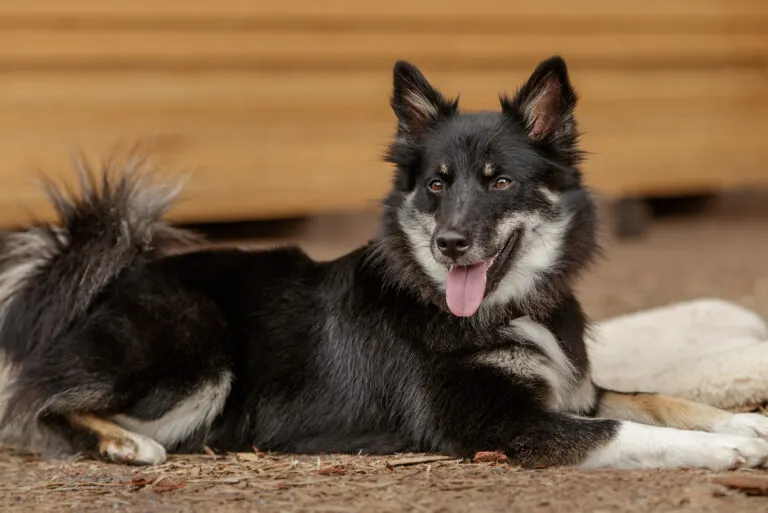
The Icelandic Sheepdog is a loyal companion for active people.
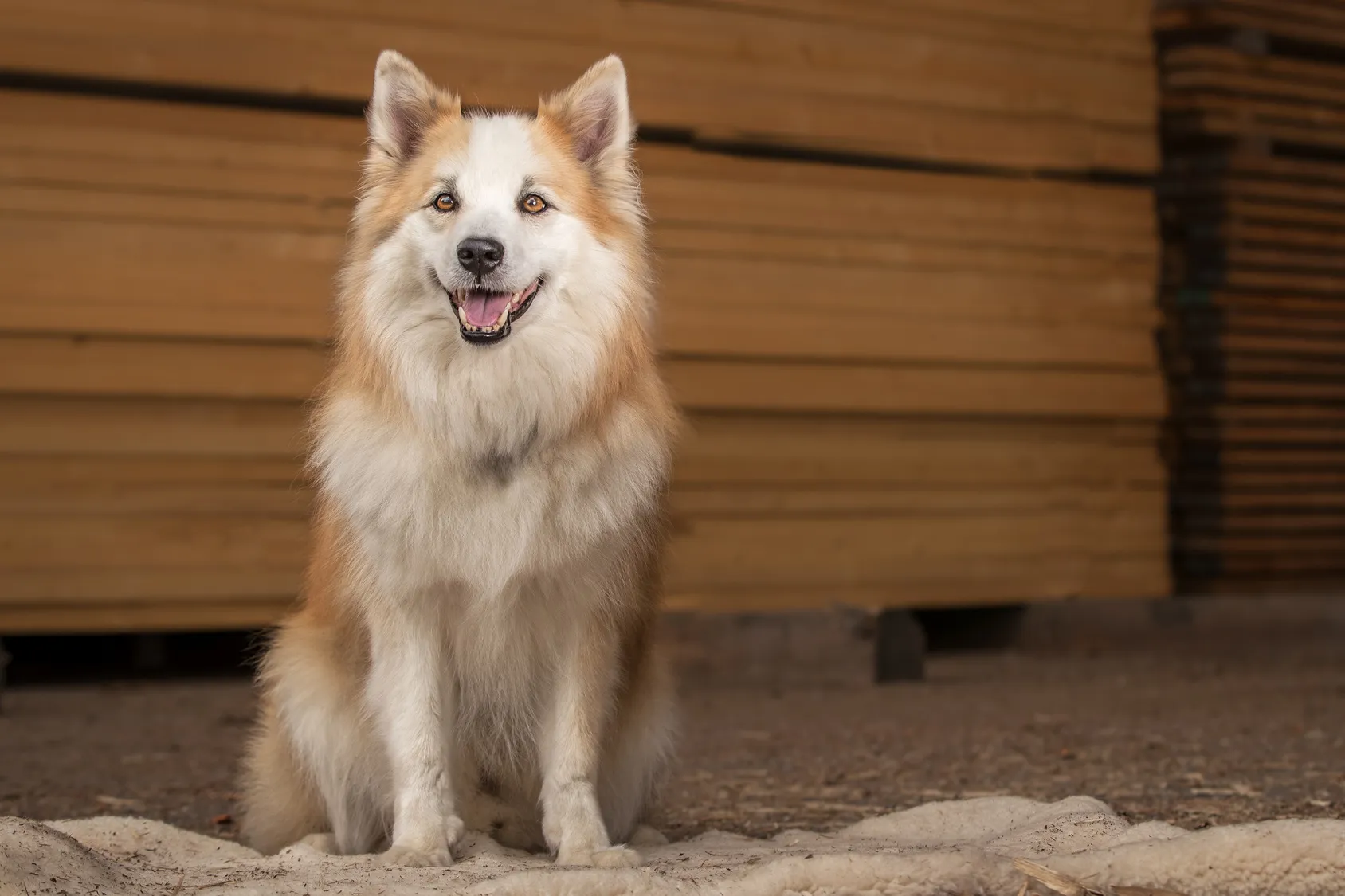
The Icelandic Sheepdog also has the characteristic appearance of a Nordic Spitz-type dog. Its distinguishing features include upright, medium-sized ears, a bushy tail carried over the back, and a sporty, compact build.
Males reach a shoulder height of around 46 centimetres. Females grow up to 42 centimetres tall. These compact nature-loving dogs weigh between nine and 18 kilograms.
The dense coat comes in numerous colours. According to the breed standard, however, one colour must predominate. White markings are permitted.
There are two coat varieties: short-haired Icelandic Sheepdogs with medium-length fur and a long-haired variety with a long topcoat. Both types share the rough texture of the outer coat. Both Icelandic Sheepdog varieties also have a dense, soft undercoat. A distinctive feature of these dogs is the double dewclaw on the hind legs.
Good to know: The Icelandic Sheepdog is also known as the Icelandic Spitz.
 © Daniila di Sein / stock.adobe.com
The Icelandic Sheepdog is a friendly four-legged companion. Although it announces strangers by barking, it does not attack them. This breed is always open and approachable towards other people and dogs.
In keeping with its original role as a herding dog, it is very active and lively. This energetic dog is tirelessly cheerful and always interested in its surroundings.
Icelandic Sheepdogs can form wonderful friendships with children. This dog also develops a close bond with its favourite person and loves accompanying them everywhere.
The Icelandic Sheepdog has a slight tendency to hunt. However, with consistent training, this can easily be controlled.
As agile as the Icelandic Sheepdog is outdoors, it also enjoys cosy hours with its family. This should be encouraged from the start to ensure you continue to enjoy a balanced dog.
The clever and friendly Icelandic Sheepdog learns quickly and willingly. As a result, training is usually completely straightforward – provided the owner has the necessary know-how and consistency. Previous dog experience is an advantage.
It is important to guide the Icelandic Sheepdog’s tendency to bark in the right direction from puppyhood so that it does not become a nuisance barker. It is also important to keep an eye on its recall ability. Some Icelandic Sheepdogs enjoy wandering off when they spot something like a rabbit.
Both the tendency to bark and the hunting instinct that some dogs display can be managed well. If in doubt, attend a dog training school with your dog to help you with this.
Dog training classes – including puppy play sessions – are also a great opportunity to improve social skills with other dogs. New friendships can develop between both dogs and owners here. Rule number one: gentle consistency is also the key to successful training.
Couch potatoes and city dwellers should not consider bringing an Icelandic Sheepdog into their home. This four-legged companion loves being active outdoors. The Icelandic Sheepdog also values spending time with its human pack and does not like being alone.
It is a wonderful companion for sporty nature lovers with enough time to dedicate to it. Simply going for a short walk twice a day is not enough. The Icelandic Sheepdog needs sufficient physical and mental stimulation.
This fresh-air enthusiast is not a dog for city living, but is better suited to a house in the countryside with a securely fenced garden. There, the Icelandic Sheepdog can let off steam in between activities. You should also bear the dog’s tendency to bark in mind when it comes to neighbours, even though this can usually be managed well with proper training.
The Icelandic Sheepdog fits well into family life and can form close friendships with children. Teach children from the start how to treat their animal friend respectfully and give the dog opportunities to retreat when needed.
Important: Before deciding on a dog, make sure there are no possible allergies within the family.
The herding dog usually gets on very well with cats. If you want to play it safe, choose a puppy that already has experience with cats.
As a herding dog, the Icelandic Sheepdog stands out for its agility, sure-footedness, and quick understanding. These are ideal qualities for sporting activities together.
Herding, agility or obedience – the Icelandic Sheepdog loves taking part! Choose a sport that both of you enjoy and feel free to try something new from time to time. There are plenty of options, such as dog dancing, dog frisbee or flyball.
It is important not to begin demanding training until your Icelandic Sheepdog is fully grown. With the right training, this breed also makes an excellent companion for jogging or horse riding.
However, do not forget that your Icelandic Sheepdog also needs time to rest. From puppyhood onwards, it should learn to appreciate relaxed downtime too, so it does not become overly excitable.
The weather-resistant coat of the Icelandic Sheepdog mainly requires more frequent use of a dog brush during the twice-yearly moulting periods. Ideally, you should brush it daily during these few weeks of the year.
This will also greatly reduce the amount of hair you need to remove from your home. It also shortens the moulting period. Outside these times, weekly brushing is enough to prevent matting.
If your Icelandic Sheepdog gets dirty, it is usually enough to brush dried dirt out of the coat. If the dog is very muddy all over, you can wash your four-legged friend using a mild dog shampoo.
Tip: Get your puppy used to regular brushing routines and bathing from an early age. These little wellness sessions are also perfect for strengthening your bond.
You should also regularly check the ears and eyes for dirt and clean them if necessary using special ear and eye cleaners.
You can use nail clippers to trim overly long claws and prevent painful snagging. However, this is usually only necessary for older dogs – or those that only walk on very soft ground. If in doubt, ask your vet to show you how to use nail clippers properly.
Discover our dog grooming products in the zooplus online shop.
A meat-rich diet tailored to your four-legged friend’s needs is the foundation for a long and healthy canine life. Therefore, choose a food in which meat appears first on the ingredients list.
Treats should also be high quality. Dry chew snacks such as beef ears satisfy your dog’s natural urge to chew, for example.
The ancestors of these dogs arrived in Iceland on Viking ships. The first records confirm their presence on the island as early as the year 880.
Writings from the 17th century testify to the outstanding herding qualities of Icelandic dogs, which were highly sought after by British shepherds. In 1898, the Icelandic Sheepdog received its first official breed standard description. However, this did not yet become established.
Today’s Icelandic Sheepdog breeding follows the breed standard from 1972. For centuries, these dogs have been versatile helpers. They herd horses and sheep – mainly by gathering them together rather than defending them. They also guard homes and farms.
Thanks to a ban on importing dogs into Iceland, the Icelandic Sheepdog developed in relative purity for a very long time. However, disease outbreaks repeatedly caused the population to decline dramatically. In the 19th century, three quarters of the dogs fell victim to a distemper epidemic.
Thanks to the efforts of several breed enthusiasts, the Icelandic Sheepdog was saved. However, Border Collies and other herding dogs are now increasingly common in Iceland itself, gradually displacing the Icelandic Sheepdog.
Nevertheless, thanks to the work of breeders around the world, the population is now stable. Several hundred dogs also still live in Iceland itself.
Did you know? The Icelandic Sheepdog is closely related to the Norwegian Buhund and shares many similarities with other northern Spitz-type dogs.
Fortunately, Icelandic Sheepdogs are not fashionable dogs and are not found in every town. However, breeders of this breed can be found throughout Europe.
If you have decided on an Icelandic Sheepdog, the best place to start is online to find out whether there is a breeder near you and if they are expecting a litter in the foreseeable future. It can also be useful to contact clubs for Nordic dogs, as they may be able to put you in touch with Icelandic Sheepdog breeders.
Your Icelandic Sheepdog will move in with you no earlier than eight weeks of age. At that point, it will be vaccinated, wormed several times, and come with a pet passport. Make sure you keep up with follow-up vaccinations. If you need to travel to another country to buy your new dog, make sure you thoroughly research the adoption of a puppy from abroad.
Tip: These days, you can take a well-trained Icelandic Sheepdog on holiday with you to many destinations. Why not enjoy a lovely walking holiday, for example?
Avoid puppies from “breeders” who are not affiliated with a recognised club. They are usually mainly interested in making quick money and often lack the expertise needed to breed this dog properly.
Only a reputable breeder can give you the assurance of receiving a typical, strong-charactered Icelandic Sheepdog with the best possible health care.
Alternatively, it is always worth checking rescue organisations too. Purebred dogs such as the Icelandic Sheepdog regularly end up in shelters. So it is well worth looking there for a new family member as well.
We wish you a wonderful time with your friendly Icelandic Sheepdog!
| Special features: | The Icelandic Sheepdog is a cheerful dog breed and an ideal companion for active dog lovers. |
| Character: | lively, friendly, people-oriented |
| Shoulder height: | Males: approx. 46 cm Females: approx. 42 cm |
| Weight: | approx. 9–18 kg |
| Coat: | dense, rough coat, medium-length or long, numerous colour variations with permitted markings |
| Grooming: | regular brushing required, especially during moulting periods |
| Exercise: | enjoys sporting activities and is always willing to try something new |
| Suitable for beginners: | better suited to experienced owners |
| Barking: | barks occasionally |
| Life expectancy: | approx. 12–15 years |
| Typical illnesses: | robust breed |
| FCI Group: | 5: Spitz and primitive types |
| Origin: | Iceland |

"A life without a pug is possible, but pointless," Loriot once said. I would unreservedly agree and add: "A life without horse, cat and rabbit as well!" My heart beats for all animals big and small and I have the great fortune to be able to write about my passion as a freelance author. With my articles I would like to raise awareness for animal welfare and give useful tips to animal lovers.
Fans of the Bearded Collie agree that those who aren't familiar with this dog breed simply have to get acquainted with it. And those who have experienced how a Bearded Collie bolts across meadows with its flowing fur, how it rolls around full of energy and joy and how it attentively and observantly takes into account its owners wishes become simply addicted to this original dog breed and its unique charm.
The Irish Wolfhound is one of the largest dogs in the world. Used for hunting wolves and bears in medieval Ireland, today it is kept exclusively as a family dog. Despite its imposing size, this sighthound is very gentle and affectionate. Unfortunately, the friendly giant is also quite prone to illness and has a comparatively short life expectancy. Is an Irish Wolfhound right for me, and what does keeping one involve? You can find everything you need to know in the following article.