

11 min
2.6k
Medium Size Poodle
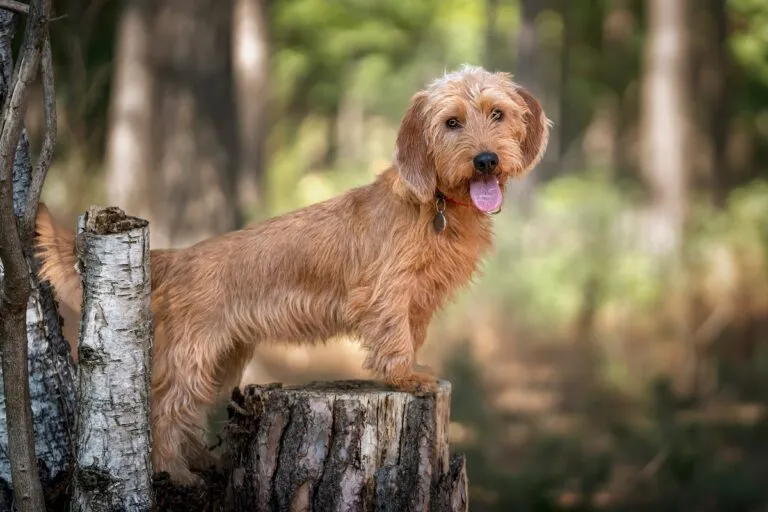
The Basset Fauve de Bretagne is a small hunting dog from France. It reliably tracks and flushes out rabbits, hares, foxes, deer and other game. Within the family, it is friendly, affectionate and good with children.
© Chris / stock.adobe.com
The Basset Fauve de Bretagne gets its name from its fawn-coloured coat (French: “fauve”).
With a shoulder height of 32 to 38 centimetres and a weight of 14 to 18 kilograms, the Basset Fauve de Bretagne belongs to the medium-sized dog breeds.
Its short legs give it a somewhat stocky appearance overall, but it has a strong build. The body of this small hunting dog is very muscular, with a back that is relatively short and broad for a Basset.
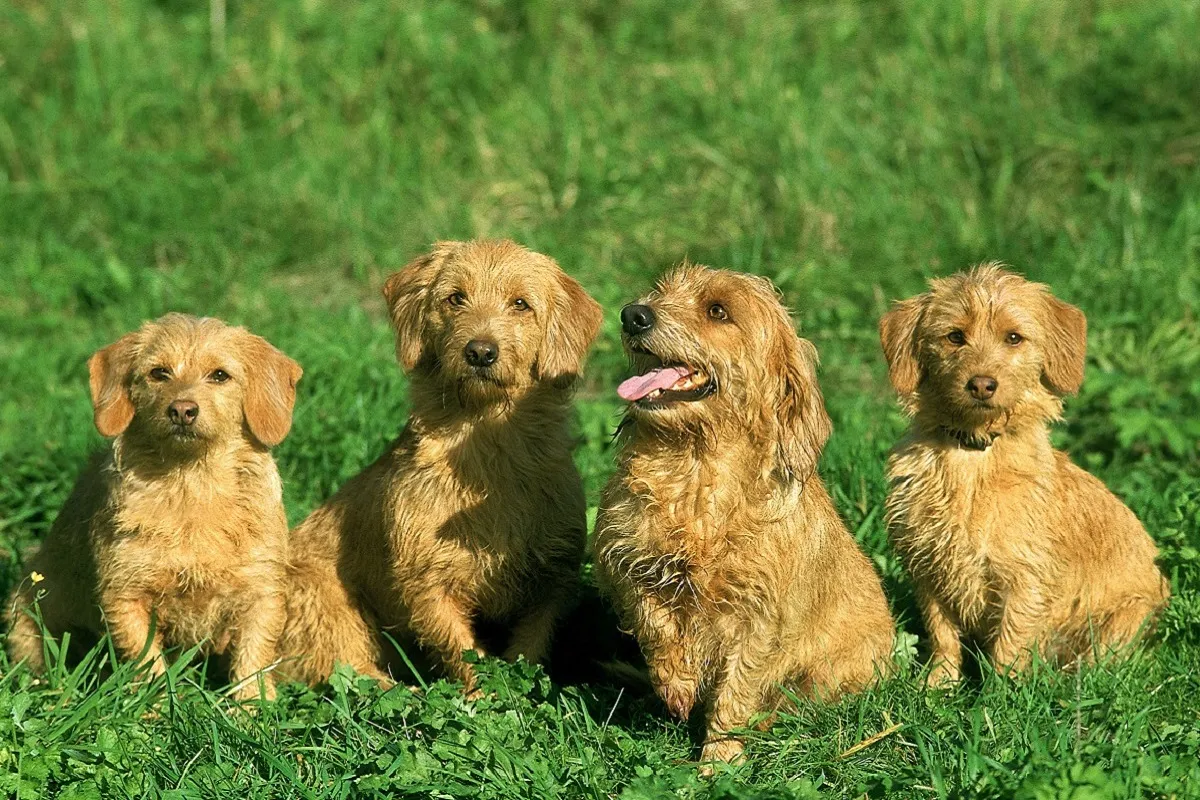
The fairly short coat of the compact French hound is rough, hard and exceptionally dense. Woolly or curly hair is undesirable. The typical coat colour is fawn, in French “fauve”.
However, this can appear in various shades: from wheaten to deer brown to brick red. A few black hairs on the back and a small white patch on the chest are not preferred but are tolerated.
This little Breton has dark brown eyes with a lively expression and drop ears tapering to a point.
Its sickle-shaped, medium-length tail is carried by the hunting dog in motion above the back line. The bristly tail swings rhythmically from side to side.
The Basset Fauve de Bretagne is a passionate and highly skilled hunter. Its speciality is rabbit and hare hunting. However, it also reliably tracks and flushes out larger game such as foxes, deer and wild boar.
When working, this little French dog shows courage, persistence and cunning.
As this breed needs to make independent decisions while hunting, its training is not straightforward and should be undertaken by experienced owners.
This intelligent, fearless Breton is not known for blind obedience, but for a pronounced hunting instinct, which must be channelled appropriately.
Training requires patience, consistency and plenty of sensitivity.
If the dog is not given enough opportunity to indulge its hunting passion, it may well find a task for itself – for example, during a walk it might run off. Once this keen hunter has caught a scent, it is often impossible to stop it.
The recall must therefore be trained early and work flawlessly.
As lively as it is on the hunt, this dog is calm and balanced at home. As a guard dog this breed is not suitable, even though it will announce strangers with barking. Any aggression is alien to it.
Regular hunting work as a flushing and tracking dog is the best way to give this little dog the right amount of exercise. It is therefore advisable to train and work the Basset Fauve de Bretagne for hunting.
With other breeds this sociable dog can live together without problems. Living with cats can be more challenging, as the Basset Fauve de Bretagne may see them as prey.
In addition to hunting, it is suitable for various dog sports such as agility, obedience and scent work. It also makes a great, nimble companion for cycling and jogging. However, it should only be let off the lead if the recall works perfectly.
In general, this French hunting dog needs plenty of exercise – at least two hours a day, whatever the weather. Simple walks are too boring for this intelligent, eager-to-learn breed.
It is therefore a good idea to make walks more varied with scent games or other activities.
Thanks to its small size and adaptability, it can in principle live in the city.
This sociable dog does not like to be left alone for long periods. It loves to accompany its family everywhere and take part in all activities.
 © slowmotiongli / stock.adobe.com
The hard, rough coat of the Basset Fauve de Bretagne has plenty of undercoat and protects it from wind, rain and snow. It requires little grooming and only needs occasional brushing and trimming. After hunting trips or walks in the woods, the coat should be checked and, if necessary, cleared of leaves, insects and parasites.
During the moulting period the hardy coat should be combed daily with a dog brush to remove loose hairs. In general, this easy-care dog belongs to the breeds that shed little.
A working Basset Fauve de Bretagne can develop quite an appetite. It neither has a sensitive stomach nor tends to food allergies or obesity.
When it comes to feeding, it is very undemanding and can eat both nutritious wet food as well as high-quality dry food or raw food. Two meals a day are recommended.
This small hunting dog is robust and resilient. No breed-specific diseases are known.
Only ear infections tend to occur repeatedly in this very hardy breed. To reduce the risk of painful ear infections, the hair inside the ear flaps should be kept short.
The life expectancy of this French breed is around eleven to thirteen years, although some individuals live longer.
The Basset Fauve de Bretagne was bred from another French hunting breed – the Griffon Fauve de Bretagne.
By crossing with Breton Basset Hounds in the 19th century, smaller, more agile dogs were developed that could cope well with the rough, hilly terrain of Brittany.
In particular, the many bushes and shrubs in the region often pose a problem for its larger, long-legged counterpart. The small, nimble Basset Fauve de Bretagne simply slips through.
The Basset Fauve de Bretagne was once mainly popular among nobles. Today, professional and hobby hunters especially value the qualities of this tough little dog – mainly in France, England and Germany.
During both World Wars, the breed was no longer bred, and it almost became extinct. Thanks to a few enthusiasts, this small hunting dog has survived as a distinct breed.
Since 1963, it has been officially recognised by the FCI, the international canine organisation, and is listed in Group 6 “Scenthounds, tracking dogs and related breeds”.
The Basset Fauve de Bretagne is a relatively rare breed, still primarily bred in France. However, there are also responsible breeders in other countries dedicated to this hardy hunting breed.
You will rarely find this breed in an animal shelter. Nevertheless, it is worth visiting your local animal welfare organisation. You may find other hunting dogs or their crossbreeds looking for a new home.
Often, they have been given up because their previous owners were overwhelmed by these agile, hunting-driven working dogs.
A passionate hunting companion like the Basset Fauve de Bretagne is happiest when allowed to fulfil its purpose. It belongs in the hands of experienced dog lovers who can train it and take it hunting.
Those who keep this breed in a way that meets its needs will be rewarded with a cheerful, well-balanced dog whose lively nature keeps the whole family on their toes.
| Special characteristics: | Small, compact hunting dog that mainly hunts rabbits but also tracks and flushes other game. |
| Character: | independent, friendly, lively, intelligent |
| Shoulder height: | 32–38 cm |
| Weight: | 14–18 kg |
| Coat: | short, rough and hard |
| Colours: | solid fawn |
| Coat care: | easy to care for |
| Exercise: | high activity needs |
| Suitable for first-time owners: | no |
| Barking: | likes to bark |
| Life expectancy: | 11–13 years |
| Typical health issues: | few known health problems |
| Origin: | France |

"A life without a pug is possible, but pointless," Loriot once said. I would unreservedly agree and add: "A life without horse, cat and rabbit as well!" My heart beats for all animals big and small and I have the great fortune to be able to write about my passion as a freelance author. With my articles I would like to raise awareness for animal welfare and give useful tips to animal lovers.
Fans of the Bearded Collie agree that those who aren't familiar with this dog breed simply have to get acquainted with it. And those who have experienced how a Bearded Collie bolts across meadows with its flowing fur, how it rolls around full of energy and joy and how it attentively and observantly takes into account its owners wishes become simply addicted to this original dog breed and its unique charm.
The Irish Wolfhound is one of the largest dogs in the world. Used for hunting wolves and bears in medieval Ireland, today it is kept exclusively as a family dog. Despite its imposing size, this sighthound is very gentle and affectionate. Unfortunately, the friendly giant is also quite prone to illness and has a comparatively short life expectancy. Is an Irish Wolfhound right for me, and what does keeping one involve? You can find everything you need to know in the following article.