

11 min
2.6k
Medium Size Poodle
Searching, pointing, retrieving – this breed is one of the most versatile hunting dogs of all. However, the multifaceted German Shorthaired Pointer also has high expectations of its home. As a working dog, it needs tasks that challenge both body and mind. If it is well exercised and kept busy, it can also be a loyal family dog.
© Евгения Глинская / stock.adobe.com
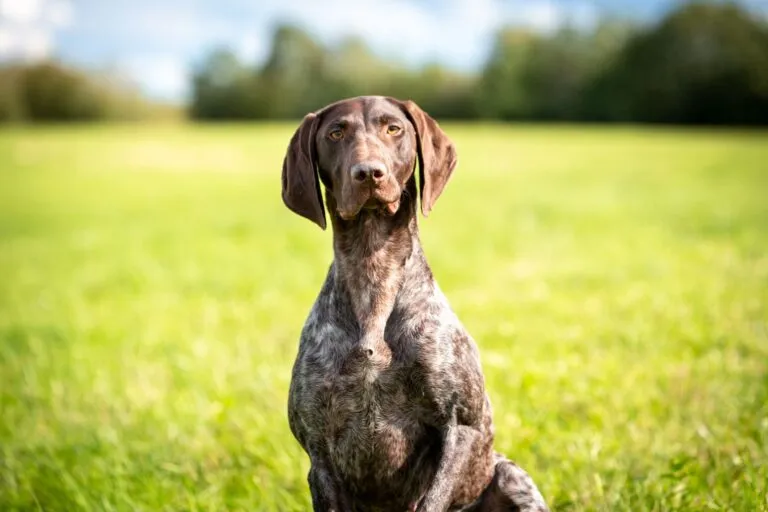
The German Shorthaired Pointer is a hunting dog bred to excel in the field.
According to the breed standard, the German Shorthaired Pointer’s appearance should be “harmonious”. Its muscular build and broad chest emphasise the speed, strength and stamina of this pointing dog.
Males reach a shoulder height of up to 66 centimetres. Females are between 58 and 63 centimetres tall.
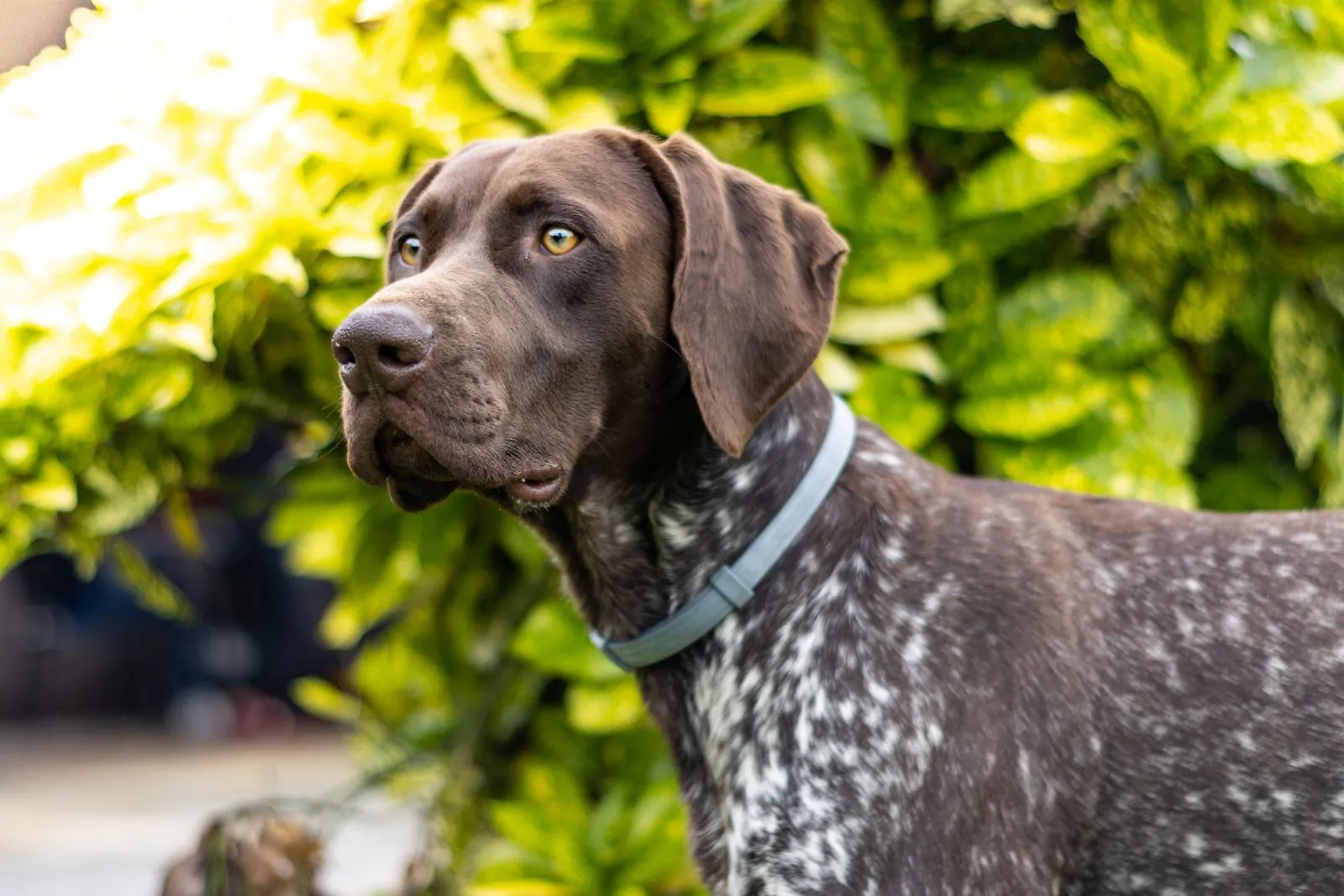
The head is framed by long, floppy ears. The long, broad muzzle allows the German Shorthaired Pointer to retrieve game.
Its naturally tapering tail, which reaches down to the hocks, is usually docked by about half for hunting purposes. However, under animal welfare legislation, tail docking is banned in many countries. This also applies in Germany, where hunting dogs are exempt – a point that is often viewed critically.
The short coat has an undercoat and can be brown or black, with or without white markings. It is dense in texture and not too soft.
 © ivan / stock.adobe.com
For hunters, the German Shorthaired Pointer is a dream on four paws. It is regarded as a brave and reliable companion that bonds closely with its two-legged pack.
Its balanced nature means it is neither overly shy nor aggressive. At most, it may show a certain reserve towards strangers.
Above all, it is an eager working dog that is very spirited and thrives on its demanding tasks in woodland and fields.
Within the four walls of its pack, however, it is calm and affectionate, provided it has had enough mental and physical stimulation beforehand. A bored German Shorthaired Pointer, on the other hand, will quickly find its own entertainment – usually not to the delight of its owners.
Although the German Shorthaired Pointer can sometimes be a little stubborn, it usually likes to follow its main carer. As it is very intelligent and curious, it learns quickly and reliably.
From puppyhood onwards, make sure to focus on thorough familiarisation and socialisation so that your companion gets on well with other dogs. Training naturally includes proper gundog training, so you should look for a suitable club at an early stage.
Place great emphasis early on recall and train your companion consistently, but always with kindness. A trusting bond is the basis for loyal obedience.
Provided it comes from a reputable breeder, this tireless, outdoorsy dog has excellent prerequisites for a long and healthy life.
According to club regulations, only dogs with healthy hips may be approved for breeding, in order to minimise the risk of hip dysplasia (HD). Do not hesitate to ask to see the relevant test results. A responsible breeder will be happy to show them to you.
German Shorthaired Pointers can also be prone to progressive retinal atrophy (PRA) and epilepsy. Speak to a breeder you trust about preventive measures within their breeding programme.
Due to their build, this breed can be susceptible to life-threatening gastric torsion. Help prevent this by giving your German Shorthaired Pointer a rest after every meal.
It is also better to offer several small meals a day rather than one large one. Even after drinking a lot of water, your dog should not immediately start exercising again.
Keep an eye on your companion’s skin, especially around the head and mouth. During hunting outings, small wounds can quickly occur here and become inflamed.
A German Shorthaired Pointer can reach an age of twelve years or more.
Alongside responsible breeding and appropriate exercise, nutrition is another key pillar for a long and healthy canine life.
Ideally, feed a high-quality food that supplies your German Shorthaired Pointer with sufficient energy. What matters most for quality is a high protein content – typically from meat.
Offer at least two meals per day and allow your four-legged friend to rest afterwards. Young dogs need up to four portions daily.
On longer outings, it is best to take a water bottle with an integrated bowl. This allows your companion to drink easily while on the go.
If you would like to treat your German Shorthaired Pointer to a snack, we recommend tasty natural snacks such as cattle ears or chew bones and chew rolls made from beef hide. These also support dental care. For training, dog treats are particularly suitable.
As the name suggests, the German Shorthaired Pointer has a short coat that is very easy to care for. Brushing once a week or using a rubber grooming glove is sufficient to remove dead hair.
Especially during the coat change in spring and autumn, the rule is: the more often you brush your dog, the fewer hairs will end up around your home. Regular coat care also strengthens the bond between you and your German Shorthaired Pointer.
Particularly in the warmer months, you should check your dog after woodland walks for ticks so that you can remove any unwanted guests straight away using tick tweezers.
Take this opportunity to look into the ears from time to time, as in the warm, moist environment of floppy ears, ear infections can develop quickly and unnoticed.
Any dirt can be effectively removed with a dog ear cleaner. However, if there is inflammation or a case of mite infestation, you should consult a vet as soon as possible.
A bath should only be given if dried-on dirt can no longer be brushed out. In that case, use a mild dog shampoo that does not irritate your pet’s skin.
A German Shorthaired Pointer belongs with a hunter, where it can pursue its passions in everyday life. It is an excellent all-rounder that supports its two-legged companion in every situation – whether before the shot through tireless searching and pointing, or afterwards when it happily retrieves or reliably carries out blood tracking work.
The German Shorthaired Pointer is also sharp on predators and ideally suited to work on and in water. Professional hunters can offer this dog exactly what it needs: plenty of tasks and several hours of exercise each day.
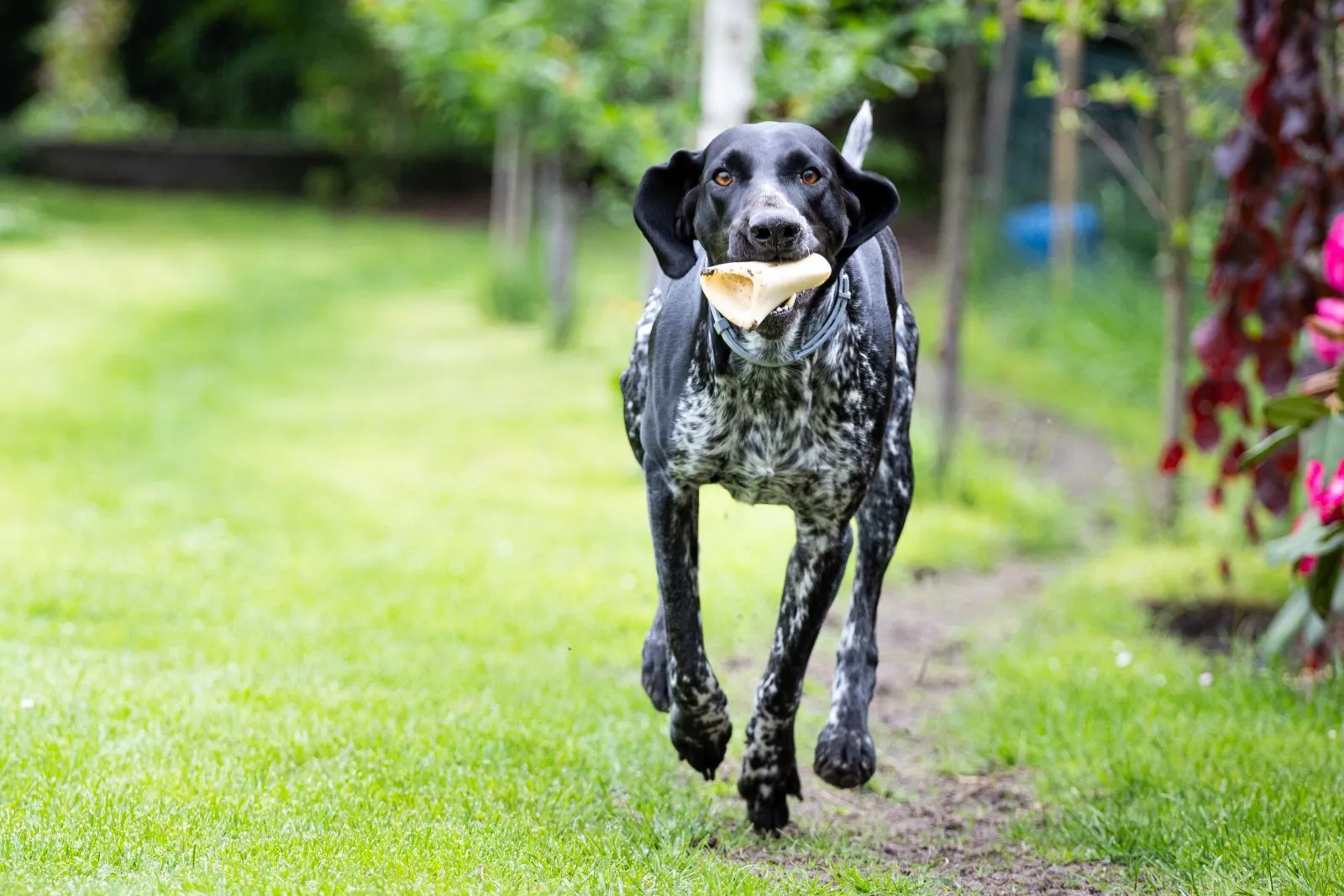
Apart from hunting, the German Shorthaired Pointer also greatly enjoys tracking work, retrieving games and dog sports. It is also well suited as a jogging companion or running alongside a bicycle.
Remember that your young athlete should only start dog sports from the age of one and after veterinary approval. Too much exercise beforehand could damage bones and joints.
 © PhotoHunter / stock.adobe.com
This breed is primarily a dog of hunters, for hunters. That is why you will usually only be happy with a German Shorthaired Pointer if you are a hunter.
The most important requirement for living with this breed is that you share its passion for hunting. If it gets enough daily exercise in woodland and fields, it can be a loving and well-balanced family dog.
You should also already have experience with gundogs and their training if you want to bring such a multifaceted pointing dog into your home. Due to its independent streak, the breed is not particularly suitable for beginners.
If you can offer several hours of exercise in the great outdoors every day and also practise other dog sports with your German Shorthaired Pointer, you do not necessarily have to be a professional hunter to take one on.
However, if you only hunt in your spare time, you should critically assess in advance whether your living situation is suitable for this demanding dog.
This four-legged friend belongs in a house in the countryside, ideally with a fenced garden where it can let off extra steam.
Make sure the fencing is secure and high enough so that your companion cannot go off hunting on its own. It reliably guards house and grounds.
This breed is very devoted to its two-legged pack. Therefore, allow your dog close family contact and life with you in the house. Permanent kennel housing is not an option for this sociable German Shorthaired Pointer.
If children live in the household, teach them respectful behaviour towards dogs at an early stage. Then nothing will stand in the way of a deep friendship, as the breed is renowned for its child-friendliness. Nevertheless, young children should never be left alone with a dog unsupervised.
It goes without saying that living with other pets is only very rarely possible, as the German Shorthaired Pointer will see them as prey.
One exception may be cats that the dog has already got to know as a puppy. Even then, however, it is still possible – indeed likely – that it will chase a cat running through the garden.
The exact origins of the German Shorthaired Pointer are not known, as several breeds were involved in its development.
The German Shorthaired Pointer is the result of crosses between the rather heavy Italian and Spanish pointing dogs of German noble courts and the more elegant, agile English Pointers as well as English Foxhounds. The aim was to create a dog better suited to the demands of hunting.
In 1897, the first “German Shorthaired Pointer stud book” marked the beginning of pure breeding of the breed with the standards recorded there. In northern Europe, the athletic German Shorthaired Pointer has also been used as a sled dog since the 1950s.
Thanks to its versatile abilities and graceful appearance, the breed has now also gained a certain level of popularity in the USA.
In the English-speaking world, it is known as the “German Shorthaired Pointer”, which underlines its relationship and similarity to the English Pointer.
Most representatives of the breed can be found – as the name suggests – in Germany. In recent years, around 1,100 to 1,200 puppies have been registered there each year.
If you are looking for a puppy, the German Shorthaired Pointer Association provides an overview of numerous breeders who have litters or are placing young dogs. Internationally, enthusiasts of the breed are organised in the “World Union Deutsch Kurzhaar”.
For good reason, most breeders only place their puppies with hunters. If you are not a hunter but still very much want a German Shorthaired Pointer, do not make the mistake of buying “German Shorthaired Pointer puppies” without papers from a dubious dealer.
As a rule, this not only turns out to be a bad deal for you, but also supports the long-term business model of unscrupulous dog traders. They breed animals without the necessary expertise and sell them without health checks or proper socialisation, purely for profit.
If it does not necessarily have to be a German Shorthaired Pointer, you may find adult dogs through animal welfare organisations that show similar character traits.
You will often need a bit of patience and training work, but you give a dog the chance of a fresh start – an experience that is usually very rewarding for both sides.
| Special features: | The German Shorthaired Pointer is a graceful dog breed for hunters who enjoy using both body and mind. |
| Character: | brave, reliable, balanced |
| Height at the withers: | Males: up to 66 cm Females: 58–63 cm |
| Weight: | approx. 20–30 kg |
| Coat: | short and dense with undercoat, brown or black with or without white markings |
| Coat care: | easy to care for |
| Exercise: | needs plenty of exercise and activity |
| Suitable for beginners: | only for experienced owners |
| Barking: | barks rarely |
| Life expectancy: | approx. 12 years |
| Typical illnesses: | can be prone to epilepsy and hip dysplasia |
| FCI group: | 7: Pointing Dogs |
| Origin: | Germany |
The zooplus editorial team consists of a dedicated team of experts with many years of experience in the field of animal husbandry: Luisa with her White Swiss Shepherd Elyos, Laura, Julio, and Florian. Together with a large network of animal experts, we work to make the zooplus magazine a trusted source of information for all animal owners and lovers. Our goal is to provide exciting animal knowledge and relevant information on the proper care of pets.
Fans of the Bearded Collie agree that those who aren't familiar with this dog breed simply have to get acquainted with it. And those who have experienced how a Bearded Collie bolts across meadows with its flowing fur, how it rolls around full of energy and joy and how it attentively and observantly takes into account its owners wishes become simply addicted to this original dog breed and its unique charm.
The Irish Wolfhound is one of the largest dogs in the world. Used for hunting wolves and bears in medieval Ireland, today it is kept exclusively as a family dog. Despite its imposing size, this sighthound is very gentle and affectionate. Unfortunately, the friendly giant is also quite prone to illness and has a comparatively short life expectancy. Is an Irish Wolfhound right for me, and what does keeping one involve? You can find everything you need to know in the following article.