

11 min
2.6k
Medium Size Poodle
The Alopekis is an exceptionally charming dog that comes in many different appearances. Outside its native Greece, however, it is still largely unknown. We would like to change that and introduce this even-tempered and family-friendly Greek dog in our profile.
© thanasis / stock.adobe.com
Beyond Greece, the Alopekis is little known.
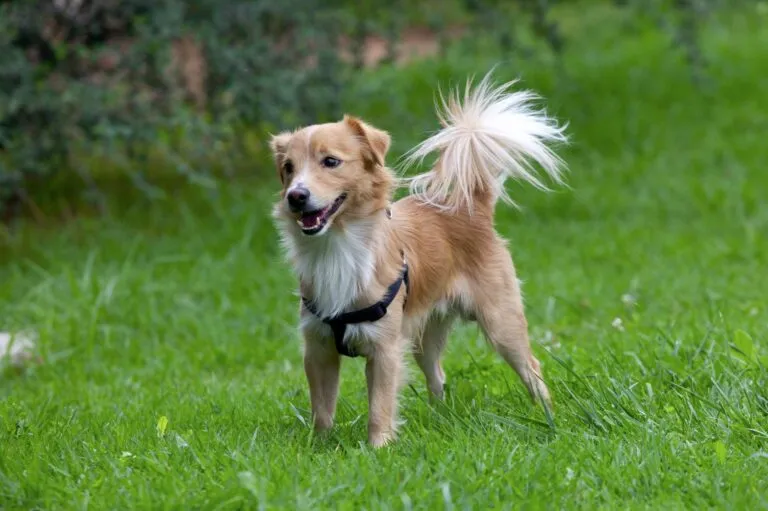
None of the major kennel associations currently recognise the Alopekis as an independent breed. As a result, there is no official standard and this dog’s appearance can vary greatly. Most Alopekis resemble a fox in build, which is also where the breed’s Greek name comes from: “Alopekis” roughly translates as “fox-like”.
The dogs have a well-proportioned body and reach a shoulder height of 20 to 30 centimetres. On average, an Alopekis weighs up to seven and a half kilograms.
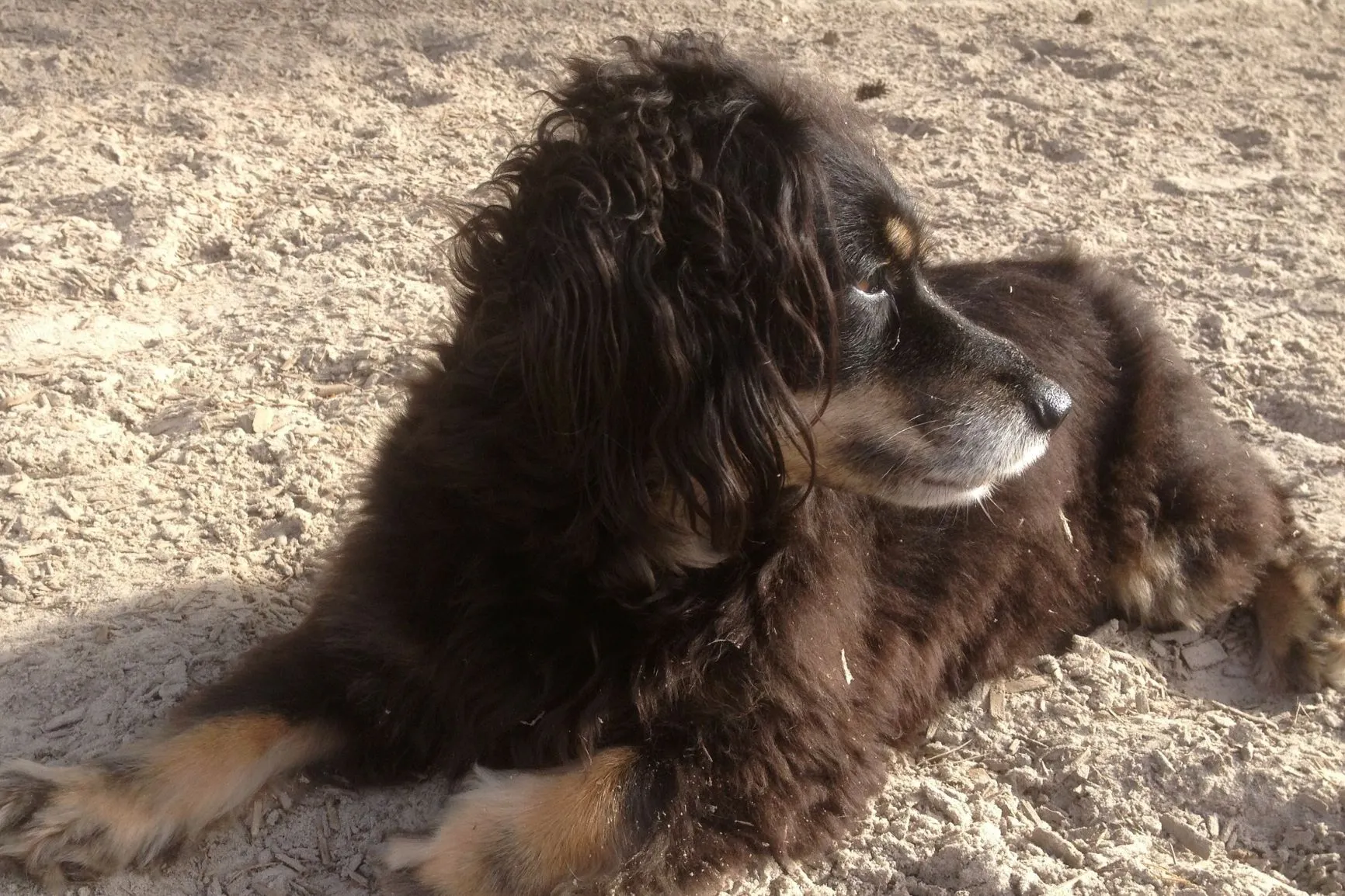
When it comes to the coat, almost anything is possible: some Alopekis have a short, harsh coat, others a medium-length one. The rarest are dogs with a semi-long, slightly wavy and softer coat. What they all have in common is an undercoat. There is a wide range of colours, with white, brown or black Alopekis, as well as combinations of these colours, being particularly popular.
The character of the Alopekis can vary considerably depending on how it is raised. Generally speaking, they are very social, eager to learn and confident dogs that are not easily unsettled.
This dog is well suited to families. It gets on well with children, provided they are used to treating pets with respect.
Outdoors, it tends to hunt smaller animals: if it spots or sniffs out a squirrel, rabbit or mouse, it can be difficult to call it back. Consistent training is essential here.
The same applies to its tendency to bark: as Alopekis are inclined to guard, they can quickly turn into persistent barkers. Early training is key to preventing this.
Especially if you are adopting an adult dog from a rescue organisation, you should ideally get in touch with a dog trainer in advance. They can offer professional support in overcoming everyday challenges together with your dog.
These small and intelligent dogs suit many dog lovers. They can live in the countryside just as well as in the city. Singles are just as suitable as families. Of course, this may differ if the dog has experienced poor socialisation.
If you adopt an adult Alopekis from an animal welfare organisation, bear in mind that it may not be used to our “typical” daily routine. It is quite possible that you will still need to teach it certain things.
This includes walking on a lead, being left alone, travelling by car or being house-trained. With an adult dog, this can require a great deal of patience. Some Alopekis are suitable for first-time owners, while others are better suited to experienced handlers.
In principle, Alopekis enjoy spending plenty of time outdoors. Even as a city dog, you should spend at least two hours a day outside with it. Other dogs or cats are usually not a problem – ideally, the Alopekis will have had lots of contact with them as a puppy.
Alopekis are considered clean dogs. Most of them enjoy grooming themselves and avoid muddy puddles. In particular, dogs with a medium-length coat require regular coat care, which is not especially demanding.
Get your young dog used to brushing in a playful way from an early age. During the coat change twice a year, it is helpful to brush the dog every other day. This helps prevent large amounts of hair ending up around your home.
You should also keep a tick remover and a nail clipper to hand so you can use them when needed.
Every dog has its own individual preferences. With Alopekis, these can vary even more than in standardised breeds. Many Alopekis enjoy learning tricks or are interested in agility for small dogs. Others, however, are not keen on this at all. Search games, retrieving or dog dance – try out what you and your companion enjoy most together.
By the way, fully grown Alopekis are very enduring runners. With sufficient training, they will be happy to become your jogging companion.
Anyone looking for an Alopekis is best advised to look into rescue organisations or visit an animal shelter. There are numerous associations that rehome dogs from Greece to other European countries. Here, you have a good chance of coming across one of these original dogs.
An Alopekis usually has neither a pedigree nor any other proof that it is a “true” Alopekis. However, with these ancient dogs – which are not (yet) recognised by any association anyway – this is not relevant. Rehoming takes place with a microchip, EU pet passport and rabies vaccination.
Outside Greece, there are hardly any breeding efforts focused on the Alopekis. If you come across a breeder offering Alopekis, ask questions: what are the breeder’s goals? Where do the parent dogs come from and what makes them Alopekis? As there is no oversight by an association and no standards, anyone can offer an “Alopekis”.
If you want to play it safe when choosing a dog, opt for a similar breed that is recognised by the Fédération Cynologique Internationale (FCI) and comes with proof of lineage.
Breeds similar to the Alopekis include, for example, the Norwegian Lundehund or smaller Spitz varieties, which tend to have more coat. The Shiba Inu also has a “fox-like” appearance, but is larger and more challenging to train.
In their homeland, many free-roaming Alopekis suffer from Mediterranean diseases. Reputable animal welfare organisations only rehome dogs that have been tested for these. Nevertheless, you should still present an Alopekis from Greek rescue to a vet once it arrives in its new home. Some diseases can only be detected in the blood weeks after infection.
Also remember to have your dog regularly vaccinated and, if necessary, wormed. Apart from this, these ancient dogs are very robust despite their small gene pool and are hardly prone to breed-specific illnesses.
With good health, an Alopekis can live to be 15 years or older. Alongside sufficient exercise and regular check-ups at the vet, a balanced diet is one of the cornerstones of a healthy canine life.
Make sure your dog receives high-quality food with a high meat content. Ideally, meat should be listed first among the ingredients. Some dogs have difficulty adjusting to new food. Even former street dogs, which usually have very robust stomachs, can react to something new with diarrhoea or vomiting.
It is therefore best to change the diet only gradually when introducing your dog to a new food. If an adult Alopekis moves in with you, it can be helpful to let it work for a large proportion of its meals.
Terracotta vessels over 5,000 years old depicting dogs prove that the roots of the Alopekis reach back to ancient Greece. The Greek philosopher Aristotle (384–322 BC) already mentioned the Alopekis.
Based on bone finds, some cynologists assume that this Greek dog is the ancestor of the Spitz breeds. Even if this has not been proven, Alopekis certainly belong among the ancient dog types.
In earlier times, the small size was not the result of targeted breeding by humans. Instead, the isolated island location led to the spontaneously emerging small dogs mating frequently with one another. It is even thought that there was a hairless variant of the Alopekis in antiquity. Confusingly, this was known as the “Turkish Hairless Dog”.
Until just a few decades ago, Alopekis were commonly seen in towns and rural areas of Greece. They were popular mouse and rat hunters, protected poultry from foxes and supported people as watchdogs.
However, in the 1970s and 1980s, more and more other dog breeds from Europe arrived in Greece, displacing the Alopekis.
The original Alopekis has a small but passionate fan base. These dog experts are working to have the breed recognised as independent by the Greek Kennel Club.
At present, there are Alopekis in some Greek regions that live as strays. Yet their existence is under threat: the dogs produce only a few puppies per litter, many of which die in their first year of life. Typical Mediterranean diseases such as leishmaniasis are a major problem.
In addition, many dogs have been neutered in an effort to reduce the number of strays on Greek streets.
Some dog lovers describe the Alopekis as the short-haired variant of the Kokoni. The Kokoni is a similar breed recognised by the Greek Kennel Club, but not by the FCI or other umbrella organisations. The Kokoni is also known as the “Small Greek Domestic Dog”.
Kokoni and Alopekis share a comparable history, but strictly speaking they are two different breeds with distinct characteristics. For example, the Alopekis is smaller than the Kokoni. However, if you are looking for a dog from Greek rescue, the label matters less: both dogs are lovable companions!
 © Annika / stock.adobe.com
Anyone looking for an intelligent and family-friendly dog from rescue will find the Alopekis a perfect choice. This small Greek dog is just as happy going on long walks as it is enjoying extended cuddle sessions.
Whether its new home is in the countryside with a family or in the city in a single-person household makes little difference to this furry friend. However, if you take in an adult Alopekis from rescue, you should be aware that you may still need to teach your new companion a few things.
| Special features: | The Alopekis is a rather unknown dog breed that is considered family-friendly thanks to its balanced nature. |
| Character: | sociable, confident, calm |
| Height at the withers: | 20–30 cm |
| Weight: | up to 7.5 kg |
| Coat: | short or medium-length with undercoat, many colour variations, often white, brown or black |
| Coat care: | uncomplicated |
| Exercise: | Individual needs, generally Alopekis are very enduring |
| Suitable for beginners: | well suited to first-time owners |
| Barking: | likes to bark |
| Life expectancy: | approx. 15 years |
| Typical illnesses: | robust breed |
| FCI group: | 5. Spitz and primitive types |
| Origin: | Greece |

The zooplus editorial team consists of a dedicated team of experts with many years of experience in the field of animal husbandry: Luisa with her White Swiss Shepherd Elyos, Laura, Julio, and Florian. Together with a large network of animal experts, we work to make the zooplus magazine a trusted source of information for all animal owners and lovers. Our goal is to provide exciting animal knowledge and relevant information on the proper care of pets.
Fans of the Bearded Collie agree that those who aren't familiar with this dog breed simply have to get acquainted with it. And those who have experienced how a Bearded Collie bolts across meadows with its flowing fur, how it rolls around full of energy and joy and how it attentively and observantly takes into account its owners wishes become simply addicted to this original dog breed and its unique charm.
The Irish Wolfhound is one of the largest dogs in the world. Used for hunting wolves and bears in medieval Ireland, today it is kept exclusively as a family dog. Despite its imposing size, this sighthound is very gentle and affectionate. Unfortunately, the friendly giant is also quite prone to illness and has a comparatively short life expectancy. Is an Irish Wolfhound right for me, and what does keeping one involve? You can find everything you need to know in the following article.