{"url":"https://www.zooplus.co.uk/magazine/dog/dog-training/the-10-most-popular-dog-tricks","title":"The 10 Most Popular Dog Tricks","mag_id":228057,"is_single":true,"cat_name":"Dog","sub_cat_id":141,"sub_cat_name":"Dog Training","cat_id":3410}
Paw shake, sit pretty or catch a treat in mid-air? With these 10 dog tricks, you and your dog will be the star of the show. And best of all: these tricks don’t just wow the audience, they also challenge your dog mentally and physically.
Teaching Dog Tricks: How Can I Keep My Dog Meaningfully Occupied?
When a dog spins in a circle on command or waves goodbye with a paw, it’s guaranteed to raise a few delighted smiles. But far more important than impressing onlookers is how your dog feels while doing it.
Luckily, most dogs are naturally curious. They want to be kept busy and love letting off steam physically while also being mentally stimulated. And if there’s a reward in it for them, their world is perfectly in order.
Dog Tricks Strengthen the Human–Animal Bond
Knowing that practising tricks also brings many benefits for the relationship between dog and owner, plenty of dog owners set themselves ambitious goals.
But before you begin training, you should be aware that not every trick is suitable for your dog. Although most dogs are keen to learn, their size, build or weight alone may prevent them from practising certain tricks.
Fun As the Basic Requirement
Dogs, just like us, have their own likes and dislikes. If your dog doesn’t enjoy lying on their back, for example, you shouldn’t start by teaching them to roll over. And if they’re not keen on jumping, it’s best to leave “catching a treat in mid-air” for now.
The key requirement for practising dog tricks is that both you and your dog enjoy it. Success will also come much more quickly when fun is at the heart of your training.
How Do I Teach My Dog Tricks?
Practising tricks should be a positive experience for your furry friend. Force or harshness have no place here. Take a gentle approach and teach each trick step by step. Be patient with your dog and respect their learning pace.
Of course, that doesn’t mean giving up straight away if your dog isn’t cooperating one day or a trick doesn’t work immediately. Sometimes your pet simply needs a little time to understand what you want.
Observe Your Dog
It’s important to watch your dog closely and learn to assess their behaviour. If they lose motivation, it’s better to end the session. Over time, you’ll develop a good sense of whether your dog is still engaged or would rather turn their attention elsewhere. Practising tricks also helps you understand your dog better.
At the same time, your dog builds trust in you because you respond to their needs. The real success of teaching tricks isn’t just the perfect performance, but the time you spend training together. Consistent, step-by-step practice and small wins along the way boost confidence and strengthen the bond between you and your dog.
Mutual trust, reliability and clear commands are the cornerstones of successful dog training. This also applies when teaching small tricks.
Obedient Companion or Stubborn Character?
But to truly inspire your dog to follow our rules of the game and learn tricks, you’ll need a little more. Some breeds naturally have a so-called “will to please” (a desire to make their owner happy). However, they’re also a little self-interested. After all, dogs know that desired behaviour brings rewards, while unwanted behaviour is ignored or even corrected.
With some breeds, often described as somewhat stubborn, you can almost see them weighing up whether following a command will benefit them at all.
Successful Tricks Through Rewards
You can use this “hunger for praise” to your advantage during training. Dogs choose the path that promises the greatest reward. If a tasty treat awaits at the end of a successfully performed trick, they’ll naturally be motivated to join in.
Positive reinforcement in the form of treats, strokes or a favourite toy will help you and your dog reach your goal more quickly and reliably than trying to force them into anything.
End Each Session with a Sense of Achievement
For your dog to learn which behaviour is correct and earns the praise they’re hoping for, the reward should always follow immediately. Dogs live in the moment and associate your reaction directly with the current situation.
It’s also important to finish every training session on a positive note. If you notice an exercise is still too challenging for your four-legged friend, take a few steps back. Give a command they can perform confidently and reward them for it. Only then end the session. That way, they’ll be just as enthusiastic next time.
Before You Start Teaching Tricks
The basis for successfully practising the following 10 tricks is that your dog has mastered basic commands such as “sit”, “down” and “leave”. Only start teaching tricks once your dog performs these reliably. Also make sure the timing for your training session is right.
If your dog is tired or hungry, they’re unlikely to show much interest in your tricks. After eating, you should also give them at least an hour to digest. Once rested and content, they’ll be far more eager to join in.
We Explain the 10 Most Popular Dog Tricks
Trick 1: Give Paw
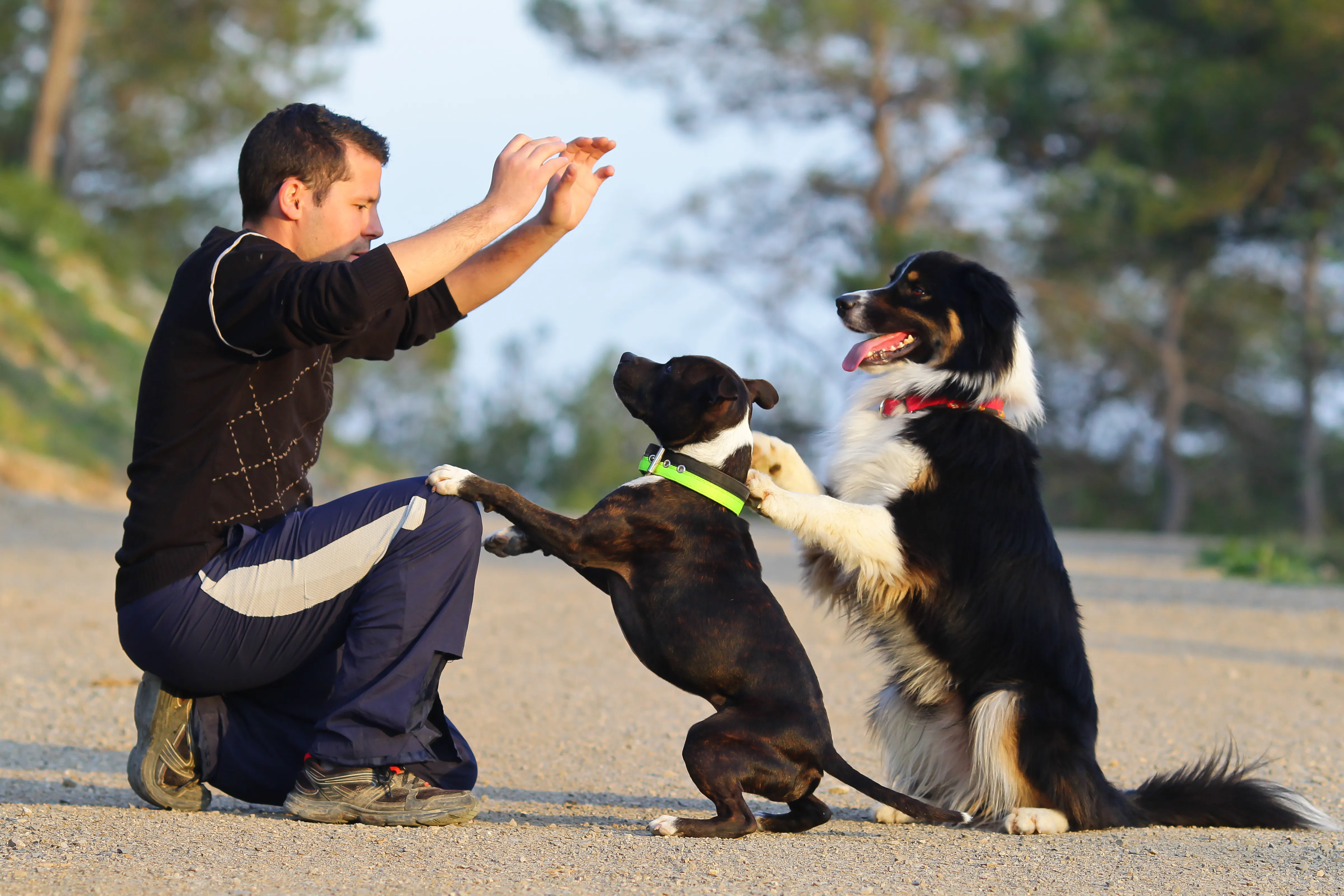
A classic among dog tricks and the basis for many others is giving paw. Although this trick is relatively easy to learn, you’ll still need a little patience (and a few treats) before your dog reliably responds with both paws on command.
How Do I Teach My Dog to “Give Paw”?
Ask your dog to “sit” and kneel beside them. Gently lift one paw from underneath with your flat hand while clearly saying the command “give paw”. Repeat this process until your dog lifts their paw on their own as soon as you give the command.
Using Treats Effectively
Then reward them immediately with a treat. Alternatively, you can hide a treat in your hand from the start and hold it close to your dog’s head. Your dog will try to reach it and will probably use their paw sooner or later.
If they place their paw on your hand with the treat, give them the reward. Clearly say “give paw” again as you do so. Over time, your furry friend will internalise the trick and lift both their left and right paw.
Trick 2: High Five or Wave
Clapping hands together, also known as a “high five” or “give me five”, is pretty cool among humans. No wonder this trick is becoming increasingly popular with dogs too. If your dog has already mastered giving paw, you’ll be able to teach this one fairly quickly.
How Do I Teach My Dog to “High Five”?
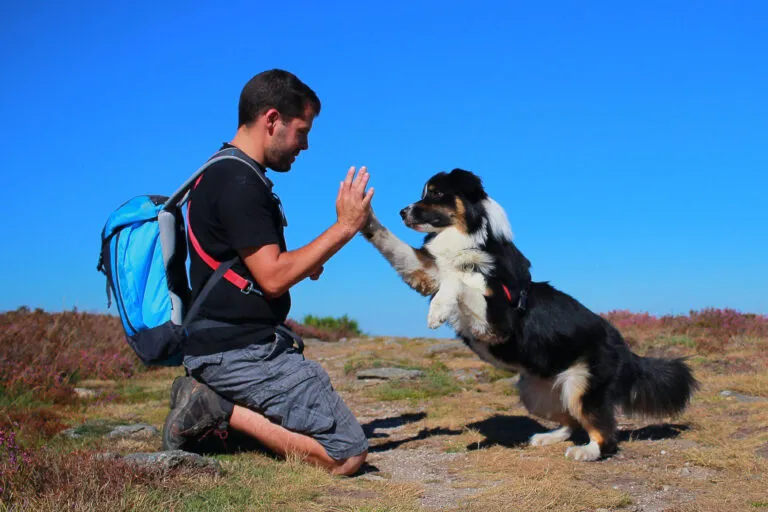
Hold your hand vertically (not horizontally as for giving paw) and say the familiar command “give paw”. As soon as your dog lifts their paw and touches your hand, reward them. At first, they may be a little confused about why they’re being rewarded before placing their paw fully on your hand.
But with time, they’ll get used to the new exercise. Once they’ve developed some routine, you can introduce a new command such as “give me five” or “high five”.
A Variation of the Trick
Later, you can try the whole thing from a distance. Gradually move further away so that when your dog lifts their paw, they can no longer touch your hand.
Still reward them as soon as they raise their paw. This teaches them that simply lifting the paw is enough. Eventually, when you’re standing further away and raise your hand vertically in greeting, they’ll “wave” back at you.
Practising tricks together strengthens the bond between you and your pet.
Trick 3: Sit Pretty
The “sit pretty” trick is especially popular, where your dog lifts both front paws from a sitting position. They need to shift their weight backwards, and it may take a while to find their balance. It’s important that your dog remains seated on their hindquarters throughout the exercise.
How Do I Teach My Dog to “Sit Pretty”?
As with the previous two exercises, start from the “sit” position. Lead your dog close to a wall and give the command “sit”. Ideally, they should begin with their back to the wall. This helps with balance at first and prevents them from standing up too quickly.
Now show them a treat and move it over their head with your hand. Be careful not to hold it too high, otherwise your dog will try to stand up.
Pay Attention to Correct Execution
As soon as your dog straightens up slightly and lifts their paws to reach the treat, say the command “sit pretty”. Reward them by giving the treat.
If they stand up instead, calmly say “sit” again and withhold the treat until they manage to lift only their front paws.
Trick 4: Step
This exercise comes from dog dancing. You stand facing your dog and alternately lift your left and right leg. At the same time, your dog lifts their right and left paw from a sitting position. It looks as though you’re both marching on the spot together.
How Do I Teach My Dog to “Step”?
This exercise again requires that your dog has mastered the “give paw” command. Ask your dog to “sit” and stand facing them. When you say the cue “paw”, lift your right leg instead of your hand.
Many dogs who already know “give paw” will instinctively lift their paw and orient themselves towards your leg. If your leg initially confuses them and they don’t follow the command, support them by placing your outstretched hand on your leg at first. Praise them as soon as they lift their paw almost in sync with your leg and give them a small treat.
Train Both Sides
Now repeat the same exercise with the other (left) leg. Your dog should lift the opposite paw. Repeat several times and gradually require more steps before rewarding them. In other words, only give the treat after they’ve alternated paw and leg two, four, six or more times in a row.
Trick 5: Touch & Close the Door
The aim of this trick is for your dog to touch an object with their paw and knock it over. Once they’ve mastered this, you can teach them to close doors with their paw.
How Do I Teach My Dog to Touch Objects?
Place an interesting object (for example, a plastic bottle or a cuddly toy) in the room and draw your dog’s attention to it. Then wait to see what happens.
If your dog approaches and touches the object, praise them enthusiastically and give a treat. Repeat the process by pointing to the object and rewarding them each time they touch it with their paw.
The next day, add the command “touch”. Each time your dog touches the object, say “touch”. After a few days, the signal will be so well established that your dog will respond even when you point to other items around the house and say “touch”.
The “Close the Door” Trick
To teach them to close doors, point to the door and say “touch”. When your dog touches it with their paw, reward them. To get them to actually close the door, extend the command to “touch! Door shut!” and only reward them once they push hard enough for it to close.
Gradually increase the distance from the door until it’s enough to point at it from the sofa or table and call out “touch! Door shut!”.
Trick 6: Roll Over
For this trick, your dog should roll over their back once until they’re back in the starting “down” position. Since some dogs don’t naturally like lying on their backs, this exercise requires a bit of finesse. And of course, treats as a reward will help.
How Do I Teach My Dog to Roll Over?
Ask your dog to “down”. They should be lying in front of you with their hindquarters and both elbows touching the floor. Hold a special treat right in front of their nose so their muzzle almost touches it.
Slowly move your hand in the direction you want them to roll, guiding it over the back of their head and along their back.
Offer a Little Help with Your Free Hand
Your dog will try to keep their nose on the treat and ideally turn over automatically. If they hesitate, gently support them with your other hand and carefully guide them onto their side.
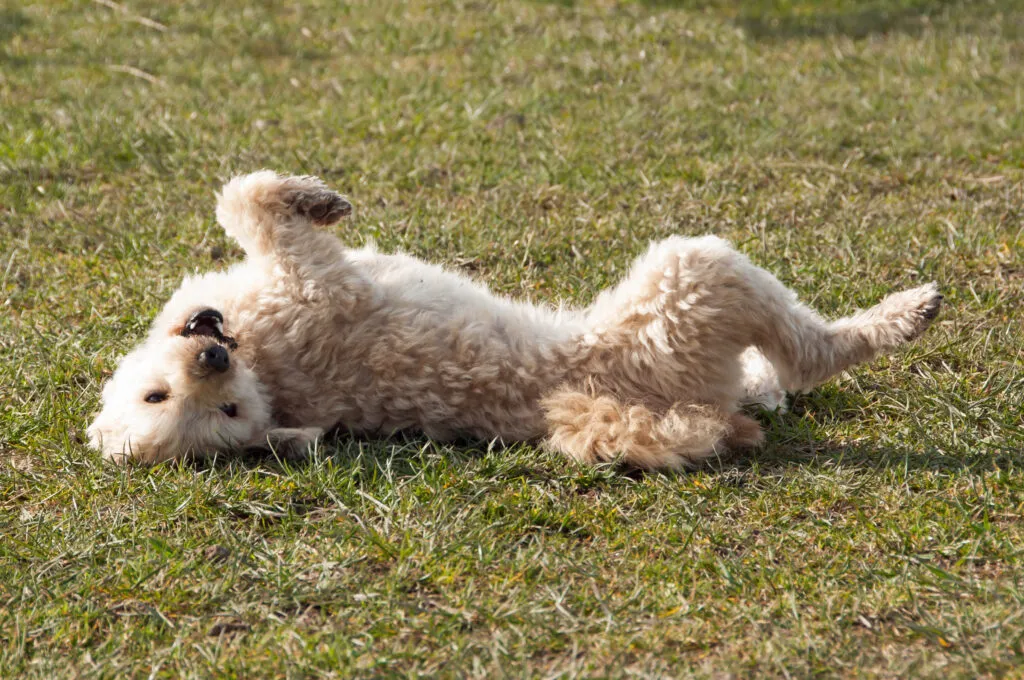
A happy dog mastering the roll over command, one of the most popular and impressive dog tricks to teach at home.
Trick 7: Crawl
It’s also fun to watch your dog crawl low across the floor, belly touching the ground as they slowly move forward. However, it may take a few practice sessions before they master this trick, as crawling isn’t a natural way for dogs to move.
How Do I Teach My Dog to Crawl?
Give the command “down” and kneel beside them. Place one hand lightly on their back and hold a treat in front of their nose with the other. Slowly draw the treat away from them, keeping it close to the ground. If your dog tries to stand up, gently guide them back down. Say the command “crawl” or a similar cue as you do so.
As soon as they manage to crawl forward a little – even if it’s just a small distance at first – praise them and give the treat. Repeat the exercise until your dog crawls forward on command.
Increase the Difficulty Slightly
After a few days, once they’ve mastered the movement, you can remove the hand from their back and sit a short distance away. Hold the treat close to the floor and give the command. Reward them as soon as they crawl. If they try to stand, say “down” again. Give the treat once they’ve crawled all the way to you.
Trick 8: Spin
The aim of this trick is for your dog to turn once around their own axis from a standing position. This movement may feel unfamiliar to some dogs at first, but once they realise there’s a reward waiting, most will quickly get the hang of it.
How Do I Teach My Dog to Spin?
Stand in front of your dog and, as with “roll over”, hold a treat close to their nose. Move your hand in a circular motion past their head and over their back so your dog has to turn in a circle to follow it. Say an appropriate command such as “spin”, “turn” or similar. Once they’ve completed a full turn, reward them.
Give the “Spin” Command from a Distance
Repeat the exercise until your dog can spin even when you’re further away. Gradually increase the distance until a small circular hand movement and the command alone are enough to make them turn.
Trick 9: Slalom Through Your Legs
Like stepping and spinning, weaving through your legs is a popular element in dog dancing. But even dogs who aren’t keen on “dancing” will enjoy this trick. However, your dog should be no taller than knee height – otherwise you may struggle to keep your balance while they pass through your legs.
How Do I Teach My Dog to Weave?
Stand with one foot in front of the other beside your dog. If your dog is on your right, place your left leg forward. In this position, hold your left hand with the treat far back through your legs (as close to the floor as possible) and then guide it back to the left side. Your dog will follow your hand and move through your legs to the left side.
Now step forward with your right leg and repeat the exercise on the other side. Use a command such as “through”, “slalom” or “zigzag”.
Pay Attention to Timing
At first, give your dog the treat fairly quickly so they don’t lose interest. Over time, you can take more steps forward before rewarding them. Once they’ve understood the principle, they’ll eventually manage without the lure of a treat.
Trick 10: Balance and Catch a Treat
This trick promises action and amazed looks from your audience. However, it’s not that easy to perform. Your dog will need a bit of skill, and you’ll need plenty of patience and a little know-how before the trick works perfectly.
How Do I Teach My Dog to Catch a Treat in Mid-Air?
First, practise catching with your dog. Gently toss a treat towards their mouth and say the command “catch” or “snap”. Instinctively, they’ll try to grab it. If they succeed, they’ve earned their reward.
If the treat falls to the floor, you’ll need to be quick and pick it up before your dog does. Over time, you can stand further away and throw the treat slightly to the right or left so your dog has to jump to catch it.
If you’d like to take this trick a step further, you can then train balancing the treat.
How Do I Teach My Dog to Balance a Treat on Their Nose?
Gently hold your dog’s muzzle with one hand and place a treat on their nose with the other. Say an appropriate command, such as “hold” or “steady”, and slowly remove your hand without letting the treat fall.
If your dog manages to keep their head still and balance the treat for a while, reward them. Once they’ve mastered both catching and balancing, you can combine the two tricks in the final step.
Snatch the Treat from the Nose
Place the treat on your dog’s nose and give the balancing command. Then say “catch”, prompting your dog to flick the treat off their nose and catch it in one movement.
This trick requires plenty of practice before it works reliably. Be patient and encourage your dog to keep trying. If it doesn’t work, simply go back a step and practise catching or balancing again.
Fancy Even More Dog Tricks?
Have you noticed? All 10 tricks follow a similar principle. There’s a clear command, a distinct hand movement and a reward at the end. As described, this can be a treat, but an appealing dog toy can also be used as a training aid.
Once you’ve understood this pattern, you’ll be able to teach many more tricks. For example, your dog could jump through your arms or fall over “as if shot” on the command “bang”. You can also teach practical tricks such as “fetch the slippers” or “bring the lead” with a little practice.
We hope you and your dog have lots of fun practising together!
zooplus Editorial Team
The zooplus editorial team consists of a dedicated team of experts with many years of experience in the field of animal husbandry: Luisa with her White Swiss Shepherd Elyos, Laura, Julio, and Florian. Together with a large network of animal experts, we work to make the zooplus magazine a trusted source of information for all animal owners and lovers. Our goal is to provide exciting animal knowledge and relevant information on the proper care of pets.
Being particularly social animals, dogs love the company of their pack. Nevertheless, every adult dog should be capable of staying on its own for short periods of time. This will need to be trained early on in life, as a fully-grown dog that has never been left alone will struggle to adapt.
Shoes, cables, phones, felt-tip pens, sofas, carpets or waste bins – nothing seems to be safe from the destructiveness of some dogs. Within a very short space of time, wild dogs can turn a home and all its furnishings upside down. But why do some dogs have destructive tendencies and how can they move away from this behaviour?
Are you thinking about adopting a rescue dog from abroad? Maybe you’ve met a ‘Rommie’ rescue dog out on a walk and become curious about what the adoption process entails?