{"url":"https://www.zooplus.co.uk/magazine/dog/dog-health-and-care/patellar-luxation-in-dogs-symptoms-causes-treatment","title":"Patellar Luxation in Dogs: Symptoms, Causes & Treatment","mag_id":414800,"is_single":true,"cat_name":"Dog","sub_cat_id":143,"sub_cat_name":"Dog Health and Care","cat_id":3410}
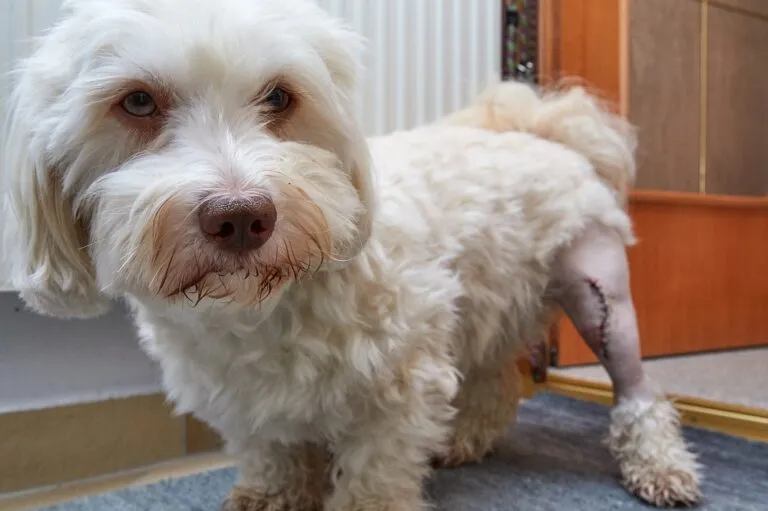
Recently, your little four-legged friend has started hopping on walks on just one hind leg, yet he doesn’t seem to be in any pain? If so, your dog may have a patellar luxation. Find out here what this means for your beloved pet and how you can recognise a patellar luxation in dogs.
Breed Predisposition: Which Breeds Are Particularly Affected?
If the kneecap (patella) shifts out of the so-called groove of the knee joint (trochlear sulcus), vets refer to this as luxatio patellae or patellar luxation – in simple terms, a dislocated kneecap.
Symptoms: What Are the Signs of Patellar Luxation in Dogs?
The symptoms vary depending on the type and severity of the patellar luxation. In general, this knee joint injury changes your dog’s gait .
What Does the Gait Look Like with Patellar Luxation?
Young dogs with a congenital, bilateral luxation typically show a crouched gait of the hind limbs. They often struggle with climbing stairs, jumping and/or lying down. If the patellar luxation occurs on only one side, affected dogs lift the affected leg for several steps at a time.
Older dogs with spontaneous luxations may, in addition to lameness, also show sudden onset pain. This occurs particularly when a traumatic incident has injured other structures in the knee (e.g. a cruciate ligament tear).
Diagnosis: How Is Patellar Luxation in Dogs Diagnosed?
If your dog is lame, this may be a sign of a serious musculoskeletal disorder or injury. It is therefore important to consult your vet if the lameness persists .
Examination by the Vet
To confirm a suspected patellar luxation in your dog, your vet will carefully feel the knee and check to what extent and in which direction the kneecap can be moved. To do this, they extend and flex the knee joint while gradually applying pressure to the patella.
Based on these observations, your vet will classify the kneecap displacement into four grades:
Grade
Symptoms
1
Manual and, rarely, spontaneous displacement is possible, but the kneecap usually slips back into place on its own (spontaneous repositioning).
2
Manual and spontaneous displacement and repositioning are possible.
3
The kneecap remains luxated and slips back out again after manual repositioning.
4
The kneecap is permanently luxated; manual repositioning is not possible.
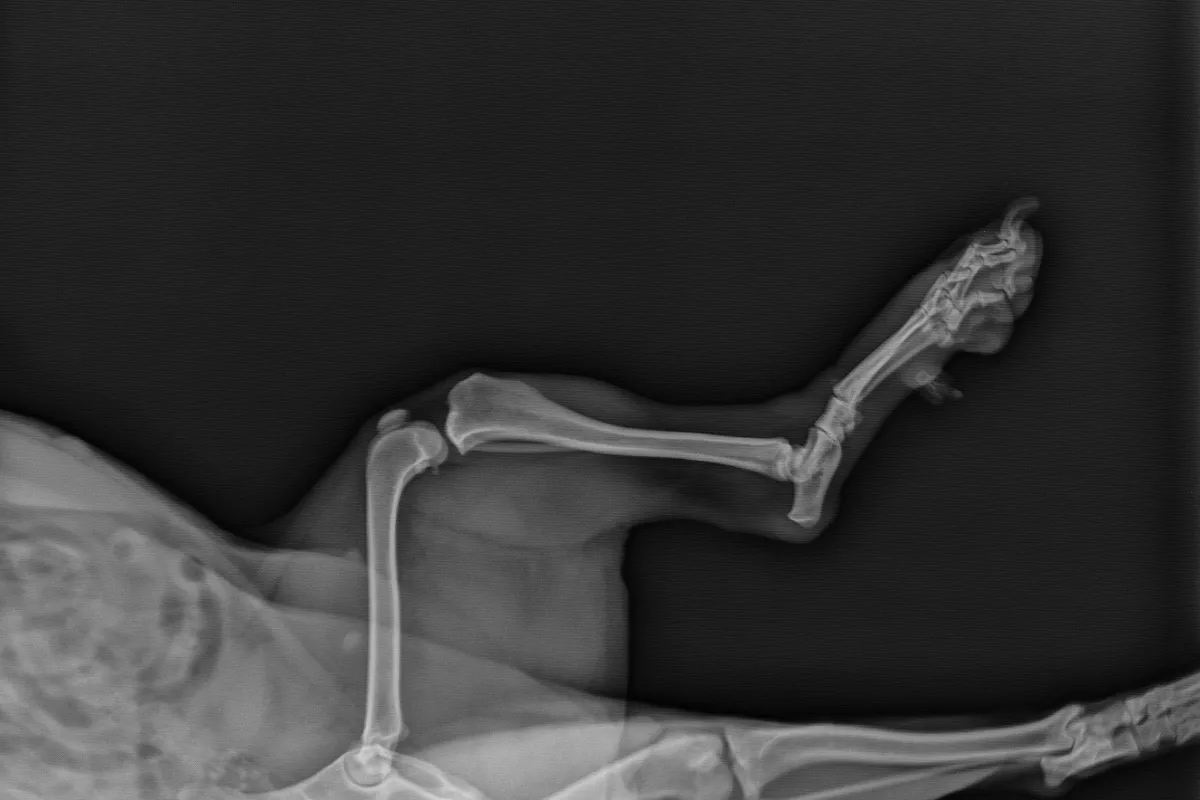
To take a closer look at the position of the kneecap and surrounding structures, your vet will then carry out an X-ray examination. This also helps to determine the angle of the luxation.
An X-ray image of a dog showing the left (top) and right knee (bottom).
Treatment: Is Surgery Necessary for Patellar Luxation in Dogs?
Surgery – yes or no? Not every case of kneecap displacement in dogs requires surgical treatment. The quality of life of dogs with grade 1 and sometimes grade 2 is often unaffected. If treatment is needed, milder cases may be managed with healthy weight reduction, physiotherapy and/or anti-inflammatory medication or pain relief as an alternative approach.
What Should You Do if Your Dog Has Patellar Luxation?
In higher grades and in cases of recurring pain, however, surgery is advisable, as it can relieve your dog’s discomfort. To do this, the vet deepens the trochlear groove, repositions a specific bony prominence at the top of the shin bone (tibial tuberosity) and tightens the joint capsule.
If the joint cartilage is damaged (osteoarthritis), your vet can reconstruct the joint surface using an implant. In addition, they can surgically correct severe misalignments of the bone axes of the thigh and lower leg.
What Happens after the Operation?
After knee surgery, your dog will need around six weeks to recover. During this time, sporting activities are off limits. Your vet will check the success of the treatment around two months after the procedure with an X-ray examination. Follow-up physiotherapy is recommended to gently build up the surrounding muscles through targeted exercises.
Surgery Costs: How Much Does Surgical Treatment for Patellar Luxation Cost?
The costs of the operation depend on many factors that determine the complexity of the procedure. In addition to the cost of the surgery itself, there are expenses for pre- and post-operative examinations, the prescribed medication (e.g. painkillers and antibiotics) and the materials used.
Treatment costs also increase during emergency services and at weekends, so an amount of several thousand euros can quickly be reached. You can ask your vet for a cost estimate .
Which Dog Insurance Covers the Treatment Costs?
Taking out dog health insurance in good time can protect you from high vet bills. There are surgery-only policies as well as comprehensive health insurance for dogs, which cover not only operations but also other veterinary treatments. Costs and benefits can therefore vary considerably. If you are considering taking out a policy, make sure you research thoroughly in advance and read the insurance terms and conditions carefully.
What Should I Feed My Dog if They Have Patellar Luxation?
To provide support, you can give your pet special dog food designed to promote mobility. It contains ingredients such as omega-3 fatty acids, which can have a positive effect on joint metabolism. In addition, supplements such as green-lipped mussel powder and glucosamine are available and may benefit the cartilage. However, you should discuss any change of diet with your vet beforehand.
Causes: What Triggers Patellar Luxation in Dogs?
In dogs, displacement of the kneecap can occur either permanently (static patellar luxation) or recurrently (habitual patellar luxation). Specialists also distinguish between inward (medial) and outward (lateral) displacement, which have different causes.
Lateral Patellar Luxation
This form of patellar luxation occurs less frequently, but is then seen more often in larger dogs. Vets suspect that the kneecap dislocates outwards because a twisting of the thigh bone and a misalignment of the femoral neck axis (coxa valga) shift the muscles connected to the kneecap.
Medial Patellar Luxation
Medial patellar luxation occurs most frequently. The cause may be either a congenital or acquired misalignment of the hind legs. As a result, the hind legs form an bow-legged shape, which, when the muscles contract, pushes the kneecap out of its natural position. If your dog is genetically predisposed, symptoms may occur on one or both sides, usually before the first year of life .
Prognosis: What Are the Chances of Recovery?
In recent years, the prognosis for kneecap displacement in dogs has improved significantly thanks to advances in veterinary surgical techniques. Although the outlook always depends on the severity of the displacement and the presence of cartilage damage, early surgery usually promises a good treatment outcome.
What Is the Life Expectancy of a Dog with Patellar Luxation?
Not every form of patellar luxation is accompanied by symptoms such as pain, lameness and/or restricted mobility. In dogs with grade 1, it often goes unnoticed – and if it is noticed, it usually does not need surgery.
In more severe forms, factors such as the cause of the patellar luxation, the timing of the diagnosis , as well as the age and the general health of the dog influence the success of treatment. In turn, the dog’s quality of life and ultimately life expectancy depend on these factors.
Prevention: Can Patellar Luxation in Dogs Be Prevented?
Although well-developed thigh muscles help to stabilise the position of the kneecap, this does not always prevent patellar luxation. Even more important is the so-called breeding health screening of breeding animals, to enable the birth of healthy puppies without congenital patellar luxation.
Important Note: The content provided for informational purposes only and is not intended to replace professional veterinary advice, diagnosis or treatment. If you have any questions or concerns about your pet's health, please always consult a licensed veterinarian.
This article was translated using Artificial Intelligence from the original German zooplus Magazine. While the original content was authored by industry experts and reviewed by our editorial team, this automated translation has not been human-edited and is provided for informational purposes.
At the Justus-Liebig-University of Giessen I was extensively trained as a veterinarian and was able to gain experience in various fields such as small animal, large animal and exotic animal medicine as well as pharmacology, pathology and food hygiene.
Since then, I have been working not only as a veterinary author, but also on my scientifically driven dissertation. My goal is to better protect animals from pathogenic bacterial organisms in the future.
Besides my veterinary knowledge, I also share my own experiences as a happy dog owner and can thus understand and enlighten fears and problems as well as other important questions about animal health.
When does a female dog’s first season begin? How often and for how long is a female dog in season? And what symptoms does a female dog in season show? Find out everything you need to know about these “hot days” and how you and your dog can get through the season calmly and stress-free in the following article.
16 February 2024 |Leishmaniasis is an infectious disease transmitted by sandflies and can often prove fatal for dogs. Find out how you can protect your dog and how to recognise and treat the disease should it emerge.
Neutering has traditionally been a standard veterinary practice, but is it universally recommended? What distinguishes neutering from sterilisation and what expenses should a dog owner anticipate? Here, you can discover all the essential information concerning the advantages and disadvantages of neutering your dog.