{"url":"https://www.zooplus.co.uk/magazine/dog/dog-health-and-care/physiotherapy-for-dogs","title":"Physiotherapy for Dogs","mag_id":417448,"is_single":true,"cat_name":"Dog","sub_cat_id":143,"sub_cat_name":"Dog Health and Care","cat_id":3410}
Is your furry friend suffering from osteoarthritis or has he been diagnosed with a painful slipped disc? If so, it may be time to consider physiotherapy for your dog. Read on to find out when physiotherapy for dogs can help and what risks it may involve.
Physiotherapy – also known as physical therapy – is considered a conservative form of treatment. Unlike invasive surgery, physiotherapy treatments are non-invasive.
Physiotherapy works by the animal physiotherapist treating specific areas of the body externally. For example, if your dog has joint pain or inflamed tissue, physiotherapy can help improve circulation and speed up the healing process.
Areas of Application: When Is Physiotherapy for Dogs Useful?
Physiotherapy is used for a range of conditions. This form of treatment mainly focuses on problems affecting the musculoskeletal system, such as the muscles or joints.
Physiotherapy may be beneficial in the following cases:
for joint conditions (e.g. osteoarthritis, misalignments)
as part of pain management
for disorders affecting the skeletal muscles (e.g. muscle weakness, strains)
before and after operations (e.g. following accidents)
to improve mobility (e.g. in older or sporty dogs)
What Types of Physiotherapy Are Available for Dogs?
There are many different types of physiotherapy. To restore or improve bodily functions, canine physiotherapists use the following methods:
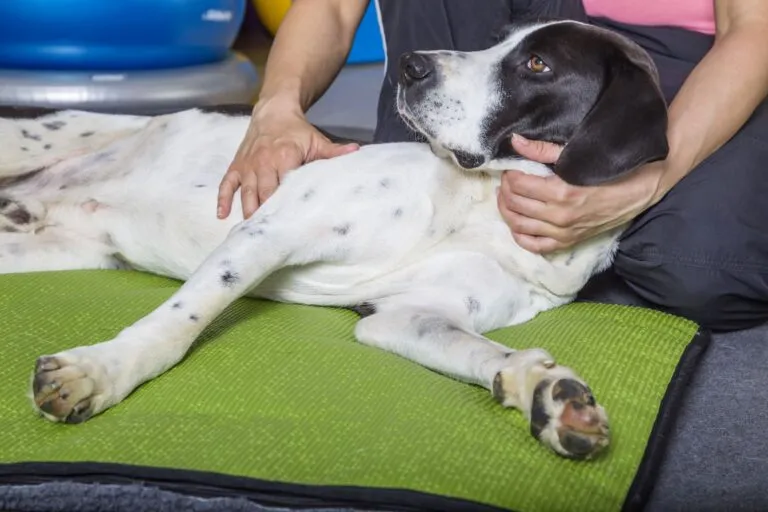
Massage
Injured dogs are often unable to move their muscles properly for a long period of time. This can cause the muscles to tense up and stick to the surrounding connective tissue.
By massaging the affected areas using pressure, the canine physiotherapist can loosen these sometimes painful adhesions. Massages also stimulate circulation and help relieve stress.
Exercise Therapy
Targeted movements speed up muscle building and improve coordination. The canine physiotherapist can either passively stretch the limbs or actively train them through slalom exercises, trampoline exercises or hurdle training.
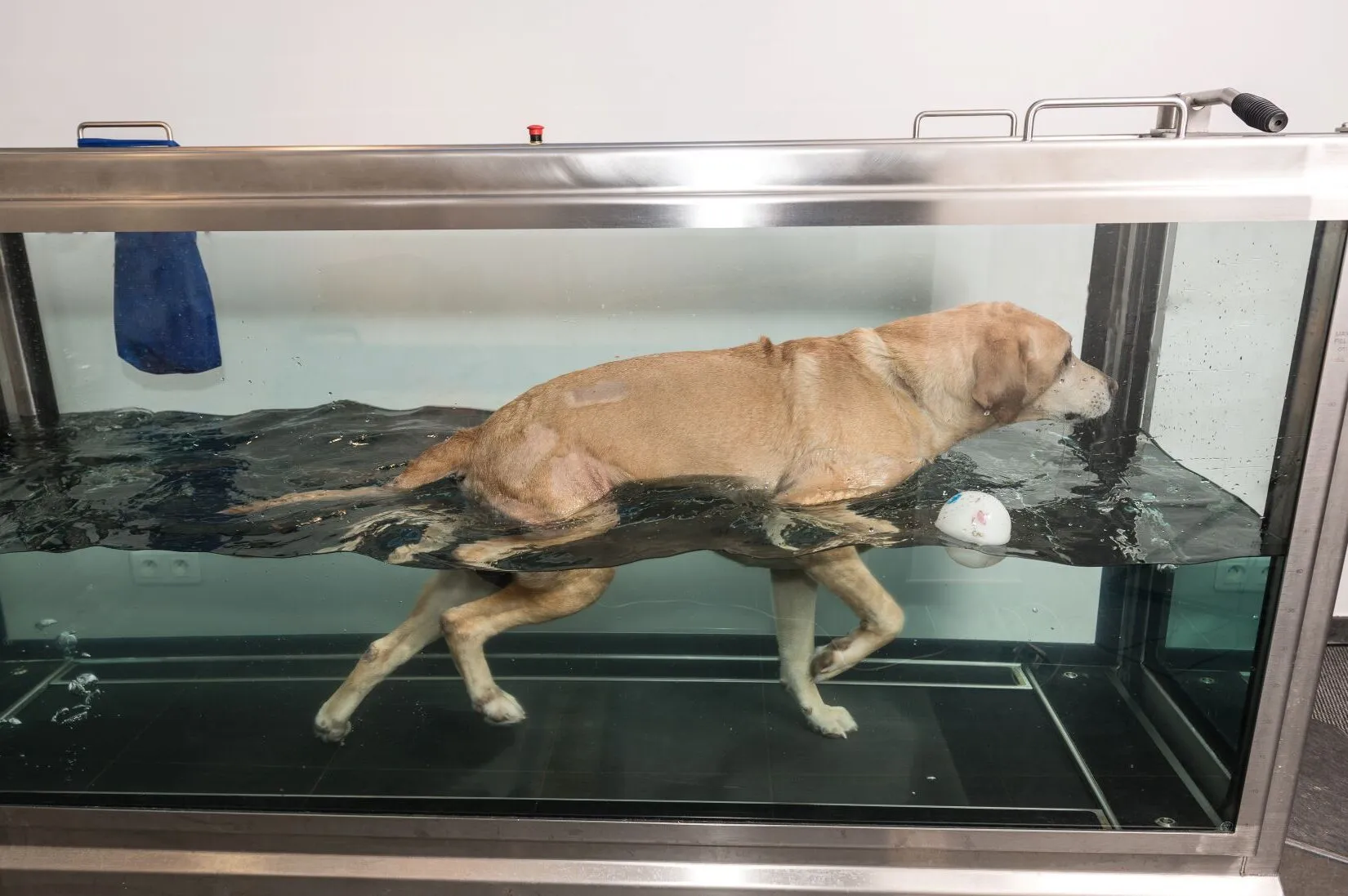
Underwater Treadmill
Another form of physiotherapy for dogs involves the use of underwater treadmills. Therapists use the water to reduce the patients’ body weight.
The greater resistance also makes the training more effective than exercising in air, allowing muscle mass to increase while being gentle on the joints. Animal physiotherapists often use this form of treatment for chronic joint problems or obesity.
With the help of underwater treadmills, dogs can train their muscles in a way that is gentle on the joints.
Thermotherapy
Different temperatures support the healing process. Heat improves circulation and relaxes the muscles, while cold helps reduce inflammation and acute pain.
Acupuncture
Acupuncture has a long tradition in both human and veterinary medicine. By inserting fine needles into specific areas of the body, the canine physiotherapist can reduce your dog’s chronic pain perception. This effect is partly due to improved circulation and the stimulation of the autonomic nervous system through the triggered impulses.
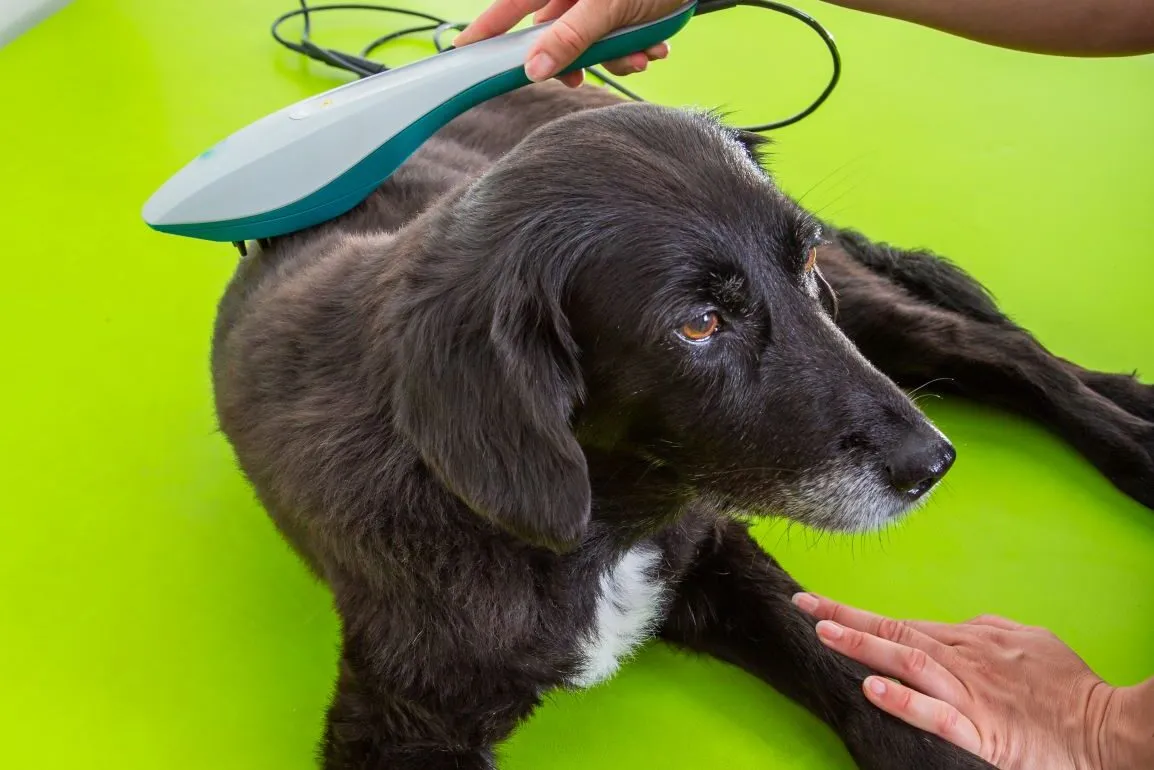
Laser Therapy
Even though laser therapy may sound alarming at first, there is no need to worry. The laser is not painful for your dog. Laser beams consist of concentrated light rays that penetrate through the skin into deeper tissue. This improves circulation, speeds up healing processes and relieves pain.
Vets can adjust the laser beams individually, which is why they are often used for muscle and tissue injuries.
Laser beams penetrate deep tissue and stimulate cells to heal.
Medium-Frequency Electrotherapy (MET)
Medium-frequency electrotherapy (MET) is also part of the range of physiotherapy treatments for dogs. In this treatment, the canine physiotherapist attaches electrodes to your dog’s skin. These release electrical impulses that stimulate the muscle fibres spontaneously and naturally. As a result, the skeletal muscles regenerate more quickly.
What Are the Risks of Physiotherapy for Dogs?
If the canine physiotherapist works correctly, the risk of side effects is very low. However, if they overstrain the areas being treated or fail to adapt the physiotherapy to your dog’s current state of health, injuries or inflammatory reactions may occur. It is therefore important to always adapt physical therapy to the latest health condition.
What Should You Keep in Mind after Canine Physiotherapy?
Once the vet has finished your dog’s physiotherapy, this usually does not mean that the body has fully recovered.
Especially after serious injuries or in the case of chronic conditions such as joint wear and tear, it is important to continue strengthening the muscles and joints. Ask your animal physiotherapist to show you which exercises you can do yourself at home and what you need to pay attention to.
If you notice that your dog is still limping or starts limping more again, it is advisable to visit the vet once more. They can then decide whether further physiotherapy or possibly surgery is needed.
Important Note: The content provided for informational purposes only and is not intended to replace professional veterinary advice, diagnosis or treatment. If you have any questions or concerns about your pet's health, please always consult a licensed veterinarian.
This article was translated using Artificial Intelligence from the original German zooplus Magazine. While the original content was authored by industry experts and reviewed by our editorial team, this automated translation has not been human-edited and is provided for informational purposes.
zooplus Editorial Team
The zooplus editorial team consists of a dedicated team of experts with many years of experience in the field of animal husbandry: Luisa with her White Swiss Shepherd Elyos, Laura, Julio, and Florian. Together with a large network of animal experts, we work to make the zooplus magazine a trusted source of information for all animal owners and lovers. Our goal is to provide exciting animal knowledge and relevant information on the proper care of pets.
When does a female dog’s first season begin? How often and for how long is a female dog in season? And what symptoms does a female dog in season show? Find out everything you need to know about these “hot days” and how you and your dog can get through the season calmly and stress-free in the following article.
16 February 2024 |Leishmaniasis is an infectious disease transmitted by sandflies and can often prove fatal for dogs. Find out how you can protect your dog and how to recognise and treat the disease should it emerge.
Neutering has traditionally been a standard veterinary practice, but is it universally recommended? What distinguishes neutering from sterilisation and what expenses should a dog owner anticipate? Here, you can discover all the essential information concerning the advantages and disadvantages of neutering your dog.