{"url":"https://www.zooplus.co.uk/magazine/cat/cat-travel-and-transport/moving-with-cats","title":"Moving with Cats – How to Make it (Almost) Stress-Free!","mag_id":240946,"is_single":true,"cat_name":"Cat","sub_cat_id":24423,"sub_cat_name":"Travelling with a cat","cat_id":138}
When moving house, many things can go wrong – especially breaking a treasured possession. But when you move with your cat, something can also happen to them. That’s why this article shares the most important tips and tricks for moving house with cats.
Preparations: What should you consider when moving with cats?
Cats are considered very sensitive, which is why a move should be carefully planned. If you don’t do this, a number of scenarios can arise that neither you nor your cat would want.
How Well Do Cats Cope With Moving House?
For example, it could happen that your cat gets lost during the move. This can quickly end badly, especially for indoor cats. This is because they don’t recognise dangers such as cars or trains as quickly as outdoor cats.
If you don’t prepare your cat sufficiently for the move, it can also have a negative impact on their mental wellbeing – and as we know, mind and body are closely linked, meaning that illnesses can develop as a result. The better prepared you and your kitty are, the higher the chance that your furry friend will cope with the change of territory unharmed.
Packing and Setting Up Safely
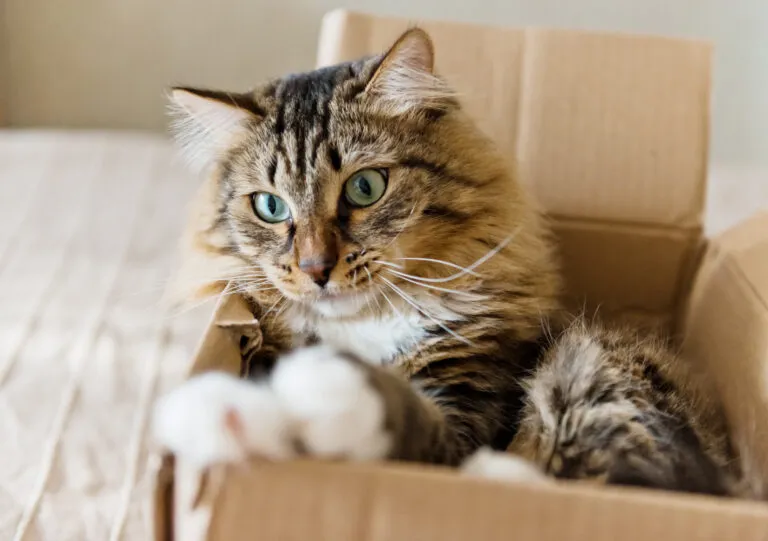
When you pack your belongings into boxes, most cats have great fun with the moving boxes lying around. However, make sure not to leave sharp or dangerous objects lying around that your cat could injure themselves on. This also includes mirrors leaning against the wall or sewing items, which would normally be kept in a cupboard.
Set up the new home to be cat-friendly and cat-proof right from the start. If available, secure the balcony with a cat safety net – in most cases, you will need your landlord’s consent for this.
Also look out for other potential sources of danger and, if needed, get a tilt-window guard. If you’re moving in with someone who also has a cat, you can already start to “exchange scents” by swapping used cuddle blankets.
How do Cats React to Moving House?
Anyone who has ever moved knows exactly how stressful a move can be. And all the hustle and bustle doesn’t leave our furry friends unaffected either. Some react with insecurity to the changes: the shifted and dismantled furniture, the lack of hiding places, the tension of their owners – all of this also affects the cat.
After weeks of preparation, the day finally arrives when all the heavy boxes are taken to the new home. But what happens to our beloved pets on this day? After all, they are rather out of place amid the chaos, but of course they must not be forgotten at the end of the move.
In Safe Hands
So that you’re not even more stressed and don’t have to divide your already stretched attention with your cat on the day, it’s best during this phase to leave them with a trusted person. This person should already know your cat and be familiar with their feeding habits.
At the end of the day or one night later you can then collect your cat again. This way, you’re not only doing yourself a favour, but also sparing your cat a great deal of stress.
Moving Day with Cats
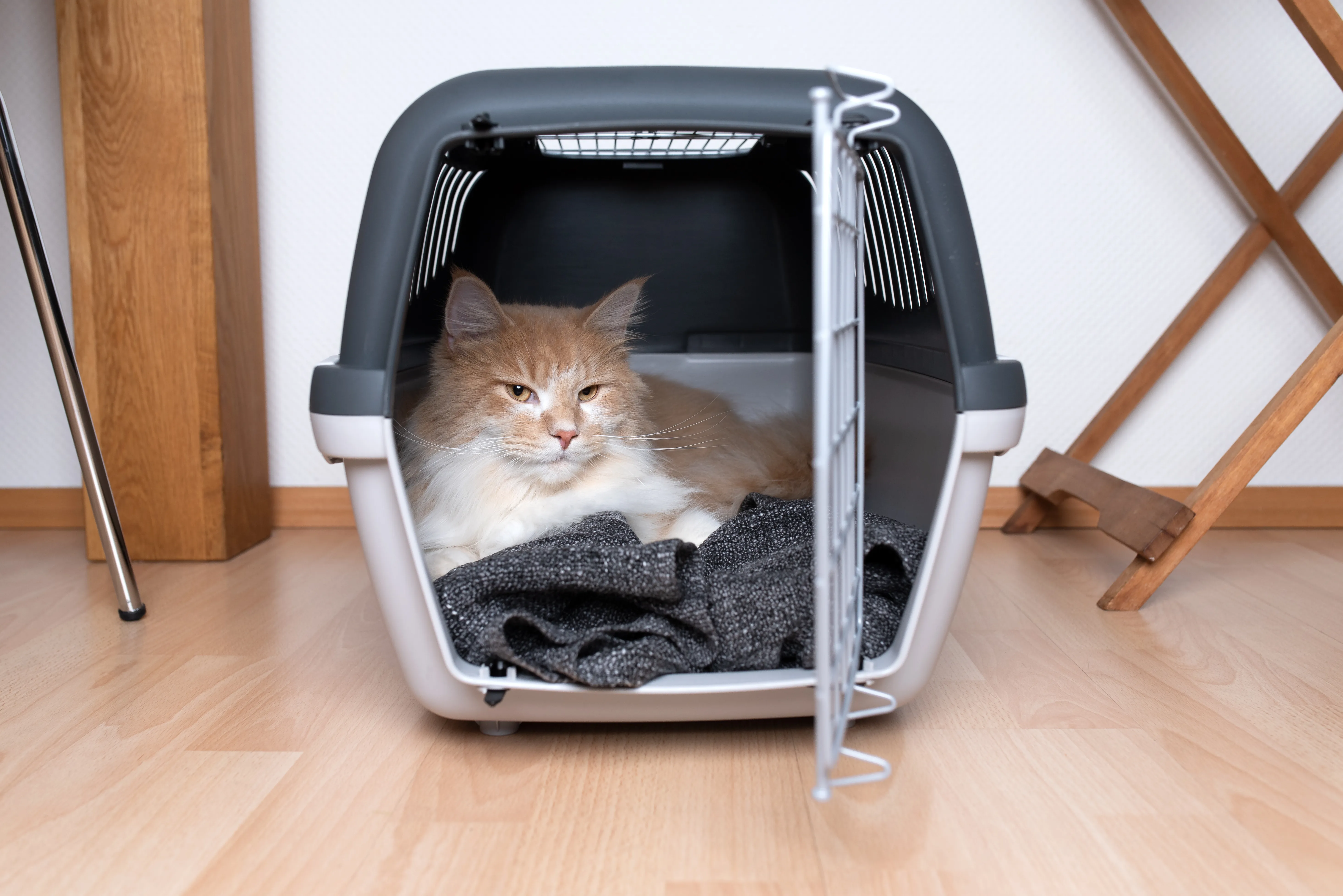
If you can’t find a suitable person to look after your cat on moving day, your cat will need to move with you. To prepare, for example, get the familiar carrier ready for your cat and line it with their favourite toys and blankets. Also attach to the carrier a note with your phone number and new address.
Creating a Place to Retreat
If they are already used to a basket, the move will be less stressful for them. To help them get used to it, you can set up the carrier at home weeks before the move and make it comfortable for your cat – with cat treats inside the basket, they’ll get used to it even faster.
Ideally, however, you should plan things so that your cat spends as little time as possible in the carrier. Until it’s time for transport, you can do this by keeping a room free for your cat, with a cat bed, a food bowl and a water bowl inside. You should also remember a clean litter tray. Once you’ve packed the last pieces of furniture and boxes, your cat should be the last thing you take with you.
A tip: get your cat microchipped and register them with an official pet database so they can be found more easily if they go missing.
How Long Do Cats Need to Settle Into a New Home?
Most cats settle into their new home quite quickly. To make sure this works for you too, you should follow these tips:
Place (scratching) furniture and objects that your cat is already familiar with and that give them a feeling of home.
Create a cosy place to retreat for your cat from day one by lining it with familiar blankets or soft toys.
Attach to your cat’s collar a capsule containing a note with your phone number and address. Alternatively, you can also have a tag engraved with the information. Until your cat has accepted the new home, they should always wear this.
Only let your cat explore the new rooms and the garden once everything has been properly put away and your cat has had a few days or weeks to settle in.
Be patient and respond to your cat’s needs. It can take days or weeks before your cat feels comfortable in their new surroundings.
If your cat shows marked behavioural changes such as aggression or anxiety after the move, you should discuss this with your vet. This is important, as a move can lead to depression in cats.
Outdoor Cats: the First Adventure After Moving
If your cat is an outdoor cat, they should first get used to the new home before exploring the new territory. This is because the risk of running away is very high in the first few days after a move. It’s particularly high if you’ve only moved a few streets away. Your cat may try to return to their old territory.
How Long Should a Cat Stay Indoors After Moving?
Once your cat has accepted the new home, you can venture outside for the first walks together. Accompany them at first and call them back inside after a short time for feeding.
After about a month, most outdoor cats should be ready for their first solo explorations. However, bear in mind that this timing varies from cat to cat and should be adapted to your individual pet. A GPS tracker for cats can also give you extra peace of mind if your outdoor cat ever gets lost.
Get your cat used to a travel carrier well in advance, so she feels comfortable using it for vet visits or during a house move.
How Can You Calm Your Cat After a Move?
If your cat is particularly prone to stress or the move will take a long time due to the distance to the new home, you can talk to your vet in advance about the use of calming remedies. This also applies if your cat has difficulty adjusting to the changed environment.
Typical relaxation aids for cats include, for example, homeopathic remedies (Bach flower remedies for cats) or pheromones for cats.
You’ll find suitable products to help your cat cope with stress in the zooplus shop:
At the Justus-Liebig-University of Giessen I was extensively trained as a veterinarian and was able to gain experience in various fields such as small animal, large animal and exotic animal medicine as well as pharmacology, pathology and food hygiene.
Since then, I have been working not only as a veterinary author, but also on my scientifically driven dissertation. My goal is to better protect animals from pathogenic bacterial organisms in the future.
Besides my veterinary knowledge, I also share my own experiences as a happy dog owner and can thus understand and enlighten fears and problems as well as other important questions about animal health.
When moving house, many things can go wrong – especially breaking a treasured possession. But when you move with your cat, something can also happen to them. That’s why this article shares the most important tips and tricks for moving house with cats.
The cat boarding cattery is completely full, the friendly neighbour has no time, and your own family lives far too far away. If you want to go on holiday with your cat, there are plenty of things to consider. In the following article, you’ll find important information and tips about travelling with your cat.
Taking your cat on a cruise? What sounds crazy is actually possible. After all, commuters too sometimes have to take their cat with them on the ferry. We'll give you some tips on how to make travelling by ship as pleasant as possible both for your cat and also the fellow passengers!