{"url":"https://www.zooplus.co.uk/magazine/cat/cat-health-and-care/mange-in-cats","title":"Mange in Cats","mag_id":402853,"is_single":true,"cat_name":"Cat","sub_cat_id":152,"sub_cat_name":"Cat Health and Care","cat_id":138}
Mange in cats is a contagious skin disease caused by various types of mange mites. These mites burrow into a cat’s skin, leading to sometimes severe skin changes. Read on to learn more about the symptoms, causes and treatment.
Feline mange is an itchy skin condition caused by different types of mange mites. If left untreated, mange in cats can lead to severe skin inflammation and other health complications.
It is therefore important to have your cat treated for mange by a vet as early as possible.
Which Cats are Most Often Affected?
In principle, any cat can become infested with mange mites. However, the disease only tends to occur in cats whose immune system is already weakened by other factors (e.g. underlying illness, malnutrition). Stray or sick cats therefore have a higher risk of developing the disease.
Can Cats Pass Mange on to Humans?
Yes, humans can become infected with mange mites through contact with an affected cat – so it is a zoonotic disease.
In humans, mite infestation can also cause skin irritation, although in people it usually heals on its own.
Symptoms: What Does Mange Look Like in Cats?
The signs of mange in cats depend primarily on the type of mite causing the disease. Typical signs include:
Itching and frequent scratching in the affected areas of skin
If bacteria enter the wounds through constant scratching, secondary bacterial infections can develop, making the condition worse.
Which Parts of the Body are Most Often Affected?
The part of the body affected by feline mange depends on the type of mite. While ear mites in cats mainly infest the ears, head mange usually starts on the head, and fox mange begins on the belly and flanks.
When Should I See a Vet?
As soon as you notice signs of a parasite infestation in your cat, you should consult a vet. This is important not only for your cat’s health, but also for the wellbeing of your family and yourself.
Treatment: How is Mange in Cats Managed?
Long-term treatment of your cat’s mange requires several measures. These include not only medication but also hygiene practices:
Which Medications Help with Feline Mange?
To rid your cat of mites in the long term, it is necessary to treat all other animals living in the household as well. Depending on the type of mite, there are various anti-mite treatments for cats available in different forms (e.g. spot-on, ointment, drops, tablets).
It may also be necessary to give your cat antibiotics to combat secondary bacterial infections.
Are there Home Remedies?
Various reports mention home remedies said to relieve feline mange – these include, for example, apple cider vinegar or coconut oil for cats.
Please note, however, that these home remedies have no proven effect and do not specifically target mite infestations. In the worst case, self-medicating with home remedies can even make the condition worse, so you should always consult a vet.
How Can I Remove Mites from the Environment?
To prevent your cat from becoming re-infested after successful treatment, it is important to remove mites from your cat’s entire environment as far as possible during treatment.
Wash all textiles your cat comes into contact with at a minimum of 60 degrees Celsius. Also vacuum all carpets and upholstered furniture, and disinfect surfaces with cleaning products suitable for controlling mites.
Causes: What Triggers Mange in Cats?
There are various types of mites that can cause that:
Ear Mange in Cats (Otodectes mange)
One common type for felines is ear mange. You can find more information about this type of mite and how to treat it in our article “Ear mites in cats”.
Fox Mange in Cats (Sarcoptes mange)
Burrowing mites (Sarcoptes mites) are particularly common in wild animals, especially foxes. Stray cats or outdoor cats that roam fields or forests can therefore become infected with fox mange. In healthy cats, however, fox mange is relatively rare.
Head Mange in Cats (Notoedres mange)
The burrowing mite (Notoedres cati) tunnels into a cat’s skin and triggers a strong allergic reaction. Head mange typically starts on the head (ears, face, neck) and often spreads from there to other parts of the body – in such cases, a generalised form of head mange is present.
How do Cats Catch Mange Mites?
There are several ways your cat can become infected with mange mites:
Direct contact: if your cat has direct contact with an infected cat or another infected animal, the mites can transfer to your cat
Indirect contact with contaminated objects: Mites can be present in your cat’s surroundings (e.g. on carpets, clothing or brushes). If your cat comes into contact with these items, she can become infested with mites.
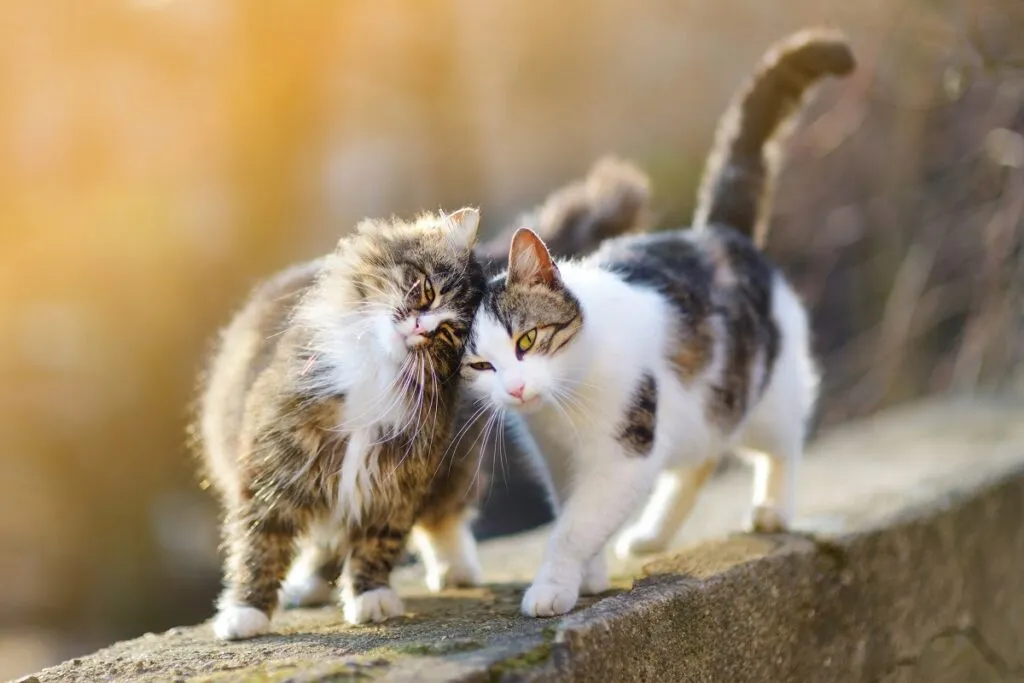
Cats can catch mange through direct contact with an infected cat.
Prognosis: Is Mange Curable?
The outlook for a cat with mange depends on various factors. In addition to any underlying illnesses and the extent of the mite infestation, the type of mite plays a particularly important role.
Can Mange in Cats be Fatal?
Notoedres mange can cause particularly severe illness in cats. Sadly, it is not uncommon for the generalised form of mange to lead to the death of the affected cat if left untreated.
Prevention: How to Avoid Feline Mange
To prevent your cat from becoming infested with mites in the first place, it is advisable to use special parasite protection products. If you take in another cat, you should initially keep her in quarantine and wait until the parasite test result is negative.
As mange usually only develops in cats with weakened immune systems, it is also important to have your cat checked regularly by a vet and to ensure she has a balanced, species-appropriate diet.
Important Note: The content provided for informational purposes only and is not intended to replace professional veterinary advice, diagnosis or treatment. If you have any questions or concerns about your pet's health, please always consult a licensed veterinarian.
"A life without a pug is possible, but pointless," Loriot once said. I would unreservedly agree and add: "A life without horse, cat and rabbit as well!" My heart beats for all animals big and small and I have the great fortune to be able to write about my passion as a freelance author. With my articles I would like to raise awareness for animal welfare and give useful tips to animal lovers.
It’s not just the right type of litter tray that will make your cat happy, but also the right type of cat litter. The best litters are ones that are very absorbent and ideally neutralise odours too, but finding the perfect cat litter can be no easy task with so many varieties on offer from natural clumping litter made of clay, non-clumping litter, litter made of wood or silica.
Are you worried because your ageing feline friend no longer responds to her name? Or are you wondering why your house cat can’t find her food bowl straight away? Your cat has probably reached a proud senior age and now needs special care. Find out how to spot the symptoms of senility in your cat early on and give her an age-appropriate life.
Coconut oil is very popular among cat owners as it provides natural protection from ticks and other parasites. In addition, this on-trend product is said to have numerous benefits. We will give you tips and information on how and when coconut oil can be a practical alternative to conventional remedies.