{"url":"https://www.zooplus.co.uk/magazine/cat/cat-health-and-care/fip-in-cats-feline-infectious-peritonitis","title":"FIP in Cats (Feline Infectious Peritonitis): Symptoms and Treatment","mag_id":389876,"is_single":true,"cat_name":"Cat","sub_cat_id":152,"sub_cat_name":"Cat Health and Care","cat_id":138}
Feline Infectious Peritonitis (FIP) is one of the most feared infectious diseases in cats. This article summarises the most important information about FIP in cats and explains how you can protect your cat from FIP and what treatment options are available.
Feline Infectious Peritonitis, or FIP for short, is an infectious viral disease in cats that is often associated with inflammation of the abdominal lining. This feline disease is triggered by a mutation of the feline coronavirus (FCoV).
How dangerous is FIP in cats?
In the past, FIP was considered a certain death sentence for affected cats. However, veterinarians worldwide have worked intensively to research effective medicines against what was previously a fatal feline disease. There are now promising treatment options.
Causes: How does FIP develop in cats?
When looking at the causes of the feline disease FIP, it is important to clearly distinguish between an FCoV infection and Feline Infectious Peritonitis itself.
FCoV is widespread among cats. Animals become infected through contact with faeces, saliva and nasal secretions, as well as via contaminated objects. Transmission from the mother to the kittens also often occurs. A feline coronavirus infection only turns into FIP in cats through mutation.
By the way:Humans do not become infected with the feline coronavirus, but big cats do.
Risk factors: immune system and number of cats
In healthy cats with an intact immune system, the body appears to be able to prevent the mutation from FCoV to FIP.
If the cat’s immune system is weakened, however, it cannot keep the virus under control. This is why cats between six months and two years old, and cats over 14 are particularly affected by FIP.
Another risk factor is the close confinement of many cats living together. The cats repeatedly infect one another. This not only increases the viral load in the cat, but also the likelihood of a mutation of the feline virus.
FIP transmission: How high is the risk of infection?
As contagious as the feline coronavirus is, it is just as unlikely to become infected with the mutated variant that causes FIP. If one cat in the household tests positive for FIP, this does not automatically mean that all the others will become infected. Nevertheless, infected cats should be separated from the other animals in your household.
Symptoms: What are the most important signs of FIP in cats?
When it comes to symptoms, a distinction must also be made between an infection with the generally harmless coronavirus and those of an FIP disease. In addition, the disease occurs in two phases.
The feline coronavirus usually causes no or only mild symptoms such as mild diarrhoea and cat flu.
However, if the virus mutates into the FIP virus (FIPV), the first symptoms appear after varying lengths of time.
What happens in phase 1?
In the first phase of the disease, affected cats tend to show non-specific symptoms such as:
At first, these initial symptoms subside again. After some time, the symptoms of the second phase appear.
Which symptoms are typical of phase 2?
In the second phase, a distinction is made between the wet and dry forms of FIP:
Wet (exudative) FIP: In this form of FIP, the cat’s abdominal lining becomes inflamed (peritonitis). Fluid leaks out and accumulates in the abdominal cavity (ascites). A distended abdomen is therefore typical, while the cat continues to lose weight. In some cases, the inflammation spreads to the lining of the chest, and fluid also accumulates in the chest cavity. In addition to these symptoms, anaemia and jaundice (icterus) often occur.
Dry FIP: Unlike the wet form, dry FIP in cats is not quite so easy to recognise. The cats usually have recurrent bouts of fever and in some cases breathing difficulties. Internal organs such as the liver, spleen or kidneys are inflamed.
The most important FIP symptoms at a glance:
Fever
Apathy
Weight loss
Anaemia
Increase in abdominal girth (due to fluid accumulation caused by inflammation of the abdominal lining)
Jaundice (icterus)
Organ failure
Central nervous system symptoms (incoordination, weakness, ataxia, seizures) if the brain is affected
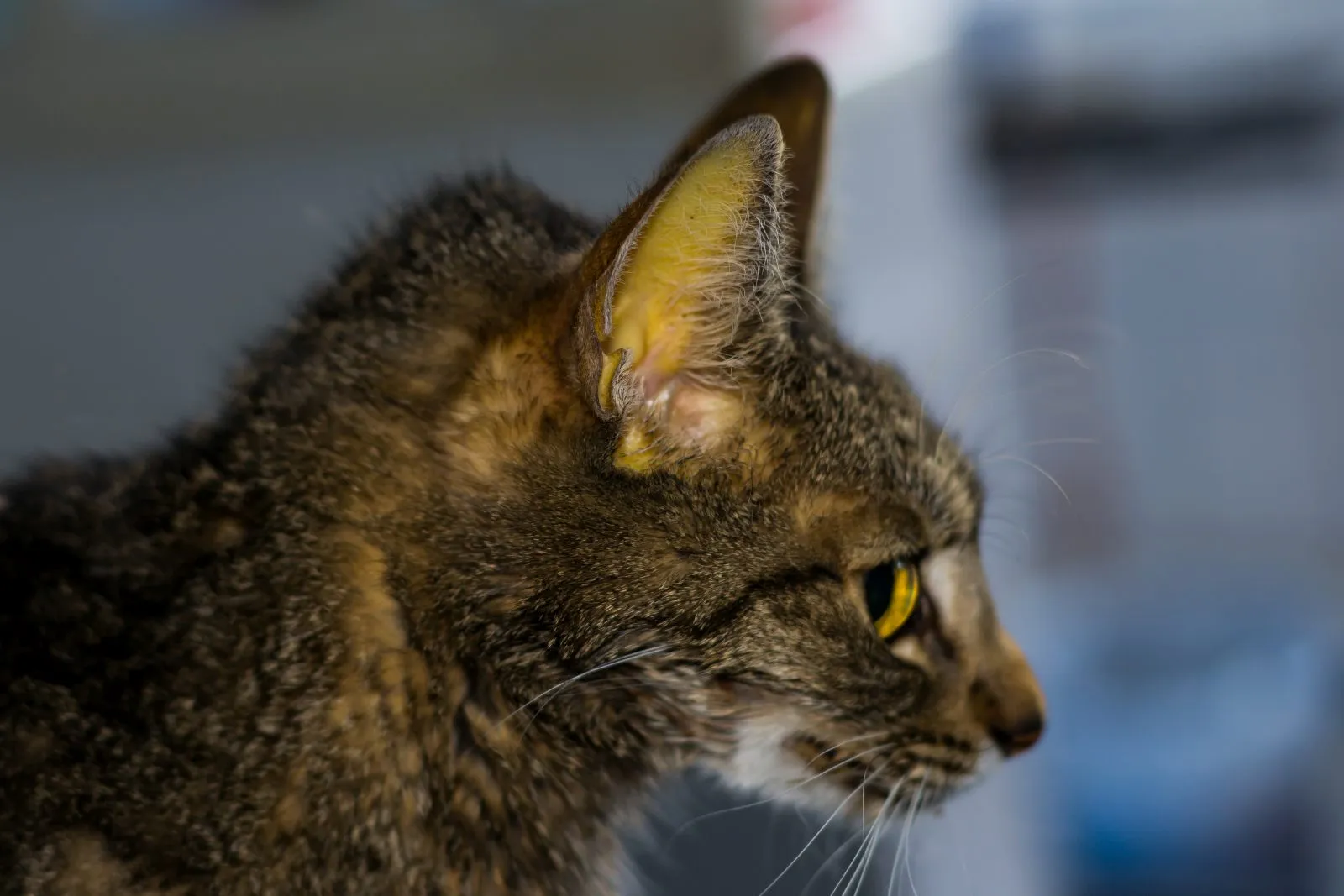
This cat shows yellowish discolouration of the mucous membranes due to an FIP infection.
Diagnosis: How can FIP be diagnosed in cats?
A general clinical examination and the cat’s vaccination status provide initial clues for diagnosis. If Feline Infectious Peritonitis is suspected, the vet will initiate further tests.
Important to know: There is no definitive test that can conclusively diagnose FIP in cats. Instead, diagnosis is like a puzzle made up of many individual pieces. If many indicators come together, infection is likely.
These tests are carried out by the vet if FIP is suspected
Blood test: Typical changes in the blood profile, such as a lack of red blood cells (anaemia), lymphopenia, increased bilirubin levels, elevated ALT levels and a low albumin–globulin ratio, support the suspicion.
Detection of antibodies: The detection of antibodies alone (“FIP titre”) does not yet prove the disease. However, cats suffering from FIP usually have a much higher number of antibodies.
Direct pathogen detection (PCR test): The FIP virus can be detected directly in blood, faeces or abdominal fluid. However, a negative test result does not rule out FIP in cats.
If neurological symptoms are present, sampling and examination of cerebrospinal fluid may be necessary for direct pathogen detection.
Pathological examination: Sadly but true – the definitive diagnosis of FIP is often only made by a pathologist after the cat has died.
Treatment: Can Feline Infectious Peritonitis be treated?
FIP in cats was long considered incurable. Today, however, there are options to treat affected cats, for example with the antiviral active ingredient GS-441524. This is a protease inhibitor that is able to destroy the viruses.
GS-441524 can be administered, among other forms, as tablets or as an injection (remdesivir). Initial studies show cure rates of between 80 and 90 percent. In a study conducted by Ludwig Maximilian University of Munich, all 18 treated cats were cured. Long-term studies now need to show whether a permanent cure is possible.
Where is the FIP medication available in Europe?
GS-441524 has not yet been approved as a veterinary medicinal product. However, pharmacies are allowed to produce medicines for cats based on individual formulations. Since 2026, cat owners in many European countries have been able to obtain remdesivir and GS-441524 legally in this way.
The following table shows where and how GS-441524 is available. Different rules apply in some cases for remdesivir. Your vet can advise you in detail.
Country
Access
United Kingdom, Portugal
legally available on prescription from specialised pharmacies
France
produced by specialised pharmacies as a compounded medicine and shipped throughout the EU
Germany
import from France with a veterinary prescription access via clinical studies or the prescribing cascade (use of medicines authorised for humans)
Switzerland
produced by specialised pharmacies as a compounded medicine
Netherlands
access via clinical studies or specialised pharmacies
Belgium
import from France with a veterinary prescription
Caution with medicines from the black market
Because access to GS-441524 and remdesivir was difficult in Europe for a long time, there are some websites online that sell unlicensed medicines. To ensure your cat receives the best possible treatment with high-quality active ingredients, you should strongly avoid these and obtain medicines only via your vet and licensed pharmacies.
What happens if the FIP medication does not work?
If drug treatment is unsuccessful, the vet can take supportive measures as long as the cat’s condition allows. This may include symptomatic treatment with anti-inflammatory drugs and immune system suppressants (immunosuppressants), which can improve the affected cat’s quality of life.
Prognosis: What are the chances of recovery if cats have FIP?
Infection with the feline coronavirus is usually mild, which is why the prognosis is good. If the coronavirus mutates into the FIP virus, the chances of recovery with the new FIP medication are good. In untreated FIP, the life expectancy of affected cats is up to one year.
Prevention: How can I avoid FIP in cats?
The good news: under certain circumstances, you can prevent Feline Infectious Peritonitis. You can achieve a reduction in infection pressure by
keeping a maximum of two to three cats
creating a low-stress environment
providing several litter trays and cleaning them regularly
However, it is not possible to completely eliminate the risk of infection with coronaviruses. If a cat in the household has already developed FIP or has died from it, you should thoroughly clean and disinfect your home. You should also wait at least three months before adopting a new animal.
Is there a vaccination against FIP in cats?
It is possible to vaccinate your cat against FIP from 16 weeks of age via the nasal mucosa. Local immunity is intended to prevent the virus from entering the upper respiratory tract via the mucous membranes.
What speaks against the FIP vaccination?
The vaccination is only useful in animals that have not yet been infected with the feline coronavirus. In addition, it is unclear how long the immunity lasts. As the vaccine is controversial among vets, you should seek detailed advice.
Also speak to your vet about GS-441524 and remdesivir. This gives you a good chance of exhausting all available options in the fight against FIP in your cat and ensuring the best possible treatment.
Important Note: The content provided for informational purposes only and is not intended to replace professional veterinary advice, diagnosis or treatment. If you have any questions or concerns about your pet's health, please always consult a licensed veterinarian.
Franziska Pantelic, Veterinarian
I am supporting the zooplus magazine for several years with my extensive expertise. I became a licensed veterinarian as early as 2009 and currently operate a mobile small animal practice in the metropolitan area of Munich.
It’s not just the right type of litter tray that will make your cat happy, but also the right type of cat litter. The best litters are ones that are very absorbent and ideally neutralise odours too, but finding the perfect cat litter can be no easy task with so many varieties on offer from natural clumping litter made of clay, non-clumping litter, litter made of wood or silica.
Are you worried because your ageing feline friend no longer responds to her name? Or are you wondering why your house cat can’t find her food bowl straight away? Your cat has probably reached a proud senior age and now needs special care. Find out how to spot the symptoms of senility in your cat early on and give her an age-appropriate life.
Coconut oil is very popular among cat owners as it provides natural protection from ticks and other parasites. In addition, this on-trend product is said to have numerous benefits. We will give you tips and information on how and when coconut oil can be a practical alternative to conventional remedies.