{"url":"https://www.zooplus.co.uk/magazine/cat/cat-health-and-care/cat-vomiting-causes-treatment-and-tips","title":"Cat Vomiting: Causes, Treatment and Tips","mag_id":415011,"is_single":true,"cat_name":"Cat","sub_cat_id":152,"sub_cat_name":"Cat Health and Care","cat_id":138}
“Rustle”, “retch”, “plop”: has your feline friend been sick – and not for the first time? Find out here what the most common reasons are and when you should start to worry, if your cat is vomiting.
Symptoms: What Signs often Accompany Vomiting in Cats?
Vomiting is not an illness, but a symptom. It therefore often occurs alongside other signs of disease. Depending on the cause, the following accompanying symptoms may also occur:
If your house cat vomits several times in a row or there is blood in the vomit, you should take her to the vet. For diagnostic reasons, however, it is important to distinguish between the terms “vomiting” and “regurgitation”:
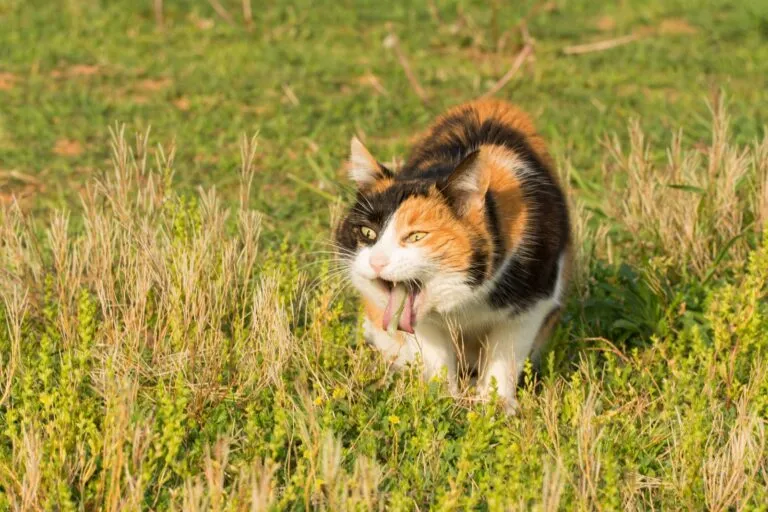
When your cat vomits, her abdominal muscles actively contract. She brings up partially digested stomach contents.
By contrast, during regurgitation your cat shows passive abdominal movement. In this case, she simply brings up undigested food without feeling nauseous. Regurgitated food therefore has an unchanged consistency and does not smell acidic, unlike vomit.
What Does the Vet Do?
As the causes of vomiting in cats can vary widely, it is important to give your vet detailed information about your cat. As a rule, your vet will carry out a general clinical examination during this consultation.
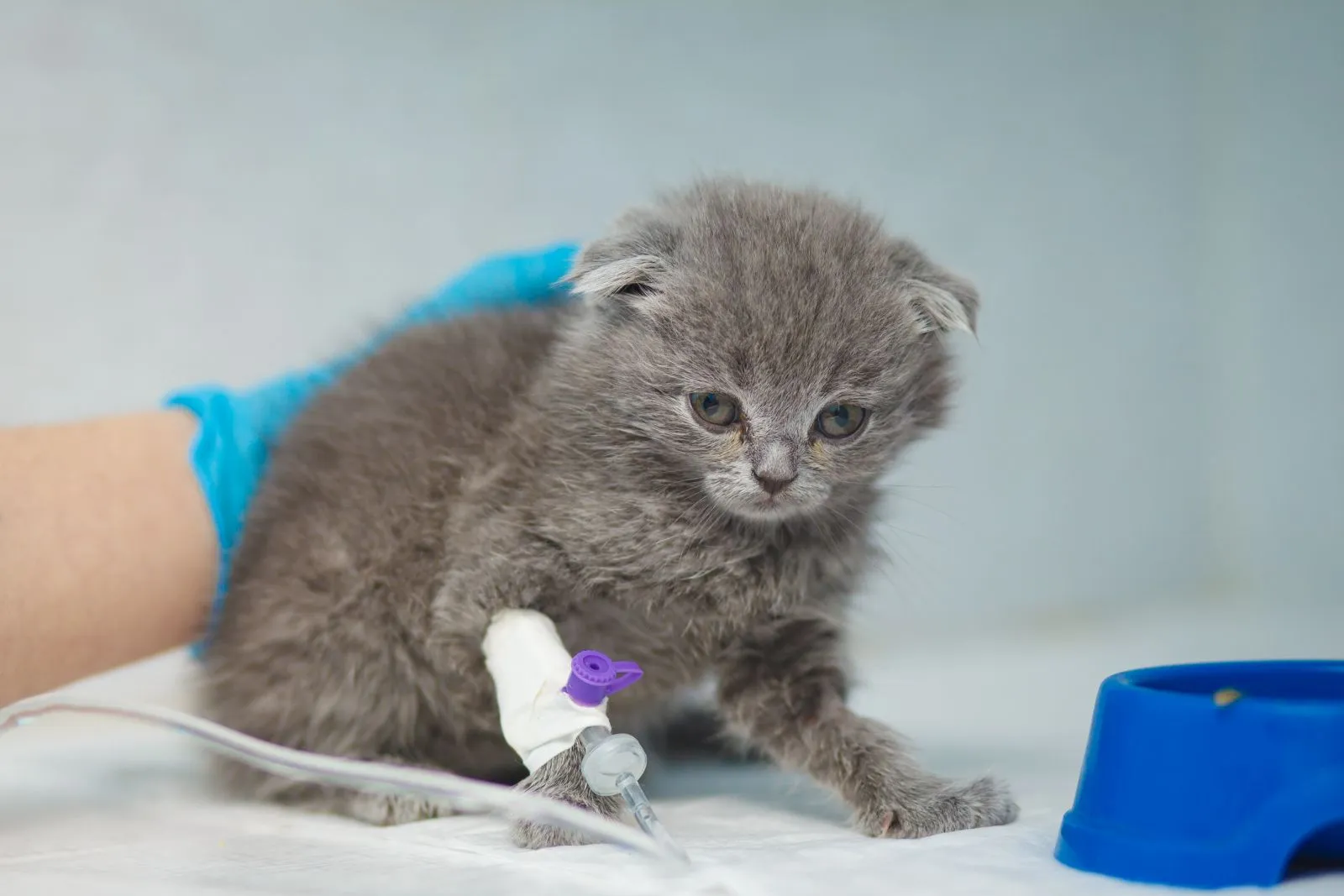
They will assess your cat’s current state of health. If she is severely dehydrated, they will also administer fluids via a drip to stabilise her circulation. Once your cat is stable, your vet can carry out further tests.
Further Diagnostics
As standard, the vet will perform a blood test. The number of inflammatory cells as well as the liver and kidney values can provide important clues. For example, an increased level of eosinophils may indicate an allergy or a parasitic infection.
It is also possible that your cat is suffering from a food allergy. This can be ruled out with an elimination diet (a sudden change of food over a longer period) or specific allergy tests .
Using imaging techniques (for example X-rays), your vet can also take a look at your cat’s internal organs. This allows them to identify swallowed foreign bodies or tumours.
Treatment: What Should I Do if My Cat is Being Sick?
Your vet will explain the treatment in detail. It is usually divided into two parts: to help your cat feel better quickly, she will receive supportive treatment. However, to treat the underlying condition, specific therapy is also necessary.
1. Supportive Treatment
Fluid therapy and administration of electrolytes via drip or bolus
Anti-vomiting medication (antiemetics)
Stomach-protecting tablets
Dietary measures (bland diet)
2. Specific Treatment
Infectious causes require, depending on the pathogen, antibiotics, antivirals or worming treatments
Dietary measures for food intolerance
Surgical procedures, for example in cases of swallowed foreign bodies, displacement of the intestines or tumours
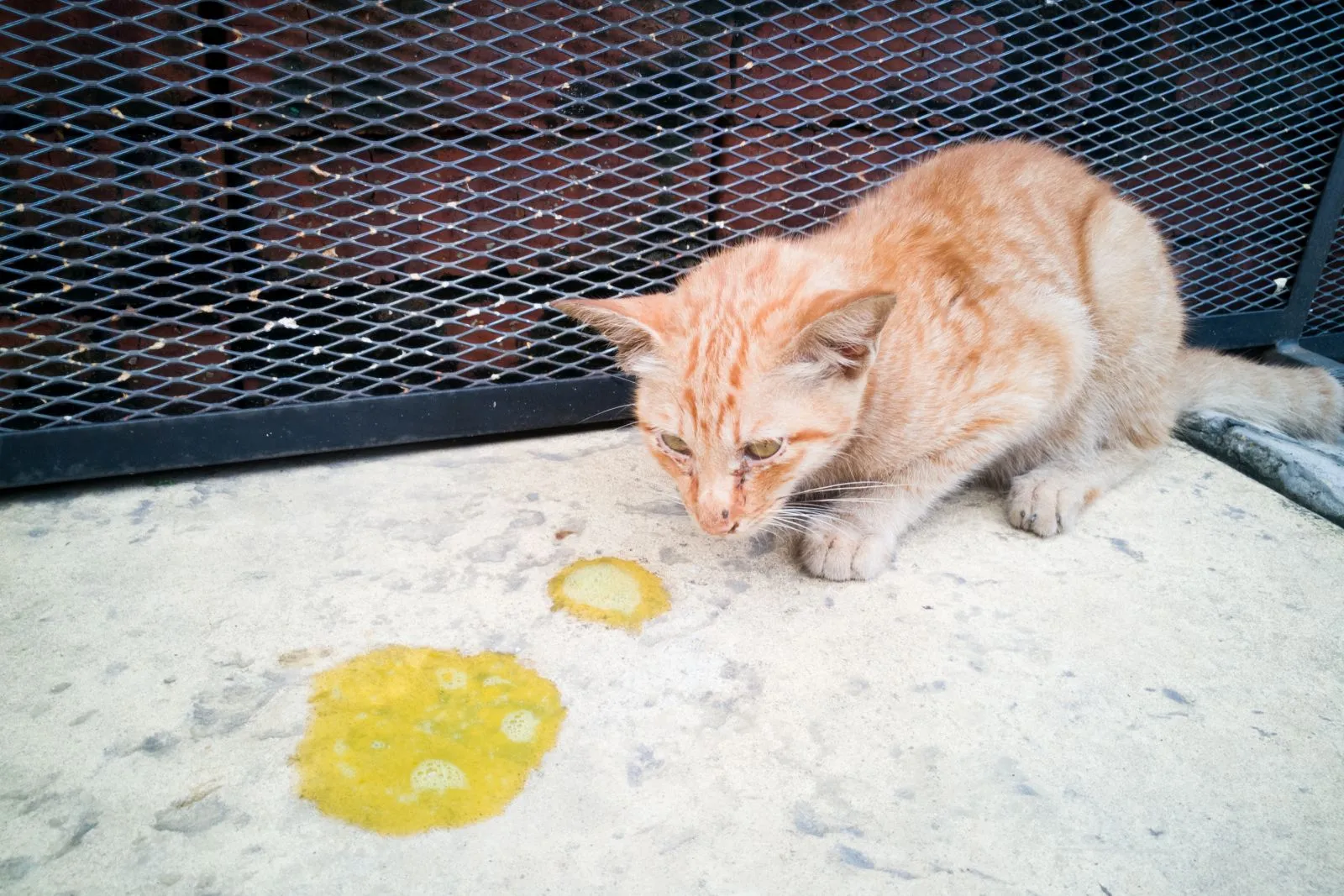
This cat’s vomit is yellowish, which indicates the presence of bile.
Causes: What Triggers Vomiting in My Cat?
Vomiting in cats (Gr. emesis, Lat. vomitus) is not a clearly defined disease, but a reflex. Cats vomit when a stimulus activates the vomiting centre in the brain.
Problematic or Harmless?
This causes the stomach and diaphragm muscles, as well as the abdominal muscles, to contract involuntarily. The stomach then empties in the opposite direction.
Vomiting can occur due to a health problem or as a harmless “cleansing programme” of the digestive system.
Vomiting Hairballs
Cats’ natural behaviour leads them to eat grass. They use this to trigger a natural gag reflex to clear their stomachs and, for example, get rid of hairballs.
As indoor cats have no access to the garden, they often try to replace grass with hair. It is therefore advisable to provide cat grass for them.
Medical Reasons for Vomiting in Cats
However, if your cat vomits, this can also be a sign of a wide range of illnesses. The following tables provide an overview – divided into non-infectious and infectious causes.
Inflammation of the stomach lining (gastritis), intestinal inflammation (enteritis), inflammation of the pancreas (pancreatitis), ingested foreign bodies (e.g. string or plastic in cases of pica syndrome)
Diseases of other organs
Overactive thyroid (hyperthyroidism), kidney disease or tumour development
What the Colour and Consistency of Vomit Can Reveal
To get to the bottom of the cause, taking a closer look at the vomit can help. The composition and the colour can provide valuable clues about the trigger.
yellow or green: If the vomit appears yellow or greenish, stomach acid or bile may be present. This indicates that the stomach is empty. In this case, possible causes include inflammation or blockage in the gastrointestinal tract. However, a serious disease of the liver or pancreas may also be responsible. If your cat is bringing up yellow fluid daily or constantly, you should seek veterinary advice as soon as possible to clarify and treat the cause.
brown: A brown or unusually dark colour of the vomit suggests a presence of blood. There may be a bleed in the digestive tract: the blood enters the stomach, clots and is brought up with the food pulp. Possible causes include tumours and intestinal ulcers .
red: Fresh blood in the vomit appears as red, bright red, light brown or pink streaks. The cause may be a dangerous stomach bleed or injury to the oesophagus – for example from a sharp blade of (cat) grass.
clear fluid: Transparent vomit can be a kind of early sign of an impending hairball. However, particularly in older cats, it may also indicate a serious condition such as kidney failure or gastrointestinal inflammation.
white foam: Pale, viscous mucus without food residue suggests that the cat’s stomach is empty. Harmless triggers may include stress or travel sickness. However, a serious health problem such as poisoning could also be the cause. A visit to the vet will provide clarity.
undigested food: If the cat brings up her food almost undigested, she may have not tolerated it well. However, life-threatening causes such as a bowel obstruction or a swallowed foreign body can also cause a cat to regurgitate food undigested.
sausage-shaped: Sausage-shaped masses containing a lot of hair are usually no cause for concern. The cat has vomited to rid herself of swallowed hair that entered the stomach during grooming.
Young cats are more prone than adult cats to becoming dehydrated as a result of vomiting.
Prognosis: What Are the Chances of Recovery if My Cat Is Vomiting?
The prognosis always depends on the specific cause and the severity of the condition. In most cases, cats vomit because they have eaten something spoiled or are suffering from a parasitic infection. These causes can usually be resolved quickly.
However, serious illnesses may also lie behind the symptom. For example, cancer or a foreign body in the gastrointestinal tract that is detected too late can be life-threatening for your cat. Never underestimate the risk ofshock. This can result from prolonged vomiting, during which your cat loses large amounts of electrolytes and fluids.
Aftercare: What Soothes a Cat’s Stomach after Vomiting?
If your cat has only been sick due to a mild upset stomach, the irritated stomach lining will calm down most quickly with a short break from food. However, fresh water should still be freely available. You can also offer weak, cooled camomile tea for additional support.
How Long Should You Withhold Food after a Cat Has Been Sick?
You should not leave your cat without food for too long. With mild stomach upsets, after one day there should already be a slight improvement, allowing you to offer a bland diet – for example boiled, unseasoned chicken breast without bones or fat. You can also give boiled, mashed carrots.
Prevention: How to Protect Your Cat from Vomiting
Due to the many possible causes of vomiting in cats, it is of course not 100% possible to protect your cat completely.
Nevertheless, you can try to prevent some of the causes with these tips:
Above all, make sure your cat is not exposed to stress.
Prevent access to toxic substances.
Have outdoor catsregularly checked for parasites (around every three to four months).
If your cat is already ill, you should keep her away from other animals living in the household.
Store cat food away from light and in sealed containers to prevent contamination or pests
Conclusion: How often Is It Normal for a Cat to Be Sick?
Unfortunately, this question cannot be answered in general terms. How often a cat vomits depends on individual factors such as her overall health and eating habits. However, if your cat is regularly being sick, i.e. several times a week, or even frequently, meaning several times a day, you should definitely take this symptom seriously. Your vet can get to the bottom of the cause and, if necessary, treat the underlying condition.
Important Note: The content provided for informational purposes only and is not intended to replace professional veterinary advice, diagnosis or treatment. If you have any questions or concerns about your pet's health, please always consult a licensed veterinarian.
This article was translated using Artificial Intelligence from the original German zooplus Magazine. While the original content was authored by industry experts and reviewed by our editorial team, this automated translation has not been human-edited and is provided for informational purposes.
At the Justus-Liebig-University of Giessen I was extensively trained as a veterinarian and was able to gain experience in various fields such as small animal, large animal and exotic animal medicine as well as pharmacology, pathology and food hygiene.
Since then, I have been working not only as a veterinary author, but also on my scientifically driven dissertation. My goal is to better protect animals from pathogenic bacterial organisms in the future.
Besides my veterinary knowledge, I also share my own experiences as a happy dog owner and can thus understand and enlighten fears and problems as well as other important questions about animal health.
It’s not just the right type of litter tray that will make your cat happy, but also the right type of cat litter. The best litters are ones that are very absorbent and ideally neutralise odours too, but finding the perfect cat litter can be no easy task with so many varieties on offer from natural clumping litter made of clay, non-clumping litter, litter made of wood or silica.
Are you worried because your ageing feline friend no longer responds to her name? Or are you wondering why your house cat can’t find her food bowl straight away? Your cat has probably reached a proud senior age and now needs special care. Find out how to spot the symptoms of senility in your cat early on and give her an age-appropriate life.
Coconut oil is very popular among cat owners as it provides natural protection from ticks and other parasites. In addition, this on-trend product is said to have numerous benefits. We will give you tips and information on how and when coconut oil can be a practical alternative to conventional remedies.