{"url":"https://www.zooplus.co.uk/magazine/cat/cat-health-and-care/cat-faeces-what-colour-and-consistency-reveal","title":"Cat Faeces: What Colour and Consistency Reveal","mag_id":414269,"is_single":true,"cat_name":"Cat","sub_cat_id":152,"sub_cat_name":"Cat Health and Care","cat_id":138}
Hard to believe, but a cat’s poo also reflects their health. In this article, you’ll find out why it’s worth taking a closer look at your cat’s faeces and when you should see the vet.
Cats can become infected with toxoplasmosis. This is particularly dangerous for pregnant women and people with weakened immune systems. They can become infected with toxoplasma through contact with contaminated cat faeces.
That’s why it’s important to remove cat poo only while wearing gloves and to have your cat checked regularly by a vet.
When Should I See a Vet if My Cat’s Stools Change?
Cats are curious animals and explore their surroundings down to the last inch. In the process, outdoor cats may eat mice or help themselves to leftovers from bins. That’s why, especially with outdoor cats, it’s normal for them to have diarrhoea from time to time.
However, if your cat has had severe diarrhoea for two days or seems unwell in any other way, you should consult a vet. Otherwise, the risk of dehydration is very high, particularly in young kittens.
The Consistency and Colour of Cat Poo Reveal Their Health Status
Before cat poo ends up in the litter tray or on the lawn, it passes through several stages in your cat’s digestive tract. If one of these stages is disrupted, changes in the stool can occur – especially in terms of consistency, contents and colour:
Consistency
The consistency of your cat’s poo can provide valuable insight into their current state of health. Stools that are too soft or too hard can be an initial indication of possible illness.
1. Watery Cat Poo
Watery cat poo is the same as diarrhoea (diarrhoea). If it lasts less than a week, it’s considered acute diarrhoea. If it continues for more than three weeks, it’s classed as chronic diarrhoea.
It’s important to note that this classification guides treatment. While acute diarrhoea can usually be brought under control quickly with simple symptomatic measures (e.g. fluids), chronic diarrhoea often requires additional medical treatment (e.g. antibiotics, anti-parasitic medication, immunosuppressants).
One of the main functions of the large intestine is to remove water from the stool. If the intestinal contents remain in the colon for too long, the stool becomes increasingly dry and firm.
The result: the cat’s poo is hard. Hard stools therefore suggest that the large intestine is impaired in its function or mechanics .
If there is a mechanical problem, the intestine may be blocked by a foreign body or narrowed by a tumour. A functional disorder, on the other hand, can occur as a result of anaesthesia or poisoning in cats.
Additions: What Do Threads or Mucus in Cat Poo Mean?
If your cat has eaten grass, you may notice it later in their poo. Sometimes, however, you may find other additions that provide important clues about your cat’s digestive tract:
Mucus (mucus): If the poo is coated in mucus, your cat may have inflammation of the large intestine.
Threads: White threads in cat poo can be hair or worms. You should discuss both with your vet to treat underlying causes such as a parasite infestation or an allergy.
Colours: What Does Black, Red or Yellow Cat Poo Mean?
Cat poo is brown because the gallbladder releases yellow bile, which contains the pigment bilirubin.
It’s normal for the colour of your cat’s poo to vary from time to time. However, significant colour changes should be checked by a vet. This is especially true if the stool is:
Yellow: possibly a sign of pancreatitis or liver problems
Red: an indication of bleeding in the lower gastrointestinal tract
Black (tarry stool): often a result of bleeding in the upper gastrointestinal tract
Similar to the Bristol Stool Chart used to assess bowel movements in humans, vets can classify the consistency of cat poo using a numerical scale. Here, one stands for “very hard stool”, while seven describes “very watery stool”.
What Does Normal Cat Poo Look Like?
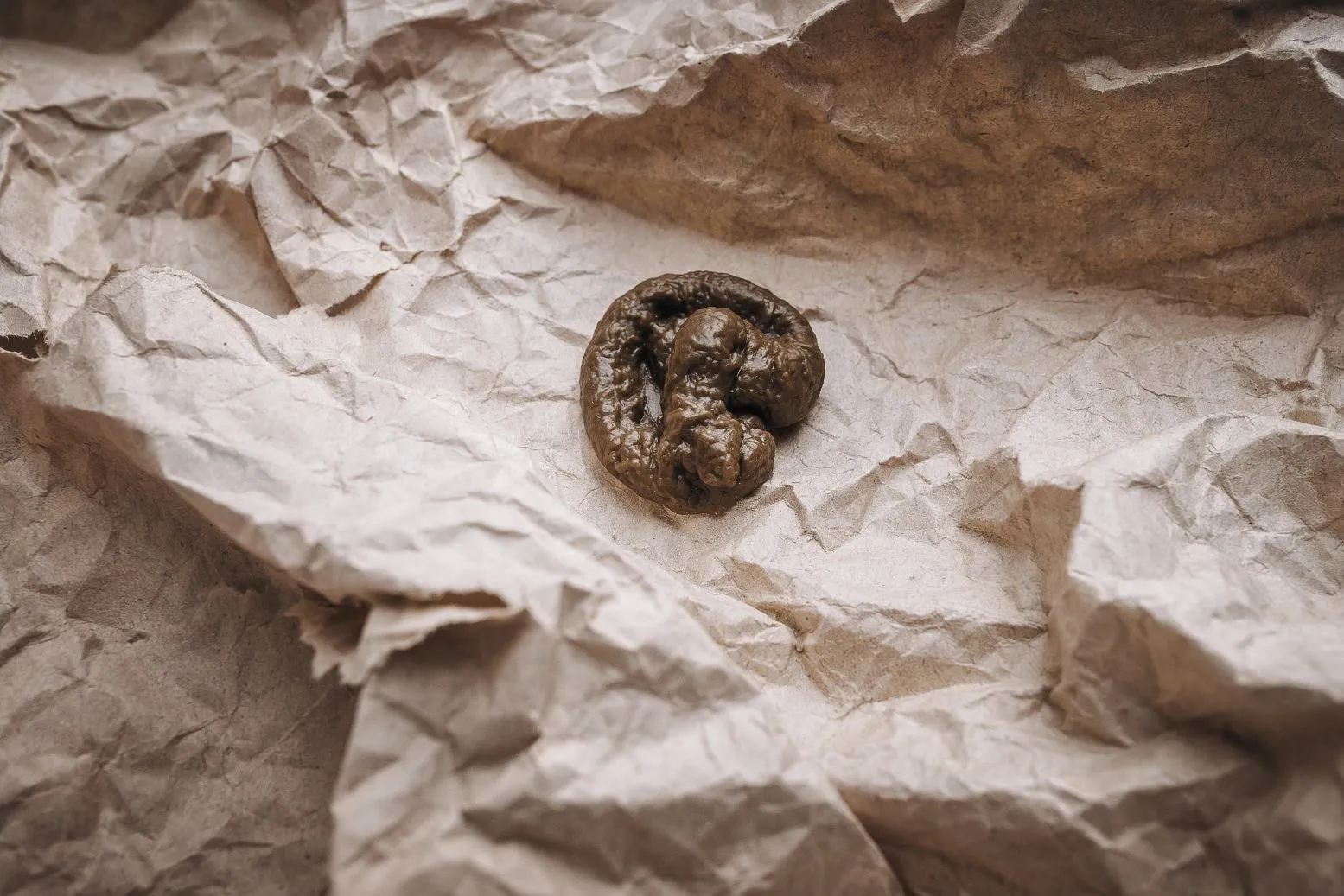
Accordingly, healthy, normal cat poo should be brown. Its ideal consistency is firm and compact, neither too soft nor too hard.
Why Does Cat Poo Smell so Bad?
The fact that faeces smell is true for almost all mammals. This is due to the normal production of putrefactive gases and fermentation products.
However, if the smell of your cat’s poo is unbearable or your cat shows other changes in their stool, you should have this checked by your vet.
Cat faeces should be well‑formed, slightly moist and brown in colour.
Facts about Your Cat’s Business
To respond promptly to digestive problems, it’s important to know a few general facts about your cat’s bowel habits and their poo.
How Often Does a Cat Poo Each Day?
Cats should pass stools daily, as food takes about a day to move through the gastrointestinal tract.
However, individual factors also play a role, so sometimes it can take a little longer. For example, the type and quantity of food are significant factors.
What Is Cat Poo Made of?
The composition of cat poo depends on what your cat eats and how much they drink.
Ideally, more than 75% of the stool should consist of water. The remaining dry matter is made up of around 80% organic compounds such as bacteria, indigestible food components (e.g. fibre), bile secretions (e.g. bile acids) and shed intestinal epithelial cells.
How Often Should You Change the Litter Tray?
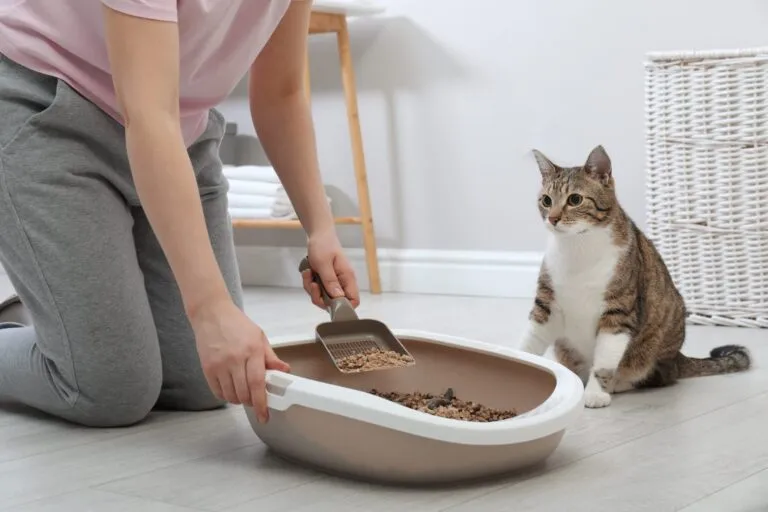
You should completely replace the cat litterat least once a week. If you have several cats or your cat has digestive problems, you should change the litter tray more frequently as needed.
In addition, for hygiene reasons, it’s important to remove cat poo daily.
Important Note: The content provided for informational purposes only and is not intended to replace professional veterinary advice, diagnosis or treatment. If you have any questions or concerns about your pet's health, please always consult a licensed veterinarian.
This article was translated using Artificial Intelligence from the original German zooplus Magazine. While the original content was authored by industry experts and reviewed by our editorial team, this automated translation has not been human-edited and is provided for informational purposes.
At the Justus-Liebig-University of Giessen I was extensively trained as a veterinarian and was able to gain experience in various fields such as small animal, large animal and exotic animal medicine as well as pharmacology, pathology and food hygiene.
Since then, I have been working not only as a veterinary author, but also on my scientifically driven dissertation. My goal is to better protect animals from pathogenic bacterial organisms in the future.
Besides my veterinary knowledge, I also share my own experiences as a happy dog owner and can thus understand and enlighten fears and problems as well as other important questions about animal health.
It’s not just the right type of litter tray that will make your cat happy, but also the right type of cat litter. The best litters are ones that are very absorbent and ideally neutralise odours too, but finding the perfect cat litter can be no easy task with so many varieties on offer from natural clumping litter made of clay, non-clumping litter, litter made of wood or silica.
Are you worried because your ageing feline friend no longer responds to her name? Or are you wondering why your house cat can’t find her food bowl straight away? Your cat has probably reached a proud senior age and now needs special care. Find out how to spot the symptoms of senility in your cat early on and give her an age-appropriate life.
Coconut oil is very popular among cat owners as it provides natural protection from ticks and other parasites. In addition, this on-trend product is said to have numerous benefits. We will give you tips and information on how and when coconut oil can be a practical alternative to conventional remedies.