
Dangerous Foods for Cats

As early as the zoologist and animal behaviour researcher Paul Leyhausen pointed out that cats do not necessarily eat only what is actually good for them. This makes it all the more important for a cat’s human companion to be well informed about which of their own foods can be dangerous to cats. Some foods that are beneficial to human health are, in fact, highly toxic for cats.

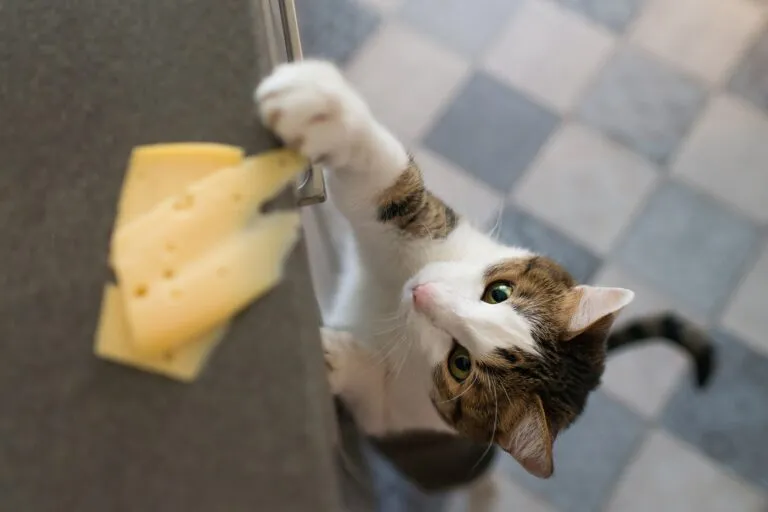
Cat reaching for cheese on a kitchen counter.

There are several dangers lurking in the kitchen and refrigerator for our feline friends.

The following list makes no claim to be exhaustive.

What are cats not allowed to eat?

 Dangerous foods for cats include, among others:

  • Alcohol: It should really go without saying that cats should not be given alcohol. For this reason, Bach flower remedies for cats are only available in alcohol-free versions. Alcohol can cause severe liver and brain damage in cats. Even a quantity that seems very small from a human perspective – just one tablespoon – is enough to send a cat into a coma. Only slightly more alcohol can even be fatal for the cat.
  • Rollmops: Even if you might think you are doing your cat a particular favour by letting it share your rollmops, this is strongly discouraged. The high salt content is not at all good for a cat’s digestive system.
  • Chocolate: Just as with dogs, chocolate is also highly toxic for cats because it contains theobromine. This substance is found in all types of chocolate, but in particularly high concentrations in dark chocolate and pure cocoa, such as that used for baking or for making hot chocolate. If cats consume chocolate, it has serious consequences. It can lead to cardiac arrhythmias, muscle tremors and seizures. The higher the cocoa content of the chocolate, the more dangerous it is for our feline companions. Fortunately, unlike dogs, cats are often not particularly interested in this sweet temptation, but because of the risk of poisoning you should still make sure that your house cat cannot access your chocolate.
  • Raw pork: There is a risk of infection with the Aujeszky virus, which is often fatal. Aujeszky’s disease, also known as pseudorabies, primarily manifests itself in cats through neurological symptoms. The cat becomes restless and agitated, draws attention to itself by frequent meowing and loses a lot of saliva due to noticeable swallowing movements. In the advanced stage, coordination problems and paralysis occur.
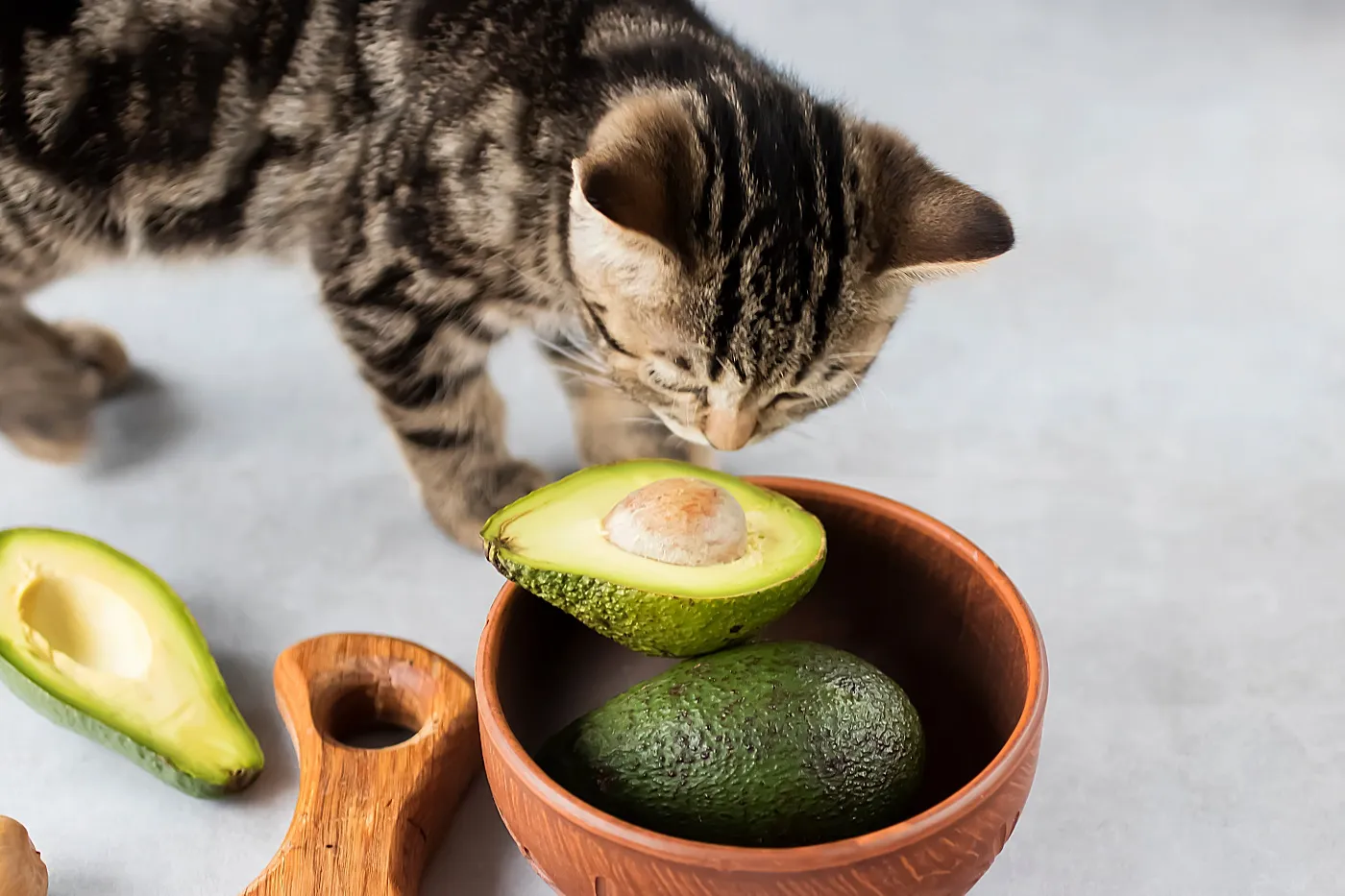
Cat approaching a bowl with avocados on a kitchen surface. © zhannaz / stock.adobe.com
Avocados: Superfood for us, no-go for cats!
  • Avocados: Other dangerous foods for cats include avocados. Currently very popular in human diets because of their health benefits, avocados are harmful to cats. The persin they contain can cause shortness of breath and oedema in cats and damage the heart muscle.
  • Tomatoes and aubergines: These vegetables contain atropine, which can trigger cardiac arrhythmias in cats.
  • Raw poultry meat: Even though cats love poultry, they should never be allowed to eat it raw. Consumption poses numerous risks for our feline friends – among other things, because it may contain salmonella.
  • Bones: These can splinter and therefore injure the cat’s palate, become lodged in the throat or damage the intestinal wall of your house cat.
  • Pulses and cabbage: Pulses and cabbage are also harmful foods for cats. They are difficult to digest. For cats, they can be virtually indigestible and lead to flatulence or diarrhoea. In addition, isolated fatal cases are known.
  • Onions: Onions are very toxic for cats in any form – whether raw, cooked, dried or powdered. The reason is the sulphur compounds they contain, which attack cats’ red blood cells. Eating onions in any form can therefore cause vomiting, diarrhoea, irritation of the mucous membranes or even anaemia in our beloved feline companions. Even small amounts can be enough to negatively alter a cat’s blood and endanger its health.
  • Leeks: Leek-family plants are also dangerous foods for cats. These include wild garlic and chives, among others. Chives in particular are often found in the garden, on the balcony and in the kitchen. If a cat eats them, there is a risk of poisoning.
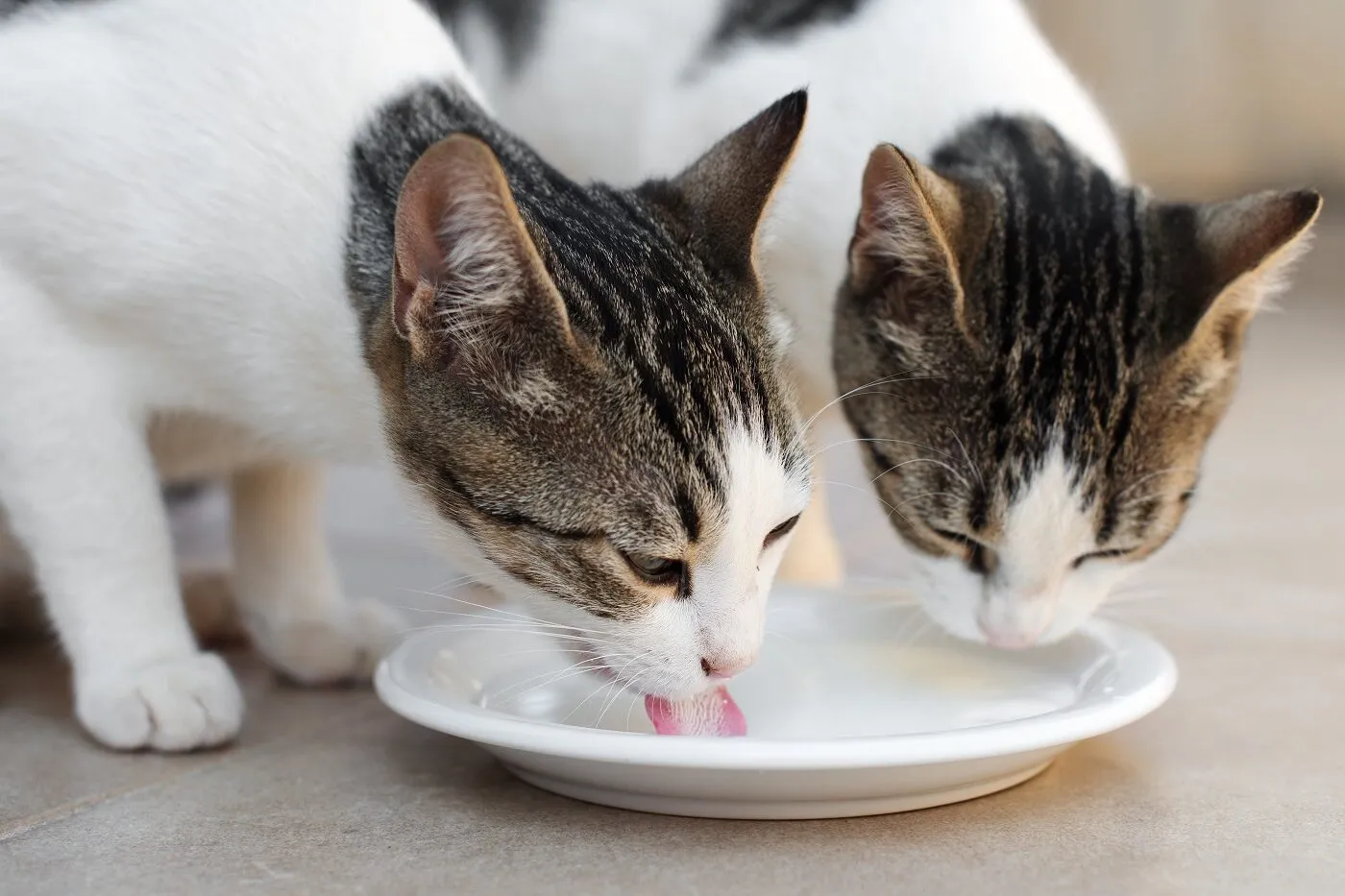
  • Milk: Because cats are naturally lactose intolerant, they should not be given milk, even though it is often argued that farm cats also regularly drink milk, supposedly without suffering any harm.

Discover our selection of special cat milk with reduced lactose in the zooplus shop. 

Two cats drinking from a shallow plate of milk. © M-Production / stock.adobe.com
Many cats love milk, however, they cannot tolerate the milk sugar (lactose) contained in cow’s milk.

Not a food for cats, but still dangerous: slug pellets

Slug pellets are not alcohol for slugs, but a pest control product that is pressed into pellet form and used to combat slug infestations in gardens and around the home. They are also referred to as molluscicides. Slug pellets can contain the stomach poison metaldehyde. So make sure that cat food never comes into contact with slug pellets.

If your feline friend shows symptoms such as vomiting, balance problems or very heavy salivation, you should seek veterinary advice immediately. The vet can then initiate appropriate treatment as quickly as possible to save the cat.

Incidentally, ingesting these chemical agents can be fatal for children and mammals as well. Garden owners with children or pets should therefore never use slug pellets under any circumstances. This also applies if neighbours have cats that could come into contact with the pellets. Find out about environmentally and animal-friendly alternatives – children, cats and the environment will thank you for it.


zooplus Editorial Team
zooplus Redaktion

The zooplus editorial team consists of a dedicated team of experts with many years of experience in the field of animal husbandry: Luisa with her White Swiss Shepherd Elyos, Laura, Julio, and Florian. Together with a large network of animal experts, we work to make the zooplus magazine a trusted source of information for all animal owners and lovers. Our goal is to provide exciting animal knowledge and relevant information on the proper care of pets.


Our most helpful articles
5 min

Make your own cat ice cream: 5 great recipe ideas

Summer is the peak season for refreshing ice cream, and cats enjoy it too when it's hot. Would you like to surprise your cat with some ice cream for a change? We will clarify whether ice cream is dangerous for cats and show you how to make your own healthy cat ice cream.