{"url":"https://www.zooplus.co.uk/magazine/cat/cat-adoption/pregnancy-with-a-cat","title":"Pregnancy with a Cat","mag_id":417420,"is_single":true,"cat_name":"Cat","sub_cat_id":149,"sub_cat_name":"Cat Adoption and Ownership","cat_id":138}
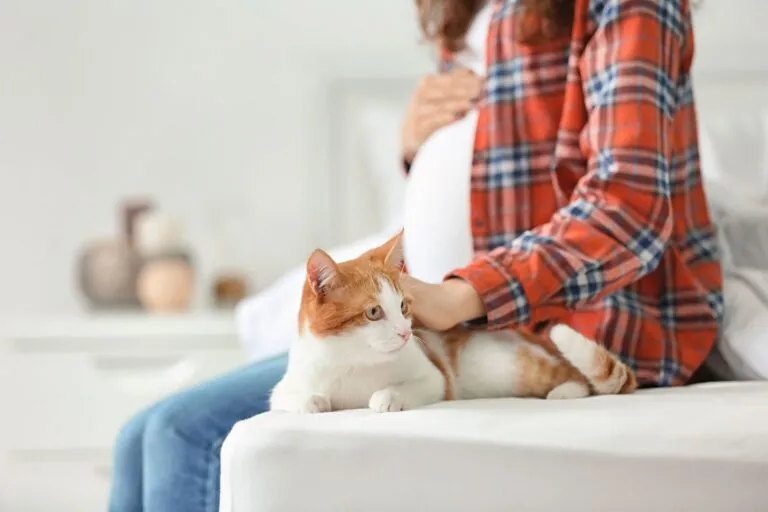
There’s nothing lovelier for children than growing up with pets of their own. From an early age, children learn what respect and consideration mean and can start taking responsibility for another living being. In this article, you’ll find out what you should keep in mind during pregnancy if you have a cat.
Pregnancy with a Cat: What Should I Be Aware of During this Time?
It can be difficult for cats when a new family member arrives. Many cats dislike change. However, when a baby is on the way, changes to routines and new rules are unavoidable.
Helping Your Cat Adjust Gradually during Pregnancy
You should therefore use the nine months of pregnancy to slowly help your cat adapt to the new living situation. There is always a risk of jealousy towards a new family member. Some cats also do not understand why the baby’s cot or changing table is off limits to them.
Introducing the new rules step by step will help your cat enormously. Then you can look forward to a wonderful time with both your baby and your cat.
Good to know:Outdoor cats often find it easier to adjust. They can “escape” outside whenever they want. They are also used to their favourite person being away for hours at a time and are already familiar with different and new situations.
Do I Need to Rehome My Cat if I’m Pregnant?
Unfortunately, expectant mothers are still often asked by neighbours or friends whether they will be giving their cat away. Of course, the answer to this question is a clear no.
After all, your cat is part of the family. You wouldn’t send an older sibling to a children’s home just because a baby is arriving.
Do Cats Have a Positive Effect on Children’s Development?
Living in the same household as cats enriches people’s lives. Children who grow up with pets tend to have stronger immune systems and generally have a lower risk of developing allergies.
Cats also help their family members reduce stress through stroking or playing with them. In many situations, their presence alone can calm people and provide comfort and security through their affection.
Animals also encourage respectful interaction and help people develop a positive self-image. They teach empathy, improve learning ability and social behaviour, and help people become reliable friends.
Hygiene During Pregnancy with a Cat and Afterwards
Cats are naturally clean animals. However, they rely on humans to dispose of their mess. The following points should be considered if you are pregnant and have a cat in the household.
Cleaning the Litter Tray During Pregnancy
Many bacteria, viruses and parasites can gather in the litter tray. During pregnancy in particular, an infection with toxoplasmosis must be avoided at all costs.
Special tests carried out by your gynaecologist can determine whether you have previously had an infection. Otherwise, your partner should take over cleaning the litter tray during pregnancy to protect your baby’s health.
As soon as your child starts moving around independently, you should place the litter tray somewhere inaccessible. To many children, a litter tray looks like a fantastic indoor sandpit.
Regular cleaning can also reduce the risk of infection from dangerous germs.
Make Sure Your Cat is Vaccinated and Wormed
Only regular vaccinations and worming will reduce the risk of dangerous diseases being passed on to you and your baby.
Regular Cleaning
Vacuum and mop your floors regularly to reduce cat hair and germs.
Also check hard-to-reach places for injured or dead animals your cat may have brought in, such as mice or birds.
For hygiene and safety reasons, your cat should sleep outside the bed. Ideally, start getting your cat used to no longer being allowed on the bed while you are still pregnant. It may take a few weeks before your cat accepts the new rule.
How Do I Prepare My Cat for the Baby During Pregnancy?
Pregnancy gives you plenty of time to prepare your cat for life with a new baby. It’s best to start early so your cat does not associate the changes with the baby itself. You should keep the following points in mind:
Introduce New Rules
Think early on about which rules apply now and which will apply in future. For example, if your cat will no longer be allowed in the baby’s room for safety reasons, it’s best to start enforcing this straight away.
It always takes some time for new rules to be accepted and internalised. Starting the adjustment early also helps avoid your cat associating the changes with the baby, which could lead to jealousy.
Rearranging Rooms
During pregnancy, you will buy many new things for your baby. Introduce items such as the cot, changing table, playpen and high chair into your home gradually.
Give your cat enough time to explore everything and get used to it. Packaging such as cardboard boxes can also make a brilliant playground for your cat.
Create Cat-Only Areas
By the time the baby arrives at the latest, your cat will need enough places to retreat to. To help them adjust gradually, it is better to provide these areas during pregnancy.
Cat trees or hiding spots in elevated positions are particularly suitable as safe retreats. From above, your cat can calmly observe everything while remaining out of reach of small, boisterous children’s hands.
Your cat will almost certainly appreciate a quiet, baby-free room. It is quite possible that your cat may initially be startled by the baby crying or screaming and will be grateful for a peaceful hiding place.
It is also helpful to let your cat spend time with neighbours’ children during pregnancy or get used to baby noises from TV programmes, for example. This will also help you quickly find out whether your cat reacts fearfully.
The correct way to handle animals can be taught from an early age.
The Baby Is Here: What Should I Keep in Mind During the First Meeting?
At last, your baby has arrived. The next question, however, is how to introduce your baby and your cat to one another.
Before you come home, your partner can bring back worn nappies or clothing from the hospital. This gives your cat the chance to get used to the scent of the new family member.
Plenty of Contact, but Under Supervision
Stay calm during the first meeting, speak to your cat in a gentle voice and let them thoroughly sniff the baby and the bags.
While at home, you should often give your cat the opportunity to interact with your baby. It also helps to consciously stroke your cat near your child and spoil them with treats.
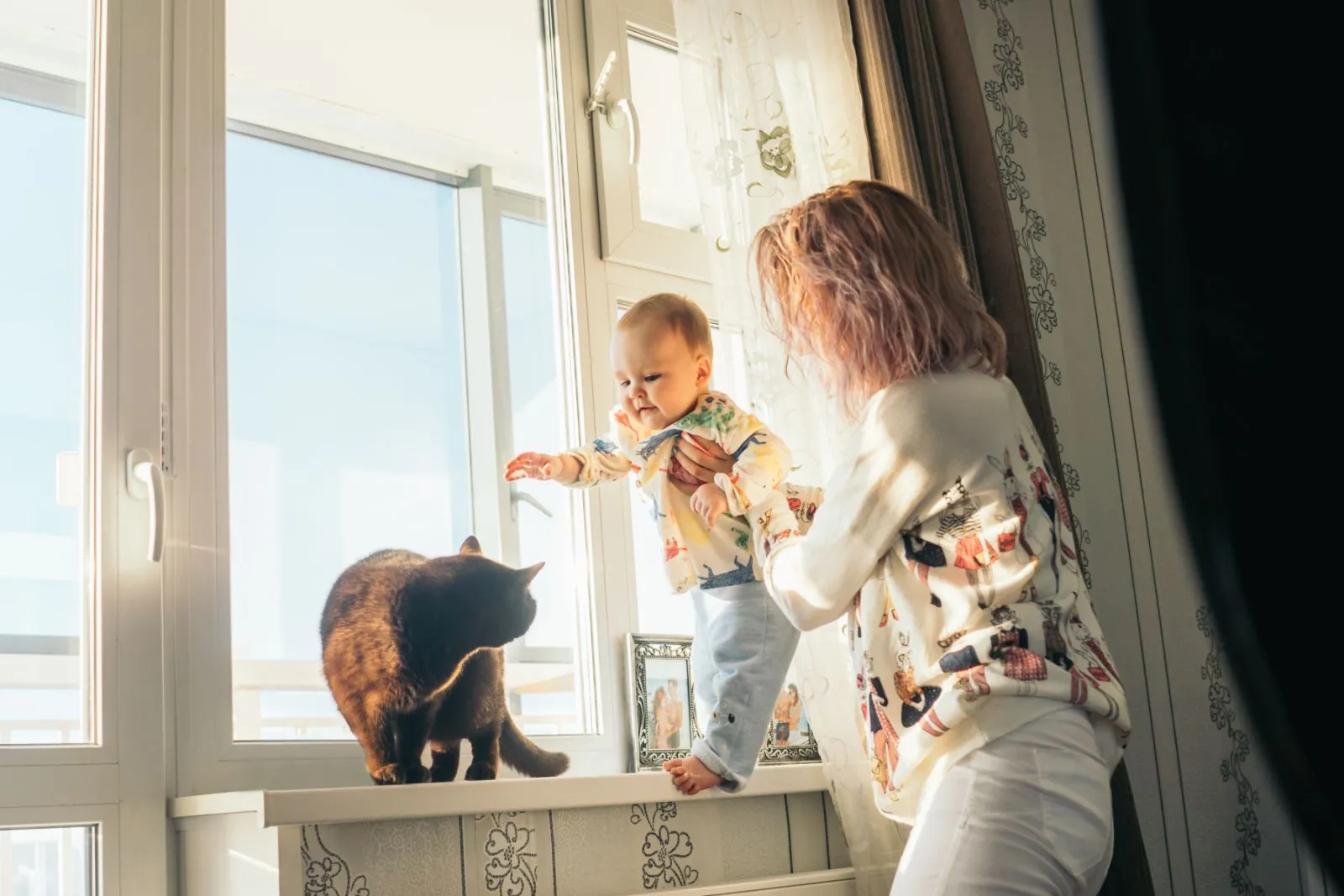
However, never leave your cat alone with your baby. Some cats are very affectionate and may curl up next to the baby.
6 Tips for a Good Relationship Between Cat and Child
Finally, we have put together six tips to help you create a relaxed relationship between your child and your cat with ease.
1. Make Time for Your Cat
Set aside dedicated time for your cat so jealousy does not develop. Stroke them often and play with them.
Especially during the hectic early days, your baby will still sleep a lot and your cat will really appreciate your attention. With your baby lying on your chest, treat-tossing and treat-hiding games are particularly suitable.
2. Include Your Cat
It helps to involve your cat in your new daily routines. Let them watch while you change nappies or cuddle and talk to them while breastfeeding. This way, your cat will not feel left out and will be more likely to accept the baby as a new family member.
3. Cat-Only Areas Are off Limits to Children
From the very beginning, it is important for your child to learn that your cat’s retreat areas are off limits. For hygiene reasons, the litter tray should also be a no-go area.
4. Make the Feeding Area Child-Safe
Your child should also learn that the feeding area is off limits. A simple tip is to place the bowls in an elevated position. This makes it harder for small children to reach them and allows your cat to eat undisturbed.
5. Always Supervise Your Cat and Baby
Never leave your cat alone with your baby. Most cats are very gentle, but they like to curl up in warm beds or on sleeping babies. This can pose a suffocation risk to your baby, as they are not yet able to free themselves.
6. Mutual Respect
From the very beginning, you should explain your cat’s needs to your child. Cats are not toys. Hitting, pulling their fur, locking them in cupboards or rough chasing games are all off limits.
Your cat wants to be respected and left in peace. After all, a good relationship between child and cat is only possible with mutual consideration.
This article was translated using Artificial Intelligence from the original German zooplus Magazine. While the original content was authored by industry experts and reviewed by our editorial team, this automated translation has not been human-edited and is provided for informational purposes.
Dr Julia Striegl, Veterinarian
I studied veterinary medicine at LMU Munich, where I also finished my PhD in 2012. After that, I was able to gain a lot of experience, for example as a practicing veterinarian and scientific advisor. Particularly important to me is the continuous improvement of animal welfare and farm animal medicine. My greatest concern has always been to act in the best interest of my patients and to provide them with optimal care. In addition to my veterinary knowledge, I am happy to share my experience as a horsewoman and long-time dog owner, as well as a dog sportswoman.
The origins of indoor cats are as mysterious and fascinating as their characters. Are cats really desert animals – and what would that mean for their behaviour? In fact, it was unclear for a long time where the ancestors of our feline friends originated. That was until a genetic analysis shed some light on the enigma of cat evolution.
It’s not just the right type of litter tray that will make your cat happy, but also the right type of cat litter. The best litters are ones that are very absorbent and ideally neutralise odours too, but finding the perfect cat litter can be no easy task with so many varieties on offer from natural clumping litter made of clay, non-clumping litter, litter made of wood or silica.
There comes a time when every kitten becomes an adult and tests boundaries. The following article explains when puberty begins with cats and what this defiant phase means for you as a cat owner.