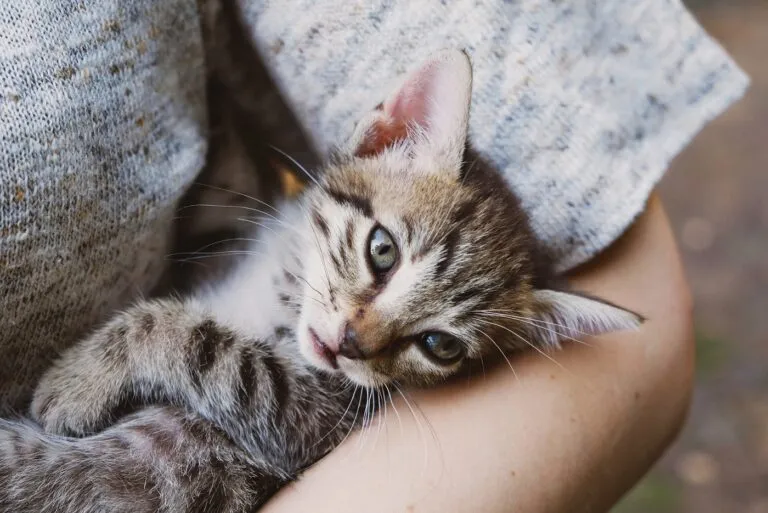
In a cat foster home, cats in need are given a temporary place to stay. The volunteers work closely with local animal welfare organisations. But how do you become a cat foster carer, and what should you keep in mind?
When space and resources at the animal shelter become scarce, many animal welfare organisations urgently search for foster homes for their four-legged charges.
What Is a Foster Home for Cats?
Cat foster homes take in, for example, stray cats – or cats whose owner has passed away and who have nobody to care for them. Mother cats found during neutering campaigns can also stay in foster homes together with their kittens.
Sometimes cats are also rescued from households belonging to so-called “animal hoarders” – people with mental health problems who collect cats out of misguided affection for animals and then become overwhelmed by caring for so many pets.
Working with Animal Shelters
When animal shelters run out of space, many organisations rely on private foster homes. Cats from shelters abroad also often stay temporarily in a foster home before moving on to their permanent home.
These cats are often traumatised by their past experiences and need to learn to trust people again. In foster care, they are looked after with love until they are ready to move in with suitable “adoptive parents”. The volunteers usually also help to find them a new home.
Voluntary Work
Important to know: this is voluntary work, and foster carers are not paid for what they do. However, some organisations do offer an allowance to help cover expenses, such as vet costs.
Requirements for Becoming a Cat Foster Carer: Love of Animals, Space and Time
Do you have a big heart for animals and want to help cats in need? Then you could support your local animal welfare organisation as a cat foster carer. Many organisations advertise on their websites when they are looking for foster homes.
What do you need to become a cat foster carer? A love of animals, reliability and a sense of responsibility are among the basic requirements for this role. It is also helpful if you already have experience with cats.
Enough Space for Cat-Friendly Accommodation
Your home should also offer enough space to provide suitable accommodation for a foster cat. If you already have cats of your own, you should be able to keep your foster cat in a separate room – at least until the cats have got used to each other.
Mother cats should also have a room of their own so they can look after their babies in peace and quiet.
What Do You Need to Become a Foster Carer?
In terms of food and accessories, you will need all the same things you would for a cat of your own. Some foster cats have had very bad experiences and are therefore often anxious and stressed.
Cosy cat caves, scratching posts, wall shelves and other hiding places are therefore especially important.
Foster Home for Cats: A Secure Balcony is an Advantage
Some cat welfare organisations also consider it important for the foster home to have a cat-safe balcony with a cat net. However, the cats should not be allowed outdoor access. Otherwise, they could become attached to the area around the foster home.
Foster cats need plenty of time
The time involved in running a cat foster home should never be underestimated. On average, it takes four to six weeks for a cat to be rehomed permanently. However, some foster cats stay for several months.
Preventing Cat Fights
Until a foster cat has settled in, it needs a lot of attention and care. If you already have cats, you also need to allow enough time for the introduction to the newcomers. You should definitely avoid additional stress caused by cat fights.
Cats that end up in animal welfare care are often in poor health. So make sure you allow enough time for visits to the vet. You should also expect to have to regularly administer medication to your foster cat.
Becoming a Cat Foster Carer: The Process
Have you found a suitable animal welfare organisation you would like to support? Usually, the first step is an introductory meeting between the organisation and the prospective foster carer.
Among other things, the animal welfare team will check whether there is enough space and whether the necessary equipment for the four-legged “foster child” is available. You will also usually stay in close contact throughout the fostering period.
The Fostering Agreement
Once everything has been clarified, the animal welfare organisation will probably draw up a fostering agreement with you. This sets out the rights and responsibilities of both the organisation and the foster carer. Read the agreement carefully before signing it to avoid any problems later on.
Foster Home for Cats: What the Agreement Includes
The “subject of the agreement” is the foster cat. The cat’s name, date of birth, sex, breed, colour and – if available – microchip number are recorded in the agreement. Any parasite treatments and other healthcare treatments are also noted there.
The fostering agreement usually also states that the animal remains the property of the organisation and may be reclaimed at any time. This protects the animal welfare organisation. If the foster home proves unsuitable, the organisation can remove the cat at any time.
Who Covers Which Costs?
As volunteers, foster carers are not paid. Some animal welfare organisations contribute towards the cost of food, toys and accessories.
Important: The fostering agreement should clearly state who covers the vet costs. Otherwise, you may end up having to pay for expensive treatments yourself.
Can I Keep the Foster Cat?
What happens if you become so attached to your foster cat that you no longer want to give it up? This actually happens quite often. In the animal welfare world, these people are jokingly called “failed foster carers”.
Most animal welfare organisations are happy for you to keep your foster cat. To be on the safe side, though, you should check in advance whether this is generally allowed.
This article was translated using Artificial Intelligence from the original German zooplus Magazine. While the original content was authored by industry experts and reviewed by our editorial team, this automated translation has not been human-edited and is provided for informational purposes.